

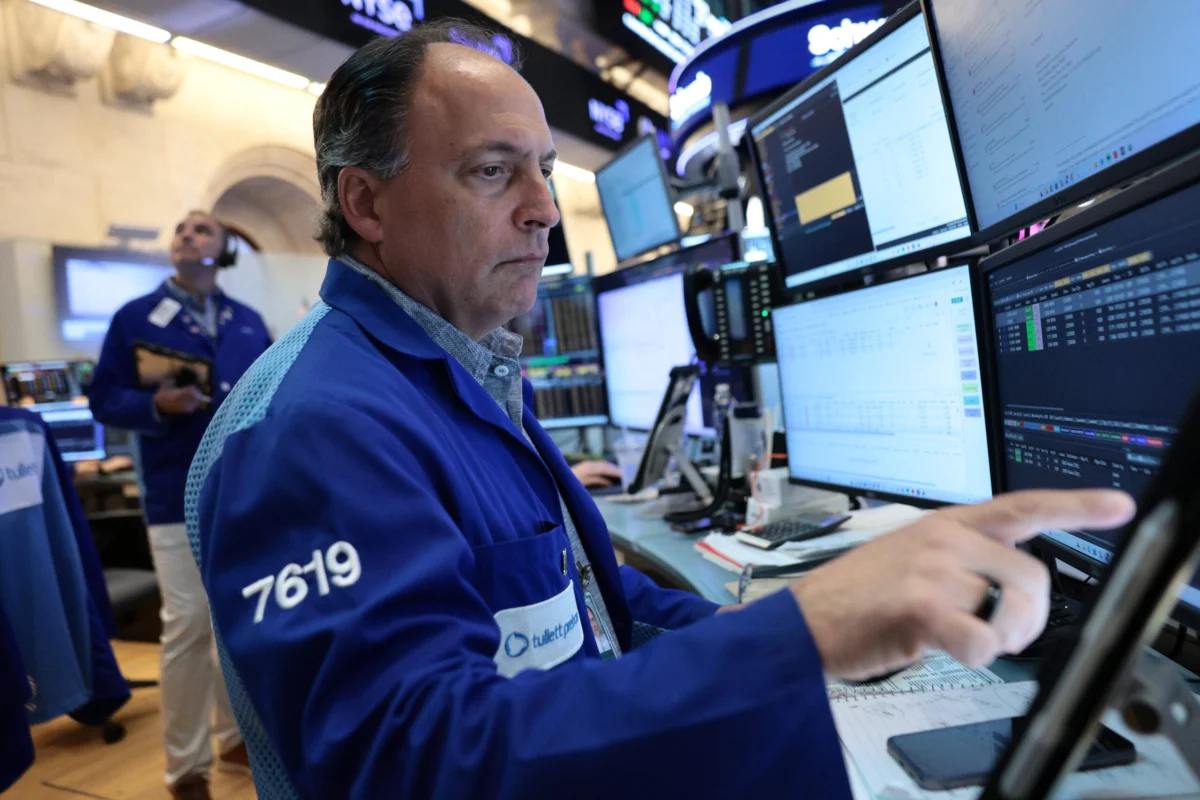
The strategic bearish options position on Tesla, initiated prior to its second-quarter earnings release, has largely fulfilled its maximum potential, prompting market participants to either secure their gains or pivot the successful playbook towards another high-profile, "priced-for-perfection" technology stock: Palantir. The initial thesis, predicated on the market’s elevated expectations for Tesla’s performance, proved prescient as the electric vehicle giant’s Q2 report triggered a significant sell-off, validating the downside-skewed risk assessment. This development underscores a broader trend in the technology sector, where extraordinary growth narratives are increasingly scrutinised against tangible profitability and operational efficiency, particularly in a landscape of evolving economic conditions and investor sentiment.
Tesla’s Q2 Performance and Market Reassessment
Leading into its Q2 2026 earnings call, Tesla Inc. (TSLA) was under intense scrutiny from investors and analysts alike. The company, known for its ambitious growth targets and often volatile stock performance, had cultivated an environment of sky-high expectations. This sentiment, frequently described as "priced for perfection," implied that any deviation from stellar results, even minor ones, could lead to a disproportionately negative market reaction. Indeed, the Q2 report, delivered on Wednesday, confirmed this vulnerability.
While Tesla reported robust revenue of $28.2 billion, marking a significant 26% increase year-over-year and handily beating consensus estimates, the underlying profitability metrics painted a more sobering picture. Adjusted earnings per share (EPS) came in at a disappointing 34 cents, falling well short of the anticipated 50 cents per share. This substantial miss on the bottom line immediately raised concerns, overshadowing the top-line beat. Further exacerbating these worries was a notable compression in operating margin, which narrowed to a mere 1.4%. This figure, significantly lower than previous quarters, suggested increasing cost pressures, aggressive pricing strategies, or a less efficient operational structure impacting overall profitability.
Perhaps most critically, the company’s capital spending surged by an astounding 142%, a massive outlay that swung free cash flow (FCF) into negative territory. Free cash flow is a crucial indicator of a company’s financial health, representing the cash a company generates after accounting for cash outflows to support operations and maintain its capital assets. A negative FCF, especially one driven by such a dramatic increase in capital expenditure, often signals heavy investment cycles in expansion or research and development. However, in the context of an EPS miss and margin compression, it fueled investor anxiety about the company’s immediate financial agility and the potential for delayed returns on these substantial investments.
Adding to the market’s disquiet were comments from Tesla executives regarding the highly anticipated robotaxi project. While reiterating the long-term vision and immense potential of autonomous ride-hailing, calls for "patience" on the robotaxi front were interpreted by some analysts and investors as a delay in commercialization or a lack of immediate catalysts. This tempered enthusiasm for a key future growth driver disappointed investors who often factor in the revolutionary potential of such ventures into Tesla’s lofty valuation. The market, it appears, was more interested in tangible "tells" of near-term profitability and operational execution rather than the long-term "show" of future technological breakthroughs.
The immediate aftermath was swift and severe. On Thursday, following the earnings release, Tesla’s stock slid approximately 14.5%, breaching critical support levels and reaching the downside target implied by the pre-earnings bearish options strategy. This sharp decline wiped out billions in market capitalization and underscored the fragility of investor confidence when a compelling growth narrative clashes with less-than-perfect financial realities in an environment of heightened scrutiny.
Chronology of Tesla’s Q2 Earnings Event
- Weeks Pre-Earnings (June – Mid-July 2026): Market sentiment for Tesla remains largely bullish, buoyed by its dominant position in the electric vehicle (EV) market and the ambitious promise of future technologies like robotaxis and AI advancements. Analysts largely maintain ‘Buy’ or ‘Outperform’ ratings, with consensus estimates reflecting high expectations for both revenue and profitability, contributing to the "priced for perfection" narrative.
- Early Q2 2026 (July 2026): Tesla releases its quarterly delivery numbers, showing strong vehicle shipments globally. These figures, often seen as a bellwether for the company’s performance, contribute to a positive pre-earnings buzz and reinforce investor optimism.
- Wednesday, [Date of Q2 Report] (Late July 2026): Tesla releases its Q2 2026 earnings report after market close. The report reveals a revenue beat but a significant miss on adjusted EPS. Key operational details, including compressed operating margins and negative free cash flow due to substantial capital expenditure, raise red flags. Executives temper expectations for the robotaxi project, advising "patience," which is met with investor disappointment.
- Thursday, [Day After Report] (Late July 2026): Tesla stock opens sharply lower, plunging by approximately 14.5% during trading hours. The sell-off is broad, impacting both institutional and retail investors, as the market reacts decisively to the profitability miss and less-than-stellar operational details. The stock closes near the targeted move of bearish options strategies.
- Following Days: Market analysts begin to recalibrate their price targets and ratings, reflecting the new information and reassessing Tesla’s near-term profitability outlook. Discussions emerge about the balance between aggressive growth investments and immediate financial returns.
The Successful Bearish Options Play and Strategic Decisions
For options traders who had anticipated this scenario, the outcome was highly favorable. The bearish strategy, often employing put spreads, aimed to profit from a downside move in Tesla’s stock. A put spread involves buying a put option at one strike price and simultaneously selling another put option with a lower strike price, both with the same expiration date. This strategy defines both maximum profit and maximum loss, making it a popular choice for traders seeking to capitalize on anticipated declines with managed risk. The specific "short put strike" mentioned in the original analysis was breached by the stock price, allowing the strategy to capture a significant portion of its maximum potential value.

When a position works as intended and has captured the bulk of its possible profit, traders face a critical decision point. Holding the position further offers diminishing returns relative to the risk of a potential, albeit unlikely, snap-back rally. This scenario, where the "math flips against you," encourages prudent risk management.
Two primary paths typically emerge for successful traders in this situation:
- Bank the Entire Gain: This conservative approach involves closing the position, realizing the profit, and waiting for the next opportune moment. This eliminates all remaining risk and secures the capital, aligning with the investing adage, "One never loses money taking profits," which emphasizes the importance of securing gains rather than chasing marginal additional returns.
- Press the Playbook: This involves securing a substantial portion of the profits (e.g., "bank most of it") and redeploying a portion of these "house money" profits into a similar, high-conviction trade. This approach allows traders to leverage their success while managing risk, as the capital at play is now primarily profits from a previous trade, reducing the psychological impact of potential losses.
The latter path, emboldened by the Tesla success, has led some sophisticated options traders to turn their attention to Palantir Technologies (PLTR), a data analytics company with its own unique set of market expectations and vulnerabilities, slated to report its Q3 earnings on August 3rd. This pivot exemplifies the dynamic nature of active options trading, where identifying and executing on successive opportunities is key to sustained success.
Shifting Focus: Palantir as the Next "Priced for Perfection" Target
Palantir Technologies, known for its sophisticated data integration and artificial intelligence platforms utilized by government agencies and commercial enterprises, is a company that commands significant attention in the tech world. Its innovative solutions and strategic importance in areas like national security and advanced analytics have contributed to a valuation that, like Tesla’s, often reflects future potential rather than immediate, robust profitability. The company’s unique position, bridging complex data challenges for high-stakes clients, has historically supported a premium market valuation.
However, several counterpoints warrant serious consideration for investors and traders ahead of Palantir’s upcoming earnings report. These factors collectively suggest that Palantir, despite its remarkable technology, could be another candidate for a "priced for perfection" market correction if its Q3 results or outlook fail to meet stringent expectations, particularly given the evolving competitive landscape and investor focus on sustainable growth.
The Counterpoints on Palantir’s Outlook
- Ambitious Growth Strategy and Scalability Concerns: Palantir has articulated an ambitious goal to grow revenues tenfold without a commensurate scaling of its sales force. While a testament to the efficiency of its platform and potential for viral adoption within its client base, this strategy is inherently challenging. Expanding market penetration, especially in the complex enterprise and government sectors, typically requires significant investment in direct sales and marketing infrastructure. Analysts express doubts regarding the feasibility of such aggressive growth purely through product-led expansion without a more traditional sales team scaling, potentially limiting its ability to capture new, diverse clients.
- Intensifying LLM Competition and Direct Deployment Trends: The landscape for Large Language Models (LLMs) and generative AI is rapidly evolving and becoming increasingly competitive. While Palantir leverages AI extensively in its platforms, the rise of powerful, accessible LLM providers means that enterprise customers are increasingly exploring options to deploy these models directly within their existing infrastructure or through more generalized cloud-based AI services. This trend could potentially diminish the perceived necessity or unique value proposition of Palantir’s intermediary platform for certain AI functionalities, leading to slower adoption rates or increased competitive pressure from companies offering more modular or integrated AI solutions.
- Finite Total Addressable Market (TAM) and International Constraints: While the overarching market for data analytics and AI is vast, Palantir’s specific focus areas, particularly in highly sensitive government contracts and bespoke commercial solutions, can lead to a more constrained total addressable market (TAM) than initially perceived. Furthermore, international sales, a crucial component for global growth, face additional hurdles. Many nations, particularly when national security or critical infrastructure data is concerned, exhibit a strong preference for local vendors. This understandable geopolitical and security-driven bias can significantly limit Palantir’s ability to expand globally at the desired pace, impacting its long-term revenue diversification.
- Slowing Commercial Backlog Growth: Recent financial indicators have signaled a potential deceleration in key growth metrics. Bloomberg data indicated that Palantir’s commercial backlog growth slowed to 12% in the first quarter, a notable decline from 21% recorded in the fourth quarter of 2025. A slowing backlog, which represents future revenue from signed contracts, can be an early warning sign of impending revenue growth deceleration. This metric is closely watched as it provides insight into the company’s future revenue visibility and sales momentum.
- Premium Valuation in a Shifting Market: Even after recent market fluctuations, Palantir continues to trade at a substantial premium compared to its peer group within the software sector. Its Enterprise Value-to-Sales (EV/Sales) ratio, a common valuation metric for growth companies, remains significantly higher than the industry average and well above its own historical average. Such elevated valuations leave little room for error; any disappointment in earnings or guidance can trigger a sharp correction as investors re-evaluate the company’s growth trajectory against its current market price, especially in a market increasingly prioritizing profitability.
Palantir’s Historical Volatility and Options Market Dynamics
Historically, Palantir’s stock has demonstrated considerable volatility around its earnings reports. Analysis reveals that the average move in Palantir’s stock, from one week before earnings through two weeks after (consistent with a typical August options expiration cycle), has been approximately 26%. This significant historical price swing underscores the stock’s sensitivity to earnings news and guidance, indicating that Palantir is a stock that reacts strongly to new fundamental information.
Despite this historical precedent, the options market is currently pricing in a more modest one-day earnings move of 9.5% for Palantir. While this implied move is larger than what the stock has delivered in the past four quarters, it is still substantially below the long-term average of over 14% for one-day post-earnings reactions. This discrepancy suggests that August options, despite appearing expensive with an implied volatility of 65%, might actually be reasonably priced for traders who anticipate a larger move, especially when utilizing spread strategies that help neutralize the inherent volatility premium. The
