

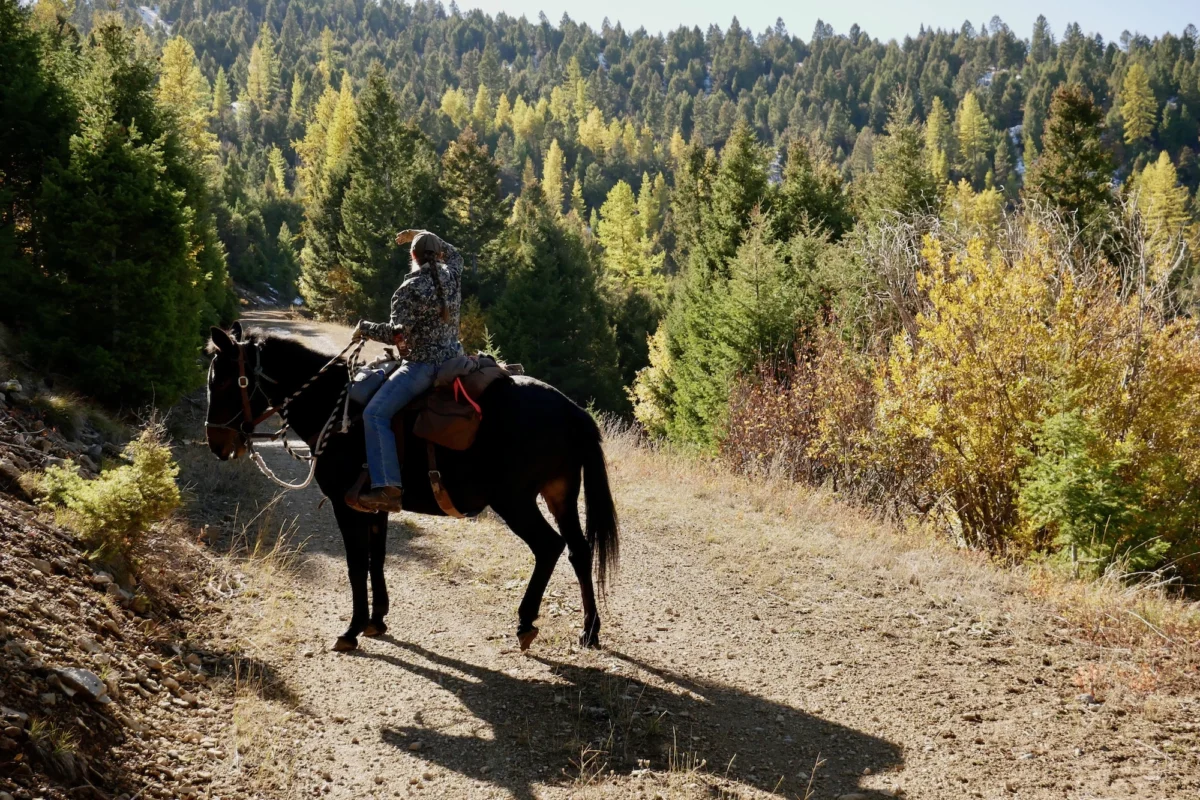
High along a ridgeline in Montana’s Blackfoot Valley, Sigrid Olson leads her horses along a winding Forest Service road, her eyes scanning the dense timber and open meadows for more than just stray cattle. Olson is a range rider, a profession that was once a staple of the American West during the 19th-century era of westward expansion but had largely faded into the annals of history. Today, however, the role is seeing a vital resurgence as the western United States grapples with the successful, yet complicated, recovery of apex predators. As grizzly bears and gray wolves reclaim territories they were driven from a century ago, the range rider has become an essential intermediary in the effort to balance the requirements of modern ranching with the realities of conservation.

The re-emergence of range riders in the Blackfoot Valley is a direct response to the shifting ecological landscape of Montana. For decades, the presence of large carnivores was a rarity, but state and federal protections have fostered a slow and steady return of these species. This resurgence has brought a new set of tensions to the rural landscape, where the livelihoods of ranchers often intersect with the migratory paths and hunting grounds of protected wildlife. In this context, the modern range rider serves as a proactive tool for conflict mitigation, providing a constant human presence that deters predators and offers ranchers real-time data on their herds.
The Biological Context of Predator Resurgence
The necessity of the range rider program is underscored by the dramatic recovery of apex predators in the Northern Rockies. Grizzly bears, particularly those in the Northern Continental Divide Ecosystem (NCDE) which borders the Blackfoot Valley, have seen their numbers rise to over 1,100 individuals. This population growth has led to an expansion of their range, pushing bears out of protected wilderness areas and onto private agricultural lands. Similarly, gray wolves, which were reintroduced to Yellowstone National Park and central Idaho in the mid-1990s, have established a robust presence across Montana. Current estimates suggest there are approximately 1,100 to 1,200 wolves in the state, organized into hundreds of packs.

While these recovery efforts are hailed as triumphs of the Endangered Species Act, they present significant challenges for the livestock industry. In Montana, cattle ranching is a primary economic driver, and the loss of even a few calves to predation can represent a substantial financial blow to a family-run operation. Beyond the direct loss of livestock, the presence of predators can cause "sub-lethal" effects, such as stress-induced weight loss in cattle or lower conception rates, both of which impact a rancher’s bottom line.
The Role and Responsibilities of the Modern Range Rider
Sigrid Olson is one of three range riders currently patrolling the Blackfoot Valley, and she remains the only woman in the program within this specific region. Her work, which spans the most active months for human-wildlife interaction from May to October, is a blend of traditional horsemanship and modern ecological monitoring. The primary objective is not to hunt or harm predators, but to manage the landscape in a way that makes conflict less likely.

A typical day for a range rider involves long hours in the saddle, covering vast distances that are often inaccessible by motorized vehicles. Olson’s tasks include:
- Livestock Monitoring: Keeping track of the location and health of various cattle herds. By ensuring cattle are bunched appropriately and not wandering into high-risk areas—such as thick brush where a grizzly might be bedding down—the rider reduces the opportunity for an encounter.
- Wildlife Tracking: Identifying signs of predator activity, including tracks, scat, and kill sites. Range riders are trained to distinguish between various types of predators and to understand their movement patterns.
- Communication: Serving as a liaison between the landscape and the rancher. Olson reports her daily findings to local landowners, allowing them to make informed decisions about where to move their stock or when to increase surveillance.
- Carcass Management: One of the most critical aspects of the job is the early detection of dead livestock. Whether a cow dies of natural causes or predation, the carcass acts as a powerful attractant for bears and wolves. By locating these carcasses quickly, range riders can facilitate their removal or treatment, preventing predators from becoming "food-conditioned" to ranching areas.
The presence of a range rider creates a "buffer of human scent and activity" that many conservationists and ranchers believe acts as a natural deterrent. Unlike the range riders of the 1800s, who were often tasked with predator eradication, modern riders like Olson work within a framework of coexistence.

The Blackfoot Challenge: A Model for Collaborative Conservation
The range rider program in the Blackfoot Valley is managed and funded by the Blackfoot Challenge, a landowner-based nonprofit organization that has become a national model for community-led conservation. Founded in 1993, the Blackfoot Challenge seeks to protect the natural resources and rural way of life in the 1.5-million-acre Blackfoot River watershed.
The organization’s approach is rooted in the "80/20 rule," which focuses on the 80 percent of issues that community members agree on rather than the 20 percent that divide them. Predator management was historically one of the most divisive issues in the valley, but the Blackfoot Challenge has shifted the narrative toward proactive, non-lethal solutions. The range rider program has been a cornerstone of this effort for over a decade.

By providing a service that directly benefits the ranchers’ economic interests—namely, the safety of their cattle—the Blackfoot Challenge has built a level of trust that is often missing in federal or state-led conservation initiatives. The program is funded through a combination of private donations, federal grants, and contributions from the ranchers themselves, ensuring that all stakeholders have "skin in the game."
Chronology of the Range Riding Season
The workload of a range rider follows the seasonal rhythms of both the livestock and the wildlife:

- May – June: This is a high-risk period known as calving season. Young calves are particularly vulnerable to predators. Range riders spend significant time near calving grounds, monitoring for wolves that may be drawn to the area.
- July – August: As the weather warms, cattle are moved to higher-elevation summer pastures, often on Forest Service or Bureau of Land Management (BLM) leases. This is when range riders like Olson are most active, patrolling rugged terrain where cattle are more dispersed and harder to monitor.
- September – October: This period coincides with "hyperphagia," a biological state where grizzly bears increase their caloric intake significantly to prepare for winter hibernation. During these months, bears are more active and may travel closer to valley floors in search of food, necessitating increased vigilance from range riders.
- November: As cattle are brought down from the high country and bears begin to den, the range riding season typically concludes.
Economic and Social Implications of Coexistence
The success of the range rider program is often measured in the number of "non-events"—the predations that didn’t happen because a rider was there to prevent them. While it is difficult to quantify a negative, data from the Montana Department of Fish, Wildlife and Parks (FWP) suggests that areas with active range rider programs and carcass pick-up services see a marked decrease in confirmed livestock losses compared to areas without such interventions.
Beyond the numbers, there is a significant social impact. The psychological stress of ranching in "grizzly country" is substantial. Ranchers often describe the feeling of being under siege when they find a maimed animal or see tracks near their homes. The range rider provides a sense of security and a shared burden. When Olson finds a herd bunched up and safe at the bottom of a valley after a long day of tracking, it represents a victory for the entire community.

Furthermore, the program helps to keep working landscapes intact. When ranching becomes economically unviable due to predator losses, there is a higher risk of those lands being sold for sub-division and development. Maintaining the ranching economy effectively preserves the open space that the predators themselves need to survive and move across the landscape.
Broader Impact and the Future of the Frontier
The resurgence of range riders in Montana is part of a broader trend across the American West. Similar programs have been implemented in the Wood River Valley of Idaho to manage wolf-sheep conflicts and in the Tom Miner Basin near Yellowstone. These programs represent a shift in the philosophy of the "New West"—one that acknowledges that the removal of apex predators was a temporary state and that their return requires a return to older, more labor-intensive methods of animal husbandry.

However, challenges remain. Funding for these programs is often precarious, relying on grants that may not be renewed. There is also the challenge of finding individuals with the rare combination of skills required for the job: expert horsemanship, a deep understanding of bovine behavior, and a sophisticated knowledge of predator ecology.
As Sigrid Olson continues her ride through the Blackfoot Valley, she represents a bridge between the past and the future. Her work suggests that while the "wildness" of the West is returning, it does not necessarily have to come at the expense of the people who live and work on the land. Through the use of range riders, the Blackfoot Valley is proving that coexistence is not just a biological possibility, but a social and economic reality. The "boots on the ground" approach, though centuries old, remains one of the most effective tools for navigating the complex interface between human civilization and the natural world.
