

A federal judge in Massachusetts has formally ruled that the Trump administration acted in direct violation of a standing judicial injunction by proceeding with a controversial deportation flight that sent eight migrants to South Sudan earlier this week. District Court Judge Brian Murphy issued the ruling on Wednesday, asserting that the Department of Homeland Security (DHS) and Immigration and Customs Enforcement (ICE) failed to provide the deportees with a meaningful opportunity to challenge their removal to a third country, a requirement established by a court order issued earlier this year.
The ruling marks a significant legal setback for the administration’s expedited removal policies and highlights a growing rift between the executive branch’s immigration enforcement strategies and judicial oversight regarding due process. The individuals involved, who hail from diverse nations including Myanmar, Laos, Vietnam, Cuba, and Mexico, as well as South Sudan, were reportedly flown out of Texas on a Boeing C-17 military transport aircraft, a move that has drawn intense scrutiny from human rights advocates and legal experts alike.
The Court’s Findings and the Violation of Due Process
During a heated hearing on Wednesday, Judge Murphy expressed profound concern over the sequence of events that led to the migrants’ departure. The core of the legal dispute centers on a preliminary injunction issued by Murphy in March, which prohibited the government from deporting individuals to any country other than their nation of origin without first allowing them to raise claims of potential persecution or torture in that third country.
"The department’s actions are unquestionably violative of this court’s order," Judge Murphy stated during the proceedings. He noted that the administration’s timeline for the deportations appeared designed to bypass legal counsel. According to court records, the eight individuals were only notified of their final destination—South Sudan—late Monday evening, well outside of standard business hours. By the following morning, between 9:00 a.m. and 10:00 a.m., they were already being processed for departure from the ICE facility.
Judge Murphy argued that this window was insufficient for the migrants to consult with their attorneys or families, making it "impossible" for them to exercise their legal right to object. The ruling emphasizes that the right to due process is not a discretionary privilege but a constitutional requirement that applies even to those the government deems high-priority for removal.
Profile of the Deportees and Administration Justifications
The Department of Homeland Security confirmed the deportation of the eight men during a press briefing on Wednesday morning. The individuals identified by the government include Enrique Arias-Hierro, Jose Manuel Rodriguez-Quinones, Thongxay Nilakout, Jesus Munoz-Gutierrez, Dian Peter Domach, Kyaw Mya, Tuan Thanh Phan, and Nyo Myint.
The DHS defended its actions by highlighting the criminal backgrounds of the men involved. According to agency spokespeople, several of the deportees had been convicted of violent crimes, including murder and sexual assault. The administration has consistently maintained that its primary focus is the removal of "bad hombres" and individuals who pose a significant threat to public safety.
However, legal representatives for the migrants argue that the nature of their past crimes does not negate their right to a fair legal process, especially when being sent to a conflict zone. Jonathan Ryan, a San Antonio-based immigration attorney representing Nyo Myint, a migrant from Myanmar, expressed outrage over the lack of transparency. Ryan stated that his client has essentially been "disappeared," as the government has provided no confirmation of his current whereabouts or safety. "I have not heard from my client," Ryan said. "How am I supposed to take their word that they sent him to Burma?"
Humanitarian Concerns in South Sudan
The choice of South Sudan as a deportation destination has raised alarms within the international community. The U.S. State Department currently maintains a "Level 4: Do Not Travel" advisory for the country, citing extreme risks of crime, kidnapping, and armed conflict. In March, the State Department went as far as ordering the departure of non-emergency U.S. government employees from the capital, Juba, due to the deteriorating security situation.
South Sudan, the world’s youngest nation, has been plagued by instability since gaining independence in 2011. While a 2018 power-sharing agreement between President Salva Kiir and Vice President Riek Machar brought a temporary end to a five-year civil war that killed hundreds of thousands, the peace remains fragile. Recent reports indicate that violent clashes between rival factions have ramped up, leading to fears that the country is on the precipice of another full-scale civil war.
For migrants from countries like Vietnam, Myanmar, or Laos, being dropped in South Sudan—a country with which they have no cultural, linguistic, or familial ties—presents a "death sentence," according to human rights observers. The practice of "third-country deportation" is increasingly being used by the administration to remove individuals whose home countries refuse to accept them, but Judge Murphy’s ruling suggests this practice must still adhere to strict legal guardrails.
Chronology of the Legal Battle
The conflict between Judge Murphy and the Trump administration has escalated over several months, characterized by a series of emergency motions and reaffirmed injunctions.
- March 2025: Judge Murphy issues an initial injunction. This order requires the federal government to provide ample notice and a legal forum for migrants to contest being sent to a third country where they might face "extraordinary danger."
- Early April 2025: The administration attempts to deport a group of individuals from the Philippines, Vietnam, and Laos to Libya. Libya, much like South Sudan, is currently classified as a high-risk conflict zone. Judge Murphy blocks this move, reaffirming the March injunction.
- Monday, April 14, 2025: Migrants are notified of their destination to South Sudan during the evening hours. Attorneys are not informed in time to file stays of removal.
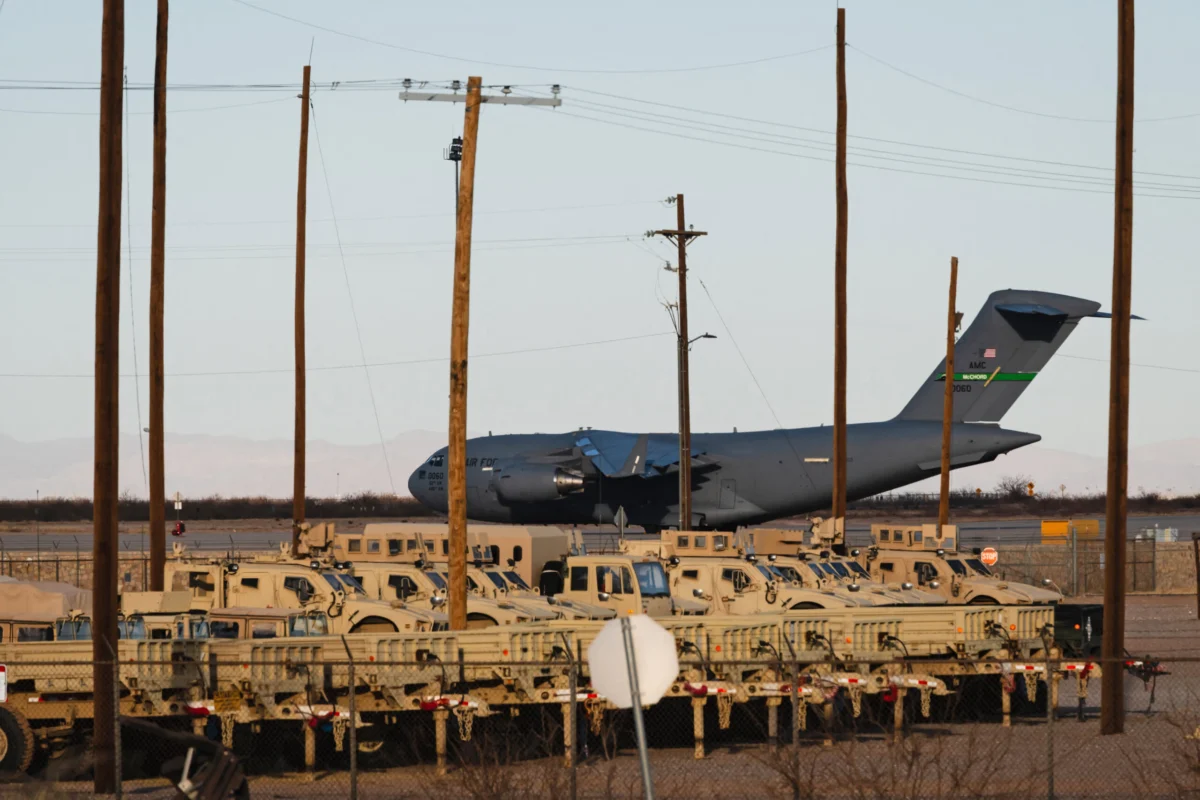
- Tuesday, April 15, 2025: A Boeing C-17 takes off from Biggs Army Airfield in Fort Bliss, El Paso, Texas. Reports surface that at least two clients (from Myanmar and Vietnam) are on the flight.
- Wednesday, April 16, 2025: Judge Murphy holds a hearing, including 30 minutes of sealed proceedings. He rules that the administration violated the court’s order. Government attorneys confirm the plane has landed but refuse to disclose the final location of the migrants.
Use of Military Assets for Deportation Flights
The use of a Boeing C-17 Globemaster III for these deportations represents a notable shift in logistics. Typically, ICE Air Operations utilizes chartered civilian aircraft for "repatriation flights." The deployment of a heavy-lift military transport aircraft, operated by the United States Air Force, suggests an integration of Department of Defense assets into domestic immigration enforcement on a scale rarely seen in previous administrations.
The C-17 is designed to carry large equipment and troops into harsh environments, making it a capable tool for reaching remote or unstable regions like South Sudan. However, critics argue that using military hardware for the deportation of civilians—even those with criminal records—blurs the line between civil law enforcement and military operations. This "militarization" of the deportation process has become a flashpoint for political debate, with supporters praising the efficiency and detractors decrying the optics and legal implications.
Broader Implications and Analysis
The ruling by Judge Murphy is likely to have far-reaching consequences for the administration’s "Third Country" deportation strategy. If the government is required to provide a "meaningful opportunity" for every migrant to contest their destination, the speed of removals will be significantly throttled.
From a legal standpoint, the case touches on the "Non-Refoulement" principle—a fundamental concept in international law that forbids a country from returning asylum seekers to a country where they would be in danger of persecution. While the U.S. government argues that these individuals are not asylum seekers but convicted criminals, the court’s focus remains on the procedural requirements of the law.
The administration’s apparent strategy of notifying migrants of their destination outside of business hours suggests a tactical attempt to circumvent the "lawyer-client" relationship. By creating a fait accompli before a judge can intervene, the executive branch is testing the limits of judicial power. Judge Murphy’s ruling is a firm reassertion that the judiciary maintains the authority to check executive actions, even in matters of national security and border control.
Conclusion and Current Status
As of Wednesday evening, the eight migrants remain in a state of legal and geographical limbo. While government attorneys stated that the individuals are still technically in ICE custody and that the transport plane has landed, the lack of transparency regarding their specific location continues to frustrate legal advocates.
The Department of Justice is expected to appeal Judge Murphy’s ruling, potentially taking the matter to a higher circuit court. In the meantime, the injunction remains in place, and any further attempts to deport migrants to third countries without adequate notice will likely face immediate legal challenges.
This case serves as a landmark moment in the ongoing struggle over immigration policy in the United States. It pits the administration’s mandate for swift enforcement and public safety against the judicial system’s mandate for due process and humanitarian protections. As South Sudan teeters on the edge of renewed conflict, the fate of the eight men deported this week remains a symbol of the high stakes involved in the intersection of law, politics, and human rights.
