

The French industrial technology firm Eurodia Industrie has successfully secured €18 million (approximately $20 million) in a strategic funding round led by Starquest Capital and Yotta Capital Partners. This capital injection is earmarked for the rapid acceleration of the company’s international footprint and the scaling of its proprietary technologies designed to decarbonize heavy industry. As global manufacturing faces intensifying regulatory pressure to reduce its environmental impact, Eurodia’s suite of solutions—ranging from resource efficiency and chemical process electrification to advanced carbon capture—positions the company at the forefront of the ecological transition within the industrial sector.
Founded in 1988 and headquartered in France, Eurodia has spent over three decades perfecting the science of liquid separation and purification. The company’s core competency lies in the design and industrialization of custom processes that extract, separate, and recover valuable components from complex liquid streams. While these processes were historically utilized for traditional industrial efficiency, they have recently become foundational to the "green" transformation of the global economy. The new funding arrives at a pivotal moment, as Eurodia reports a period of extraordinary financial performance, with revenues more than doubling from €34 million in 2023 to €80 million by the end of 2025.
A Strategic Pivot Toward Deep Decarbonization
Eurodia’s technological portfolio addresses some of the most difficult challenges in the industrial transition. Historically, heavy industry—including chemical manufacturing, food processing, and mining—has been one of the most significant contributors to global greenhouse gas emissions and resource depletion. According to data from the International Energy Agency (IEA), the industrial sector is responsible for nearly 40% of global final energy consumption and a significant portion of direct CO2 emissions.
To combat this, Eurodia has pivoted its focus toward several high-impact areas:
- Direct Lithium Extraction (DLE): As the global demand for electric vehicles (EVs) surges, the need for sustainable lithium sourcing has become a matter of national security for many Western economies. Eurodia’s DLE technologies allow for the extraction of lithium from geothermal brines or industrial wastewater with a significantly lower environmental footprint than traditional evaporation ponds, which are land-intensive and consume vast quantities of water.
- Electrification of Chemical Processes: Traditional chemical manufacturing relies heavily on fossil fuel-generated heat. Eurodia is developing membrane-based and electrochemical processes that allow these industries to switch to renewable electricity, effectively "de-fossilizing" the production of essential chemicals.
- Circular Economy and Resource Recovery: The company’s systems are designed to recover mineral co-products from waste streams, turning potential pollutants into valuable raw materials. This not only reduces the need for virgin mining but also lowers the waste disposal costs for industrial operators.
- Carbon Capture and Biobased Chemistry: Eurodia is actively refining technologies necessary for the capture of CO2 from industrial flue gases and the development of processes for biobased chemistry, which utilizes plant-based materials rather than petroleum-based feedstocks.
The Financial and Regulatory Landscape
The investment from Starquest Capital and Yotta Capital Partners is particularly notable due to the classification of the funds used. Both investors have deployed capital through vehicles classified as Article 9 under the European Union’s Sustainable Finance Disclosure Regulation (SFDR). Article 9, often referred to as "dark green," is the most stringent category of the SFDR, reserved for funds that have a specific sustainable investment objective and must demonstrate measurable environmental or social impacts.
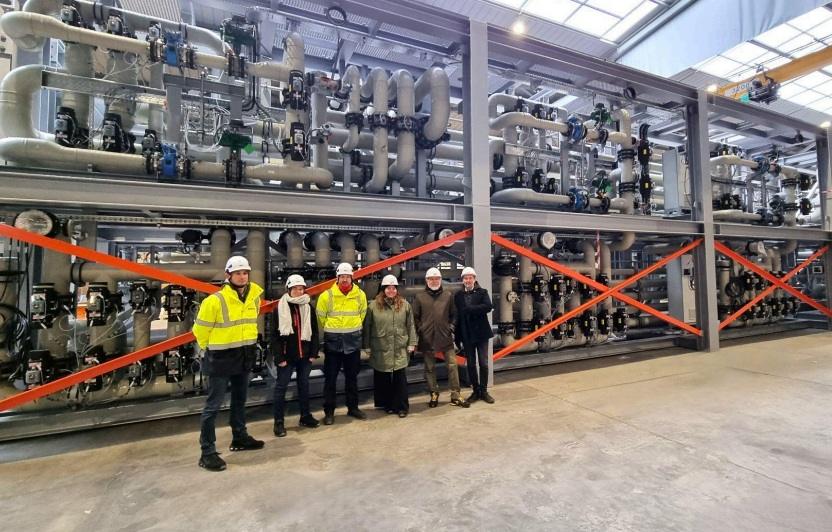
This classification underscores the high degree of confidence that institutional investors have in Eurodia’s ability to deliver tangible ecological benefits alongside financial returns. For Starquest and Yotta, Eurodia represents a "sovereign" industrial asset—a company that provides the technological independence necessary for Europe to maintain its industrial base while meeting the ambitious goals of the European Green Deal, which aims for climate neutrality by 2050.
The timeline of Eurodia’s growth reflects a broader trend in the venture capital and private equity markets. While general tech funding has seen volatility in recent years, "Climate Tech" and "Industrial Tech" have remained resilient. Eurodia’s jump from €34 million to €80 million in revenue over a 24-month period suggests that industrial players are no longer viewing decarbonization as an optional ESG (Environmental, Social, and Governance) goal, but as a core operational requirement to remain competitive in a carbon-constrained market.
Perspectives from Leadership and Investors
Mathieu Bailly, President of Eurodia Industrie, emphasized that the partnership with Starquest and Yotta is rooted in a shared vision for the future of manufacturing. "We are delighted to partner with Starquest Capital and Yotta Capital Partners, who share our group’s values and vision," Bailly stated. "Backing from such leading players in the eco-energy transition is a powerful endorsement. The growing number and scale of projects in this sector confirm the market’s strong momentum and fuel our ambition."
The sentiment was echoed by the investment community. Vincent Deltrieu, Managing Partner at Yotta Capital Partners, highlighted Eurodia’s role as a model for modern industrial growth. "Eurodia perfectly exemplifies the kind of industrial growth path we want to support at Yotta Growth Industry," Deltrieu said. "The company has achieved remarkable growth and is now scaling up in deep, rapidly accelerating markets, offering solutions that directly contribute to the decarbonisation and transformation of industry."
Industry analysts suggest that Eurodia’s success is partly due to its "brownfield" compatibility—meaning its technologies can often be integrated into existing industrial plants without requiring a complete teardown of current infrastructure. This significantly lowers the barrier to entry for legacy manufacturers looking to modernize their operations.
Broader Implications for Global Industry
The scaling of Eurodia’s operations carries significant implications for the global industrial landscape. As the company expands internationally—with a particular focus on the North American and Asian markets—it brings with it a methodology for "decoupled growth," where industrial output can increase while resource consumption and emissions decrease.

One of the most critical areas of impact is water scarcity. Industrial processes are notoriously water-intensive. Eurodia’s ability to cut water and chemical reagent use is becoming a vital survival tool for factories located in water-stressed regions. By purifying and recycling process water on-site, companies can mitigate the risks associated with tightening environmental regulations and rising utility costs.
Furthermore, the focus on Direct Lithium Extraction positions Eurodia as a key player in the "Green Industrial Revolution." As Europe and North America seek to build domestic battery supply chains to rival China’s dominance, technologies that can produce high-purity lithium quickly and sustainably will be in high demand. Eurodia’s decades of experience in purification give it a competitive edge over newer startups that may lack the experience of operating at a massive industrial scale.
Chronology of Eurodia’s Evolution
To understand the significance of this $20 million raise, one must look at the company’s trajectory over the last several decades:
- 1988: Eurodia Industrie is founded in France, initially focusing on specialized separation for the dairy and sugar industries.
- 1990s-2000s: The company expands its R&D into membrane technologies and electrodialysis, diversifying into the chemical and pharmaceutical sectors.
- 2010s: Eurodia identifies the growing need for environmental solutions and begins adapting its purification technologies for water treatment and resource recovery.
- 2023: The company records annual revenues of €34 million, driven by a growing interest in sustainable industrial processes.
- 2024-2025: Eurodia experiences a surge in demand for lithium extraction and chemical electrification projects, causing revenues to spike to €80 million.
- July 2026: Eurodia announces the €18 million ($20 million) investment from Starquest and Yotta to fund its next phase of global expansion and technical scaling.
Future Outlook and Conclusion
Looking ahead, Eurodia faces the challenge of maintaining its technological lead in an increasingly crowded market. However, its long history of operational excellence and its recent financial windfall provide a sturdy foundation. The company plans to use the new funds to hire additional specialized engineers, expand its manufacturing facilities in France, and establish stronger sales and support hubs in the United States and Singapore.
The success of Eurodia’s funding round serves as a bellwether for the "Deep Tech" industrial sector. It demonstrates that there is significant investor appetite for companies that offer pragmatic, scalable solutions to the climate crisis. As the industrial world moves away from the "take-make-waste" model of the 20th century, firms like Eurodia are providing the mechanical and chemical blueprints for a more circular, electrified, and carbon-neutral global economy.
In conclusion, the $20 million investment is more than just a capital raise; it is a strategic deployment of resources into a company that has proven it can translate complex science into industrial-scale environmental impact. For Eurodia, the journey from a specialized French engineering firm to a global leader in decarbonization is well underway, signaling a broader shift in how the world’s most essential industries will operate in the decades to come.
