

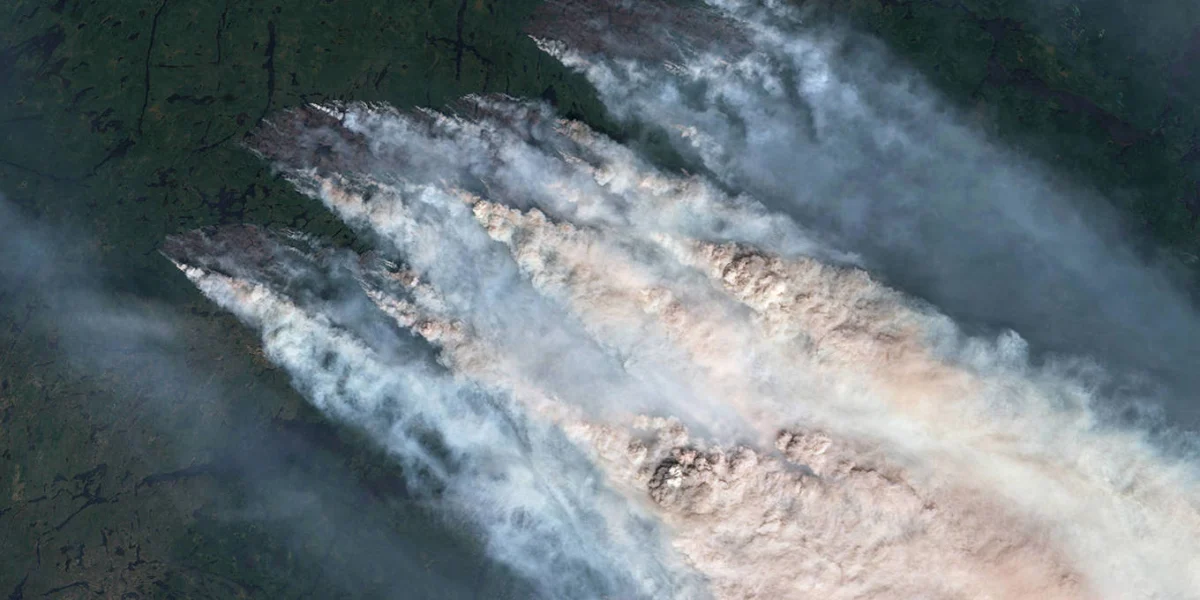
The global landscape of climate change has entered a new, contentious phase. For the first time, a major economic power has unilaterally imposed financial penalties on another nation for transboundary climate-driven harms, specifically targeting massive wildfires. This unprecedented move, initiated by the United States against Canada, has escalated a climate crisis from an issue of development, insurance, or emissions accounting into a full-blown security and trade dispute between two G7 economies. This action sets a significant and potentially imitable precedent for how nations will confront the escalating consequences of a warming planet, signaling a potential shift towards a more confrontational international approach.
From Floods in Africa to Smoke in North America: A Tale of Two Responses
The stark contrast in international responses to climate-induced disasters was recently highlighted by two distinct events. In mid-December 2025, southern Africa, particularly Mozambique’s Gaza province, was inundated by months of relentless rainfall. The resulting floods devastated infrastructure, including roads, bridges, clinics, and schools, affecting over 700,000 people and displacing more than 200,000. Tragically, an estimated 300 lives were lost, with the aftermath compounded by a surge in waterborne diseases. Scientific analysis by World Weather Attribution quickly concluded that climate change had intensified the rainfall by approximately 40%.
In the wake of such disasters in developing regions, the established international response typically involves attributing blame to climate change as a collective, abstract failure with no identifiable culprits. While victims are often impoverished, specific perpetrators are rarely pinpointed, and no direct financial compensation is sought from individual nations. This pattern, while familiar, has consistently left vulnerable regions to bear the brunt of climate impacts they did little to cause.
However, the narrative surrounding climate-driven harms has begun to shift dramatically, not on the flood-ravaged plains of Mozambique, but amidst the smoky skies over North America. As immense wildfires raged across Canada in the summer of 2025, blanketing much of the United States in an orange haze and even threatening to disrupt major international events, the U.S. response took an unexpected turn. President Donald Trump, rather than offering solidarity or mutual aid, demanded accountability. He declared that America had been "unnecessarily invaded" by Canadian pollution, citing alleged negligence in Canadian forest management. His proposed remedy was not cooperation, but the imposition of higher tariffs on Canadian goods.
The Dawn of Climate-Security Conflicts: A G7 Precedent
This U.S.-Canada dispute marks a critical turning point in the politics of climate change. The unilateral imposition of financial penalties for transboundary climate-driven harms represents a significant departure from previous diplomatic and economic approaches. What was once relegated to the realms of development aid, insurance claims, or complex emissions accounting has now been elevated to a bilateral security and trade conflict between two highly developed G7 economies. This development signals the emergence of the first international climate-security conflict, a scenario with profound implications for global governance and international relations.
The irony of this situation is particularly potent given the past advocacy of Canadian figures on climate finance. Mark Carney, former Governor of the Bank of England and former Prime Minister of Canada, spent a decade as a leading voice in the global financial community regarding climate change. As one of the first and most influential central bankers to publicly warn of the "tragedy of the horizon," Carney championed the idea that climate change posed significant financial risks, both physical and transitional, to the global economy. His work provided a crucial impetus for the financial industry to incorporate climate risks into its strategic planning.
Yet, within his own country, Carney, as Prime Minister, faced pressures from a domestic coalition advocating for increased oil and gas production. Simultaneously, the U.S. administration under President Trump employed tariffs as a coercive tool, demanding greater fossil fuel extraction and pipeline development. This dynamic underscores a concerning trend: scientific understanding of climate change is increasingly being sidelined in favor of political leverage. The Canadian smoke, a symptom of a global carbon problem, has become the basis for American tariffs, illustrating how coercive power can be weaponized to address climate-related costs. This echoes previous instances, such as the G20’s 2019 decision to halt multilateral funding for oil and gas exploration in developing countries, which prioritized the interests of developed nations over the growth prospects of emerging economies.
The Inevitable Rise of Transboundary Climate Harms
The U.S.-Canada dispute is likely the harbinger of a new era, one defined by the escalating and unavoidable consequences of physics. The January 2025 wildfires in Los Angeles, which were among the costliest disasters on record, were largely confined within a single nation’s borders. However, as climate change intensifies, such localized impacts will become increasingly rare. Smoke plumes, rising floodwaters, and drought-driven migration are phenomena that utterly disregard national boundaries.
Regions across the globe are already experiencing or are poised to face similar transboundary challenges. India, Pakistan, and China share the critical water resources of Himalayan-fed rivers, a potential flashpoint for conflict. Six nations currently contest the flow of the Mekong River. Senegal is increasingly absorbing Saharan dust blown from Mauritania, impacting air quality and public health. Furthermore, climate-induced displacement is creating significant migratory pressures on Europe. Each of these scenarios represents a potential "smoke tariff" waiting to be levied, a future instance where one nation might seek to financially penalize another for climate-related damages.
If the United States can impose tariffs on Canadian wildfire smoke, the question arises: should not countries like Mozambique, devastated by a climate crisis they did not create, be able to seek compensation from the world’s largest emitters? Small island developing states have already brought the issue of climate harm before the International Court of Justice (ICJ). The U.S.-Canada precedent could embolden them to cite this recent event as evidence that climate-induced damage constitutes an actionable interstate injury. If such harm is demonstrable, quantifiable, and attributable to specific actors, the principle of "someone must pay" becomes increasingly difficult to ignore.
The Perilous Economics of a Securitized Climate Response
The economic implications of a fragmented, "everyone-for-themselves" approach to climate change are profoundly detrimental. If Europe, for instance, were to adopt a protectionist "fortress" mentality in response to climate impacts, it could significantly hinder its own decarbonization efforts, potentially leading to a loss of approximately 14% of its potential economic output by 2050, according to some analyses.
The insurance industry is already sounding alarms about this emerging fragmentation. Capital is reportedly being trapped behind national borders, leading to the formation of regional risk pools. These pools, by their very nature, exhibit high correlation, making diversification impossible and causing insurance coverage to recede from areas where climate risks are most concentrated. The response of imposing tariffs on climate damage will only accelerate these trends, further destabilizing global financial markets and hindering adaptation efforts.
Charting a Path Forward: Three Priorities for a Cooperative Future
Instead of reacting to climate crises on an ad-hoc basis, policymakers must prioritize three key areas to navigate this escalating challenge.
1. Treating Climate Resilience as Shared Security
The first priority is to fundamentally reframe climate resilience not as a national responsibility, but as a form of shared security. While Mark Carney’s emphasis on the universal responsibility to combat climate change is valid, his message has, unfortunately, not been universally heeded. Despite decades of cooperative efforts, such as joint U.S.-Canada firefighting initiatives, tariffs now appear to be a more readily available tool for assigning blame. However, a more constructive approach would involve earmarking a portion of any tariff revenue for joint investments in critical areas like fire management, watershed protection, and grid resilience. Such collaborative investments would serve to neutralize the weaponizing potential of these policies and foster genuine cooperation.
2. Establishing Mechanisms for Adjudication
Secondly, it is imperative to establish robust international mechanisms for adjudicating climate-related disputes before further escalation occurs. The world urgently requires a common framework, grounded in scientific evidence rather than political leverage, for assessing transboundary climate harms. Artificial intelligence could potentially play a significant role in developing such solutions, helping to answer critical questions about contributions to emissions, failures to adapt, and subsequent liabilities. Small island states and the V20 group of vulnerable countries have already been at the forefront of this conversation, securing an ICJ advisory opinion and a United Nations loss-and-damage fund. These initiatives must be strengthened, and trade rules need to clearly distinguish between legitimate carbon levies and protectionist measures disguised as climate policy.
3. Preventing Sovereignty Claims from Undermining Decarbonization
The third and final priority is to prevent the assertion of national sovereignty claims from becoming an obstacle to essential decarbonization efforts. The underlying assumption in the U.S.-Canada dispute appears to be that climate costs are solely the result of individual negligence, rather than a shared consequence of accumulated global emissions. This line of thinking risks allowing the largest historical emitters to convert the costs of their own inaction into political and economic leverage. A more productive alternative to the divisive logic of border tariffs lies in developing resilient and efficient carbon markets. Such markets would coherently and predictably link emissions reductions, market access, and climate adaptation finance and investment. The time may indeed be ripe for a serious global discussion on comprehensive compliance markets that incentivize emissions reductions across all nations.
The smoke that once obscured the skies over New York and New Jersey has eventually cleared, allowing for events like the World Cup to proceed. However, the precedent set by the U.S.-Canada dispute is undeniable. For years, climate activists have questioned whether nations would cooperate to prevent harm. Now, the critical question facing governments worldwide is how they will respond as the harms inevitably mount. Will they find more constructive solutions than simply billing each other at the border? The nascent climate-security conflict offers little cause for immediate optimism, but the window for finding a more cooperative and equitable path forward remains open.
