

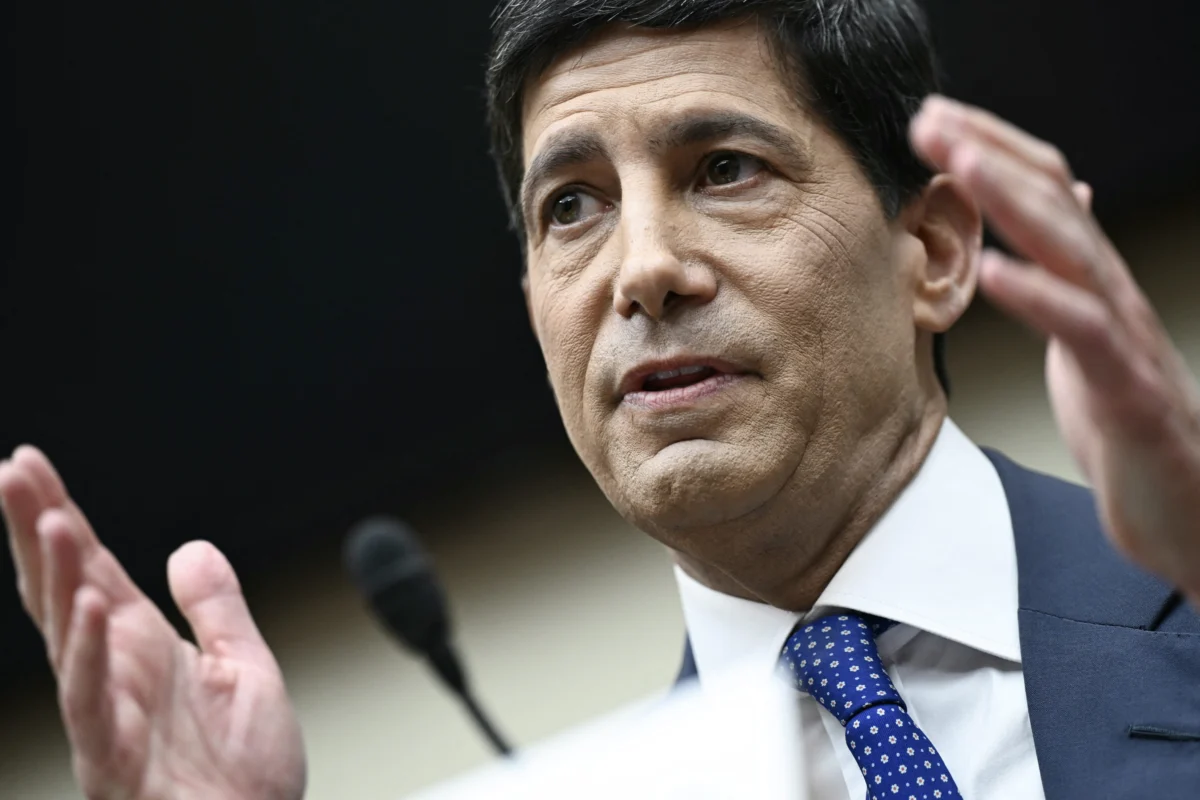
Kevin Warsh, the new Federal Reserve Chair, has quickly distinguished himself not just by his policy pronouncements, but by a distinctive vocabulary that has left economists and market watchers alike searching for deeper meaning. While not reaching the enigmatic heights of his predecessor Alan Greenspan, Warsh has adopted a handful of recurring phrases that, due to their repetition and inherent ambiguity, warrant closer examination. Across five public appearances, from his nomination hearing in April to his inaugural press conference, a roundtable in Portugal, and two congressional testimonies, Warsh has strategically employed phrases such as "family fight" (13 times), "first principles" (11 times), and "inflation is a choice" (six times). The challenge for those observing the Federal Reserve lies not in counting these instances, but in deciphering their implications for monetary policy, especially from a leader who appears committed to a more parsimonious communication style than his predecessors. This premium on understanding his chosen words has prompted an in-depth analysis by five prominent Federal Reserve watchers, shedding light on the potential underpinnings of Warsh’s policy philosophy.
The Nuances of a "Family Fight"
The recurring phrase "family fight" suggests an internal dynamic within the Federal Open Market Committee (FOMC) that Warsh is keen to acknowledge, and perhaps, cultivate. For Dan Greenhaus, strategist at Solus Alternative Asset Management, this implies an encouragement of robust debate. "If Chair Warsh encourages more open debate around policy and creates an environment where prevailing assumptions can be challenged rather than simply accepted, that should ultimately lead to better policymaking," Greenhaus posits. He emphasizes that the benefit is less about immediate policy shifts and more about the long-term enhancement of the decision-making process.
Loretta Mester, former President of the Cleveland Fed, offers a perspective rooted in her direct experience. She asserts that the "family fight" likely refers to ensuring an environment where "all views/arguments to be heard" at FOMC meetings. Mester notes that this atmosphere was already present during her tenure, and she never felt constrained in expressing her views. However, she also cautions about the practicalities of a 19-member committee, suggesting that without some structure, the loudest voices might dominate, paradoxically leading to fewer views being articulated.
Claudia Sahm, chief economist at New Century Advisors, views Warsh’s preference for a "livelier back-and-forth" as a stylistic one, more comfortable for him. She anticipates that the format of FOMC meetings, often highly scripted, is unlikely to fundamentally alter policy decisions, especially given the large number of participants.
Mark Spindel, a Fed author and chief investment officer at Potomac River Capital, interprets "family fight" as Warsh’s aphorism for the inherent debates within the FOMC and the Board of Governors. He believes Warsh sees these as natural disagreements that, like actual family disputes, are best kept within the family. Spindel finds this aspect problematic, as many committee members appear more willing to express dissenting opinions publicly. He also suggests it could be a tactic for Warsh to deflect external pressures from politicians and markets. Michael Feroli, chief U.S. economist at JPMorgan, sees the phrase as Warsh’s attempt to be "folksy" while still adhering to the tradition, established under Ben Bernanke, of publicly welcoming dissenting opinions.
Re-examining "First Principles"
Warsh’s invocation of "first principles" signals a desire to return to foundational economic concepts and reassess the very underpinnings of monetary policy. Spindel suggests this phrase is a broad enough canvas for Warsh to imbue with his specific policy agenda, particularly in the context of structural reform. He references Warsh’s comments in Sintra, where he noted a shared "willingness to go back to first principles" among central banking leaders, questioning the current processes of monetary policy making. Spindel links this to Warsh’s reintroduction of monetary aggregates and his assertion that "monetary policy should have something to do with money." He critically notes that traditional economic tools, like the Phillips Curve, appear to be downplayed in Warsh’s "principled" approach. Warsh’s pointed criticism of past inflation misses and his implication that his predecessors, including Jerome Powell, were too slow to tighten policy, highlight his belief that departures from these "first principles"—including the embrace of FAIT (Flexible Average Inflation Targeting)—have led to suboptimal outcomes.
Sahm concurs that "first principles" is code for a comprehensive re-evaluation. Warsh’s repeated calls for "regime change" at the Fed, she argues, are embodied in this phrase. However, Sahm expresses skepticism about Warsh’s ability to unilaterally redefine these principles, noting that demonstrating flaws in existing assumptions is insufficient without offering viable alternatives. Despite his task forces, she anticipates incremental improvements rather than a complete paradigm shift.
Mester views "first principles" as an invitation to "rethink the way the Fed goes about achieving its dual mandate goals of price stability and maximum employment without preconceived notions or assumptions." She advocates for a fundamental re-evaluation of approaches to communication, inflation and labor market assessment, balance sheet operations, and data sources. This re-evaluation, she believes, frees the committee from the inertia of minor tweaks and allows for the consideration of genuinely new strategies.

Feroli connects the "first principles" remark to Warsh’s earlier critique of academics from elite institutions influencing monetary policy, suggesting a belief that the Fed has become too detached from basic economic tenets. He contrasts this with Jerome Powell’s less defensive posture regarding his academic background.
Greenhaus elaborates on the significant implications of this approach. He interprets "getting back to first principles" as a fundamental question about the Fed’s mandate and its fulfillment. This suggests a potential narrowing of the Fed’s role, with increased skepticism towards its involvement in areas beyond monetary policy, such as regulatory policy and climate-related issues. Greenhaus believes Warsh aims to reassess the expansion of the Fed’s responsibilities since the 2008 Global Financial Crisis.
"Inflation is a Choice": Accountability and Control
Warsh’s assertion that "inflation is a choice, and the Fed must take responsibility for it" is a direct echo of Milton Friedman’s seminal observation that "inflation is always and everywhere a monetary phenomenon." Mester elaborates on this, linking it to the Fed’s core responsibility of ensuring aggregate demand does not outpace aggregate supply over the long run to maintain price stability. She acknowledges that short-term supply disruptions can cause temporary price increases, which the Fed might "look through" due to policy lags. However, for persistent or multiple supply shocks, like those experienced post-pandemic, Mester stresses the Fed’s imperative to ensure monetary policy is sufficiently restrictive to align demand with supply, thereby preventing sustained inflation.
Sahm agrees with the Friedman connection but points out Warsh’s omission of a crucial timeframe. While the Fed’s current framework acknowledges that longer-run inflation is primarily driven by monetary policy, Warsh’s phrasing, by omitting the "longer run," potentially obscures the impact of short-term supply shocks. She believes this could lead to public confusion about the Fed’s capabilities.
Greenhaus interprets this statement as a signal that Warsh will be less inclined to attribute persistent inflation to exogenous factors. His message, "the buck stops with us," implies a greater emphasis on the Fed’s own role in managing inflation. While not claiming responsibility for every shock, Warsh, in this view, holds the Fed accountable for preventing these shocks from becoming entrenched inflationary pressures.
Feroli finds an apparent contradiction between Warsh’s "inflation is a choice" statement and his earlier remark, "I don’t believe that we have a cruel choice." He argues that the modern consensus is that central banks control long-run inflation. However, the idea of no short-run tradeoff between growth and inflation raises questions about why a Fed would ever "choose" inflation. Feroli suggests that the very independence of central banks is predicated on their ability to resist the temptation to exploit short-run tradeoffs for political gain at the expense of long-run price stability.
Spindel, echoing his analysis of other phrases, sees "inflation is a choice" as open to interpretation. He notes its consistency with the FOMC’s restated inflation mandate. However, he recalls Warsh’s struggle to articulate specific actions when pressed by Senator John Kennedy on how he would address inflation, ultimately suggesting higher interest rates. Warsh’s criticism of predecessors for their perceived comfort with higher inflation rates underscores his belief that the Fed is fundamentally responsible for the price of money and must act when it is too cheap.
Broader Implications and Future Outlook
The consistent deployment of these phrases by Chairman Warsh suggests a deliberate effort to reframe the Federal Reserve’s operational philosophy and communication strategy. The emphasis on "family fights" could foster a more intellectually rigorous FOMC, leading to better long-term policy outcomes. The call to return to "first principles" signals a potential recalibration of the Fed’s mandate and a critical examination of its expanded role since the financial crisis, possibly leading to a more narrowly defined focus on core monetary policy. The assertion that "inflation is a choice" underscores a commitment to price stability and a clear accountability for the Fed’s actions in managing inflation.
However, the inherent ambiguity of these phrases also presents challenges. Market participants and the public will need to closely monitor Warsh’s subsequent actions and policy decisions to fully grasp their practical implications. The Fed’s ability to navigate complex economic environments, including supply-side shocks and evolving global dynamics, will be tested against this backdrop of Warsh’s distinct linguistic approach. As the Federal Reserve continues its work under Chairman Warsh, the decoding of his favored phrases will remain a critical exercise for understanding the trajectory of U.S. monetary policy.
