

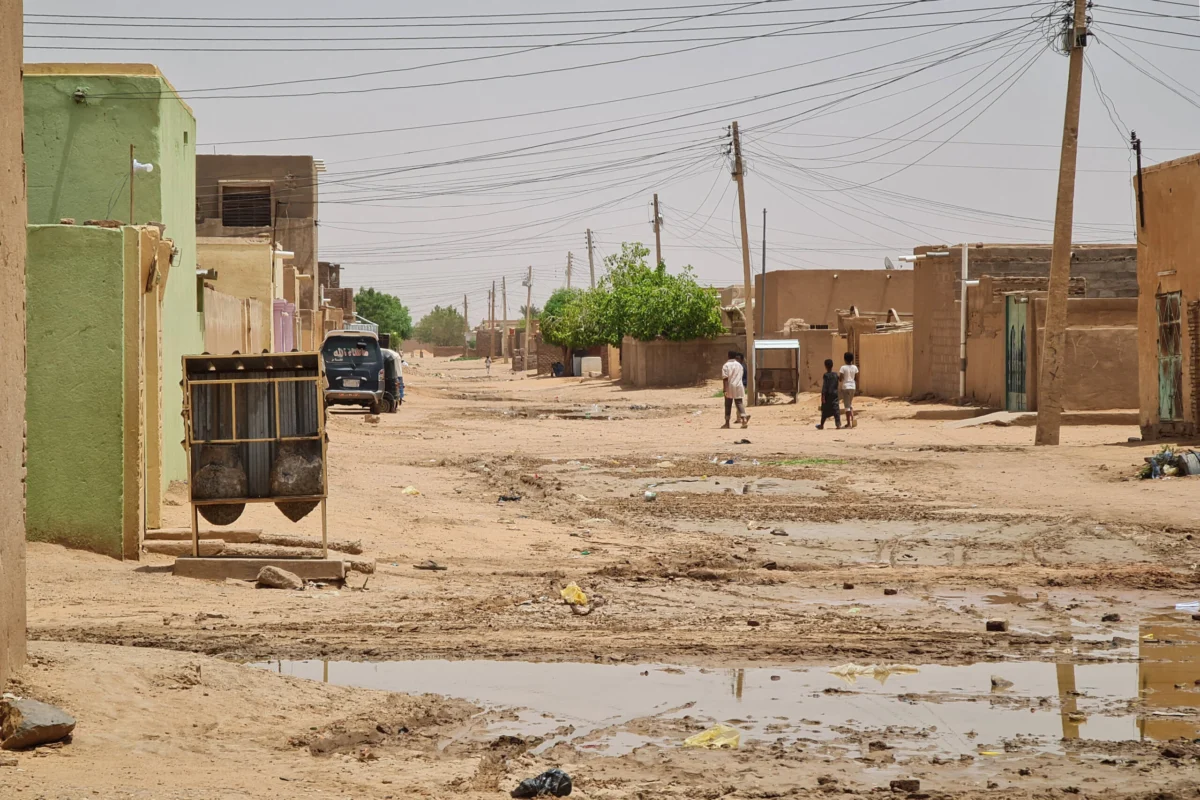
A devastating airstrike in the Sudanese capital of Khartoum on Saturday resulted in the deaths of at least 17 individuals, including five children, as the violent power struggle between the nation’s two most powerful generals continues to ravage urban centers. The strike, which hit the densely populated Yarmouk neighborhood in the southern reaches of the city, marks one of the deadliest single incidents in the ongoing conflict between the Sudanese Armed Forces (SAF) and the paramilitary Rapid Support Forces (RSF). According to health officials and local volunteer groups, the bombardment leveled at least 25 residential homes, leaving a trail of destruction that underscores the increasing peril faced by civilians trapped in the crossfire of a war that shows no signs of abatement.
The Ministry of Health confirmed that the casualties included women and elderly residents, with dozens more suffering from various degrees of injury. While the specific nature of the ordnance—whether delivered by a manned fixed-wing aircraft or an unmanned aerial vehicle—remains unverified, the SAF has consistently utilized its air superiority to target RSF positions throughout the capital. Conversely, the RSF has increasingly deployed anti-aircraft weaponry and reportedly utilized drones to counter the military’s aerial dominance. This latest escalation in Khartoum coincides with a worsening humanitarian catastrophe that has seen millions displaced and the nation’s infrastructure pushed to the brink of total collapse.
The Tragedy in Yarmouk and the Mechanics of Urban Combat
The Yarmouk district, the site of Saturday’s tragedy, is strategically significant due to its proximity to a major military industrial complex controlled by the SAF. For weeks, the area has served as a focal point for intense ground battles and shelling. Residents reported that the strike occurred during the morning hours, catching families inside their homes. The Emergency Room, a grassroots network of local volunteers and activists that has become the primary provider of humanitarian aid in the absence of international NGOs, released harrowing footage of the aftermath. The images depicted residents digging through piles of brick and twisted metal with their bare hands in a desperate search for survivors.
In a formal statement, the RSF accused the military’s air force of "cowardly bombing" civilian quarters, claiming that their forces successfully downed a MiG fighter jet during the engagement. These claims, however, have not been independently verified by international observers or satellite imagery. The Sudanese military has largely remained silent regarding specific allegations of civilian collateral damage in Yarmouk, though spokespersons have previously maintained that all strikes are directed at "rebel gatherings" and "logistical hubs" used by the paramilitary group.
The tactical reality of the Khartoum conflict has turned the city into a labyrinthine battlefield. The RSF, lacking the heavy armor and air power of the regular army, has adopted a strategy of embedding itself within residential neighborhoods, occupying private homes, hospitals, and schools to shield its fighters from aerial bombardment. This "human shield" dynamic has led the SAF to conduct frequent airstrikes and heavy artillery barrages on built-up areas, inevitably leading to high civilian casualty rates and the systematic destruction of the city’s housing stock.
Chronology of the Conflict: From Transition to Total War
The current war did not emerge in a vacuum but is the culmination of a fractured political transition that began with the 2019 ouster of longtime autocrat Omar al-Bashir. The following timeline outlines the descent from a hopeful democratic movement to the current state of civil war:
- April 2019: Mass protests lead to the military’s removal of Omar al-Bashir. A precarious power-sharing agreement is established between civilian leaders and the military.
- October 2021: General Abdel Fattah al-Burhan, head of the SAF, and General Mohamed Hamdan Dagalo (known as Hemedti), head of the RSF, unite to lead a military coup, dissolving the civilian-led transitional government.
- Late 2022 – Early 2023: Tensions simmer between Burhan and Hemedti over the integration of the RSF into the regular army. Disagreements over the timeline for integration and the future chain of command stall a proposed return to civilian rule.
- April 15, 2023: Full-scale hostilities break out in Khartoum and spread rapidly to other regions, including Darfur. Both sides trade blame for the initial spark of violence.
- May 2023: The United States and Saudi Arabia broker the "Jeddah Declaration," a series of short-term ceasefires intended to allow humanitarian access. Most ceasefires are violated within hours of taking effect.
- June 2023: The conflict shifts toward a war of attrition. The assassination of the Governor of West Darfur and the escalation of airstrikes in Khartoum signal a more brutal phase of the war.
Data and the Scale of the Humanitarian Catastrophe
The human cost of the conflict is staggering and continues to grow exponentially. As of mid-June 2023, the following data points illustrate the depth of the crisis:
- Displacement: Over 2.2 million people have been uprooted from their homes. This includes approximately 1.7 million internally displaced persons (IDPs) and over 500,000 who have sought refuge in neighboring countries such as Chad, Egypt, and South Sudan.
- Casualties: While the official death toll is cited in the low thousands, medical groups and the UN suggest the actual figure is significantly higher, as many bodies cannot be recovered from active combat zones or are buried in unmarked graves.
- Healthcare Collapse: In Khartoum, an estimated 60% to 80% of hospitals are non-functional. Facilities that remain open face acute shortages of medicine, oxygen, and electricity.
- Food Insecurity: The World Food Programme (WFP) warns that more than 19 million people—nearly 40% of the population—are facing hunger, a situation exacerbated by the looting of food warehouses and the disruption of the planting season.
The Darfur Front: Ethnic Dimensions and Targeted Killings
While the airstrikes in Khartoum capture international headlines, the situation in the western region of Darfur has taken an even more ominous turn. The conflict there has reignited old ethnic fault lines, pitting the RSF and allied Arab militias against non-Arab groups. The city of Genena (El Geneina), the provincial capital of West Darfur, has become the epicenter of what many observers describe as ethnic cleansing.
The recent abduction and subsequent slaying of West Darfur Governor Khamis Abdalla Abkar has shocked the international community. Abkar was killed just hours after he gave a television interview accusing the RSF and its allied militias of committing "genocide" against the Masalit people. The RSF has denied involvement in the assassination, attributing it to "longstanding tribal frictions," but the UN and various human rights organizations have pointed to credible reports of RSF involvement in the targeted killing of local leadership and the systematic burning of IDP camps.
The involvement of the "Janjaweed"—the notorious Arab militias that gained infamy during the Darfur genocide of the early 2000s—is a particularly alarming development. Many of these fighters have been absorbed into the RSF structure, and their return to the battlefield has raised fears that the horrors of the past are being repeated under the cover of the current national power struggle.
Official Responses and Diplomatic Stagnation
The international response to the Sudanese crisis has been characterized by a flurry of diplomatic activity that has yielded little tangible result on the ground. The United Nations, the African Union, and the Intergovernmental Authority on Development (IGAD) have all called for an immediate cessation of hostilities, but neither General Burhan nor Hemedti has shown a genuine willingness to negotiate a permanent peace.
In the wake of the Yarmouk airstrike, the UN’s humanitarian coordinator for Sudan expressed "deep horror" at the continued targeting of residential areas. "The rules of war are being ignored with impunity," the statement read, calling for both parties to adhere to international humanitarian law.
The United States has imposed sanctions on several key companies controlled by the SAF and the RSF, aiming to choke off the financial resources used to fund the war effort. However, analysts suggest that both generals have significant "off-budget" wealth and external backers that allow them to sustain a prolonged conflict. The Jeddah talks, while providing a platform for communication, have been criticized for failing to include civilian political stakeholders and for the lack of a robust monitoring mechanism to enforce ceasefires.
Analysis: Implications for Sudan and the Region
The persistence of the conflict in Sudan carries profound implications for the stability of the Horn of Africa and the Sahel. A total state collapse in Sudan would create a massive security vacuum in a region already plagued by insurgency, economic instability, and climate-driven migration.
- State Fragmentation: There is a growing risk that Sudan may split into competing fiefdoms. If neither side can achieve a decisive military victory, the country could see a "Libyanization," where different regions are controlled by rival governments and militias with varying degrees of international legitimacy.
- Regional Spillover: The influx of refugees into Chad and South Sudan is straining the resources of countries already facing their own internal crises. Furthermore, the involvement of regional actors—some providing logistical support or weapons to the warring parties—threatens to turn Sudan into a theater for a larger proxy war.
- Economic Ruin: Khartoum was the heart of Sudan’s economy. The destruction of its industrial base, the looting of its banks, and the flight of its middle class mean that even if the war ended today, the path to recovery would take decades.
- The Death of the Democratic Dream: For the millions of Sudanese who marched in 2019 for "Freedom, Peace, and Justice," the current war represents the ultimate betrayal. The systematic destruction of civil society and the empowerment of warlords make the prospect of a civilian-led democracy feel more distant than ever.
As the smoke clears from the Yarmouk neighborhood and the families of the 17 victims begin the grim task of burial, the international community faces a critical juncture. Without a more concerted and unified global effort to pressure the warring generals into a genuine settlement, the airstrikes on Khartoum and the massacres in Darfur are likely to continue, further hollowing out a nation that was once a beacon of revolutionary hope in the Arab world.
