

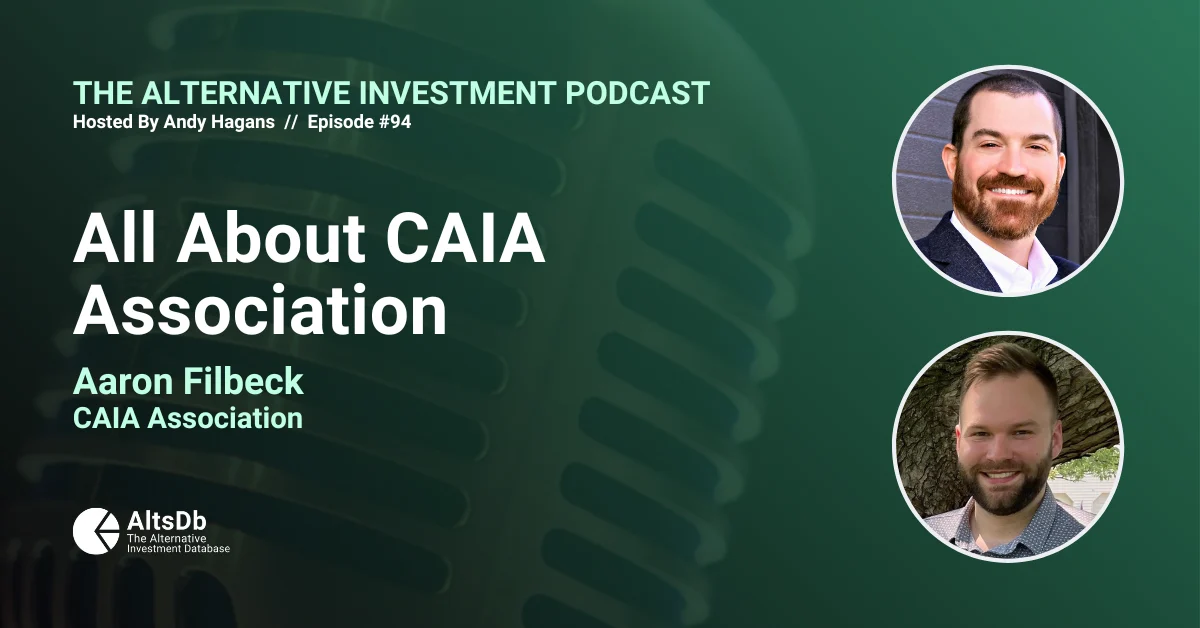
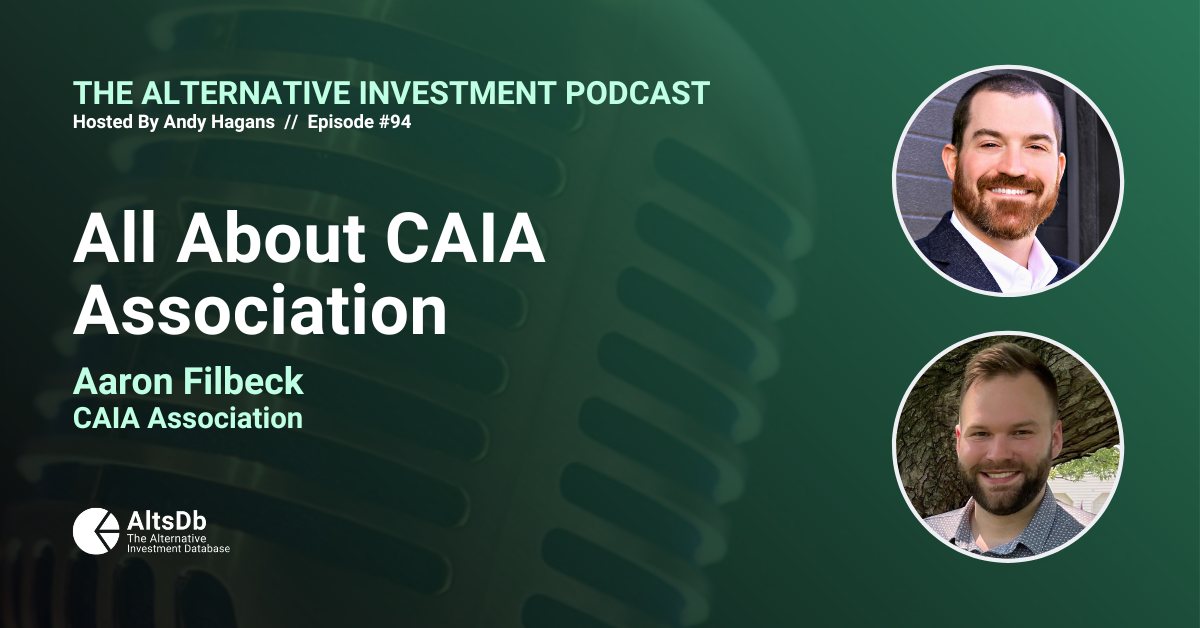
The landscape of financial advisory is undergoing a significant transformation, with alternative investments emerging as a crucial component for enhancing client portfolios and driving business growth. However, the inherent complexity of these diverse asset classes presents a formidable challenge for many financial advisors, creating a substantial education gap within the industry. To address this critical need, the CAIA Association, a global professional body dedicated to advancing knowledge in alternative investments, is actively working to equip advisors with the expertise necessary to navigate this evolving market. Aaron Filbeck, Managing Director and Head of UniFi at CAIA, recently discussed the association’s mission and initiatives on The Alternative Investment Podcast, underscoring the profound impact of enhanced advisor education on client outcomes and the broader financial ecosystem.
The Growing Demand for Alternatives and the Persistent Education Hurdle
Alternative investments, encompassing strategies such as private equity, venture capital, hedge funds, real estate, and infrastructure, have moved beyond their traditional institutional investor base to become increasingly accessible to individual investors. This democratization, however, has outpaced the industry’s capacity to adequately educate the advisors who serve these clients. The complexity of structuring, valuation, liquidity, and regulatory frameworks surrounding alternative assets requires a specialized understanding that many financial professionals currently lack.
"For financial advisors, alternative investments have the potential to enhance client portfolios, and to improve business outcomes," stated Filbeck. "But alternatives can be a complex ‘beast,’ and the education gap remains a significant challenge in the advisor community." This sentiment is echoed across the financial services industry, with numerous studies and industry surveys highlighting advisor confidence and knowledge as key barriers to broader alternative investment adoption. A 2023 Cerulli Associates report, for instance, indicated that while advisor interest in alternatives is high, a significant portion still feel ill-equipped to discuss or recommend these products to their clients.
CAIA Association: A Global Leader in Alternative Investment Education
The CAIA Association has positioned itself as a pivotal organization in bridging this knowledge chasm. With a global membership exceeding 13,000 individuals across approximately 100 countries, the association is committed to fostering greater alignment, transparency, and knowledge for all investors, with a particular focus on the alternative investment space.
"We’re a global professional body dedicated to creating greater alignment, transparency and knowledge for all investors, but we have a particular focus on the world of alternative investments," Filbeck explained. The association’s approach is multi-faceted, encompassing formal education programs, thought leadership, and advocacy. This comprehensive strategy aims to elevate the industry standard by providing accessible and rigorous educational resources.
The CAIA membership base is remarkably diverse, reflecting the multifaceted nature of the alternatives ecosystem. It includes limited partners (LPs) and general partners (GPs), financial advisors, regulators, and distribution professionals. This broad representation allows CAIA to gain a holistic perspective on the industry’s challenges and opportunities, ensuring its educational offerings are relevant and impactful across various stakeholder groups.
The CAIA Charter Program: Cultivating Allocator Mindsets
At the core of CAIA’s educational framework is the CAIA Charter program, a two-level examination process designed to provide in-depth knowledge of institutional-quality alternative investments. This rigorous program typically requires candidates to dedicate between 200 to 250 hours of self-study per level, totaling 400 to 500 hours for successful completion.
Level I of the CAIA Charter introduces candidates to a spectrum of alternative strategies, including private equity, real assets, hedge fund strategies, and structured credit. It delves into the fundamental understanding of these strategies, their risk-return profiles, and their operational mechanics. Level II then shifts the focus to a top-down, allocator’s perspective, emphasizing portfolio management, risk management, investment and operational due diligence, and the integration of environmental, social, and governance (ESG) factors.
"We’re really teaching you to think like an allocator," Filbeck stated, highlighting the program’s core objective. This "allocator mindset" is crucial, as it equips professionals with the ability to understand how various alternative strategies can be integrated into a broader portfolio to meet specific investment goals and objectives. This perspective is valuable not only for institutional investors but also for financial advisors seeking to construct diversified portfolios for their individual clients. The program’s evolution over the past two decades reflects the dynamic nature of the alternatives market, consistently adapting its curriculum to align with emerging trends and institutional allocation patterns.
UniFi by CAIA: Tailored Education for the Private Wealth Management Industry
Recognizing the specific educational needs of the wealth management sector, CAIA Association launched UniFi by CAIA. This platform is specifically designed to educate asset managers, intermediaries, and individual Registered Investment Advisors (RIAs) on the intricacies of alternative investments.
"UniFi by CAIA is a learning platform that was announced by CAIA Association last year, so 2022, and is really designed to educate the private wealth management industry on alternatives," Filbeck explained. UniFi offers a more accessible learning format, primarily delivered online through videos and structured instruction, differentiating it from the more intensive self-study required for the CAIA Charter.
The platform currently features a flagship certificate program, "Fundamentals of Alternative Investments," a 20-hour course providing a foundational overview of alternative strategies. Looking ahead, UniFi is expanding its offerings with a series of micro-credentials, shorter, focused programs delving deeper into specific topics. The initial micro-credentials will cover private debt and digital assets, catering to the growing interest and need for specialized knowledge in these areas.
The design of UniFi caters to professionals who may not require the deep technical expertise of the CAIA Charter but need to become conversant in alternative investments to effectively serve their clients. This includes sales teams at asset management firms, advisors at wirehouses, and independent RIAs. The platform aims to empower these professionals to ask better questions, communicate effectively with clients, and determine the appropriate role of alternatives within client portfolios.
The FDP Charter: Bridging Data Science and Finance
In recognition of the increasing influence of data science and technology in financial services, CAIA Association also offers the Financial Data Professional (FDP) Charter. This program operates at the intersection of data science and finance, equipping professionals with the skills to navigate the burgeoning field of quantitative finance.
"The program is really the intersection of data science and financial services," Filbeck elaborated. The FDP Charter addresses the growing need for professionals who can bridge the gap between data scientists and traditional financial practitioners. It aims to help financial professionals better understand data science methodologies and translate complex data into actionable investment insights, thereby mitigating the risks of overfitting data or developing algorithms that lack practical financial relevance. The program consists of a single-level examination and has been gaining traction as the industry increasingly embraces data-driven decision-making.
Addressing the Education Gap: Progress and Future Outlook
The journey to close the alternative investment education gap has been a long one, marked by the evolution from early, product-led approaches to a more client-centric educational philosophy. Filbeck characterized the initial wave of liquid alternatives around a decade ago as a "democratization wave that probably went pretty poorly, you know, relative to what it could have been in terms of education." This was often a case of leading with product and hoping for the best, rather than starting with client needs.
However, the landscape has shifted. "Compared to what we saw 10 years ago with kind of this move in private capital, which has, you know, really accelerated over the past couple of years, I would say that we’ve done a much better job than we did, but I think there’s still a lot of ground to cover in terms of providing education," Filbeck noted.
The current trend, according to Filbeck, is a more optimistic shift towards a client-centric approach. "The point isn’t really that I understand the product, the point isn’t that I know the ins and outs of a DST, the point is that I understand how all this stuff is a part of improving outcomes for clients," he emphasized. This means prioritizing client goals and objectives before delving into specific product details. This client-first methodology is seen as a significant step forward, reversing the previous trend of trying to retrofit products into client portfolios.
Technological advancements in educational delivery have also played a crucial role. Online platforms, video content, and interactive learning modules have made education more accessible and palatable for a wider audience. This improved delivery mechanism, coupled with a growing recognition of the need for specialized knowledge, is fostering a more proactive approach to education within the industry.
"I think that the technology has certainly gotten better in terms of delivering education," Filbeck observed. "And I’m an optimist on a lot of the stuff. I do see more and more conversations kind of being…moving towards, you know, the client perspective and maybe away from kind of leading with the product."
The Role of Client Demand in Driving Education
The increasing engagement of clients, particularly younger demographics, in seeking out alternative investment opportunities is also acting as a powerful catalyst for advisor education. As clients become more informed and curious about diverse asset classes like cryptocurrencies, private equity, and real estate, advisors are compelled to enhance their understanding to meet these demands.
"You’ve got a client base that’s much more engaged with some of these more interesting esoteric strategies," Filbeck remarked. This client-driven demand serves as a significant motivator for advisors who may have previously hesitated to engage with alternatives. The "stick" of potential client dissatisfaction or missed opportunities is now a strong impetus for advisors to proactively seek out the necessary education.
Looking Ahead: A Collaborative Effort
The CAIA Association, through its comprehensive suite of programs and its commitment to global reach, is playing a vital role in addressing the persistent education gap in alternative investments. By fostering a culture of continuous learning and providing accessible, relevant educational resources, CAIA is empowering financial professionals to better serve their clients, navigate the complexities of the alternatives market, and ultimately contribute to improved financial outcomes for individuals and institutions alike. As the alternatives industry continues its rapid expansion, the imperative for robust and accessible education will only intensify, with organizations like CAIA at the forefront of this critical endeavor.
For those interested in learning more about CAIA Association’s educational programs, their website, caia.org, serves as a central hub. The association also maintains an active presence on social media platforms including Twitter, LinkedIn, and Instagram, providing further avenues for engagement and information.
