

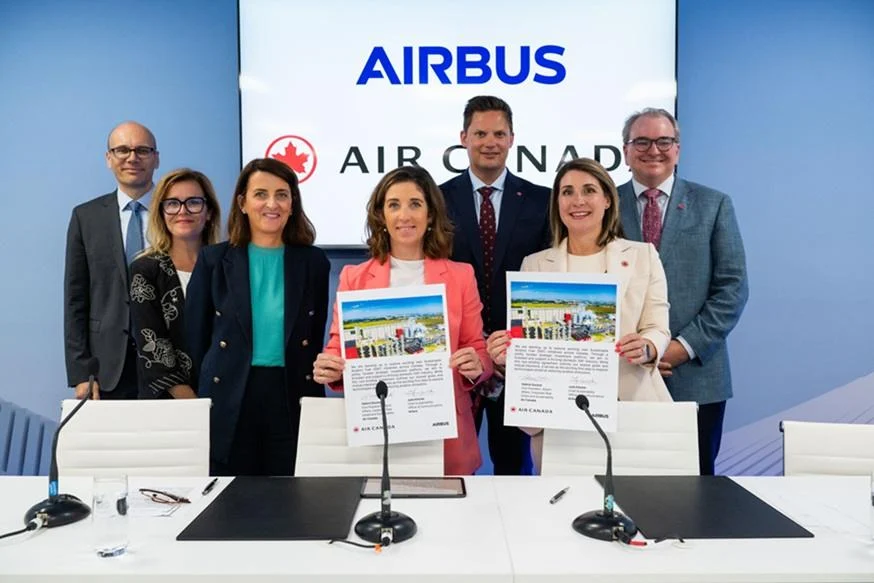
In a significant move to accelerate the decarbonization of the North American aviation sector, Airbus and Air Canada have announced the establishment of a jointly funded Sustainability Co-Investment Platform. This strategic initiative is designed to catalyze the development of a commercial-scale sustainable aviation fuel (SAF) industry within Canada, addressing one of the most persistent hurdles in the transition to green flight: the lack of localized, high-volume production. The two aerospace leaders have committed an initial investment of up to approximately CAD $13.7 million (US $10 million) through the platform, signaling a long-term partnership aimed at transforming the fuel supply chain for the nation’s aviation ecosystem.
The aviation industry currently accounts for approximately 2% to 3% of global carbon dioxide emissions. For major carriers like Air Canada and manufacturers like Airbus, the path to net-zero emissions relies heavily on the adoption of SAF, which can reduce lifecycle greenhouse gas (GHG) emissions by up to 80% compared to conventional jet fuel. However, the global supply of SAF remains a fraction of what is required to meet industry targets, and the cost of production remains significantly higher than that of fossil-based kerosene. This new investment platform seeks to bridge that gap by funding projects that can reach a Final Investment Decision (FID), effectively moving Canadian SAF production from the theoretical stage to industrial reality.
The Strategic Framework of the Co-Investment Platform
The primary objective of the Sustainability Co-Investment Platform is to identify and accelerate domestic SAF projects that demonstrate technical viability and economic potential. By providing early-stage capital and strategic backing, Airbus and Air Canada intend to de-risk these projects for other private and public investors. The platform serves as more than just a financial vehicle; it is a collaborative hub intended to align the interests of aircraft manufacturers, airline operators, and fuel producers.
A critical component of this initiative is the advancement of a jointly agreed-upon Canadian SAF project toward its Final Investment Decision. Achieving an FID is a major milestone in any energy project, representing the point at which the board of directors or the primary investors commit to the full construction and operation of a facility. By focusing on this specific hurdle, the partnership aims to overcome the "valley of death" often associated with scaling new green technologies.
Furthermore, both companies have emphasized that while their private capital is a necessary spark, the long-term success of a Canadian SAF industry requires a "supportive policy environment." This includes ongoing engagement with federal and provincial governments to establish structural frameworks, such as tax credits, production subsidies, or carbon pricing mechanisms, that can level the playing field between sustainable fuels and conventional fossil fuels.
Enhancing Corporate Sustainability via the Leave Less Travel Program
Beyond the infrastructure investment, the collaboration extends to immediate operational sustainability through Air Canada’s "Leave Less Travel Program." This program is designed to allow corporate clients and cargo freight forwarders to address their Scope 3 emissions—those indirect emissions that occur in the value chain of the reporting company. Under the new agreement, Airbus has committed to a five-year partnership within this program.
In its initial allocation, Airbus will purchase SAF environmental attributes associated with more than 60,000 liters of fuel. This "book and claim" model allows Airbus to claim the carbon reduction benefits of SAF even if the physical fuel is used elsewhere in Air Canada’s network. Air Canada will be responsible for tracking the greenhouse gas emissions associated with Airbus’s corporate travel and removing the verified SAF attributes on the manufacturer’s behalf. This provides a transparent and audited method for Airbus to mitigate its business travel footprint while directly funding the purchase of more expensive, cleaner fuels.
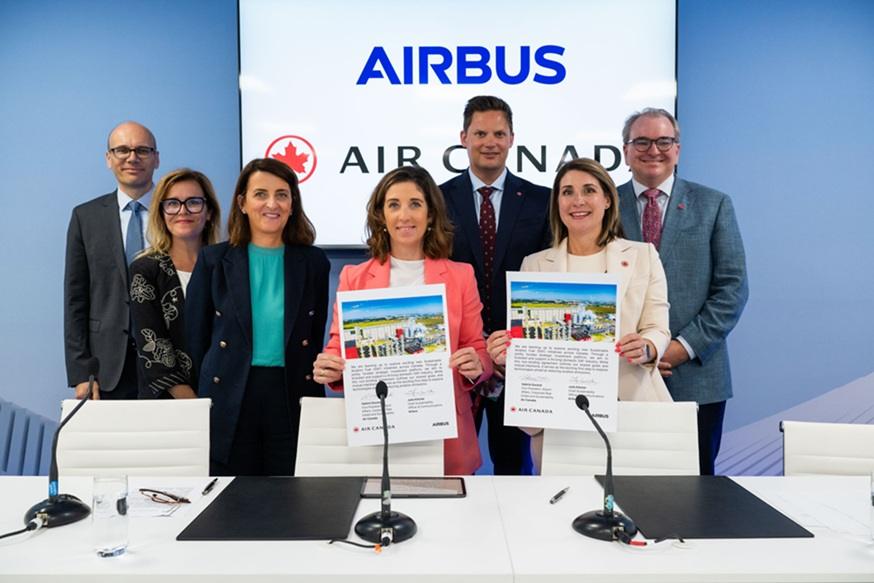
Julie Kitcher, Chief Sustainability Officer and Communications at Airbus, highlighted the dual nature of the partnership, noting that by both launching the co-investment platform and committing to the Leave Less Travel Program, the company is stimulating both the supply side and the demand side of the SAF market in Canada.
The Technological and Economic Context of SAF
Sustainable Aviation Fuel is produced from non-petroleum-based renewable feedstocks. These include used cooking oils, agricultural residues, woody biomass, and even captured carbon dioxide combined with green hydrogen (e-fuels). Because SAF is a "drop-in" fuel, it can be blended with conventional jet fuel and used in existing aircraft engines and airport infrastructure without requiring modifications.
For Airbus, ensuring the availability of SAF is essential to the future of its product line. Currently, all Airbus aircraft are certified to fly with a 50% SAF blend, and the company has set a target to make its entire fleet 100% SAF-compatible by 2030. However, the technical capability of the aircraft is moot if the fuel is not available at scale at the world’s major hubs.
In Canada, the economic potential for SAF is substantial. As a country with a massive forestry sector and a robust agricultural base, Canada possesses the raw materials (feedstocks) necessary to become a global leader in SAF production. Establishing a domestic industry would not only help airlines meet climate targets but also create high-skilled jobs in the green energy sector and enhance national energy security by reducing reliance on imported petroleum products.
Chronology of Air Canada’s Climate Commitments
The launch of this platform is the latest step in a multi-year sustainability roadmap for Air Canada. In 2021, the airline announced an ambitious goal to achieve net-zero greenhouse gas emissions across its global operations by 2050. To ensure progress toward this long-term objective, the company established several interim targets for 2030:
- A 20% net reduction in GHG emissions from air operations compared to a 2019 baseline.
- A 30% net reduction in GHG emissions from ground operations compared to a 2019 baseline.
- A commitment to invest $50 million specifically in SAF and other carbon reduction and removal technologies.
Prior to the Airbus partnership, Air Canada had already made significant strides in fuel procurement, including a major agreement with Neste for 78 million liters of SAF. The new platform with Airbus represents a shift from being a mere consumer of fuel to becoming an active architect of the fuel’s production infrastructure.
Official Responses and Industry Implications
The leadership of both organizations has framed this partnership as a necessary evolution in industry collaboration. Valerie Durand, Vice President of Airport Affairs, Corporate Real Estate, and Sustainability at Air Canada, emphasized that the airline is taking "meaningful steps toward supporting domestic SAF production." She noted that the initiative helps corporate customers address their emissions while contributing to a lower-carbon path for the entire industry.
Industry analysts suggest that this move by Airbus and Air Canada could set a precedent for other regions. By pairing a global manufacturer with a national carrier, the platform creates a closed-loop of demand and investment that can persuade governments to move faster on regulatory support. The involvement of Airbus is particularly noteworthy, as it demonstrates the manufacturer’s willingness to move beyond the hangar and into the energy supply chain to ensure the long-term viability of air travel.

The broader implications for the Canadian aviation sector are profound. If the platform successfully drives a project to a Final Investment Decision, it could trigger a wave of secondary investments. Canada’s Clean Fuel Regulations, which aim to reduce the carbon intensity of fuels used in the country, provide a regulatory backdrop that makes such investments increasingly attractive to institutional investors looking for ESG-compliant opportunities.
Navigating the Challenges Ahead
Despite the optimism surrounding the Airbus-Air Canada announcement, significant challenges remain. The primary obstacle is the "green premium"—the price difference between SAF and fossil fuels. Currently, SAF can cost three to five times more than traditional jet fuel. While corporate programs like "Leave Less Travel" help distribute this cost, they are currently voluntary and represent a small portion of total fuel spend.
Furthermore, the competition for sustainable feedstocks is intensifying. Other sectors, such as heavy-duty trucking and marine shipping, are also eyeing the same waste oils and biomass to meet their own decarbonization goals. The Sustainability Co-Investment Platform will need to identify projects that utilize diverse and scalable feedstocks to avoid supply bottlenecks.
Finally, the timeline for industrial-scale energy projects is long. From an FID to an operational plant can take several years. The 2030 interim targets set by Air Canada are approaching rapidly, meaning the platform must act with urgency to identify and fund projects that can come online within the next five to seven years.
Conclusion: A Catalyst for Change
The partnership between Airbus and Air Canada represents a maturing of the aviation industry’s approach to climate change. It acknowledges that individual corporate targets are insufficient without a fundamental transformation of the energy systems that power flight. By pooling financial resources and technical expertise, the Sustainability Co-Investment Platform aims to turn Canada into a test case for how a nation can transition its aviation sector toward a sustainable future.
As the global community looks toward the 2050 net-zero horizon, the success of this platform will be measured not just by the liters of fuel produced, but by its ability to prove that sustainable aviation is an economically viable and scalable reality. With an initial $13.7 million commitment, the journey has begun, but the ultimate destination—a decarbonized sky—will require continued innovation, massive capital injection, and unwavering political will.
