

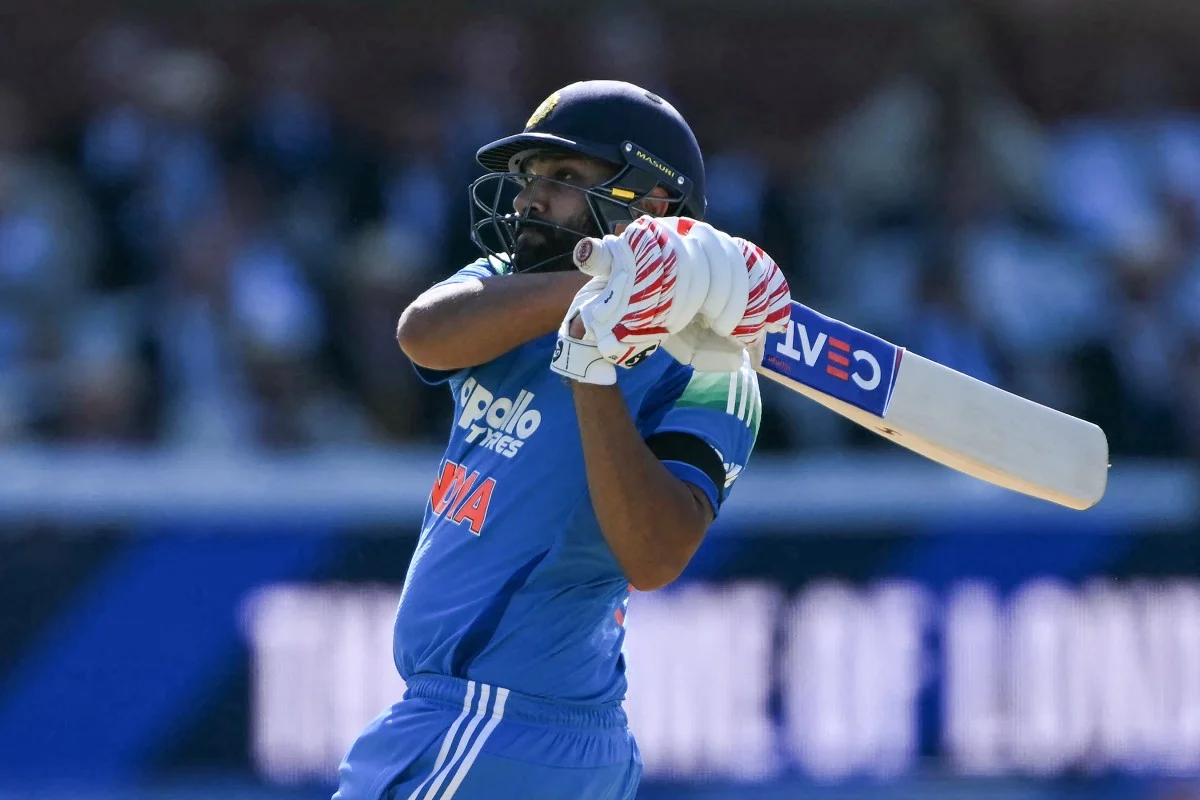
Former India captain Rohit Sharma has emphatically dismissed growing speculation regarding his international future, asserting that his commitment to the national side remains unwavering despite intense external scrutiny. The veteran opening batter’s comments followed a vintage performance at the historic Lord’s Cricket Ground, where he struck a defiant 138 off 110 deliveries during the third and final One-Day International (ODI) against England. While the innings was not enough to secure a victory for India, it served as a potent reminder of Sharma’s enduring class and his pivotal role in the team’s top-order hierarchy.
The match, which saw England clinch the series 2-1, had been framed by some sections of the media and cricketing pundits as a potential swan song for the 39-year-old. However, speaking in a post-match interview hosted on the official Board of Control for Cricket in India (BCCI) website, Sharma made it clear that he has no immediate plans to hang up his boots. Instead, he reaffirmed his ambition to lead India’s charge toward the 2027 ICC Cricket World Cup, an event set to be hosted across South Africa, Zimbabwe, and Namibia.
The Lord’s Masterclass: A Detailed Account of the 138
The third ODI at Lord’s was a high-stakes encounter, serving as the decider for a hard-fought series. Chasing a formidable target set by the English side, India relied heavily on their veteran opener to provide a platform. Sharma’s innings of 138 was characterized by his trademark elegance and clinical power-hitting. Reaching his century in just 88 balls, he dismantled a potent English bowling attack that included the likes of Mark Wood and Adil Rashid.
His knock included 14 boundaries and five towering sixes, showcasing a strike rate of 125.45 that kept India in the hunt long after the required run rate began to climb. Despite the brilliance of his individual performance, the lack of substantial partnerships from the middle order meant that India eventually fell short, conceding both the match and the series. The loss, however, was overshadowed by the narrative surrounding Sharma’s future. The "Home of Cricket" has seen many legendary careers reach their conclusion, and the atmosphere on Sunday felt heavy with the weight of expectation that this might be Sharma’s final act in the iconic white jersey.
Confronting the Retirement Discourse
For several months, the cricketing world has buzzed with questions about how much longer Sharma can sustain his performance levels at the highest tier of the sport. At 39, he is among the oldest active players in international cricket, leading to inevitable comparisons with younger talents waiting in the wings. The pressure had been compounded by a recent dip in form; prior to the Lord’s century, Sharma had endured a stretch of 11 ODIs without reaching triple figures.
Addressing these rumors head-on, Sharma adopted a stoic and focused demeanor. "My job is with the bat, come and play, represent my country, represent my team. That’s what I have been told to do since my debut, so that’s what I am going to do," he stated. He further characterized the media speculation as "noise" that has been a constant companion throughout his career. "The noise since I made my debut was there. And till the time I am going to stay here, it is always going to be there. So it doesn’t really matter too much. What matters is what I do on the field, try and contribute to the success of the team."
In a moment of lightheartedness that reflected his mental resilience, he added, "If there is no noise, there is no fun." This perspective suggests a player who has made peace with the pressures of elite sport and remains motivated by the internal drive to compete rather than external validation.
Statistical Context: Ending the Century Drought
The significance of Sharma’s 138 cannot be overstated when viewed through the lens of his recent statistical output. The 11-match period without an ODI century was one of the longest "dry spells" of his career since he was promoted to the opening slot over a decade ago. During this lean run, critics argued that his reflexes might be slowing and that his ability to anchor long innings was waning.
However, the data from the Lord’s innings suggests otherwise. His control percentage during the first 50 runs was recorded at 89%, indicating that he was seeing the ball as clearly as ever. Furthermore, his ability to accelerate against spin in the middle overs—a traditional strength—remained intact, as he took 42 runs off just 30 balls bowled by England’s spinners. This performance has effectively reset the narrative, proving that while his consistency may fluctuate with age, his ceiling remains higher than almost any other opener in world cricket.
Team Management Support and Leadership Dynamics
Despite the public debate, Sharma has consistently enjoyed the full backing of the Indian team management and the BCCI selection committee. Sources close to the dressing room indicate that his value is measured not just in runs, but in the tactical intelligence and mentorship he provides to the younger cohort of players.
The transition period in Indian cricket has seen several young openers like Shubman Gill and Yashasvi Jaiswal integrated into the various formats. Within this ecosystem, Sharma is viewed as the "stabilizing force." The management’s strategy appears to involve utilizing Sharma’s experience to navigate high-pressure ICC tournaments while gradually building a successor plan. His stated goal of playing in the 2027 World Cup suggests that the BCCI is comfortable with a long-term roadmap that keeps the veteran at the helm or at least in the starting XI for the next three years.
The Road to 2027: South Africa, Zimbabwe, and Namibia
The 2027 ICC World Cup represents the ultimate objective for this generation of Indian cricketers. Having come agonizingly close to glory in previous editions, the desire to secure a world title remains the primary motivator for Sharma. The tournament, which will return to the African continent for the first time since 2003, will feature a expanded format, requiring teams to possess both depth and experience.
For Sharma to reach 2027 as an active player, his fitness and workload management will be paramount. At 39, he will be 42 by the time the tournament commences. While rare, playing at that age is not unprecedented in cricket history—legends like Misbah-ul-Haq and Sachin Tendulkar played into their 40s. The challenge for Sharma will be maintaining the physical rigor required for the 50-over format, which is arguably more demanding on the body than T20s or the tactical grind of Test matches.
Series Review and Technical Implications
While Sharma’s century was a highlight, the 2-1 series loss to England exposed several areas of concern for the Indian ODI squad. England’s aggressive approach, particularly in the powerplay, often left India’s bowlers searching for answers. The series began with a dominant display by India in the first match, but England rallied back with superior middle-order batting and disciplined death bowling in the subsequent games.
The Lord’s finale highlighted a recurring issue for India: the over-reliance on the top three. When Sharma was dismissed in the 42nd over, the chase faltered rapidly. This "middle-order collapse" is a tactical puzzle that the coaching staff will need to solve before the next major ICC cycle. The data shows that India’s strike rate in the overs 35-45 drops significantly when a set opener is dismissed, a trend that was painfully evident on Sunday.
Upcoming Schedule: Zimbabwe and Sri Lanka
There is little time for reflection as the Indian team prepares for a busy international schedule. The squad is set to travel to Zimbabwe for a three-match Twenty20 International (T20I) series starting this coming Thursday. This series is expected to feature a younger squad, allowing senior players like Sharma a brief period of recovery before the more grueling assignments ahead.
Following the Zimbabwe tour, India will travel to Sri Lanka for a high-profile Test series. This series will be crucial for India’s standing in the World Test Championship (WTC) rankings. Sharma’s role as an opener in the longest format remains just as vital as his ODI presence. His ability to weather the new ball in subcontinental conditions will be key to India’s strategy of dominating the spin-friendly tracks expected in Sri Lanka.
Conclusion: A Legacy in Progress
Rohit Sharma’s performance at Lord’s and his subsequent dismissal of retirement rumors have reaffirmed his status as a cornerstone of Indian cricket. By shifting the focus away from his age and onto his contributions on the field, he has challenged the traditional timelines of professional athletic careers.
The journey toward the 2027 World Cup is long and fraught with challenges, but Sharma’s 138-run defiant stand in London suggests he has the hunger and the skill to see it through. For now, the "noise" may continue, but as long as the runs continue to flow from his bat, Rohit Sharma remains the master of his own destiny, focused entirely on the next ball, the next match, and the next trophy for his country.
