

The long-standing paradigm that has guided development economics for decades, primarily centered on the movement of resources between sectors, is increasingly outmoded in its ability to explain how modern economies generate value and achieve prosperity. As the traditional boundaries between manufacturing, services, and agriculture blur, the true drivers of economic advancement lie in the cultivation of robust ecosystems that foster technological progress, innovation, and the sustained development of productive capacity. This paradigm shift necessitates a fundamental re-evaluation of what constitutes structural transformation in the 21st century, particularly for developing nations seeking to navigate a complex and rapidly evolving global economic landscape.
Challenging Manufacturing Exceptionalism in Development Economics
The debate surrounding the engine of economic development has been reignited by prominent economist Dani Rodrik. In a recent commentary, Rodrik challenged the deeply ingrained assumption that manufacturing remains the indispensable pathway to prosperity for developing countries. He argued for a strategic shift, suggesting that these nations should increasingly focus on productivity-enhancing services as a more viable route to economic growth. This perspective directly confronts the historical narrative that has placed manufacturing at the forefront of development strategies since the mid-20th century.
For over half a century, development economics was largely shaped by the concept of structural transformation, a framework championed by scholars like W. Arthur Lewis, Raúl Prebisch, Albert Hirschman, and Nicholas Kaldor. This model posited that economic development was primarily achieved through the reallocation of labor and capital from less productive sectors, typically agriculture, to more productive ones, predominantly manufacturing. Manufacturing was seen as the ideal sector due to its inherent characteristics: economies of scale, significant potential for technological learning, and the capacity for sustained productivity growth. This was a reflection of an era where industrial factories were unequivocally the nexus of technological advancement and economic expansion.
While the fundamental goals of development – increased productivity, continuous technological learning, and enhanced economic complexity – remain as crucial as ever for long-term prosperity, the means by which these capabilities are achieved have undergone a profound transformation. The locus of innovation and value creation is no longer confined to traditional industrial settings. Instead, it is distributed across a more integrated and interconnected economic landscape.
The Triad of Forces Reshaping Economic Structures
Three overarching forces are fundamentally reshaping the nature of economic activity and, consequently, the dynamics of structural transformation: the rapid advancement of Artificial Intelligence (AI), increasing geopolitical fragmentation, and the imperative of the clean-energy transition.
AI is fundamentally altering the relationship between human labor and production processes. Its capacity to automate tasks, analyze vast datasets, and drive sophisticated decision-making is redefining what constitutes productive work and how value is generated. Simultaneously, a resurgence of geopolitical competition and protectionist tendencies has brought industrial policy back into sharp focus. Nations are re-evaluating their strategic industries and supply chain resilience, leading to renewed interest in domestic production and technological sovereignty. The clean-energy transition, driven by the urgent need to address climate change, is catalyzing a massive reorganization of global production. This transition is not only creating demand for new technologies and critical minerals but also fostering the growth of entirely new low-carbon industries, fundamentally altering the energy landscape and its associated economic activities.
While these developments do not diminish the importance of manufacturing in absolute terms, they collectively signal that manufacturing no longer exclusively defines the trajectory of structural transformation. The traditional understanding of moving labor and capital from one distinct sector to another is becoming an oversimplification of a far more complex reality.
The Rise of Productive Capabilities and Integrated Ecosystems
The critical determinant of economic success is increasingly shifting from the specific sector to the underlying productive capabilities that a nation possesses within and across sectors. Modern manufacturing, for instance, is inextricably linked to software development, advanced logistics, sophisticated financial services, and global digital platforms. Similarly, advancements in agriculture are now driven by biotechnology, satellite imagery, and precision engineering.
Sophisticated services, once considered secondary to industrial output, are now playing a pivotal role in driving technological learning, fostering innovation, and generating export dynamism – functions historically attributed almost exclusively to manufacturing. This convergence has led to a steady blurring of the lines that once clearly separated different economic sectors. The distinction between a "manufacturing" company and a "service" provider is becoming increasingly fluid, with many businesses operating across these traditional divides.
In essence, productive capabilities have always been the true engine of structural transformation. However, with productive services now assuming the role historically played by manufacturing, the paramount question becomes: which activities continuously expand an economy’s productive capacity? The answer lies in the development of integrated ecosystems. These ecosystems are not confined to a single sector but rather represent a synergistic fusion of manufacturing and engineering with research and development institutions, robust digital infrastructure, accessible financial systems, and supportive public institutions.
Lessons from the Electric Vehicle Battery Value Chain
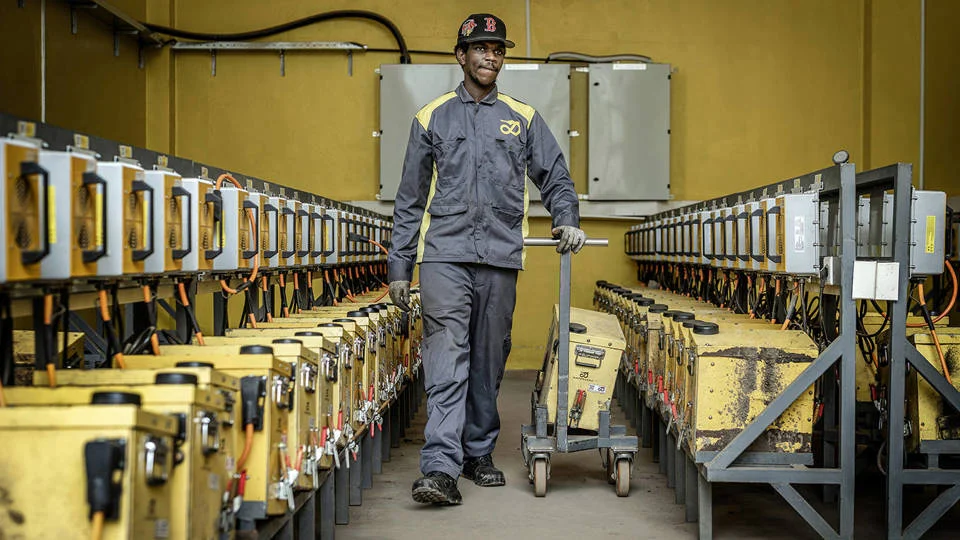
The production of electric vehicle (EV) batteries offers a compelling case study of this evolving economic reality. Traditional industrial policy might encourage a country like the Democratic Republic of Congo, a major cobalt producer, to process its raw ore domestically rather than export it. While this aims to capture more value within the country, domestic manufacturing of battery components or even complete batteries alone does not guarantee a dominant position in the most profitable segments of the value chain. A significant portion of the value will likely flow elsewhere if the critical elements of design, specialized manufacturing equipment, proprietary software, technical standards, and global distribution networks remain concentrated in other nations.
For example, the advanced algorithms that optimize battery performance, the specialized machinery required for precise manufacturing, and the global logistics networks that ensure timely delivery are all crucial components of value capture that extend far beyond the assembly line. Without control or significant participation in these upstream and downstream activities, domestic manufacturing can become a low-margin assembly operation.
China’s Model: Ecosystem Ownership as the Key to Competitive Advantage
China’s economic trajectory provides a potent illustration of this dynamic. Despite its unparalleled manufacturing scale, the country’s enduring competitive advantage stems less from sheer production volume and more from its strategic control over the underlying technologies, deep technical know-how, extensive intellectual property portfolio, and the intricate industrial ecosystems within which its manufacturing operations are embedded. This highlights a crucial lesson: true structural transformation requires a strategic move beyond merely engaging in production to actively owning and shaping the entire productive ecosystem. This ownership encompasses not only the physical production but also the knowledge creation, technological development, and market access that define the value chain.
Implications for Africa: Industrialization Reimagined
For Africa, this paradigm shift reinforces the strategic importance of industrialization. The imperative to build technological capabilities and capture greater value domestically remains paramount. Indeed, the rise of AI and the growing significance of productive services paradoxically strengthen the argument for manufacturing’s role as a potent catalyst for learning, technological advancement, and capability building. However, Africa’s path to industrialization must be distinct from that of previous late developers, taking into account the transformative forces of demographic change, the climate transition, and the pervasive influence of digital technologies.
Unlike established industrial economies that are grappling with aging populations, Africa is projected to experience significant growth in its working-age population and consumer demand. This demographic dividend presents a unique opportunity. Furthermore, African nations are not burdened by legacy, carbon-intensive production systems. This allows them to leapfrog outdated technologies and build state-of-the-art renewable energy systems, low-carbon industries, and digitally integrated infrastructure from the ground up.
The success of capitalizing on these advantages hinges on the ability to cultivate robust institutions that foster continuous learning and innovation. Industrial policy, therefore, must evolve beyond simply promoting manufacturing or targeting specific sectors. Governments need to focus on creating an enabling environment for productive capabilities to flourish. This entails fostering interconnected ecosystems that seamlessly link businesses with universities, research institutions, sophisticated financial systems, advanced digital infrastructure, and dynamic regional markets.
Building the Institutional Foundations for a Modern Economy
Industrialization in Africa has historically been about establishing the fundamental institutional scaffolding of a modern economy. Industrial societies are underpinned by well-functioning formal markets, efficient modern logistics, robust financial intermediation, reliable contract enforcement mechanisms, and accurate data, all supported by institutions capable of managing complex economic interactions. Factories represent only one component of this broader architectural framework.
Emerging technologies offer unprecedented opportunities for African nations that previous generations of late developers did not possess. Digital payment systems, digital identity solutions, interoperable public platforms, and AI can accelerate the formalization of economies, drastically reduce transaction costs, enhance tax administration efficiency, broaden access to finance, and significantly strengthen state capacity.
AI, in particular, holds immense potential to modernize the institutional architecture that governs market functions. When governed effectively, AI can enable countries to bypass traditional stages of industrial development, creating new avenues for developing and protecting intellectual property. This can lead to a more equitable distribution of innovation and value creation on a global scale.
A New Model for Structural Transformation
By challenging the notion of manufacturing exceptionalism, Dani Rodrik has performed a valuable service to the field of development economics. The logical next step is to extend this critical inquiry to questioning sectoral exceptionalism itself and to reimagine how production is structured in the contemporary global economy.
In an era characterized by pervasive digital networks, the increasing dominance of intangible assets, and the rise of complex industrial ecosystems, national prosperity will increasingly be determined by an economy’s capacity to accumulate, adapt, and renew its productive capabilities. Rather than attempting to replicate the historical development pathways of earlier industrializers, Africa has a unique opportunity to forge a novel model of structural transformation, one that is attuned to the realities of the 21st century and leverages emerging technologies to build a more inclusive and sustainable economic future. This requires a strategic focus on building comprehensive productive ecosystems, fostering innovation, and developing the institutional capacity to thrive in a dynamic global marketplace.
