

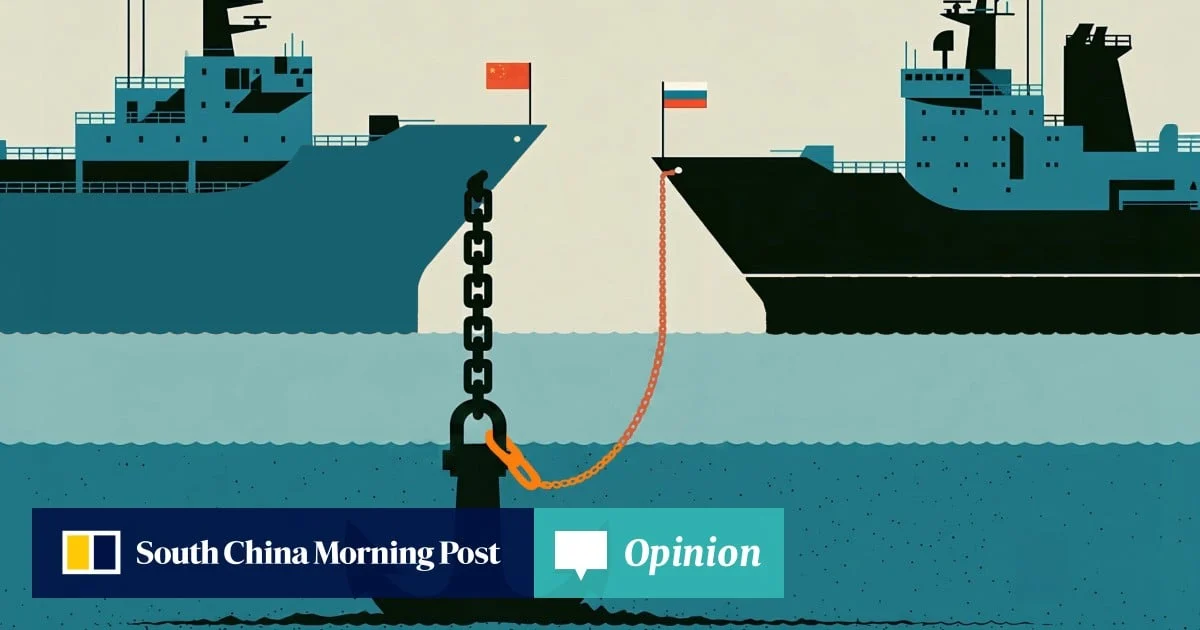
The geopolitical landscape of the 21st century is increasingly defined by the deepening bond between Moscow and Beijing, a relationship characterized by the Kremlin as a "comprehensive strategic partnership of coordination for a new era." While both nations frequently project an image of a unified front against Western hegemony, the internal mechanics of this alliance reveal a complex web of economic asymmetry and strategic dependency. As China and Russia continue to align their interests, particularly in the wake of the ongoing conflict in Ukraine and subsequent Western sanctions, the fundamental question remains: can a partnership be truly equal when one side relies so heavily on the other for its economic survival and technological advancement?
The Rhetoric of Equality versus Economic Reality
On July 14, 2026, Kremlin spokesman Dmitry Peskov addressed international concerns regarding the nature of the Moscow-Beijing axis, asserting that the partnership is "based on the principle of equality" and mutual respect. This statement followed a series of analytical reports in Western media suggesting that Russia is increasingly becoming a "junior partner" to China. However, a deep dive into the trade statistics suggests a stark disparity in leverage.
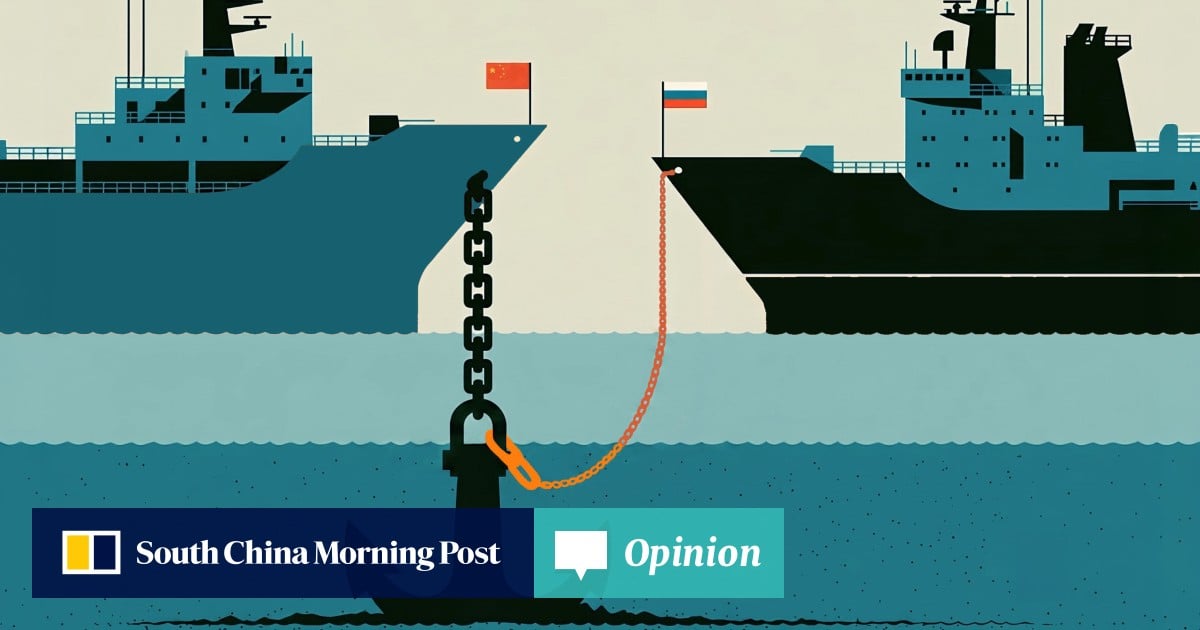
Currently, China stands as Russia’s largest trading partner, a position solidified as Moscow found itself decoupled from European markets. Conversely, Russia accounts for only approximately 4 percent of China’s total foreign trade volume. This imbalance creates a structural vulnerability for the Kremlin. While the loss of the Russian market would be a manageable setback for the Chinese economy, the loss of Chinese trade—encompassing everything from consumer electronics to critical industrial components—would be catastrophic for Russia.
In 2023 and 2024, bilateral trade between the two giants surpassed $240 billion, a record high. While this growth is touted as a success by both administrations, the composition of this trade is telling. Russia primarily exports raw materials—oil, gas, coal, and timber—while importing high-value-added goods from China, including semiconductors, telecommunications equipment, and automotive vehicles. This classic "resource-for-technology" exchange often characterizes relationships between developing and developed economies, further complicating Moscow’s claim of an equal strategic footing.
A Historical Pivot: The Shift from West to East
To understand the current state of Sino-Russian relations, one must look back at the pivot point of 2014. Before the eruption of the Ukraine crisis and the subsequent annexation of Crimea, the European Union was Russia’s most vital economic partner. In 2013, EU member states accounted for roughly 57 percent of Russian exports and 46.5 percent of its imports.
The energy relationship with Europe was the cornerstone of the Russian economy. Through the Nord Stream pipelines, Russia provided Germany and the wider continent with a steady stream of relatively inexpensive natural gas, which in turn fueled European industrial growth. However, the 2014 crisis forced Russian strategic planners to acknowledge that "business as usual" with the West was no longer a viable long-term strategy.
Faced with the threat of isolation, Moscow accelerated its "Pivot to the East." China emerged not just as an alternative market, but as a necessary lifeline. In May 2014, President Xi Jinping and President Vladimir Putin signed a landmark 30-year, $400 billion natural gas deal. This agreement, which led to the construction of the Power of Siberia pipeline, saw Gazprom commit to supplying the China National Petroleum Corporation (CNPC) with 38 billion cubic metres of gas annually. While the deal was a diplomatic victory, industry analysts have long noted that the pricing terms were significantly more favorable to Beijing than the rates previously enjoyed by European customers, illustrating China’s superior bargaining position even a decade ago.
The Evolution of Strategic Coordination
The relationship has evolved from a marriage of convenience into a deeply integrated strategic alignment. In 2019, the two nations officially upgraded their ties to a "comprehensive strategic partnership of coordination for a new era." This designation reflects more than just trade; it encompasses military cooperation, joint exercises in the Baltic and South China Seas, and a shared vision for a multipolar world order.
The timeline of this coordination shows a steady progression:
- February 2022: Shortly before the commencement of the "special military operation" in Ukraine, Putin and Xi issued a 5,000-word joint statement declaring that there are "no limits" to their friendship and "no forbidden areas" of cooperation.
- 2023: Xi Jinping’s state visit to Moscow further solidified ties, focusing on the "yuanization" of the Russian economy as a means to bypass the SWIFT banking system and U.S. dollar-based sanctions.
- 2024-2025: Increased cooperation in the Arctic and space exploration, alongside the expansion of the BRICS alliance, showcased a joint effort to build alternative international institutions.
Dependency on Critical Imports and Technology
The departure of Western brands from the Russian market following the 2022 invasion created a vacuum that Chinese firms were quick to fill. In the automotive sector, Chinese brands such as Geely, Chery, and Great Wall Motor now command over 50 percent of the Russian car market, replacing European giants like Volkswagen and Mercedes-Benz.
More critical, however, is Russia’s reliance on Chinese technology. With Western sanctions targeting the supply of high-end microchips and dual-use technologies, Moscow has turned to Beijing to sustain its industrial and military-industrial complex. While China has been cautious to avoid direct violations of secondary sanctions that could jeopardize its trade with the U.S. and Europe, it has remained a steady supplier of the components necessary for Russia’s modern economy to function.
This technological dependency is a double-edged sword. While it allows Russia to maintain its domestic stability and military production, it grants Beijing significant "off-switch" power over Russian industry. If China were to curtail the export of essential components, the Russian economy would face immediate and severe disruption.
Energy Leverage and the Power of Siberia 2
Energy remains the most visible aspect of the partnership, yet it is also where the inequality is most apparent. Following the sabotage of the Nord Stream pipelines and the EU’s decision to phase out Russian gas, Moscow has pushed aggressively for the construction of "Power of Siberia 2," a pipeline intended to transit gas to China via Mongolia.

Negotiations for this project have been notoriously difficult. Beijing, aware of Moscow’s lack of alternative buyers, has reportedly demanded "near-domestic" Russian prices and has shown no rush to finalize the deal. This "wait-and-see" approach allows China to extract maximum concessions, highlighting that in the energy sphere, the "partnership of equals" is heavily weighted in favor of the consumer rather than the supplier.
Official Responses and Diplomatic Nuance
The official rhetoric from both capitals remains resolutely positive. Russian Foreign Minister Sergey Lavrov has frequently stated that the relationship is "stronger than a military alliance" and is not directed against any third country. Beijing, for its part, maintains a policy of "pro-Russia neutrality." It refuses to condemn the invasion of Ukraine and echoes Moscow’s grievances regarding NATO expansion, while simultaneously calling for peace and the respect of territorial integrity.
Western observers, however, view the relationship through a lens of skepticism. U.S. State Department officials have characterized the bond as an "alliance of grievance," suggesting it is held together more by a shared opposition to the West than by genuine long-term commonality. European leaders have expressed concern that Russia’s economic subordination to China will eventually lead to Beijing exerting greater influence over European security matters.
Broader Impact and Global Implications
The implications of this lopsided partnership extend far beyond the borders of the two nations. In Central Asia, a region traditionally considered Russia’s "backyard," China’s Belt and Road Initiative (BRI) is rapidly eclipsing Russian economic influence. While Moscow remains the primary security guarantor for many Central Asian states, the economic gravity has shifted decisively toward Beijing.
Furthermore, the integration of the Russian and Chinese financial systems is accelerating the trend of global de-dollarization. By trading in yuan and rubles, the two nations are creating a parallel financial architecture that is insulated from Western pressure. This could eventually provide a template for other nations seeking to reduce their exposure to the U.S. financial system.
Conclusion: A Partnership of Necessity
While the Kremlin insists on the principle of equality, the data suggests a relationship defined by asymmetric interdependence. Russia provides China with a secure source of energy, a vast market for its goods, and a strategic buffer against the West. In return, China provides Russia with the economic and technological means to withstand Western isolation.
However, as Russia’s options dwindle, its leverage decreases. The partnership is "equal" in the sense that both leaders see it as a strategic necessity to counter their common rivals, but in the realm of economics, technology, and long-term strategic planning, the scales are increasingly tilted toward the East. The "new era" of coordination may indeed be a reality, but it is one where the terms of engagement are increasingly dictated by Beijing, leaving Moscow to navigate the challenges of being a vital, yet junior, partner in a changing world.
