

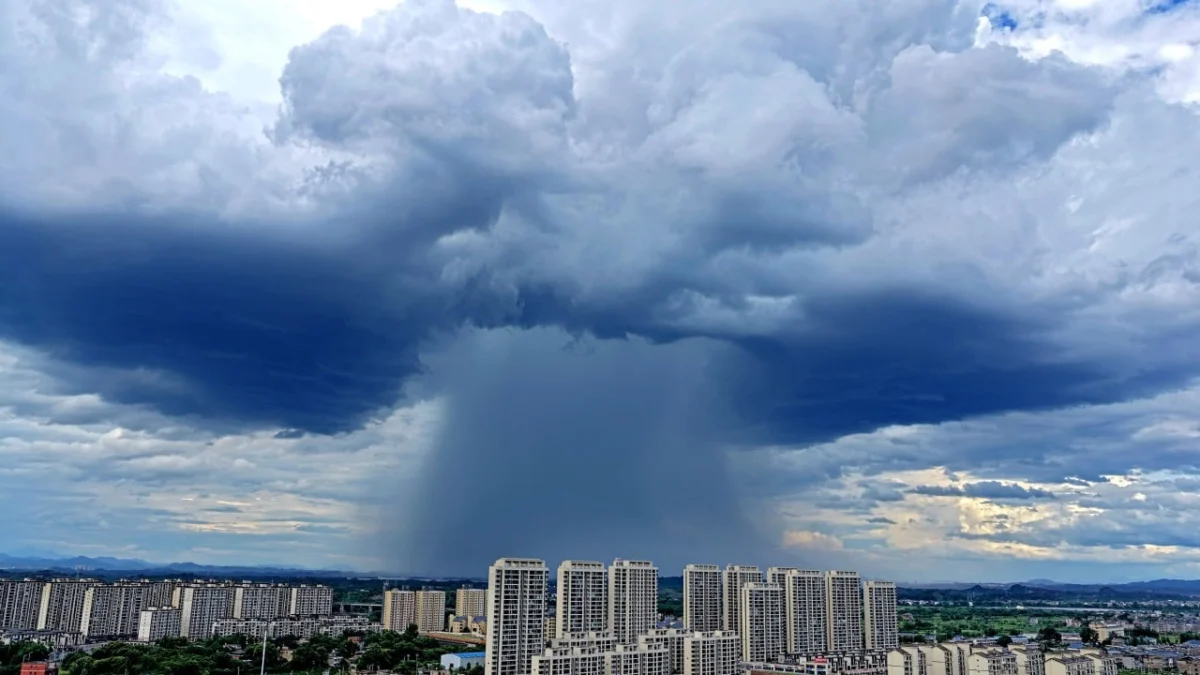
When devastating floods swept through the state of Assam in northeastern India in 2018, the immediate humanitarian crisis was shadowed by a more profound and unsettling question emerging within New Delhi’s security corridors: could the control of the weather become a new tool of geopolitical pressure or even an unconventional form of warfare? As the Brahmaputra River overflowed, displacing millions and destroying livelihoods, the discourse shifted from natural disaster management to the strategic implications of atmospheric manipulation. The catalyst for this concern was the rapid advancement of weather-modification technology by India’s northern neighbor, China, and the potential for such capabilities to be used to alter the ecological and hydrological balance of the region.
Much of the anxiety centered on China’s ambitious "Tianhe" or "Sky River" initiative. First brought to public attention in 2016, the project represents one of the world’s most expansive attempts at weather engineering. Its stated goal is to intercept and redirect atmospheric moisture across the Tibetan Plateau, a region often referred to as the "Third Pole" due to its massive ice reserves and its role as the source of Asia’s greatest rivers. For India, particularly for downstream states like Assam, the prospect of China controlling the clouds is not merely a scientific curiosity but a direct national security threat. Himanta Biswa Sarma, then the finance minister of Assam and currently the state’s Chief Minister, publicly voiced these fears, warning that the "Sky River" project could have "huge ramifications" for India’s water security and disaster patterns.
The Tianhe Project: Redirecting the Heavens
The Tianhe project is a brainchild of researchers at Tsinghua University and the Qinghai University. The fundamental concept involves the creation of a "conduit" in the atmosphere to transport water vapor from the humid regions above the Yangtze River basin to the more arid regions of the Yellow River basin. By utilizing a network of fuel-burning chambers installed across the Tibetan Plateau, the project aims to release silver iodide into the atmosphere. These particles act as ice-nucleating agents, encouraging the formation of clouds and subsequent precipitation.
The scale of this operation is unprecedented. China plans to install tens of thousands of these chambers across an area of approximately 1.6 million square kilometers. When combined with other weather-modification efforts, Beijing aims to have the capacity to manage artificial rainfall and snowfall across a staggering 5.5 million square kilometers by 2025—an area roughly 1.7 times the total landmass of India. This level of atmospheric intervention has triggered significant criticism from the international scientific community and neighboring countries, who argue that such large-scale manipulation could have unpredictable "downwind" effects, effectively "stealing" rain that would have naturally fallen elsewhere.
A Chronology of Weather Manipulation and Growing Tensions
The history of weather modification is not new, but its transition from local agricultural support to a potential strategic tool has accelerated over the last decade.
- 1940s-1960s: The dawn of cloud seeding. The United States military experimented with "Project Popeye" during the Vietnam War, attempting to extend the monsoon season to bog down North Vietnamese supply lines. This led to the 1977 Environmental Modification Convention (ENMOD), which prohibited the military use of environmental modification techniques.
- 2008: China utilized extensive cloud seeding to ensure clear skies for the Beijing Olympics opening ceremony, demonstrating its ability to manage local weather patterns with high precision.
- 2016: The "Tianhe" project was formally proposed, signaling China’s intent to move from local weather management to regional atmospheric engineering.
- 2018: Record-breaking floods in Assam sparked a diplomatic and security debate in India regarding China’s upstream activities, including both mega-dams and weather modification.
- 2020: The Chinese State Council announced a circular to further strengthen and expand the national weather-modification program, setting clear targets for 2025 and 2035.
- 2024: Unprecedented weather events, such as the floods in Dubai and extreme typhoons in southern China, have renewed global interest in the limits and dangers of artificial weather interventions.
Security Implications and the Concept of Rain Theft
For India, the security implications of China’s weather-modification programs are two-fold: the threat of induced drought and the threat of "weaponized" flooding. The Tibetan Plateau is the hydrological heart of Asia. Rivers originating there, such as the Brahmaputra (known as the Yarlung Tsangpo in Tibet), the Indus, and the Mekong, support over 1.5 billion people downstream.
If China successfully redirects atmospheric moisture to its arid northern provinces, it could potentially reduce the natural rainfall that feeds these river systems. This concept, often termed "rain theft," suggests that moisture removed from the air over Tibet is moisture that will not fall as rain in the Ganges or Brahmaputra basins. Conversely, the ability to trigger intense precipitation could, in theory, be used to exacerbate seasonal flooding in downstream countries, creating a "grey zone" tactic where a natural disaster is artificially amplified to weaken an adversary’s infrastructure and economy.
"If this new system is introduced, there will surely be huge ramifications," Himanta Biswa Sarma stated during the height of the 2018 concerns. He argued that India could no longer afford to view the atmosphere as a neutral space, as large-scale atmospheric manipulation by a neighbor could have the same impact as diverting a physical river.
Scientific Skepticism and Internal Criticism in China
Despite the grand ambitions of the Tianhe project, it has not been without its detractors within China itself. Several prominent Chinese scientists have questioned the feasibility and the scientific basis of the "Sky River" theory. Critics argue that the atmosphere does not behave like a predictable "river" and that the complexities of global air currents make the controlled redirection of moisture over thousands of miles nearly impossible with current technology.
Some researchers at the Chinese Academy of Sciences (CAS) have even labeled the project "pseudoscientific," expressing concern that the massive investment in burning chambers might not yield the promised results. However, the political momentum behind the project remains strong. The Chinese government views weather modification as a critical component of its "ecological civilization" strategy, aimed at mitigating the effects of climate change and ensuring food and water security for its 1.4 billion citizens.
The Broader Geopolitical Impact: A New Arms Race?
The escalation of weather-modification capabilities in East Asia is beginning to look like a new kind of arms race—one played out in the troposphere. As China expands its capabilities, other nations are feeling the pressure to develop their own "atmospheric defenses" or counter-technologies.
The regional speculation has evolved into a national security concern because there is currently no comprehensive international framework to regulate the "peaceful" use of weather modification. While the ENMOD treaty prohibits hostile use, proving that a specific flood or drought was caused by a neighbor’s cloud seeding is scientifically and legally difficult. This ambiguity allows states to pursue aggressive atmospheric policies under the guise of climate change adaptation.
Furthermore, the intersection of weather modification with China’s massive dam-building projects on the Brahmaputra creates a "double-jeopardy" for India. With the ability to control both the surface water (via dams) and the atmospheric water (via Tianhe), Beijing could theoretically hold significant leverage over India’s primary water sources.
Climate Change and the Sky as a New Frontier
The drive toward weather modification is being accelerated by the global climate crisis. As traditional weather patterns become more erratic, nations are increasingly desperate to stabilize their environments. From the devastating typhoons that have battered China’s coastlines to the unprecedented floods that recently brought the desert metropolis of Dubai to a standstill, the unpredictability of the sky is becoming a primary driver of domestic policy.
However, the "techno-fix" of weather modification carries inherent risks. The Earth’s climate is a closed, complex system; intervening in one part of the system inevitably causes ripples elsewhere. When a nation as large as China begins to manipulate the atmosphere on a continental scale, those ripples can become waves that crash against the borders of its neighbors.
Conclusion: The Need for Atmospheric Diplomacy
The 2018 Assam floods served as a wake-up call for the international community. The sky is no longer just a backdrop to climate change; it is becoming a contested space of geopolitical maneuvering. As China moves forward with its 2025 and 2035 goals for weather modification, the need for a robust, transparent, and legally binding international framework has never been more urgent.
For India and other downstream nations, the challenge lies in developing the scientific capacity to monitor atmospheric changes and the diplomatic leverage to demand transparency from Beijing. Without such safeguards, the clouds above the Himalayas may soon become the next flashpoint in the complex rivalry between the world’s two most populous nations. The "Sky River" may be intended to bring water to China’s parched north, but if left unregulated, it could very well bring a storm of geopolitical instability to the rest of Asia.
