

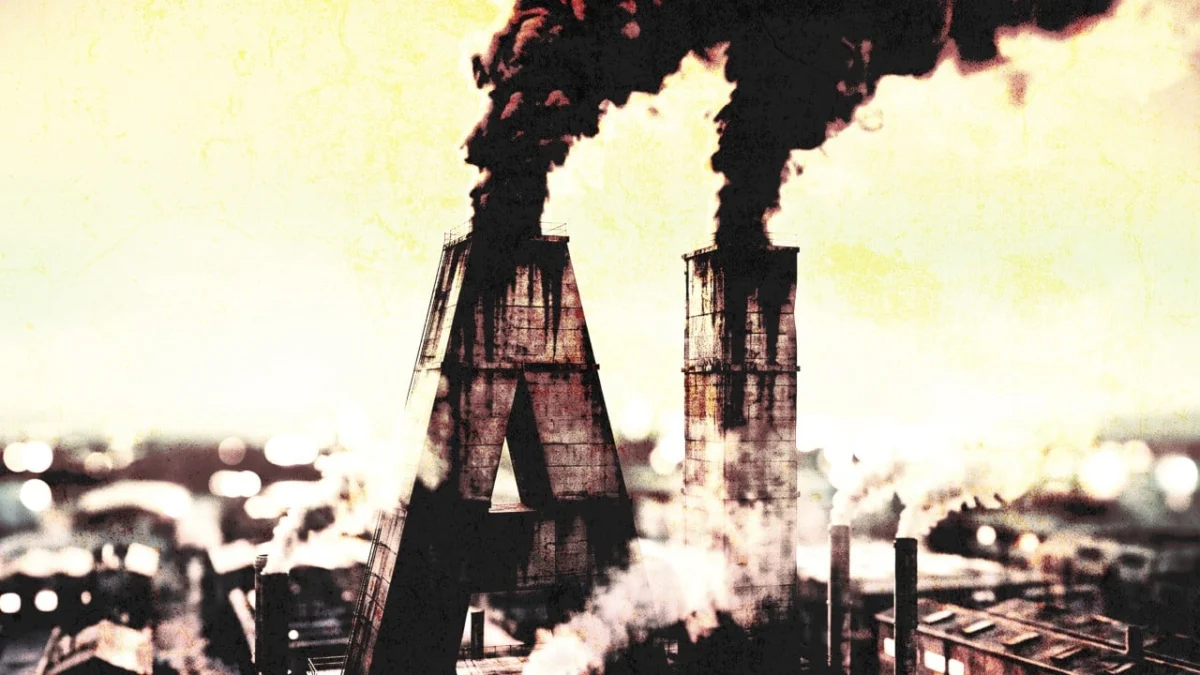
The rapid expansion of artificial intelligence infrastructure across Asia is colliding with the region’s decarbonization goals, forcing a renewed reliance on coal to meet the voracious energy demands of modern data centers. As tech giants scramble to establish a foothold in the continent’s burgeoning digital economy, the sheer scale of power required for high-performance computing is outpacing the rollout of renewable energy projects. This energy gap has repositioned coal—once targeted for a phased exit—as the primary "stopgap source" for the region’s technological ambitions.
Asia currently sits atop a staggering volume of fossil fuel wealth, holding nearly three-fifths of the world’s known coal reserves by some industry estimates. While international climate agreements have pressured nations to pivot toward solar, wind, and hydrogen, the practicalities of the AI boom are dictating a different reality. Coal remains cheaper and more reliable than imported liquefied natural gas (LNG) or oil, and it offers a level of energy security that is increasingly prized in a landscape marked by foreign wars and supply chain disruptions.
The Intersection of Generative AI and Energy Security
The emergence of generative AI has fundamentally altered the trajectory of global energy consumption. Unlike traditional data processing, the training and operation of large language models (LLMs) require an exponential increase in power. A single AI-driven search query can consume up to ten times the electricity of a standard Google search. When multiplied by millions of users and thousands of enterprises, the resulting demand on national power grids is transformative.
Alexander Kheder, a market research analyst at BMI who tracks global AI infrastructure and data center expansion, notes that the speed of the AI rollout is the primary driver of this fossil fuel resurgence. "AI demand is materialising faster than clean energy generation can be commissioned," Kheder stated. He emphasized that while solar and wind have seen significant technological progress and cost reductions, they remain intermittent. They currently lack the capacity to provide the "relentless, round-the-clock baseload" that data centers require to ensure 99.999% uptime for global digital services.
For many Asian nations, the choice is becoming a binary between slowing down their digital economic growth or utilizing their domestic coal reserves to power it. In countries like Malaysia, Indonesia, and Vietnam, the priority has shifted toward ensuring that the infrastructure for the next industrial revolution is not hampered by power shortages.
Malaysia: A Case Study in Rapid Development
Malaysia has emerged as a central hub for this infrastructure race. The nation’s pioneering smart city, Cyberjaya, is already home to dozens of operational data centers, with many more in the pipeline. Further south, the state of Johor has seen a massive influx of investment from global players such as Microsoft, Google, and Amazon Web Services, largely due to its proximity to Singapore and its relatively stable power supply.
However, this rapid industrialization is not without its social and environmental costs. Local residents in areas surrounding these "server farms" are beginning to voice concerns about the long-term sustainability of such projects. Adit Rahim, a 49-year-old communications executive and resident of a community near a major data center cluster, expressed anxiety over the strain on public utilities. "The impact is going to be very, very visible," Rahim said, pointing to the potential for increased electricity costs and the massive water requirements needed to cool the high-density server racks.
Chronology of the Regional Infrastructure Shift
The current tension between AI and energy can be traced through a series of pivotal shifts over the last decade:
- 2015–2020: The Decarbonization Pledge. Most Asian nations signed the Paris Agreement, setting ambitious targets for carbon neutrality. During this period, coal power projects faced increasing difficulty in securing international financing as ESG (Environmental, Social, and Governance) criteria became standard.
- 2021–2022: The Post-Pandemic Digital Surge. The COVID-19 pandemic accelerated the shift to digital services, increasing the baseline demand for data centers. However, the energy requirements remained within the manageable limits of existing grids.
- Late 2022: The ChatGPT Catalyst. The public release of advanced generative AI models triggered a global "arms race" for computing power. Tech companies shifted their capital expenditure from software to massive hardware infrastructure, specifically high-end GPUs (graphics processing units) which are significantly more power-hungry than traditional CPUs.
- 2023–2024: The Infrastructure Bottleneck. As tech giants announced multibillion-dollar investments in Malaysia, Indonesia, and Thailand, it became clear that renewable energy projects (which often take 5 to 10 years to reach full capacity) could not keep pace with the 18-to-24-month construction cycles of data centers.
Supporting Data: The Scale of the Challenge
The statistical reality of Asia’s energy landscape underscores the difficulty of a rapid transition. According to data from the International Energy Agency (IEA), coal still accounts for over 50% of the electricity generation in several major Asian economies.
In terms of AI impact, the numbers are equally stark. A medium-sized data center can consume as much electricity as a small city of 30,000 to 50,000 homes. In Malaysia alone, the total planned data center capacity is expected to exceed 2,000 megawatts (MW) by the end of the decade. To put this in perspective, the country’s largest solar farm produces roughly 100 MW and only does so during daylight hours. To replace the "baseload" provided by a single coal plant with solar power, an economy would need to build roughly five times the nameplate capacity of the coal plant, coupled with massive, currently prohibitively expensive battery storage systems.
Furthermore, Asia’s coal reserves are not just a matter of convenience; they are a matter of economics. The cost of generating power from domestic coal in Southeast Asia is estimated to be 30-40% cheaper than relying on imported natural gas, which is subject to the price volatility of the global market.
Official Responses and Strategic Dilemmas
Governments in the region are walking a tightrope between meeting climate targets and capturing the economic windfall of the AI era. In Malaysia, the government has introduced the National Energy Transition Roadmap (NETR), which aims to increase the share of renewables in the energy mix. However, officials have also acknowledged that natural gas and existing coal infrastructure will remain "essential components" of the energy security strategy for the foreseeable future.
Tech companies themselves are in a difficult position. Most have committed to "Net Zero" or "Carbon Negative" goals by 2030. To reconcile these promises with their massive power consumption, they often purchase Renewable Energy Certificates (RECs) or enter into Power Purchase Agreements (PPAs) for green energy. However, critics argue that these are often accounting maneuvers that do not change the fact that the physical electricity powering the servers at 2:00 AM is coming from a coal-fired plant.
Industry analysts suggest that the next phase of the AI rollout will require a "tri-modal" energy strategy:
- Aggressive investment in utility-scale battery storage to make renewables more viable for baseload needs.
- The exploration of Small Modular Reactors (SMRs) or traditional nuclear power, which provides carbon-free baseload energy.
- The implementation of Carbon Capture and Storage (CCS) technology on existing coal plants to mitigate their environmental impact.
Broader Impact and Long-term Implications
The decision to lean on coal has implications that extend far beyond the borders of Asia. If the world’s most populous and fastest-growing region continues to expand its coal usage, global climate targets may become impossible to reach. This creates a "green paradox" where the very technology intended to solve complex problems—such as optimizing energy grids or discovering new materials for batteries—is contributing to the degradation of the environment during its build-out phase.
Moreover, the reliance on coal could lead to "carbon lock-in." Once a country invests in the infrastructure to transport and burn coal for a specific industrial cluster, that infrastructure is likely to remain in place for its 30-to-40-year lifespan to justify the initial capital expenditure. This could delay the transition to cleaner alternatives even after they become more technologically feasible.
As the AI revolution continues to unfold, the tension between the digital future and the fossil-fuel past remains the defining challenge for Asia’s policymakers. For now, the hum of the world’s most advanced artificial intelligence in Cyberjaya and Johor continues to be sustained by the ancient energy stored in the region’s vast coal beds—a reminder that the virtual world remains deeply and physically tethered to the earth.
