

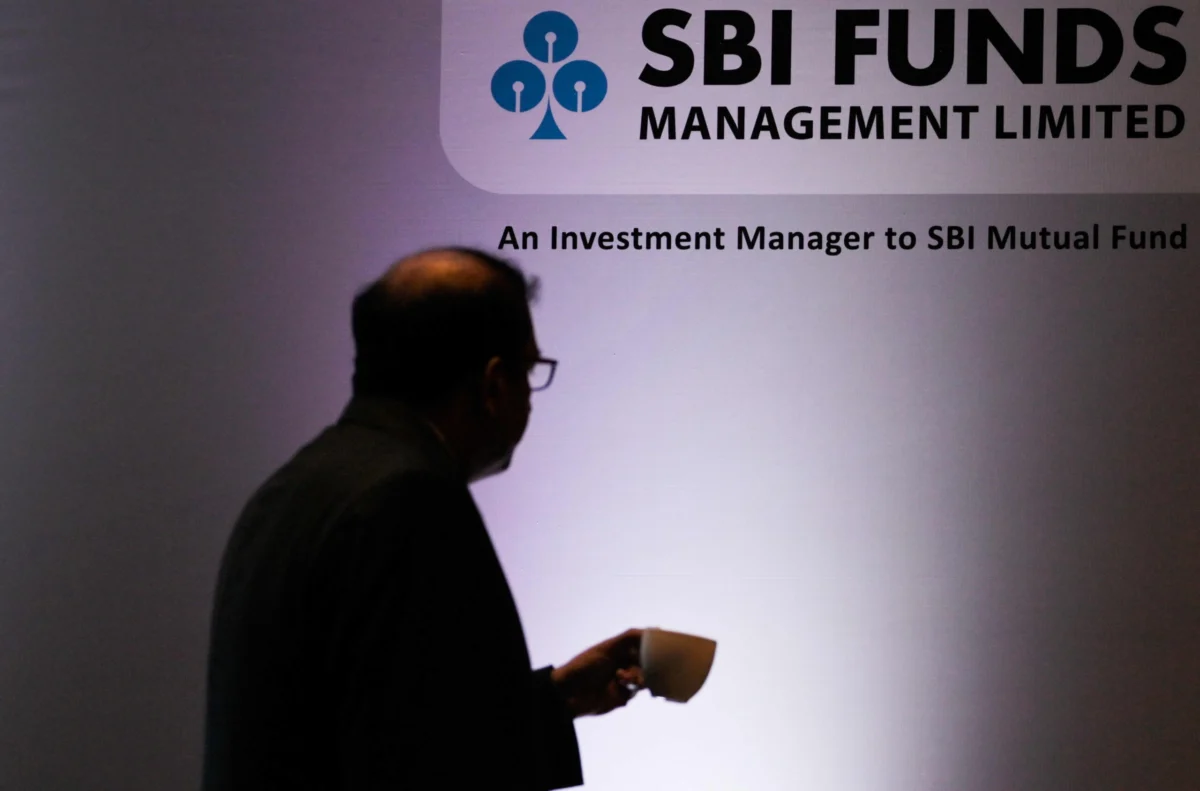
Mumbai, India – In a resounding demonstration of robust market liquidity and investor confidence, SBI Fund Management Ltd., a prominent joint venture between India’s largest public sector bank, State Bank of India, and Europe’s asset management giant Amundi Group, has successfully concluded the largest public market offering in India this year. The initial public offering (IPO), which aimed to raise 97.9 billion rupees ($1 billion), garnered bids totaling an astonishing 2.97 trillion rupees ($30.7 billion), resulting in an oversubscription of 41.6 times. This exceptional performance underscores the deep pools of capital available within the Indian market, setting a promising precedent for a series of much larger and highly anticipated public issues slated for the latter half of 2026.
The IPO, which closed on Thursday, July 14, 2026, saw an overwhelmingly enthusiastic response, particularly from institutional investors. The portion specifically reserved for Qualified Institutional Buyers (QIBs) was subscribed a remarkable 140 times, indicating a fervent appetite among large financial entities. The bulk of these significant bids originated from domestic institutional investors, including leading Indian banks and insurance companies, signaling a strong belief in the company’s fundamentals and the broader market’s potential. In contrast, participation from retail investors, while still positive, was relatively more subdued, with subscriptions reaching 3.6 times the allocated offer. This differential in investor enthusiasm highlights a trend where institutional players are often quicker to capitalize on perceived value and growth opportunities in large-cap offerings, while retail investors may exhibit a more cautious approach or allocate capital to smaller, potentially higher-risk/higher-reward segments.
A Deeper Dive into SBI Fund Management
SBI Fund Management Ltd. stands as India’s largest asset management company (AMC), a testament to its extensive reach and comprehensive suite of financial products. As of March 2026, the company boasted an impressive 29.5 trillion rupees ($395 billion) in assets under management (AUM), solidifying its leadership position in the fiercely competitive Indian mutual fund industry. The joint venture structure, combining the extensive distribution network and brand trust of State Bank of India with the global investment expertise of Amundi Group, has been a cornerstone of its success. This strategic alliance has enabled SBI Fund Management to offer a diverse range of investment solutions, catering to both retail and institutional clients across various asset classes, including equity, debt, and hybrid funds.
The decision to go public was a strategic move aimed at unlocking shareholder value, enhancing brand visibility, and providing an exit opportunity for existing investors, while also potentially raising capital for future expansion and technological upgrades. For State Bank of India, the IPO further monetizes a valuable asset, contributing to its non-interest income and strengthening its balance sheet. For Amundi Group, it reinforces its commitment to the Indian market, a key growth engine for global asset managers. Analysts widely viewed the IPO as a litmus test for the resilience of the Indian capital markets, particularly given the economic headwinds experienced earlier in the year. Its emphatic success now serves as a powerful endorsement of the underlying strength and future prospects of India’s financial services sector.
Navigating a Challenging Economic Landscape: H1 2026 Context
The overwhelming success of the SBI Fund Management IPO arrives after a period of considerable volatility and subdued activity in the Indian capital markets during the first half of 2026. This slowdown was primarily attributed to a confluence of global geopolitical tensions and their resultant economic repercussions. Foremost among these factors was the escalation of the Iran war, which sent global energy prices soaring. As a major net importer of crude oil, India’s economy was particularly vulnerable to these price shocks. Higher energy costs directly impacted corporate profitability, fueled inflationary pressures, and eroded consumer purchasing power, taking the sheen off India’s previously robust domestic consumption story.
Simultaneously, the global investment landscape witnessed a significant paradigm shift, characterized by a massive rally in Artificial Intelligence (AI) stocks. This phenomenon drew substantial capital away from emerging markets, including India, towards developed market technology companies that were perceived as "champions" in the AI revolution. India, while having a burgeoning tech sector, did not yet possess globally recognized AI giants capable of attracting similar levels of international investment. This dual pressure – rising energy costs and a global investment pivot towards AI – exerted considerable downward pressure on Indian equities.
Consequently, since the start of 2026, India’s benchmark Sensex index had lost over 9.4%, positioning it among the worst-performing large stock markets globally. The broader Nifty 50 index also suffered, declining by 7.9% during the same period. This downturn led many companies to defer their fundraising plans, contributing to the quiet spell in the IPO market.
A Glimmer of Hope: The Post-Ceasefire Recovery
A significant turning point occurred in June 2026, following a crucial ceasefire agreement between Iran and the United States. This de-escalation of geopolitical tensions had an immediate positive impact on global oil markets, leading to a moderation in energy prices. The respite from inflationary pressures and the reduction in economic uncertainty provided a much-needed boost to investor sentiment in India. Almost immediately, the Indian market began a partial recovery, and numerous companies, buoyed by renewed optimism, started announcing their fundraising intentions, signaling the potential for a rebound in capital market activity.
The SBI Fund Management IPO’s triumphant oversubscription is therefore not merely a reflection of the company’s individual strength but also a strong indicator that the market has regained its footing and is ready to absorb significant capital inflows. It underscores the underlying resilience of the Indian economy and the inherent liquidity within its financial system, which had been temporarily overshadowed by external factors.
India’s IPO Market: A Historical Perspective and Future Prospects
For the two preceding years, 2024 and 2025, India had distinguished itself as the most prolific IPO market globally, recording the highest number of listings. This boom was driven by a combination of factors, including robust economic growth, a burgeoning middle class fueling domestic consumption, strong policy support for business, and a trend of multinational corporations listing their local business units to unlock value and tap into India’s deep investor base. The market’s ability to attract diverse companies, from technology startups to traditional manufacturing giants, showcased its depth and breadth.
The H1 2026 slowdown, while significant, now appears to be an anomaly rather than a reversal of this long-term trend. The success of SBI Fund Management’s offering has reignited expectations for a monumental second half of the year. Market prognosticators, including Mumbai-based IPO intelligence firm Prime Database, estimate that public offerings worth a staggering $50 billion could potentially flood the Indian markets by the end of 2026. This pipeline includes some of the country’s most iconic and valuable enterprises.
Paving the Way for Mega Listings: NSE and Jio Platforms
The robust institutional interest witnessed in the SBI Fund Management IPO is particularly good news for two of India’s most anticipated public issues: the National Stock Exchange (NSE) and the country’s largest wireless telecommunications company, Jio Platforms. Both companies are expected to hit the market later this year, with each estimated to raise more than $3 billion, according to Prime Database.
The National Stock Exchange, India’s premier stock bourse, has been a cornerstone of the country’s financial infrastructure. Its IPO has been long-awaited, and its listing is expected to be a landmark event, offering investors a direct stake in the growth of India’s capital markets. Given its critical role in facilitating trading and its strong revenue streams from listing fees, transaction charges, and data services, the NSE IPO is likely to attract immense institutional and retail interest, potentially rivaling or even surpassing the enthusiasm seen for SBI Fund Management.
Jio Platforms, a subsidiary of Reliance Industries and the digital arm of the conglomerate, is another behemoth poised to make its public debut. As India’s largest wireless telecommunications company, Jio has revolutionized the digital landscape with its affordable data services, extensive network, and a growing ecosystem of digital applications. Its IPO is expected to be one of the largest in Indian corporate history, attracting global investors keen to participate in India’s digital transformation story. The success of the SBI Fund Management IPO provides a crucial positive signal, indicating that there is ample liquidity and investor appetite for such large-scale offerings, even amidst the backdrop of evolving global economic dynamics. Other potential listings, such as PhonePe, the digital payments giant, are also rumored to be in the pipeline, further adding to the projected $50 billion fundraising spree.
Market Sentiment and Future Outlook
All eyes will now be on the listing performance of SBI Fund Management next week. A strong debut, characterized by significant post-IPO gains, would serve as a powerful catalyst, further increasing investor appetite for new issues and validating the current market recovery. Conversely, any underperformance, though unlikely given the oversubscription, could inject a note of caution into the market.
Market analysts and investment bankers are largely optimistic, interpreting the SBI Fund Management IPO as a clear indication that domestic liquidity remains strong and that investors are willing to deploy capital into high-quality assets with robust growth prospects. "The phenomenal response to SBI Fund Management’s IPO is a testament to the underlying strength of India’s financial sector and the deep liquidity available from domestic institutions," remarked a senior investment banker at a leading Mumbai firm, who requested anonymity due to compliance policies. "It sends a very strong signal ahead of the NSE and Jio Platforms offerings, suggesting that these mega-IPOs will likely find eager takers."
However, the continuation of the Iran war, even in a de-escalated state, remains a key risk factor. Any renewed escalation could once again disrupt global energy markets, trigger inflationary pressures, and dampen investor sentiment. Therefore, while the immediate outlook is positive, market participants will remain vigilant, closely monitoring geopolitical developments and their potential impact on India’s economic trajectory.
In conclusion, the resounding success of the SBI Fund Management IPO marks a significant turning point for the Indian capital markets in 2026. It signals a robust return of investor confidence and substantial liquidity, effectively clearing the path for an unprecedented wave of mega-listings in the latter half of the year. While global uncertainties persist, the Indian market’s resilience and its capacity to attract significant capital underscore its enduring appeal as a key investment destination.
