

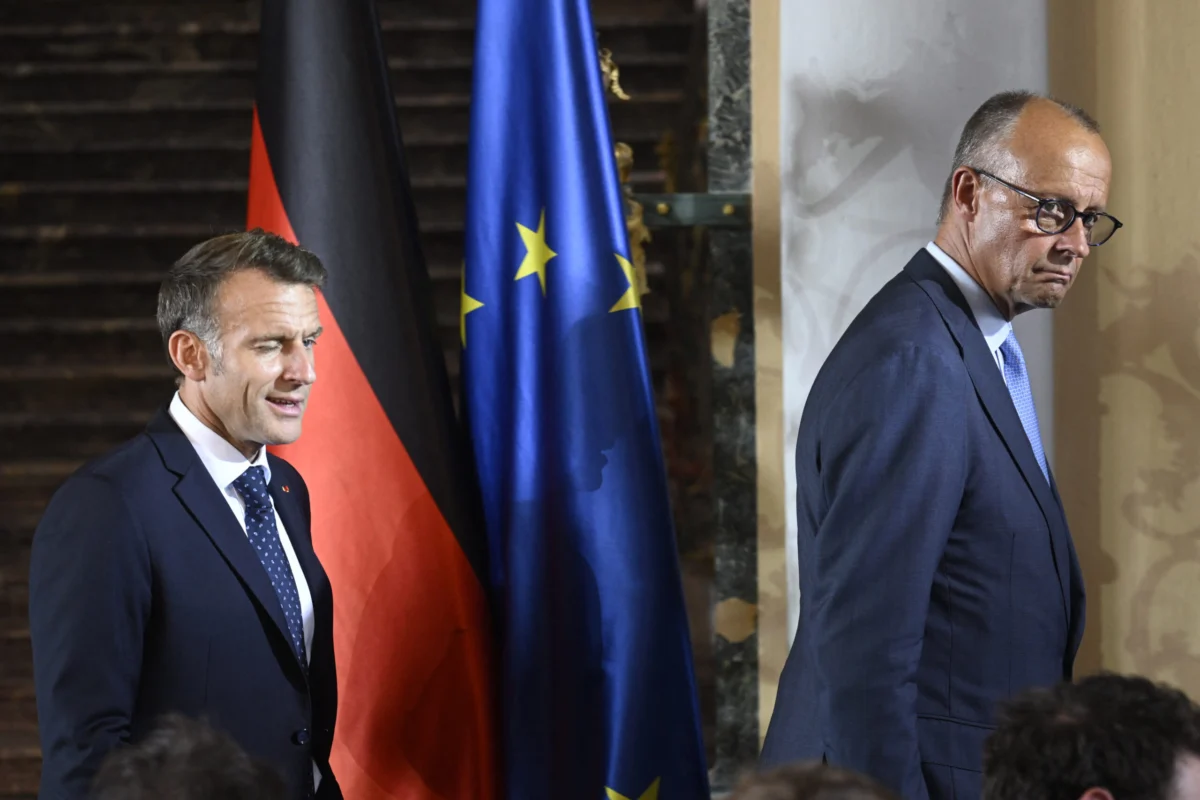
In a pivotal moment for European security, Germany has announced it will participate in a French nuclear deterrence exercise for the first time later this year, signaling a significant deepening of Franco-German military cooperation. German Chancellor Friedrich Merz, speaking alongside French President Emmanuel Macron near Cologne on Friday, emphasized that this unprecedented step is part of a new shared "deterrence strategy" and could potentially lead to a "new doctrine" for European defense. This move, however, comes with a crucial caveat from Berlin: it is explicitly not intended to replace the existing NATO nuclear umbrella, to which Germany remains firmly committed.
Chancellor Merz revealed the details, stating, "We will have German conventional forces participate in a nuclear exercise conducted by the French armed forces before the end of this year." He underscored the incremental nature of this collaboration, adding, "We are proceeding step by step, it may be that this will result in a new doctrine, but it is far too early to say that today." The announcement highlights a growing push for European strategic autonomy, particularly against a backdrop of escalating geopolitical tensions and perceived uncertainties surrounding future US security commitments to the transatlantic alliance.
The Genesis of a New European Deterrence Paradigm
The decision marks a historic shift for Germany, a nation long constrained by its post-World War II pacifist foreign policy and deeply reliant on the collective security framework of NATO. For decades, previous German administrations have notably declined overtures for direct nuclear cooperation with France, primarily due to domestic political sensitivities and a staunch commitment to multilateral disarmament efforts. Chancellor Merz acknowledged this historical reluctance, noting that "the world we live in today requires new answers." This paradigm shift is largely driven by the seismic geopolitical tremors emanating from Russia’s full-scale invasion of Ukraine in February 2022, which fundamentally altered Germany’s strategic calculus and prompted its landmark "Zeitenwende" (turning point) in defense policy.
The "Zeitenwende" saw Germany commit a special fund of €100 billion to modernize its Bundeswehr, aiming to build the strongest conventional military in Europe by 2039. This dramatic increase in defense spending and a renewed focus on military readiness provide a powerful context for the current cooperation with France. By integrating its conventional forces into a French nuclear exercise, Germany seeks to gain invaluable insights into nuclear deterrence strategies and operational protocols, enhancing its understanding of the highest level of strategic defense, even without possessing its own nuclear weapons.
Addressing Transatlantic Uncertainties: A Catalyst for Self-Reliance
The timing of this Franco-German initiative is particularly significant, unfolding amid persistent questions about the durability of US security pledges to Europe. The past few years have seen a noticeable strain in transatlantic relations, particularly concerning defense burden-sharing. Washington has recently indicated plans to reduce some military assets assigned to NATO operations in Europe, a decision that has been met with apprehension across the continent. Moreover, former US President Donald Trump, a vocal critic of NATO, has repeatedly questioned the alliance’s relevance and called for European nations to shoulder a greater share of their defense costs. His statements during a recent NATO summit in Türkiye, where he again lashed out at member states for insufficient spending, have only amplified concerns about a potential future withdrawal or reduction of US support, especially if he returns to office.
This atmosphere of uncertainty has galvanized European leaders, including Macron, in their pursuit of greater strategic autonomy. France, with its independent nuclear deterrent, the "Force de Frappe," sees itself as the natural vanguard for a more self-reliant European defense architecture. Since the United Kingdom’s departure from the European Union in 2020, France has remained the only nuclear power within the 27-nation bloc, placing a unique responsibility on Paris to lead discussions on European deterrence. In March 2026, President Macron publicly announced an increase in the French nuclear arsenal and extended an invitation to European partners to strengthen cooperation on nuclear deterrence, a call that Germany has now unequivocally answered.
France’s Independent Deterrent and the European Vision
France’s nuclear doctrine, based on "strict sufficiency" and independent decision-making, has historically been distinct from NATO’s integrated nuclear planning. The "Force de Frappe," developed in the 1960s, serves as the ultimate guarantee of French sovereignty and vital interests. Macron’s vision, however, seeks to expand the protective umbrella of this deterrent, conceptually, to encompass broader European security interests. He has consistently argued that Europe cannot rely solely on the United States for its ultimate security, especially in an increasingly volatile global landscape marked by the return of great power competition.
President Macron articulated that Germany would play a "vanguard role" in this enhanced deterrence, which he deems "critical for Europe’s collective security." He elaborated on the practical aspects of cooperation, stating it would translate into "explaining some aspects of how we operate, sharing certain closely held practices, offering joint exercises, developing joint initiatives and partnerships and fostering greater… trust among our teams, experts and military personnel." Crucially, Macron clarified that this enhanced nuclear deterrence cooperation would not involve any direct financing from Germany for the maintenance or development of the French nuclear arsenal, alleviating potential financial and political hurdles for Berlin.
Germany’s Dual Commitment: NATO and European Autonomy
Despite the groundbreaking nature of this Franco-German venture, Chancellor Merz was resolute in his affirmation that it "complements our commitment to NATO’s nuclear sharing and deterrence arrangements, which we continue to uphold." This statement is vital for reassuring both Washington and other NATO allies that Germany is not pivoting away from the transatlantic alliance.
Germany has been a key participant in NATO’s nuclear sharing agreement since the Cold War. As part of this arrangement, US tactical nuclear bombs are stored on German soil, specifically at Büchel Air Base. In the event of a conflict, German warplanes, such as the Tornado and its planned successor, the F-35A Lightning II, are certified to potentially carry and deliver these weapons, operating under NATO command. This dual capability underscores Germany’s long-standing, albeit indirect, role in nuclear deterrence within the NATO framework. The cooperation with France is framed as an additive layer, designed to enhance European capabilities and understanding of deterrence, rather than an alternative to the foundational NATO architecture.
A Timeline of Shifting Alliances and Growing Self-Reliance
- Pre-2022: Germany maintains a largely pacifist foreign policy stance, consistently declining direct nuclear cooperation with France, despite occasional French overtures. Its security doctrine remains firmly anchored in NATO.
- February 2022: Russia launches a full-scale invasion of Ukraine. This event serves as a major catalyst for Germany’s "Zeitenwende," a fundamental shift in its defense and foreign policy, leading to a massive increase in defense spending and a renewed focus on military readiness.
- March 2026: French President Emmanuel Macron announces an increase in France’s nuclear arsenal and issues a public invitation to European partners to strengthen cooperation on nuclear deterrence, aiming for greater European strategic autonomy.
- June 2026: Reports emerge of US plans to reduce some military assets deployed for NATO operations in Europe, fueling concerns about US commitment and further prompting European calls for self-reliance.
- July 2026: During a NATO summit in Türkiye, former US President Donald Trump reiterates his criticisms of NATO and calls for increased burden-sharing from European allies, intensifying anxieties about future transatlantic security.
- The Day Before the Announcement (Thursday): As a symbolic prelude to their deeper cooperation, French Rafale fighter jets and German Eurofighters participate in a joint in-flight refuelling exercise. Rafale jets are a key component of France’s nuclear delivery capability.
- The Announcement (Friday): German Chancellor Friedrich Merz and French President Emmanuel Macron announce Germany’s first-ever participation in a French nuclear drill before the end of this year, signaling a new era of Franco-German defense collaboration.
- Towards 2039: Germany continues its ambitious rearmament plan, aiming to build Europe’s strongest conventional military, further solidifying its role as a key security provider within Europe and NATO.
Wider European Engagement and Implications
The Franco-German initiative has resonated across Europe, with several countries expressing interest in strengthening cooperation on nuclear deterrence with France. This list includes not only key EU members like the Netherlands, Belgium, Greece, and Sweden, but also non-EU NATO allies such as Poland, Denmark, and Norway, and even the United Kingdom, despite its departure from the EU. This widespread interest underscores a collective European acknowledgment of the evolving security landscape and the imperative for greater self-sufficiency.
Poland’s interest, for instance, can be attributed to its historical proximity to Russia and its persistent calls for stronger deterrence on NATO’s eastern flank. The Nordic and Baltic states, similarly, are acutely aware of the Russian threat and are seeking to bolster all facets of their defense. The participation of Germany, a major economic and political power in Europe, provides significant momentum and credibility to Macron’s vision for a more robust European defense identity.
Reactions and Expert Analysis
While official reactions from the United States and NATO headquarters have yet to be fully articulated, it is anticipated that they will be carefully calibrated. Washington is likely to acknowledge European efforts to enhance their own defense capabilities while simultaneously reiterating its foundational commitment to NATO. The message would likely emphasize that such cooperation, if it strengthens overall deterrence and interoperability, can be seen as complementary to NATO’s mission, rather than a divisive force.
NATO, through its Secretary-General, would likely echo this sentiment, stressing the importance of alliance unity and the continued relevance of its own nuclear deterrence policy. The alliance has long encouraged European allies to invest more in defense and take on greater responsibility for their own security.
Defense analysts suggest that this Franco-German cooperation represents a delicate balancing act. On one hand, it addresses a legitimate European desire for greater strategic autonomy and resilience in the face of perceived US unpredictability. On the other hand, it must be managed carefully to avoid any perception of creating a parallel or competing security architecture that could inadvertently weaken NATO’s cohesion. The emphasis by Merz that this initiative "complements" NATO rather than replaces it is therefore crucial for its acceptance within the broader transatlantic framework.
The Path Ahead: Implications for European Security
The decision for Germany to join French nuclear drills marks a significant milestone in the ongoing evolution of European security architecture. It signifies not just a bilateral strengthening between the two largest economies in the Eurozone, but also a broader commitment to developing a more integrated and capable European defense posture.
The implications are far-reaching:
- Enhanced European Strategic Autonomy: This move undeniably pushes Europe closer to achieving its long-held ambition of greater strategic autonomy, providing a more robust indigenous capability for deterrence and defense.
- Improved Interoperability and Doctrinal Understanding: Direct participation in nuclear exercises will deepen Germany’s understanding of French nuclear doctrine and operational procedures, fostering greater interoperability between their conventional forces and France’s nuclear assets.
- Diplomatic Repercussions: The initiative sends a clear message to potential adversaries about Europe’s resolve, while also navigating complex diplomatic waters with the United States and other non-nuclear EU member states who might have reservations about any perceived nuclear proliferation.
- Future of NATO Burden Sharing: While presented as complementary, this cooperation will inevitably spark further debate within NATO about the future distribution of defense responsibilities and the nature of transatlantic solidarity.
- Industrial and Technological Cooperation: The deepened military ties could pave the way for further joint defense projects, fostering industrial cooperation and innovation within the European defense sector.
In conclusion, Germany’s unprecedented participation in French nuclear drills is a defining moment, reflecting Europe’s determination to forge its own security destiny in an era of profound global uncertainty. While firmly anchoring itself within the existing NATO framework, this Franco-German initiative charts a course towards a more self-reliant, strategically autonomous Europe, capable of addressing the complex security challenges of the 21st century with greater confidence and cohesion.
