

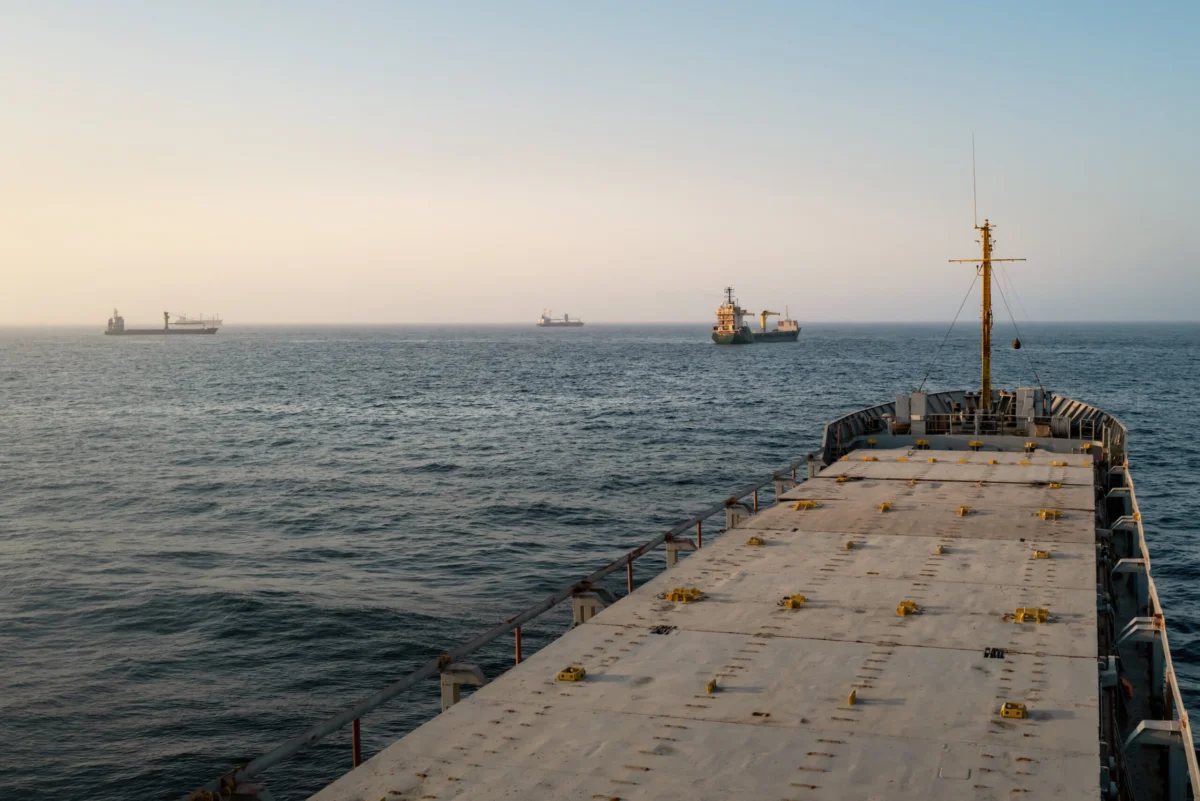
Shipping traffic has begun a tentative recovery through the vital Strait of Hormuz, a critical global energy chokepoint, a week after the United States and Iran signed a landmark deal to reopen the waterway. However, a renewed attack on a cargo ship on Thursday has cast a fresh shadow of uncertainty over the fragile passage, halting United Nations evacuation plans and forcing some tankers to alter course. The incident underscores the precarious nature of the truce and the complex geopolitical landscape governing this crucial maritime artery, which typically handles approximately 20% of the world’s oil traffic.
The ceasefire, brokered after months of escalating tensions and a significant military conflict that began in late February, has seen a surge in maritime activity. Between June 15th and June 21st, a total of 125 transits were recorded, representing the highest weekly figure since the conflict’s inception. This uptick reflects a rush by oil tankers to move stored Gulf crude before the 60-day truce window expires. Data from AXS Marine further illustrates this recovery, with 62 commercial vessel crossings recorded on June 24th, the highest single-day count since the war began. However, this figure still represents only 53% of the traffic observed on the same day in the previous year, indicating that a full return to pre-conflict levels remains distant.
The renewed attack, targeting the Singapore-flagged Evergreen container ship Ever Lovely off the Omani coast on Thursday, marks the first hostile act against a cargo vessel since the ceasefire took effect. A projectile struck the ship on its starboard side, and a U.S. official attributed the strike to the Islamic Revolutionary Guard Corps (IRGC). This incident occurred just hours after the IRGC declared on Wednesday that all ships must exclusively utilize its designated northern route and adhere to Iranian routing instructions. This directive immediately created a bifurcated maritime environment, with ships caught between competing navigational mandates.
The Strait of Hormuz, a narrow waterway situated between Oman and Iran, is a globally recognized critical energy chokepoint. Its strategic importance cannot be overstated, as any disruption can have profound implications for global energy markets and supply chains. The conflict had previously led to the closure of the standard pre-war commercial lane due to the threat of naval mines, forcing vessels into more complex and potentially hazardous alternatives.
Navigating Competing Authorities and Heightened Risks
Shipowners are now confronted with a challenging scenario, forced to navigate between two competing authorities with no universally agreed-upon rules for safe passage. One route is under the strict control of Iran, dictating specific navigational protocols. The other is a southern passage through Omani waters, supported by the United States, with Oman issuing navigational guidance and the U.S. Navy providing oversight. This dichotomy leaves shipping companies in a precarious position, facing a difficult choice: either risk transit through an environment fraught with potential dangers and unclear directives, or hold back and risk ceding ground to competitors willing to assume greater risks.
The implications of this uncertainty are far-reaching. Bruce Tan, a Singapore-based electronics manufacturer, spoke to the hesitations faced by businesses. He revealed that he had delayed deliveries to his Middle East clients for four months. While he has now resumed moving goods through the corridor, he is doing so in small batches, a precautionary measure in case the Strait closes again. Furthermore, Tan is strategically routing some orders through alternative corridors as a hedge against any future disruptions. This cautious approach highlights the lingering apprehension and the need for robust contingency planning within the global trade sector.
A Tentative Recovery and Lingering Doubts
Despite the recent attack, some industry leaders remain cautiously optimistic about the long-term trend of transits. Aristidis Alafouzos, CEO of Okeanis Eco Tankers Corp, a crude oil shipping company headquartered in Greece, expressed his belief that Thursday’s incident would not significantly alter the overall recovery trajectory. "We’ve seen a large increase, especially on the crude oil passages, and I think this is set to continue and maybe this one-off event isn’t enough to really disrupt the recent events of the large exports of Kuwaiti and Emirati crude oil from the Gulf," Alafouzos stated in an interview.
However, Alafouzos also pointed out a significant missing element in the recovery: Saudi Arabia. He noted that Saudi Arabia has, for the most part, not been exporting significant volumes from within the Arabian Gulf, with its exports primarily originating from Yanbu in the Red Sea. This observation suggests that the full potential of the Strait’s reopening might not be realized until Saudi Arabian oil traffic returns to pre-conflict levels.
The Economic Calculus of Risk and Insurance
The economic ramifications of navigating the Strait of Hormuz in its current state are substantial, particularly concerning insurance premiums. Tim Huxley, CEO of Singapore-based Mandarin Shipping, which manages a global fleet of 50 vessels, has kept all of its ships out of the strait, citing the inherent dangers. "We don’t know how much of the straits is mined – it can be very dangerous going through that," Huxley stated, emphasizing the unknown risks associated with the mine-laden waters.
Huxley further elaborated on the complex decision-making process for shipowners. "You’ve got this debate about who is authorizing ships to go through, what level of control the Iranians have on one side, the Americans have on the other. A lot of ship owners are just saying: I’m going to wait and see how these talks progress before I commit to sending a ship, its cargo, and most importantly, its crew," he explained.
The cost of insuring voyages through the Strait remains a significant deterrent. "Insurance premiums are still very high on ships and cargoes going through the straits," Huxley added. "Until there is a more concrete set of guidelines on safe navigation, people are going to be very reticent to go through." This sentiment is echoed by Han Shen Lin, China country director of The Asia Group, who provided a stark assessment of the financial pressures. "Boardrooms aren’t asking about cargo safety – they’re asking if it is insurable. War-risk premiums have shot up from 0.05% to over 0.7% of hull value per transit. That’s not a risk premium, that’s a serious business model stress test," Han declared.
The financial consequences of an incident extend beyond direct costs. "One vessel seizure doesn’t just cost you the cargo – it costs you the client relationship, the insurance renewal, and your board’s confidence. Speed is worthless without survivability," Han cautioned, underscoring the multifaceted risks involved in resuming operations in this volatile region.
A Chronology of Escalation and De-escalation
The events leading up to and following the current situation in the Strait of Hormuz can be traced through a series of critical moments:
- Late February 2026: A significant military conflict erupts in the Persian Gulf region, directly impacting maritime traffic and leading to the closure of the Strait of Hormuz to commercial shipping. This period marks the beginning of heightened geopolitical tensions and a severe disruption to global energy supplies.
- March – Early June 2026: The closure of the Strait of Hormuz results in a substantial increase in stored crude oil in the Gulf. Shipping companies are forced to reroute vessels or anchor them off the coast of Oman, leading to significant congestion at ports like Port Sultan Qaboos. Reports emerge of tankers being stranded for days due to the inability to dock and unload.
- Mid-June 2026: Diplomatic efforts intensify, culminating in a U.S.-Iran deal to reopen the Strait of Hormuz. This agreement ushers in a 60-day truce, signaling a de-escalation of tensions and providing a window for maritime traffic to resume.
- June 15-21, 2026: Following the ceasefire announcement, shipping traffic begins to recover. AXS Marine records 125 transits, the highest weekly total since the conflict began, as tankers rush to clear accumulated crude.
- June 24, 2026: AXS Marine records 62 commercial vessel crossings, a single-day high since the war started, although still significantly lower than the previous year’s traffic.
- Wednesday, June 25, 2026: The Islamic Revolutionary Guard Corps (IRGC) issues a directive mandating all ships to use its designated northern route and comply with Iranian routing instructions. This creates a dual-lane system, with Iran controlling one and Oman/U.S. backing the other.
- Thursday, June 26, 2026: The Singapore-flagged Evergreen container ship Ever Lovely is struck by a projectile off the Omani coast. A U.S. official attributes the attack to the IRGC, marking the first attack on a cargo vessel since the ceasefire. This incident leads to the halting of UN evacuation plans and prompts some tankers to reconsider their routes.
- Friday, June 27, 2026: Industry leaders like Aristidis Alafouzos of Okeanis Eco Tankers Corp express cautious optimism about the long-term recovery trend, while acknowledging the impact of the recent attack. Analysts continue to highlight the risks and the need for clearer navigation guidelines.
Broader Implications for Global Trade and Geopolitics
The ongoing situation in the Strait of Hormuz serves as a stark reminder of the interconnectedness of global energy markets and the vulnerability of critical maritime trade routes to geopolitical instability. The reopening of the Strait, even under a fragile truce, is crucial for maintaining stable oil prices and ensuring the flow of goods essential for the global economy.
However, the recent attack underscores that the underlying tensions have not been fully resolved. The dual-lane system, coupled with the threat of further incidents, creates an environment of persistent risk. This uncertainty not only impacts shipping companies and their clients but also has broader implications for energy security and international relations. The ability of the U.S. and Iran to maintain a dialogue and establish clear, enforceable protocols for safe passage will be critical in determining the long-term stability of this vital waterway. The global community will be closely watching as diplomatic efforts continue to navigate these treacherous waters and secure a lasting peace in the Strait of Hormuz.
