

July 13, 2026
By Nina L. Khrushcheva
Russia is confronting an escalating cost for President Vladimir Putin’s chosen war, a price manifested in relentless Ukrainian drone strikes, soaring inflation, and pervasive fuel shortages. Yet, this conflict has paradoxically become the central organizing principle of Putin’s regime, effectively precluding any prospect of lasting peace without a fundamental political metamorphosis within Russia itself. The nation finds itself at a critical juncture, where the continuation of the war, despite its mounting domestic repercussions, has become inextricably linked to the very survival of the current political order.
The Deepening Economic Strain
The economic ramifications of the protracted conflict are becoming increasingly palpable across Russia. Data from the Federal State Statistics Service (Rosstat) indicates a significant downturn in consumer spending, with inflation rates consistently outstripping wage growth. In the first half of 2026, the official inflation figure hovered around 9.5%, a stark contrast to pre-war levels. This persistent price increase is particularly acute in essential goods, placing immense pressure on households. The cost of staple foods, such as bread and dairy products, has seen an average rise of over 15% in the past year, according to independent economic analysts.
Furthermore, the war has exacerbated existing vulnerabilities in Russia’s energy sector. While historically a major energy exporter, the imposition of international sanctions and the redirection of resources towards military expenditure have led to domestic fuel shortages in several regions. Reports from Siberian and Far Eastern provinces detail localized disruptions in fuel supply, impacting transportation and agricultural activities. This has, in turn, contributed to a rise in the cost of goods and services, creating a vicious cycle of economic hardship. The reliance on a war economy has diverted critical investment from infrastructure development and technological advancement, potentially hindering Russia’s long-term economic competitiveness.
The Strategic Landscape: Escalation and Countermeasures
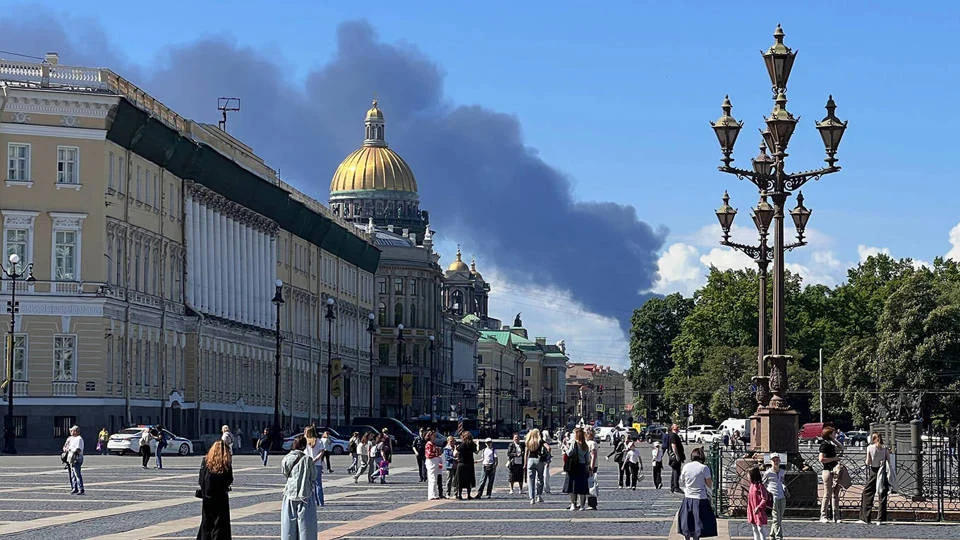
The operational tempo of the conflict has seen a marked increase, particularly in the realm of aerial warfare. Ukrainian drone strikes, once sporadic, have become a regular feature of the conflict, targeting military infrastructure, energy facilities, and logistical hubs within Russian territory. In recent months, at least a dozen major industrial sites and several key oil refineries have sustained damage from these incursions. The Ukrainian military command has stated its strategic objective is to degrade Russia’s war-making capacity and disrupt its economic support for the invasion.
Russia’s response has involved a multi-layered air defense system, but the sheer volume and evolving sophistication of Ukrainian drones present a persistent challenge. The economic cost of defending its vast territory against these aerial threats is substantial, diverting resources that could otherwise be allocated to domestic priorities. The psychological impact of these strikes, bringing the war directly to Russian soil, is also a significant factor, eroding public confidence and contributing to a sense of insecurity.
Historical Echoes: The Perils of Ideology and Autocracy
The current predicament in Russia carries historical echoes, particularly concerning the entanglement of ideology with state policy. As Nina L. Khrushcheva notes in her analysis, the invocation of grand theories to justify state actions has a recurring and often catastrophic legacy in Russian history. Karl Marx’s assertion that "theory becomes a material force the moment it grips the masses" was interpreted and implemented with devastating consequences by Soviet leaders.
Vladimir Lenin, for instance, harnessed Marxist theory to legitimize a radical revolution, ushering in an era of profound societal upheaval and civil war. Joseph Stalin then weaponized a distorted version of Marxist-Leninism to enforce rapid industrialization and collectivization, leading to widespread famine and the deaths of millions through purges and forced labor. Even Nikita Khrushchev’s attempt at de-Stalinization, while aiming to rectify past abuses, was presented as an ordering of history, reflecting a persistent belief in the state’s capacity to unilaterally dictate historical trajectories.
Putin’s current approach appears to draw from this lineage, framing the war in Ukraine not merely as a geopolitical conflict but as an existential struggle to preserve a perceived Russian civilizational identity and to counter a hostile Western order. This ideological framing, while resonating with a segment of the population, has also served to entrench the current leadership, making any deviation from the war’s objectives appear as a betrayal of national principles.
The War as the Regime’s Organizing Principle
The assertion that the war has become the "organizing principle" of Putin’s regime suggests a profound shift in the state’s priorities and its internal logic. Rather than a policy to be pursued for specific, achievable ends, the war has seemingly transformed into the very foundation upon which the regime’s legitimacy and operational framework are built. This implies that the cessation of hostilities, without achieving a perceived victory or a fundamental alteration of the geopolitical landscape, would leave the regime vulnerable to internal questioning and potential challenges.
This dynamic creates a self-perpetuating cycle. The domestic costs of the war, while mounting, are managed through increased state control, censorship, and the suppression of dissent, thereby reinforcing the regime’s authoritarian grip. The narrative of external threat and national unity is amplified to deflect attention from economic hardships and the human toll of the conflict. This has, in essence, created a political structure that is deeply invested in the continuation of the war, making any genuine pursuit of peace contingent upon a dismantling of the current political architecture.
The Absence of a Peace Pathway Without Transformation
The article’s central thesis posits that lasting peace is unattainable without a fundamental political transformation in Russia. This is a stark assessment, implying that the current leadership’s strategic objectives and its internal political dynamics are inherently incompatible with a peaceful resolution that respects the sovereignty and territorial integrity of Ukraine.
The implications of this statement are far-reaching. It suggests that diplomatic efforts, while necessary, may prove insufficient if they do not address the underlying political structures that drive Russia’s current course. A "fundamental political transformation" could encompass a range of scenarios, from a change in leadership to a broader shift in the country’s governance and foreign policy orientation. Without such a transformation, the cycle of conflict and its attendant domestic costs is likely to persist, with potential for further escalation or prolonged instability.
Broader Geopolitical and Economic Repercussions
The ongoing conflict and its impact on Russia have reverberated globally. The war has significantly disrupted global energy markets, contributing to price volatility and prompting a reassessment of energy security strategies by numerous nations. International sanctions imposed on Russia have, while aimed at crippling its war effort, also led to complex adjustments in global trade and financial systems.
Moreover, the conflict has underscored the fragility of international security and reignited debates about the efficacy of existing international institutions in preventing and resolving large-scale armed conflicts. The humanitarian crisis in Ukraine, with millions displaced and countless lives lost, remains a profound concern, demanding sustained international attention and assistance.
The Uncertain Future
As Russia grapples with the escalating consequences of Putin’s war, the path forward remains fraught with uncertainty. The interweaving of the conflict with the regime’s very survival presents a formidable challenge to achieving a stable and lasting peace. The historical lessons of ideologically driven state actions serve as a stark warning, while the present reality of mounting domestic costs underscores the unsustainable nature of the current trajectory. Without a fundamental shift in Russia’s political landscape, the prospect of enduring peace appears inextricably linked to the prospect of internal transformation, a development that will undoubtedly shape the future of Russia and the wider global order.
