

Residential housing markets across the United States experienced a notable deceleration in demand last week, as fluctuating mortgage rates led to a 3.8% decline in total mortgage application volume compared to the prior week. This downturn, reflected in the Mortgage Bankers Association’s (MBA) seasonally adjusted index, underscores the sensitivity of both prospective homebuyers and current homeowners to interest rate movements, even as the average contract interest rate for 30-year fixed-rate mortgages held steady.
The average contract interest rate for 30-year fixed-rate mortgages with conforming loan balances, capped at $832,750 or less, remained unchanged at 6.60%. Points, which represent upfront fees paid to the lender, also held firm at 0.63, including the origination fee, for loans structured with a 20% down payment. This stability in the benchmark rate, however, belies a week marked by significant market oscillations influenced by both domestic economic data and evolving geopolitical landscapes.
A Week of Economic and Geopolitical Tensions
The week’s volatility began with the release of the latest Consumer Price Index (CPI) data, a critical gauge of inflation. The report indicated that inflationary pressures continued their upward trajectory, initially pushing interest rates higher as markets anticipated a more hawkish stance from the Federal Reserve. Inflation, as measured by the CPI, registered a 3.7% year-over-year increase for core inflation, excluding volatile food and energy prices, exceeding analyst expectations of 3.5%. This sustained inflationary pressure typically leads bond investors to demand higher yields, which in turn elevates mortgage rates, as these rates are closely tied to the yields on U.S. Treasury bonds.
However, the latter half of the week witnessed a significant reversal, driven by growing optimism surrounding the opening of the Strait of Hormuz. Mike Fratantoni, senior vice president and chief economist at the MBA, articulated this dynamic in a recent release, stating, "Last week’s CPI data showed that inflation continued to move higher, putting upward pressure on rates early in the week, but growing optimism regarding the opening of the Strait of Hormuz brought rates down again by the end of the week." The Strait of Hormuz, a critical maritime chokepoint between the Persian Gulf and the Gulf of Oman, is vital for global oil shipments. Reports of de-escalation and improved navigability in the region signaled a potential easing of global energy supply concerns, which typically translates to lower oil prices and, consequently, reduced inflationary expectations, allowing bond yields and mortgage rates to retreat.
This geopolitical development resonated deeply with energy markets, leading to a notable decline in oil prices. Mortgage News Daily, in a separate survey, confirmed that mortgage rates continued their downward trend this week, reaching their lowest levels since May 14. This movement directly mirrored the fall in oil prices, as investors reacted favorably to the potential for an end to the protracted conflict with Iran, which had previously contributed to heightened geopolitical risk premiums and elevated commodity prices.
Expert Caution Amidst Optimism
Despite the positive market reaction, some analysts urged caution. Matthew Graham, chief operating officer at Mortgage News Daily, warned, "The only warning is that some analysts think oil prices have already gotten ahead of themselves in that regard. If those analysts are right, it could limit any additional momentum toward lower rates until peace is on more solid footing." This sentiment highlights the inherent fragility of market movements tied to geopolitical events, emphasizing that sustained rate relief would likely depend on tangible and lasting peace agreements rather than mere optimistic reports. The historical precedent of market overreactions to early signs of de-escalation serves as a critical backdrop to Graham’s advisory.
Declining Demand Across Mortgage Segments
The mixed signals in the market directly impacted demand for mortgage products. Applications to refinance a home loan dropped 5% for the week. This segment is particularly sensitive to rate changes, as homeowners typically seek to refinance when rates offer a significant advantage over their existing loans. Despite the weekly dip, refinance applications were still 17% higher than the same week one year ago. This year-over-year increase is largely attributable to the fact that mortgage rates in the corresponding period last year were nearly a quarter of a percentage point higher, making current rates comparatively more attractive for some borrowers who missed previous refinancing opportunities.
Applications for a mortgage to purchase a home also experienced a decline, falling 3% for the week. Similar to refinance activity, purchase applications showed a modest 3% increase compared to the same week one year ago. This marginal year-over-year gain underscores the persistent challenges faced by prospective homebuyers, who are contending with a confluence of adverse factors beyond just elevated mortgage rates.
The Persistent Affordability Crisis
The current housing market presents a formidable landscape for buyers. Inventory remains critically lean, with the national supply of homes for sale hovering at historically low levels, typically around a 2.5-month supply, significantly below the 6-month supply considered balanced. This scarcity, coupled with robust demand from a demographic bulge of millennial homebuyers, continues to exert upward pressure on home prices. The median existing-home price has seen a consistent upward trajectory, with year-over-year increases consistently in the mid-single digits, even as transaction volumes have tapered. According to recent data from the National Association of Realtors, the national median existing-home price for single-family homes reached $410,000 in the most recent reporting period, a 4.5% increase from the previous year.
Furthermore, buyers are grappling with ongoing uncertainty regarding the broader economic direction and the trajectory of inflation. This economic ambiguity makes long-term financial commitments, such as a mortgage, a more daunting prospect. High prices, elevated rates, and limited choices combine to create an acute affordability crisis, particularly for first-time homebuyers and those in lower-to-middle-income brackets. The average monthly mortgage payment for a median-priced home has increased by over 30% in the last two years, pushing homeownership out of reach for a significant portion of the population.
The Federal Reserve’s Pivotal Role
Adding another layer of anticipation to the market is the impending first meeting of the Federal Reserve with its new chairman, Kevin Warsh, scheduled for Wednesday. Warsh, known for his pragmatic approach and deep understanding of financial markets, takes the helm during a complex economic period. While it is not widely expected that the Federal Reserve will alter the federal funds rate at this particular meeting, investors will be meticulously scrutinizing the official statement and Warsh’s subsequent press conference for any "clues" regarding future monetary policy.
The Federal Reserve’s dual mandate is to maintain maximum employment and stable prices. Its decisions on interest rates, particularly the federal funds rate, indirectly influence mortgage rates by impacting the broader bond market. Any indications about the Fed’s stance on inflation, economic growth projections, or the potential for future rate adjustments – whether cuts or hikes – will have profound implications for mortgage markets. For instance, a stronger-than-expected commitment to combating inflation might signal higher rates for longer, while concerns over economic slowdown could hint at potential rate cuts down the line. Market analysts are particularly keen to understand Warsh’s communication style and his immediate priorities for steering monetary policy through these turbulent economic waters.
"The market isn’t just listening for rate changes; it’s listening for the Fed’s narrative," explained Dr. Evelyn Reed, a senior economist at Global Macro Advisors. "Chairman Warsh’s initial guidance will set the tone for investor expectations for months to come. Any subtle shift in language regarding economic forecasts or inflation targets could trigger significant movements in bond yields and, by extension, mortgage rates." This anticipation underscores the immense influence the central bank wields over financial markets and consumer confidence.
Looking Ahead: Volatility and Vigilance
The immediate future of mortgage rates and the housing market remains characterized by a delicate balance of economic data, geopolitical developments, and central bank policy. While the recent dip in rates offers a glimmer of relief, the underlying inflationary pressures, coupled with the inherent uncertainties of global politics, suggest that volatility is likely to persist.
For potential homebuyers, this environment necessitates vigilance and strategic planning. Monitoring rate trends, understanding the nuances of loan products, and preparing robust financial profiles are more crucial than ever. For homeowners considering refinancing, the current rate environment, while not as historically low as previous years, still presents opportunities for those with higher existing rates, especially as annual savings can still be significant.
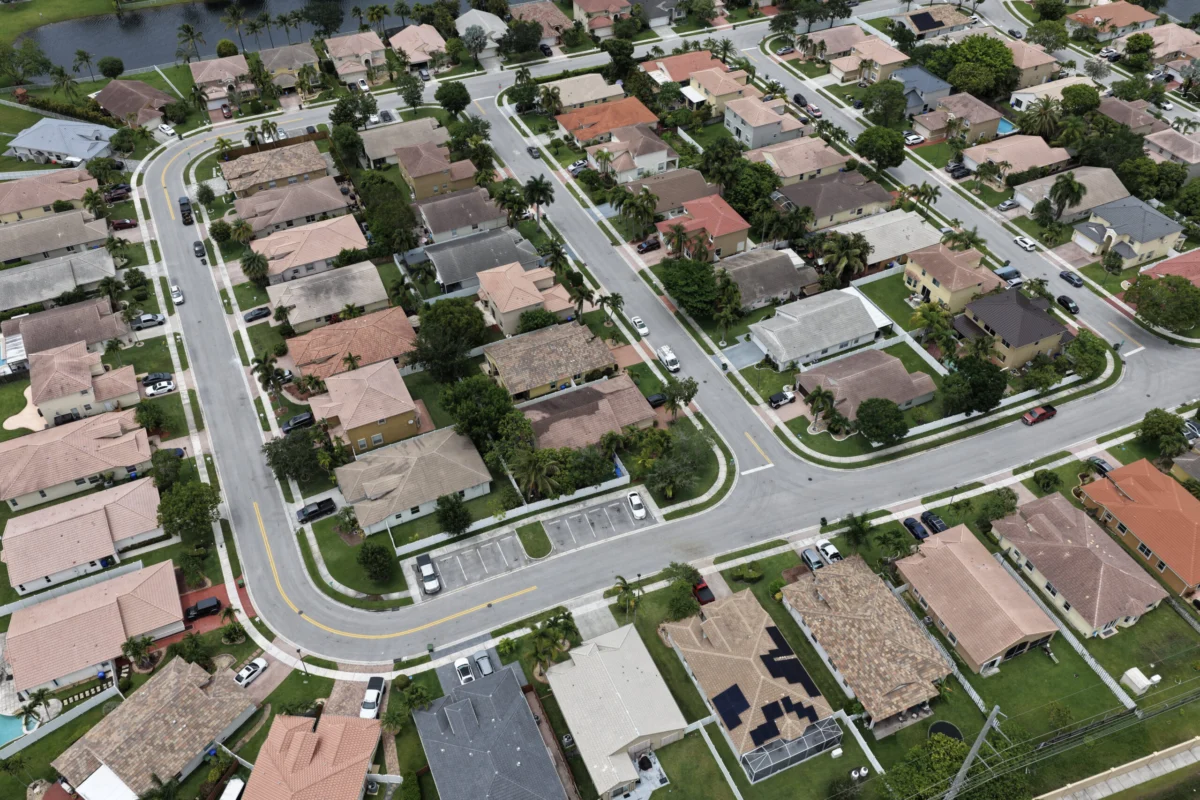
Real estate professionals continue to advise clients on the complexities of the current market. "Buyers today need to be agile and well-informed," stated Sarah Jenkins, a leading real estate agent in Pembroke Pines, Florida, where a residential neighborhood was recently captured in an aerial view. "The rapid shifts in rates mean that pre-approvals and clear financial planning are essential. Every basis point matters when you’re navigating high prices and limited inventory."
As the market continues to evolve, staying abreast of the latest developments is paramount. CNBC’s Property Play with Diana Olick offers in-depth analysis and emerging opportunities for real estate investors, delivered weekly. Those seeking to navigate these dynamic conditions can subscribe to get access today, ensuring they remain informed on the latest trends and expert insights impacting the real estate landscape. The ongoing interplay between inflation, geopolitical stability, and monetary policy will undoubtedly continue to shape the affordability and accessibility of homeownership in the coming months.
