

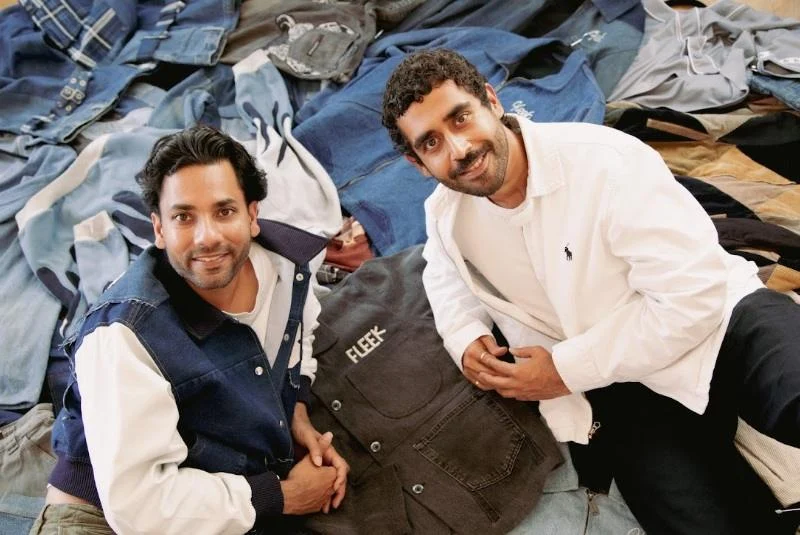
The circular fashion marketplace startup Fleek has successfully closed a $25 million Series B funding round, marking a significant milestone in the evolution of the global resale economy. The London-based company, which specializes in the B2B secondhand apparel market, intends to utilize the fresh capital to accelerate the development of its proprietary AI-powered technology. This technological pivot aims to solve the chronic logistical and standardization challenges that have historically prevented the secondhand fashion industry from scaling at the same rate as traditional retail. The investment round was led by Burda Principal Investments, with a diverse group of participants including the global e-commerce giant eBay, FJ Labs, and H14. Existing high-profile backers such as Andreessen Horowitz (a16z), HV Capital, and Y Combinator also participated, signaling continued institutional confidence in Fleek’s mission to digitize the global supply chain for used clothing.
The Technological Core: Fleek Sort and the Intelligence Layer
At the heart of Fleek’s value proposition is its "Fleek Sort" technology, a sophisticated vision-language AI model. Unlike traditional retail, where items are categorized by uniform Stock Keeping Units (SKUs), the secondhand market deals with unique, non-standardized items. Every garment in a bale of used clothing has a different brand, material composition, size, and condition. Historically, the process of identifying and grading these items has been entirely manual, leading to high labor costs, inconsistent quality, and significant pricing opacity.
Fleek Sort is trained on millions of historical secondhand transactions, allowing it to identify, categorize, and grade garments through visual data such as photographs or video. The AI does more than just recognize a shirt; it evaluates the garment’s resale value based on current market trends, brand desirability, and physical condition. This system is currently being deployed across major sorting hubs in Pakistan, India, and Dubai—regions that serve as the primary processing centers for the world’s textile waste. Furthermore, Fleek has initiated pilot programs for the technology in the United Kingdom, Europe, and the United States, aiming to bring high-tech grading closer to the points of collection and consumption.
Sanket Agarwal, co-founder and Chief Technology Officer of Fleek, emphasized the importance of data in this underserved market. According to Agarwal, the global secondhand supply chain contains a vast amount of untapped data regarding consumer preferences and garment durability. By capturing this data through AI, Fleek is creating an "intelligence layer" that acts as the critical infrastructure for the industry. This layer allows the platform to predict where demand exists, helping suppliers increase their recovery rates—the percentage of clothing that can be resold rather than discarded—and allowing buyers to source inventory with higher precision.
Addressing the Inefficiencies of a $200 Billion Industry
The global secondhand fashion market is currently valued at over $200 billion and is projected to continue its rapid ascent, growing three times faster than the traditional apparel sector. Despite this demand, the industry remains hampered by a fragmented and antiquated infrastructure. Most secondhand transactions still rely on disconnected networks of wholesalers, manual sorting processes, and a lack of standardized grading. This fragmentation often results in "deadstock," where usable clothing ends up in landfills because it was not properly identified or matched with a buyer.
Fleek’s B2B marketplace serves as a digital bridge between over 2,000 suppliers and 50,000 buyers across more than 100 countries. When inventory is processed through Fleek Sort, it is automatically listed on the global marketplace. The platform then utilizes AI-powered search, recommendation, and matching systems to connect specific stock with the right buyers, whether they are independent vintage boutiques, large-scale resellers, or online marketplaces. This automation reduces the "friction" of the trade, making it as easy for a boutique in London to source a bale of high-quality denim from a warehouse in Dubai as it would be to order new stock from a wholesaler.
Environmental Impact and the Push for Circularity
The environmental implications of Fleek’s technology are substantial. The fashion industry is frequently cited as one of the world’s most polluting sectors, responsible for approximately 10% of global carbon emissions and significant water consumption. By extending the life of garments, Fleek directly contributes to the "circular economy," a model designed to minimize waste and make the most of existing resources.
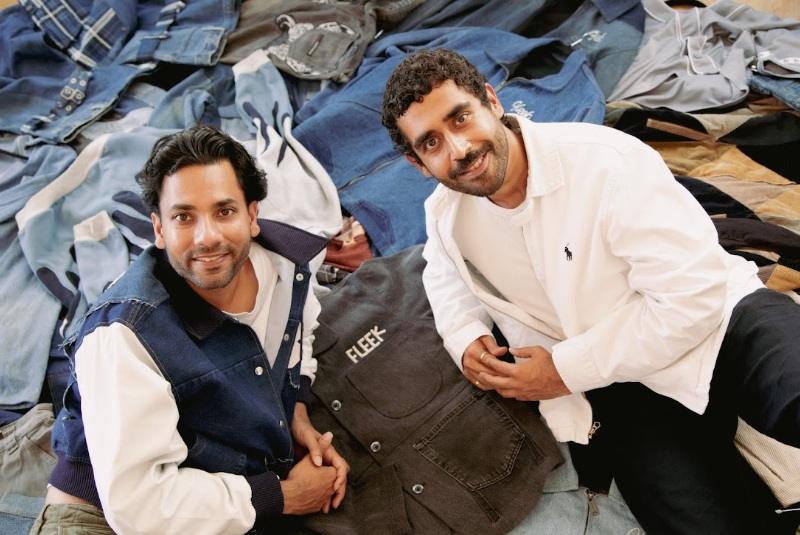
To date, Fleek estimates that its platform has kept more than 12 million garments in circulation. The environmental savings associated with these transactions are significant: approximately 13 billion liters of water saved and 23,000 tons of CO2 emissions avoided. These figures resonate with a growing global regulatory focus on textile waste. In the European Union, for example, the Strategy for Sustainable and Circular Textiles and the upcoming Digital Product Passport requirements are putting pressure on brands and retailers to account for the entire lifecycle of their products. Fleek’s ability to digitize and track the movement of used apparel provides a blueprint for how the industry might meet these future regulatory standards.
Investor Perspectives and Strategic Alliances
The inclusion of eBay in this funding round is particularly noteworthy. As one of the original pioneers of the resale market, eBay’s strategic investment suggests a move toward deeper integration between primary resale platforms and the B2B supply chains that feed them. By supporting Fleek, eBay gains exposure to the infrastructure that ensures a steady, high-quality supply of authenticated secondhand goods for its millions of users.
Julian von Eckartsberg, Managing Director Europe at Burda Principal Investments, highlighted Fleek’s role in building foundational infrastructure. He noted that scaling a platform in the fragmented secondhand market requires a unique combination of logistical expertise and advanced technology. According to von Eckartsberg, Fleek is not just a marketplace; it is the "next generation of fashion infrastructure" that will support the industry’s shift away from the "take-make-waste" linear model.
The involvement of Andreessen Horowitz and Y Combinator also underscores the "Silicon Valley" interest in circular economy startups. These firms typically look for companies that can achieve massive scale through software and AI. Fleek’s vision of turning textile waste into a structured, data-rich asset class aligns with the broader trend of "Climate Tech" investments, where software is used to optimize physical resource management.
Chronology of Fleek’s Growth
Fleek was founded in 2021 by Abhi Arora and Sanket Agarwal. The founders recognized that while consumer-facing resale apps like Depop and Vinted were thriving, the "upstream" supply chain—where bulk clothing is sorted and sold to these resellers—was stuck in the pre-digital era.
- 2021: Fleek is founded and joins the Y Combinator accelerator program, securing initial seed funding to build a basic B2B marketplace.
- 2022-2023: The company expands its supplier network into major textile hubs in South Asia and the Middle East. It begins collecting the massive datasets required to train its AI models.
- Early 2024: Fleek launches "Fleek Sort" in select markets, demonstrating the ability of AI to categorize clothing with higher accuracy than manual labor.
- Late 2024: The company secures $25 million in Series B funding to take its AI tools global and expand its marketplace footprint.
Future Outlook: Scaling the Circular Economy
With the new capital, Fleek plans to scale its AI engine to handle even more complex garment types and grading standards. The company is also looking to expand its "additional secondhand supply networks," which may include partnerships with traditional retailers looking to enter the resale market. Many brands are currently struggling with "take-back" programs where they accept old clothes from customers but have no efficient way to sort or resell them. Fleek’s infrastructure could provide the turnkey solution these brands need to implement circular business models.
Furthermore, the expansion of Fleek Sort into the UK, Europe, and the US indicates a strategic shift toward capturing supply in Western markets, where textile waste is generated, rather than just in the hubs where it is processed. This could potentially shorten supply chains and further reduce the carbon footprint of the resale industry.
As the fashion industry faces increasing scrutiny over its environmental impact, companies like Fleek are moving from the periphery to the center of the conversation. By applying cutting-edge AI to the oldest form of commerce—the trade of used goods—Fleek is attempting to prove that sustainability and profitability are not mutually exclusive. The success of its $25 million Series B round suggests that the financial world is increasingly inclined to agree. Over the next few years, the "intelligence layer" Fleek is building may well become the standard operating system for a world where "new" is no longer the only way to stay in fashion.
