

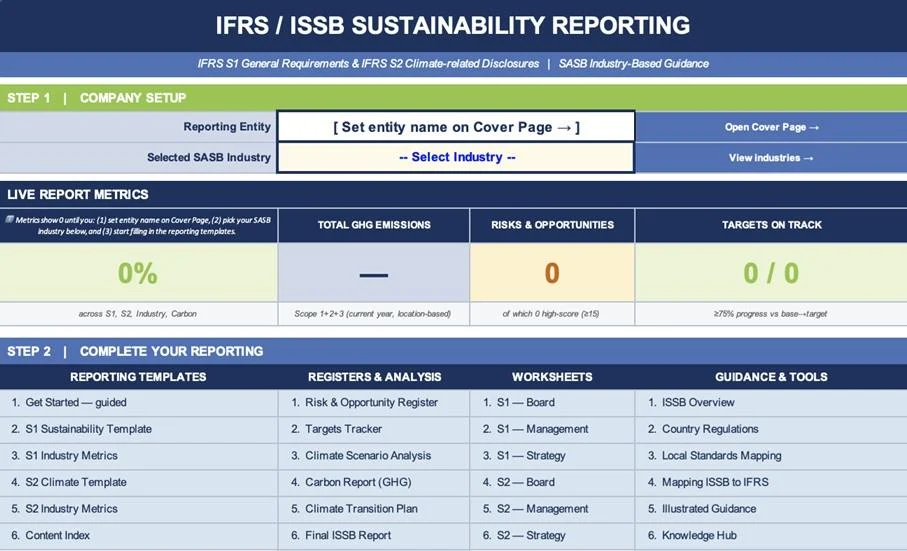
The sustainability and business risk software provider ESG Playbook has officially announced the rollout of two new product tiers specifically designed to assist small and mid-sized businesses (SMBs) in navigating the increasingly complex landscape of environmental, social, and governance (ESG) reporting. The new offerings, categorized as Essential Worksheets and Premium Modules, aim to bridge the gap between rudimentary data collection and the sophisticated disclosure requirements currently demanded by global financial institutions, regulators, and supply chain partners.
As the global regulatory environment shifts from voluntary to mandatory disclosures, smaller organizations have found themselves under mounting pressure to provide transparent sustainability data. ESG Playbook’s new solutions are built on the same underlying data architecture as the company’s flagship Enterprise Platform, ensuring that as a business grows in size or reporting complexity, its historical data remains integrated and accessible. This tiered approach allows organizations to initiate their sustainability journey with focused, cost-effective tools before scaling up to more comprehensive, automated systems.
Comprehensive Product Tiers for Scalable Reporting
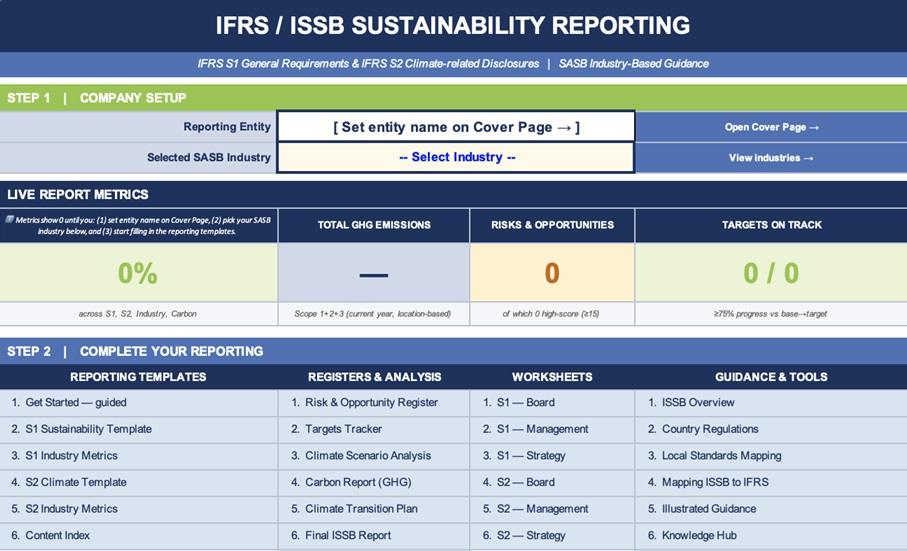
The Essential Worksheets tier represents an entry-level solution for organizations that are just beginning to formalize their sustainability disclosures. This tier consists of seven specialized, Excel-based reporting tools that are meticulously aligned with established international sustainability frameworks. By utilizing a familiar spreadsheet interface, the tools lower the barrier to entry for firms that may lack dedicated ESG departments or high-end software budgets.
The initial suite of Essential Worksheets covers a broad spectrum of critical reporting areas, including:
- Carbon Accounting: Providing a structured methodology for calculating Scope 1, 2, and 3 emissions.
- Climate Scenario Analysis: Assisting firms in evaluating how different climate-related outcomes might impact their long-term business resilience.
- Transition Planning: Helping businesses outline their strategic shifts toward lower-carbon operations.
- Double Materiality: Enabling firms to assess both how sustainability issues affect their business (financial materiality) and how their business affects the environment and society (impact materiality).
- TCFD Reporting: Aligning disclosures with the recommendations of the Task Force on Climate-related Financial Disclosures.
- VSME Reporting: Specifically tailored for the Voluntary Small and Medium-Sized Enterprises standard, which is gaining traction in European and global markets.
- Sustainability Goals and Gap Assessments: Providing a roadmap for identifying current performance shortfalls and setting measurable targets.
Looking ahead, ESG Playbook has confirmed that additional worksheets covering the Global Reporting Initiative (GRI) and the International Financial Reporting Standards (IFRS/ISSB) are currently in development and scheduled for future release.
For organizations requiring more advanced capabilities, the Premium Modules tier offers cloud-based applications that integrate high-level technology into the reporting process. These modules feature AI-assisted guidance, which helps users interpret complex regulatory language and ensures that data entries are consistent across various disclosures. The premium tier also includes robust project management functionality, allowing teams to collaborate on reporting tasks, track progress, and maintain a clear audit trail. A key advantage of this tier is its seamless integration with the Essential Worksheets; data entered in the spreadsheet phase can be transitioned to the cloud environment without the need for manual re-entry, significantly reducing the risk of data integrity errors.
The Growing Pressure on Small and Mid-Sized Enterprises
The launch of these products comes at a pivotal moment for the global economy. While much of the early legislative focus on ESG was directed at large, publicly traded corporations, the "trickle-down" effect of these regulations is now hitting the SMB sector with significant force. This phenomenon is largely driven by "Scope 3" emissions reporting requirements, where large corporations must account for the carbon footprints of their entire value chains. Consequently, small suppliers are now being asked by their larger clients to provide detailed environmental data as a condition of continued partnership.
Furthermore, the financial sector has become a primary driver of ESG adoption among smaller firms. Lenders and insurers are increasingly incorporating sustainability risk assessments into their underwriting processes. A small business with a high carbon intensity or a lack of climate transition planning may face higher interest rates, reduced access to credit, or increased insurance premiums. By providing SMBs with the tools to report accurately, ESG Playbook is positioning these firms to better manage their financial risks and appeal to a broader range of investors.
Background Context: The Global Shift Toward Standardization
The evolution of ESG reporting has been rapid. Following the 2015 Paris Agreement, the financial world recognized that climate change represented a systemic risk to the global economy. This led to the creation of the TCFD, which set the standard for climate-related financial disclosures. However, for several years, the landscape remained fragmented, with multiple competing frameworks such as GRI, SASB, and CDP creating a "muesli" of data that was often difficult for investors to compare.

The formation of the International Sustainability Standards Board (ISSB) under the IFRS Foundation in 2021 marked a turning point toward global consolidation. As these standards become codified into national laws—such as the Corporate Sustainability Reporting Directive (CSRD) in the European Union and various state and federal mandates in the United States—the need for standardized, digital-ready data has become a business imperative rather than a voluntary "nice-to-have" marketing exercise.
ESG Playbook’s decision to align its worksheets with the VSME standard is particularly noteworthy. The VSME is designed to be a simplified version of the more complex European Sustainability Reporting Standards (ESRS), specifically intended to prevent smaller firms from being overwhelmed by the data requests of their larger, CSRD-compliant customers.
Leadership and Strategic Vision
Sonia Zugel, Founder and CEO of ESG Playbook, emphasized that the motivation for sustainability reporting has evolved beyond mere compliance. "Regulations may have started the conversation, but they’re no longer the primary reason organizations collect sustainability data," Zugel stated. She highlighted that the company’s mission is to address industry-specific risks, impacts, and opportunities, focusing on mitigation and adaptation strategies that result in "real business-driven decisions."
Zugel’s perspective reflects a broader trend in the corporate world where ESG is being integrated into core business strategy. Rather than viewing sustainability as a separate department or a public relations cost center, forward-thinking CEOs are using ESG data to identify operational efficiencies, reduce waste, and discover new market opportunities in the burgeoning green economy.
Implications for the SMB Landscape
The introduction of tiered, accessible reporting tools is likely to have several significant implications for the SMB market:
- Democratization of Data: Historically, high-quality ESG reporting was the province of large corporations with the capital to hire expensive consultancies. By offering Excel-based and AI-assisted tools, ESG Playbook is lowering the cost of entry, allowing smaller firms to compete on a more level playing field when bidding for contracts or seeking investment.
- Improved Data Accuracy: One of the primary criticisms of current ESG data is the lack of reliability and "auditability." The use of structured worksheets and AI-assisted consistency checks helps move the industry away from "greenwashing" and toward verifiable, science-based reporting.
- Supply Chain Resilience: As large enterprises look to de-risk their supply chains, they will favor suppliers who can demonstrate a commitment to sustainability. SMBs that adopt these reporting tools early may gain a competitive advantage over peers who remain opaque about their environmental and social impacts.
- Regulatory Preparedness: While an SMB might not be subject to direct regulation today, the trajectory of global policy suggests that mandatory reporting will eventually encompass a larger portion of the economy. Early adoption of these tools allows firms to build the necessary internal processes and data history before they are legally required to do so.
Analysis of the Technological Integration
The inclusion of AI in the Premium Modules reflects a wider industry trend toward "Sustainability 4.0"—the intersection of digital technology and environmental stewardship. AI can process vast amounts of data to identify trends that human analysts might miss, such as subtle shifts in energy consumption patterns or emerging risks in a multi-tier supply chain. For an SMB, an AI-assisted tool acts as a "force multiplier," providing the expertise of a sustainability consultant at a fraction of the cost.
Furthermore, the decision to keep the data architecture consistent across all tiers is a strategic move that addresses a common pain point for growing companies. Many firms start with ad-hoc spreadsheets that eventually become "data silos"—isolated pools of information that cannot be easily integrated into newer, more advanced systems. By ensuring that the Essential Worksheets feed directly into the Premium and Enterprise modules, ESG Playbook provides a clear "migration path" for businesses as they mature.
Conclusion and Future Outlook
The launch of ESG Playbook’s Essential Worksheets and Premium Modules signals a maturation of the sustainability software market. It acknowledges that the "one-size-fits-all" approach of enterprise-level platforms is often unsuitable for the millions of small and mid-sized businesses that form the backbone of the global economy.
As the deadline for various international climate targets approaches, the demand for granular, accurate, and actionable sustainability data will only increase. By providing a scalable entry point for SMBs, ESG Playbook is not only helping individual companies manage their risks but is also contributing to the broader transparency of the global financial system. The forthcoming addition of GRI and IFRS/ISSB worksheets will further solidify the platform’s position as a comprehensive solution for businesses navigating the "new normal" of the sustainable corporate landscape.
