

The self-immolation of exiled Tibetan activist Lobga Rangzen outside United Nations headquarters in New York on July 2 was not an expression of personal despair. It was a desperate attempt to jolt the world out of its growing indifference to one of the most important international issues of our time: Tibet’s systematic erasure. In recent years, the international community has stood idly by while China has systematically eradicated Tibetan culture and identity. With the authorities stepping up their assimilation efforts, Asia risks not only losing one of its oldest civilizations, but also facing a China that is bigger, bolder, and more powerful than ever.
A Calculated Act of Defiance
Lobga Rangzen’s final act, witnessed by a handful of passersby and quickly disseminated through social media, served as a stark, albeit tragic, testament to the perceived futility of conventional diplomatic channels in addressing the plight of Tibet. The 48-year-old activist, who had been living in exile in the United States for over a decade, carried out his protest near the UN’s Turtle Bay complex, a location deliberately chosen to amplify his message to the global body ostensibly dedicated to human rights and international peace. His self-immolation, a method of protest historically employed by Tibetans to signal extreme desperation, underscores the deepening sense of hopelessness felt by many within the diaspora and, it is widely believed, by many inside Tibet itself.
While official Chinese government statements predictably condemned the act as the work of separatists and terrorists, Tibetan advocacy groups and international observers interpreted it as a direct response to an intensifying campaign of cultural and religious suppression orchestrated by Beijing. Sources within the Tibetan exile community reported that Rangzen had been increasingly vocal about the perceived acceleration of China’s assimilation policies, particularly concerning the re-education of Tibetan children and the erosion of traditional Tibetan language and religious practices in schools.
Escalating Assimilation: A Pattern of Control
The self-immolation occurred against a backdrop of mounting evidence suggesting a deliberate and systematic effort by the Chinese Communist Party (CCP) to integrate Tibetans fully into the Han Chinese cultural and political sphere, effectively diminishing their distinct identity. This campaign, which has been ongoing since China’s invasion and annexation of Tibet in the 1950s, appears to have entered a new, more aggressive phase in recent years.
Key areas of concern include:
-
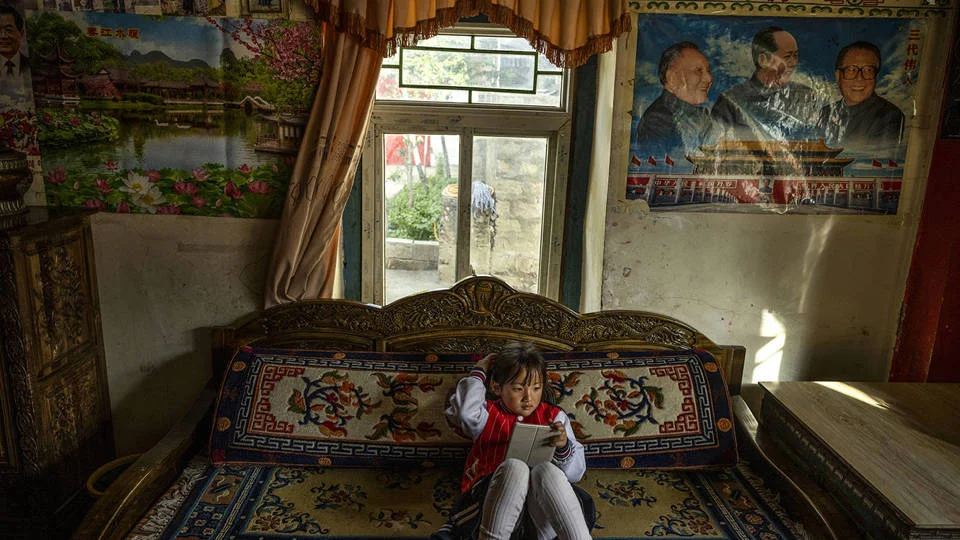
Education System Reforms: One of the most impactful recent developments has been the widespread implementation of Mandarin Chinese as the primary medium of instruction in Tibetan schools, even in subjects traditionally taught in Tibetan. This policy, often framed by Beijing as a means to improve educational standards and opportunities for Tibetans, is viewed by many as a direct assault on the Tibetan language, the very bedrock of their cultural heritage. Reports from organizations like the Tibet Advocacy Coalition and the International Campaign for Tibet detail the forced closure of Tibetan-language private schools and the redirection of students into state-run boarding schools where Tibetan language and culture are systematically sidelined. Data from these organizations suggests that by 2025, over 80% of Tibetan children in the Tibet Autonomous Region (TAR) and Tibetan areas of Qinghai, Gansu, Sichuan, and Yunnan provinces were attending these boarding schools, often separated from their families from a young age.
-
Religious Suppression: The Chinese government continues to exert stringent control over Tibetan Buddhism, a faith deeply intertwined with Tibetan identity. This includes appointing officials to oversee monasteries, restricting the number of monks and nuns, and closely monitoring religious activities. The Panchen Lama, a spiritual figure second only to the Dalai Lama, remains a point of contention, with the current Panchen Lama recognized by Beijing having been installed in 1995, while the Dalai Lama’s choice was subsequently detained and has not been seen publicly since. Furthermore, the veneration of the Dalai Lama, the spiritual leader of Tibetan Buddhism and a symbol of Tibetan resistance, is strictly forbidden within Tibet. Unauthorized possession of images of the Dalai Lama or listening to his teachings can result in severe penalties.
-
Cultural Homogenization: Beyond language and religion, efforts are underway to promote a unified Chinese national identity, often at the expense of distinct ethnic cultures. This includes encouraging Han Chinese migration into Tibetan areas, which has led to demographic shifts and the gradual marginalization of Tibetan customs, arts, and traditions. The construction of new infrastructure, while ostensibly for economic development, is also seen by some as a means to further integrate Tibetan regions into the broader Chinese economic and social fabric, often without adequate consultation with local Tibetan communities.
-
Surveillance and Control: Tibet remains one of the most heavily policed regions in the world. Advanced surveillance technologies, including facial recognition cameras and widespread internet monitoring, are employed to suppress dissent and maintain tight control over the population. Freedom of movement and assembly are severely restricted, and any perceived expression of Tibetan nationalism or dissent is met with swift and often harsh repercussions.
A Chronicle of Neglect
The international community’s response to the escalating situation in Tibet has been characterized by a gradual erosion of engagement and a prioritization of economic ties with China over human rights concerns.
- 1950s-1960s: Following the 1951 agreement and subsequent Chinese military intervention, Tibet came under the control of the People’s Republic of China. The Dalai Lama and thousands of Tibetans fled into exile in 1959 after an uprising against Chinese rule.
- 1980s: A period of relative relaxation saw some limited engagement, with the Dalai Lama initiating dialogue with Beijing. However, renewed protests in the late 1980s led to a crackdown.
- 1990s-2000s: International attention focused on the spiritual leadership of the Dalai Lama and human rights abuses. However, growing economic interdependence between Western nations and China began to overshadow these concerns. The UN Human Rights Commission passed resolutions condemning abuses in Tibet, but these often lacked strong enforcement mechanisms.
- 2010s-Present: The focus has increasingly shifted towards economic cooperation. While many governments express concerns about human rights in Tibet in bilateral meetings, concrete actions or strong public condemnations have become rarer. China’s Belt and Road Initiative and its growing global economic influence have further incentivized many countries to avoid antagonizing Beijing on sensitive issues like Tibet. The self-immolations, which began in 2009 and have continued sporadically, have served as desperate pleas for attention that have largely gone unanswered by the international political stage. Lobga Rangzen’s act in July 2026 marks the latest in a tragic series of such protests, bringing the total number of known self-immolations to over 150 since 2009.
Reactions and Inactions
The self-immolation of Lobga Rangzen elicited a predictable range of reactions.
-
Tibetan Exile Community: The diaspora expressed profound grief and renewed determination. The Central Tibetan Administration (CTA) in Dharamsala, India, issued a statement condemning the self-immolation and reiterating its commitment to seeking a peaceful resolution to the Tibet issue. However, there was also an undercurrent of frustration with the international community’s perceived apathy. "Another life lost, another desperate cry unheard," stated a spokesperson for the Tibetan Youth Congress, reflecting a widespread sentiment.
-
Chinese Government: Beijing swiftly denounced the act, labeling it a "political stunt" orchestrated by "separatist forces." State media outlets emphasized the government’s commitment to maintaining stability and national unity in Tibet, portraying the self-immolator as a misguided individual influenced by external agitators.
-
United Nations: While the UN headquarters was the backdrop for the protest, official reactions were muted. A spokesperson for the UN Secretary-General acknowledged the incident and stated that the UN "continues to follow the situation in Tibet with concern," urging "all parties to exercise restraint." However, there was no indication of any new initiatives or a significant shift in the UN’s long-standing policy of acknowledging China’s sovereignty over Tibet.
-
Western Governments: Most Western governments issued carefully worded statements expressing "deep concern" over the self-immolation and reiterating their commitment to human rights. However, these statements were often followed by reaffirmations of their "one-China policy" and their engagement with Beijing on various economic and diplomatic fronts, highlighting the delicate balancing act many nations perform. Calls for concrete action, such as targeted sanctions or a more robust international investigation into human rights abuses in Tibet, remained largely absent from official communiqués.
Broader Implications: A Shifting Geopolitical Landscape
The systematic erasure of Tibetan culture carries profound implications, not just for Tibet itself but for the broader geopolitical landscape of Asia and the international order.
For Asia:
- Increased Chinese Assertiveness: A China that feels emboldened by the international community’s inaction in Tibet may translate this confidence into more assertive behavior in other territorial disputes and regional affairs. The successful assimilation of Tibet can be seen as a model for other regions China seeks to control or influence.
- Erosion of Regional Diversity: The loss of Tibet’s unique cultural and religious heritage represents a diminishment of Asia’s rich tapestry of civilizations. This erosion of diversity can weaken the region’s cultural resilience and create a more homogenous, and potentially less tolerant, environment.
- Humanitarian and Refugee Flows: Continued repression in Tibet could lead to increased numbers of refugees seeking asylum in neighboring countries and beyond, placing further strain on regional stability and international aid systems.
For the International Order:
- Undermining of Human Rights Norms: The international community’s failure to effectively address the situation in Tibet, despite numerous reports of abuses, risks setting a dangerous precedent. It signals that powerful states can pursue policies of cultural and political suppression with limited international consequence, potentially encouraging similar actions elsewhere.
- Shifting Power Dynamics: As China’s economic and political power continues to grow, its ability to shape international discourse and influence global norms becomes more pronounced. The quiet acquiescence to its policies in Tibet can be interpreted as a tacit endorsement of its approach, further solidifying its position as a dominant global player, albeit one that operates with a disregard for established human rights principles.
- The Future of Cultural Preservation: The fate of Tibet serves as a critical case study in the challenges of preserving cultural and religious identity in the face of a powerful, assimilationist state. The international community’s response, or lack thereof, will have lasting implications for future efforts to protect vulnerable cultures worldwide.
Lobga Rangzen’s self-immolation, a tragic and final plea, underscores a critical juncture. It is a stark reminder that the "Tibet question" is not merely a historical grievance or a matter of cultural preservation for a distant people. It is a contemporary issue that speaks to the fundamental principles of human rights, self-determination, and the very nature of international responsibility in an increasingly complex and interconnected world. The silence of the international community in the face of Tibet’s systematic erasure risks not only the loss of an ancient civilization but also the emboldening of an ascendant power, with far-reaching consequences for global stability and the future of human dignity.
