

In an era defined by unprecedented global volatility and shifting economic paradigms, Canada finds itself at a critical crossroads regarding its long-term industrial strategy. As the federal government under Prime Minister Mark Carney seeks to revitalize the national economy through "projects of national interest," a growing chorus of policy experts and economists are questioning the direction of current infrastructure investments. The central debate hinges on whether the nation should continue to subsidize traditional energy sectors or pivot toward a new generation of distributed, clean energy megaprojects designed to withstand the technological and environmental pressures of the 21st century.
Recent policy announcements have signaled a commitment to fast-tracking large-scale infrastructure, yet critics argue that many of these projects risk becoming "stranded assets." These are investments in fossil fuel expansion or traditional nuclear platforms that may face diminishing returns as global markets shift toward more efficient, low-carbon alternatives. Adamant, a prominent public policy organization, has recently released a comprehensive vision for a "hard pivot" in Canadian infrastructure. Their proposal suggests that by focusing on five specific clean-energy pillars, Canada can secure economic independence, enhance affordability, and create a resilient labor market.
The Strategic Shift Toward Clean Electrification
The cornerstone of this proposed economic transformation is the massive expansion of Canada’s clean-energy capacity. Currently, the nation’s power grid is facing a dual challenge: aging infrastructure and a projected surge in demand as the transportation and heating sectors transition to electricity. According to data from the Public Policy Forum, Canada’s electricity output must increase by two to three times its current levels by 2050 to meet net-zero targets and maintain industrial competitiveness.
This objective requires a construction pace that exceeds anything seen in the last century. Projections indicate that Canada will need to build more electricity infrastructure in the next 25 years than it did in the previous 100. The economic implications of this expansion are profound. Advocates suggest that a robust, clean grid could reduce the effective cost of transportation—equivalent to paying 25 cents per litre for fuel—and cut residential heating costs by half through the widespread adoption of heat pumps.
The transition is already being led by Indigenous-owned initiatives, which provide a blueprint for future development. The Athabasca Chipewyan First Nation in Alberta currently operates three solar farms, while the Henvey Inlet Wind project on Georgian Bay generates enough power for 250,000 Ontario residents. In British Columbia, the majority of recent clean-power proponents involve Indigenous co-ownership, signaling a shift toward a more inclusive and decentralized energy economy.
Energy Efficiency as a Productivity Multiplier
While expanding supply is critical, policy experts argue that energy efficiency is perhaps the most undervalued economic lever available to the federal government. Canada’s building stock is notably aged, with approximately two-thirds of all residential and commercial structures built before the year 2000. These buildings are often poorly insulated and reliant on inefficient heating systems, contributing to high utility bills and unnecessary carbon emissions.
Research from Efficiency Canada and the Pembina Institute suggests that a "renovation wave" could produce a massive productivity multiplier. Every dollar invested in energy efficiency is estimated to generate between $4 and $7 in gross domestic product (GDP) growth. This return on investment surpasses nearly every other category of infrastructure spending.
The labor market impact of a national retrofitting strategy is equally significant. Transforming HVAC systems and building envelopes across the country could create up to 200,000 local jobs. Unlike manufacturing roles that may be vulnerable to automation or international trade tariffs, retrofitting work is inherently local and "AI-proof," providing stable employment in every region of the country.
Strengthening the National Grid: Wiring Canada Together
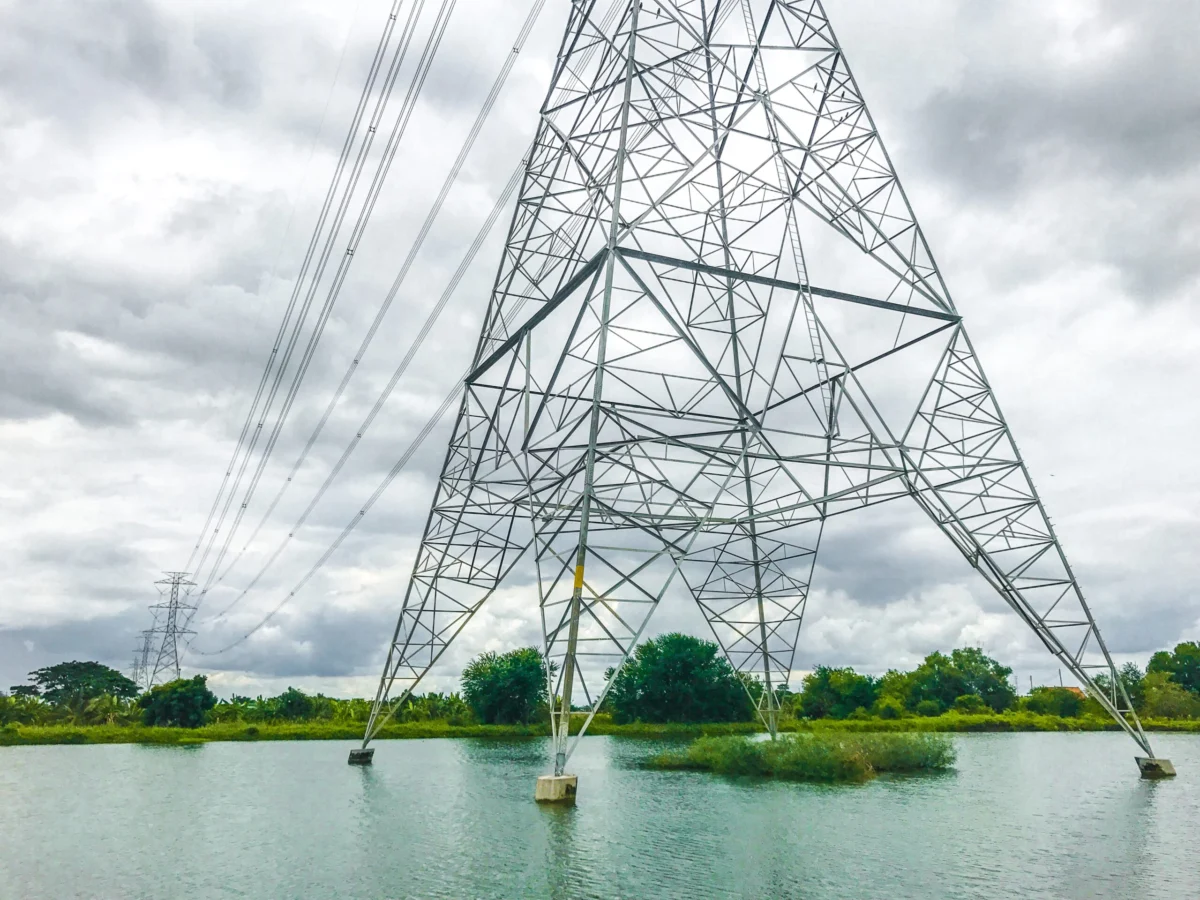
A significant hurdle to Canada’s energy security is the fragmented nature of its provincial power grids. Historically, Canadian provinces have prioritized north-south trade routes with the United States over east-west connections with their neighbors. Currently, more than 80% of Canada’s electricity trade flows toward the U.S. market, leaving domestic provinces isolated and vulnerable to supply fluctuations.
The lack of inter-provincial transmission lines means that Canada cannot effectively share its diverse resources, such as Quebec’s hydropower, the Prairies’ wind and solar, and the Maritimes’ tidal potential. Strengthening these connections is viewed as a high-yield investment. For instance, doubling the transmission capacity between British Columbia and Alberta is projected to return nearly $6 for every dollar spent.
A recent success story in this sector is the Ontario East-West Tie, a 450-kilometre transmission line. The project not only enhanced grid reliability but also generated 2,600 person-years of employment and over $200 million in economic benefits. Notably, Indigenous workers comprised more than half of the construction crew, demonstrating the potential for these projects to support reconciliation and regional economic development.
Industrializing the Housing Sector
Canada’s housing crisis has reached a point where traditional construction methods are no longer sufficient to meet demand. The Canada Mortgage and Housing Corporation (CMHC) estimates that the country needs to build approximately 500,000 homes annually to restore affordability. Current government initiatives, such as the Build Canada Homes program, are projected to deliver only a small fraction of that requirement.
The Adamant proposal calls for a radical departure from "tinkering around the edges" in favor of a massive smart-modular-housing industry. By 2050, advocates suggest that Canadian factories could produce 150,000 energy-efficient modular homes per year. This industrialized approach to homebuilding—pioneered by Sweden in the 1960s and Japan since the 1990s—allows for faster construction, lower costs, and higher energy performance.
Sweden’s "Million Programme" saw the construction of one million homes in just ten years, turning prefabrication into a cornerstone of their national economy. Japan produces an average of 150,000 modular units annually, maintaining a high standard of quality and seismic resilience. By adopting a similar model, Canada could create 100,000 manufacturing jobs while providing permanently low-cost housing for a new generation of homeowners.
Tapping into Geothermal Potential
The fifth pillar of the proposed clean-energy strategy involves unlocking Canada’s vast geothermal resources. Often described as "always-on" clean energy, geothermal power utilizes the heat from the earth’s bedrock to generate electricity and provide district heating. While Europe currently operates over 150 geothermal plants supplying 11 million people, Canada’s geothermal sector remains in its infancy.
The International Energy Agency (IEA) predicts that the global geothermal industry could eventually be worth $3.5 trillion. Canada is uniquely positioned to lead in this sector because the skills and equipment required for geothermal drilling are nearly identical to those used in the oil and gas industry. This allows for a seamless transition for thousands of skilled workers in Western Canada, pivoting from fossil fuel extraction to renewable energy production.
Beyond electricity, geothermal energy can power district heating and cooling systems, which are significantly more efficient than individual building boilers. By investing in this "infinite" energy source, Canada could secure a low-emissions domestic energy supply while building a booming export industry for geothermal technology.
Chronology of Recent Energy Policy Developments
The push for these five megaprojects comes after several years of intensifying climate and economic policy shifts in Canada:
- 2020-2021: The federal government announces the "Strengthened Climate Plan," emphasizing a price on carbon and preliminary investments in green technology.
- 2022: Global energy markets are destabilized by geopolitical conflicts, prompting a renewed focus on energy security and domestic supply chains.
- 2023: The Public Policy Forum releases its landmark report on Canada’s clean electricity supply, warning of the urgent need for grid expansion.
- May 2024: Prime Minister Mark Carney’s administration announces a preliminary national grid plan, though critics argue it lacks the necessary scale.
- Present: Policy organizations like Adamant and various Indigenous coalitions call for a "Hard Pivot" toward distributed, large-scale clean infrastructure to replace sunsetting fossil fuel subsidies.
Broader Economic Impact and Global Context
The move toward clean infrastructure is not merely an environmental imperative but a calculated economic strategy. As global buyers increasingly demand "green" products, Canadian exporters—from steel manufacturers to aluminum producers—will require clean power to remain competitive in international markets.
Moreover, the transition addresses the "market risk" associated with fossil fuels. As carbon pricing and international border carbon adjustments become more prevalent, economies reliant on high-emission energy platforms may face severe financial penalties. By investing in energy efficiency, modular housing, and an integrated clean grid, Canada is effectively hedging against the volatility of the global oil market.
The reaction from industry stakeholders has been mixed. While traditional energy companies emphasize the need for a gradual transition and the continued role of natural gas, tech innovators and Indigenous leaders are pushing for faster deregulation and more aggressive subsidies for renewables. Financial analysts note that the "productivity multiplier" of these clean projects—particularly in energy efficiency and transmission—offers a more stable long-term return for taxpayers than the boom-and-bust cycles of traditional commodity exports.
As Canada navigates this volatile new world, the choice of which "projects of national interest" to support will define the country’s economic landscape for the next half-century. The vision presented by Adamant and its partners suggests that the path to prosperity lies not in the energy systems of the past, but in a bold, distributed, and clean-powered future. The success of this transition will depend on whether the federal government can move beyond incremental changes and commit to the large-scale, transformative projects required to build a modern nation.
