

The United States Federal Reserve finds itself at a critical juncture, grappling with persistent inflation and a deeply divided policymaking committee regarding the trajectory of interest rates. This internal discord is mirrored in the highly speculative prediction markets, where traders on platforms like Kalshi are signaling a precarious balance, with just over 50% odds currently favoring a rate hike before the close of 2026. This complex scenario unfolds as Kevin Warsh, the newly appointed Chair of the central bank, embarks on his inaugural term, facing the immediate challenge of forging consensus amidst significant economic headwinds.
A Central Bank Divided: The June FOMC Minutes Unveiled
The recent release of the Federal Open Market Committee (FOMC) minutes from the June 2026 meeting laid bare the stark divisions within the central bank’s ranks. The document, a crucial insight into the Fed’s deliberations, revealed that "many participants indicated that the appropriate level of the federal funds rate would be within or slightly below the current target range at the end of this year." This perspective suggests a faction of policymakers who believe the current rate, held steady at 3.5% to 3.75% since December 2025, is either sufficient to cool the economy or that further tightening could pose undue risks to economic growth.
However, this view was not universally held. The minutes explicitly stated that "many other participants" deemed the appropriate level for the federal funds rate would be "above the current target range at the end of this year." This opposing viewpoint underscores a significant concern among another group of policymakers that inflation remains uncomfortably high and requires more aggressive monetary tightening to bring it back to the Fed’s long-term target of 2%. The tension between these two camps highlights the immense challenge facing the central bank as it seeks to navigate its dual mandate of achieving maximum employment and price stability. The current federal funds rate range, established in December 2025, marked a period of pause after a series of aggressive hikes designed to combat the inflationary pressures that had built up in the preceding years.
Kevin Warsh’s Inaugural Challenge: Steering a Split Committee
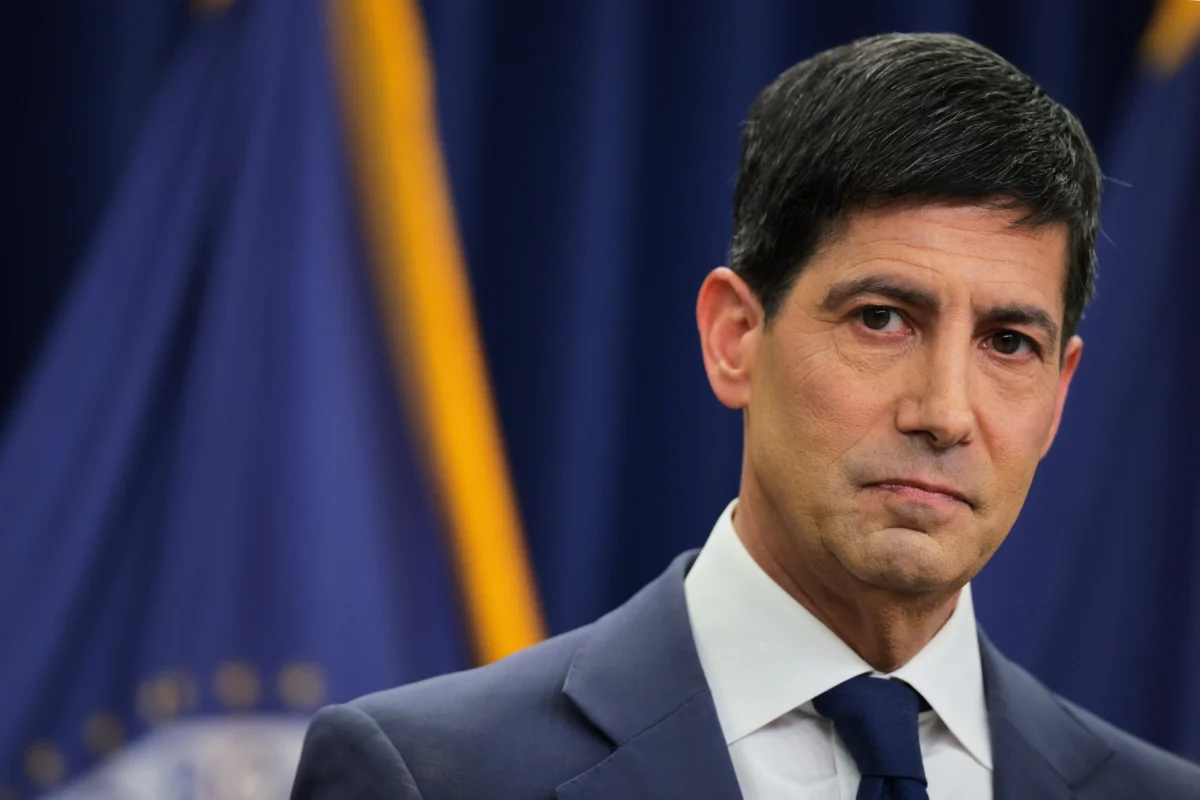
The revelation of this deep-seated division coincides with a pivotal moment for the Federal Reserve. Kevin Warsh assumed the helm as Chair of the central bank on June 17, 2026, marking his first news conference and, crucially, his inaugural FOMC meeting as chairman. Warsh, known for his previous tenure as a Fed governor and his extensive experience in financial markets, now faces the formidable task of uniting a committee that appears fundamentally split on the most critical aspect of monetary policy: the immediate path of interest rates.
His appointment came at a time when the global economic landscape was already fraught with uncertainty. Warsh’s leadership will be tested not only by the need to manage internal dissension but also by the imperative to communicate a clear and consistent policy message to financial markets and the public. The early days of his chairmanship are thus defined by a delicate balancing act, as he endeavors to establish his authority and build consensus on a committee whose decisions carry profound implications for the domestic and global economy. Analysts widely expect Warsh to leverage his extensive experience and communication skills to bridge these policy gaps, but the challenge remains substantial given the current economic climate.
Prediction Markets Reflect Uncertainty: Kalshi’s Divided Outlook
Adding another layer of complexity to the interest rate debate are the insights gleaned from prediction markets. On Kalshi, a platform where individuals trade on the outcomes of future events, traders are exhibiting a similarly divided outlook to that of the Fed policymakers. As of the latest data, Kalshi traders forecast a 54% likelihood that the Federal Reserve will raise rates this year, a slight dip from 56% observed over the past day. This contract, designed to resolve based on whether a hike occurs before year-end, before July 2027, or before 2028, illustrates a prevailing sense of near-term indecision.
Further reflecting the market’s long-term expectations, Kalshi traders currently see a nearly 80% chance that a rate hike will materialize by 2028. Additionally, there is a 62% likelihood that such an increase will take place before July 2027. These figures underscore a belief that while the immediate future remains uncertain, a tightening of monetary policy is highly probable within the next 18 months to two years.
Another pertinent contract on Kalshi, focusing on the number of rate cuts expected this year, provides additional context. Traders on this market are assigning approximately a 76% chance that there will be no rate cuts in 2026. This figure notably increased from 68% to 77% on June 16, the very day preceding Kevin Warsh’s inaugural Federal Reserve meeting as chairman. This movement suggests that market participants perceived Warsh’s appointment, or the surrounding economic intelligence, as signaling a reduced likelihood of monetary easing in the near term. The odds for this particular contract showed little fluctuation before or after the issuance of the FOMC minutes, indicating a relatively firm conviction among traders that the Fed is unlikely to reverse course with cuts this year. It is important to note that CNBC and Kalshi maintain a commercial relationship, encompassing customer acquisition and a minority investment.
Inflation’s Persistent Grip: A Key Driver of Policy Debate
The central bank’s divided viewpoint is fundamentally driven by the persistent challenge of inflation. The U.S. economy continues to grapple with elevated price pressures, which remain significantly above the Fed’s long-term target. The Fed’s preferred inflation gauge, the personal consumption expenditures (PCE) price index, registered an annual rate of 4.1% in May 2026. This figure represents the highest annual PCE inflation rate since April 2023, signaling a concerning resurgence or entrenchment of inflationary forces.
This 4.1% reading is more than double the Fed’s target, indicating that the previous monetary tightening cycles, while impactful, have not yet fully subdued price growth. Core PCE, which strips out volatile food and energy components, is also closely watched by policymakers for a clearer signal of underlying inflationary trends. While not explicitly detailed in the original article, it is plausible that core inflation also remains elevated, reinforcing the arguments for further rate hikes.
The drivers of this persistent inflation are multifaceted. Supply chain disruptions, though having eased from their pandemic-era peaks, continue to exert upward pressure on prices in certain sectors. Robust consumer demand, fueled by a resilient labor market and accumulated savings, has also played a role. Furthermore, geopolitical factors, specifically "rising tensions in the Middle East," are contributing significantly to this inflationary environment. These tensions typically manifest in higher energy prices, impacting transportation costs, manufacturing inputs, and ultimately, consumer goods. A sustained increase in oil prices, for instance, can quickly translate into broader inflation across the economy, complicating the Fed’s efforts to achieve price stability.
The Broader Economic Landscape and Global Headwinds
Beyond inflation, the Federal Reserve is monitoring a host of other economic indicators that paint a complex picture. The U.S. labor market, while showing signs of cooling from its frenetic pace, remains remarkably resilient. Low unemployment rates and sustained wage growth, while beneficial for workers, can contribute to inflationary pressures by boosting consumer spending and increasing business costs. Policymakers must weigh the risk of overtightening and potentially triggering a recession against the imperative to bring inflation under control without unduly harming employment.
Gross Domestic Product (GDP) growth figures are another critical input. A robust economy might withstand further rate hikes, while a weakening one would be more vulnerable to aggressive tightening. Global economic conditions also play a significant role. The aforementioned rising tensions in the Middle East not only fuel inflation through energy prices but can also disrupt global trade routes, impact commodity markets, and dampen international investor confidence. A slowdown in key global economies or an escalation of geopolitical conflicts could transmit negative shocks to the U.S. economy, further complicating the Fed’s policy calculus. The interconnectedness of global financial markets means that decisions made by other major central banks, such as the European Central Bank or the Bank of Japan, can also influence the Fed’s strategy.
The Federal Reserve’s Dual Mandate and Policy Tools
At the heart of the Federal Reserve’s mission lies its dual mandate: to foster maximum employment and price stability. These two objectives are often intertwined but can, at times, present conflicting policy choices. When inflation is high, the Fed typically raises interest rates to cool economic activity, thereby reducing demand and price pressures. Higher rates make borrowing more expensive for businesses and consumers, slowing investment and spending. Conversely, when unemployment is high and inflation is low, the Fed tends to lower rates to stimulate economic growth and job creation.
The primary tool for achieving these objectives is the federal funds rate, which is the target rate for overnight borrowing between banks. Changes in this rate ripple through the entire financial system, influencing everything from mortgage rates and credit card interest to business loan costs. Beyond interest rates, the Fed also employs tools like quantitative easing (large-scale asset purchases) or quantitative tightening (reducing its balance sheet) to influence long-term interest rates and overall financial conditions. However, in the current environment, the focus remains squarely on the federal funds rate as the most direct lever for managing inflation. The challenge for Warsh’s Fed is to find the optimal path that achieves price stability without tipping the economy into a downturn, a task made exponentially harder by the committee’s internal divisions and the volatile global landscape.
A Chronology of Recent Monetary Policy and Economic Shifts
To fully appreciate the current dilemma, it’s essential to review the recent timeline of monetary policy and economic events:
- April 2023: The PCE price index hit an annual rate, which was subsequently surpassed by the May 2026 reading. This period marked a peak in inflationary pressures that the Fed had been aggressively trying to combat.
- Late 2023 – Early 2025: A period characterized by the Federal Reserve implementing a series of significant interest rate hikes, moving the federal funds rate from near-zero levels to its current range. These actions were a direct response to persistently high inflation, which had surged following pandemic-related fiscal stimulus and supply chain disruptions.
- December 2025: The Federal Reserve held the federal funds rate steady at its current range of 3.5% to 3.75%. This decision marked a pause in the tightening cycle, allowing policymakers to assess the cumulative impact of previous hikes on the economy and inflation. It signaled a cautious approach, balancing the need to fight inflation with concerns about potential economic slowdown.
- May 2026: The personal consumption expenditures (PCE) price index, the Fed’s preferred inflation gauge, registered an annual rate of 4.1%. This data point was a significant concern, indicating that inflationary pressures remained strong and potentially reigniting calls for further tightening.
- June 16, 2026: Kevin Warsh was appointed as the new Federal Reserve Chair, taking the helm of the central bank. This day also saw a notable increase in Kalshi’s odds for "no rate cuts this year," rising from 68% to 77%, reflecting market anticipation of a more hawkish stance under new leadership or a stronger commitment to combating inflation.
- June 17, 2026: Chair Kevin Warsh held his first news conference since taking leadership, marking his public debut in the pivotal role. His inaugural FOMC meeting followed shortly after, setting the stage for the discussions reflected in the recently released minutes.
- Late June 2026: The Federal Reserve rolled out the minutes from its June FOMC meeting, revealing the deep split among policymakers regarding the appropriate path for interest rates by the end of the year. This release immediately fueled market uncertainty and intensified speculation about the Fed’s next moves.
Implications of a Divided Federal Reserve
A deeply divided Federal Reserve carries significant implications for various stakeholders. For financial markets, it translates into heightened uncertainty and increased volatility. Investors thrive on predictability, and a lack of consensus within the FOMC can make it difficult to anticipate future policy decisions, leading to cautious investment strategies and potential shifts in asset allocations. Bond yields, equity prices, and currency exchange rates are all highly sensitive to Fed policy, and a split committee can introduce unpredictable movements.
For businesses, particularly those reliant on borrowing for expansion or operational needs, a divided Fed means less clarity on future borrowing costs. This can complicate long-term planning, investment decisions, and hiring strategies. Small businesses, often more sensitive to interest rate fluctuations, may find it challenging to navigate an environment of unpredictable monetary policy.
Consumers, too, are directly impacted. Mortgage rates, auto loan rates, and credit card interest rates are all influenced by the federal funds rate. A divided Fed might lead to a more prolonged period of uncertainty regarding these costs, affecting major purchasing decisions, particularly in the housing market.
Furthermore, a lack of clear consensus within the central bank can erode public confidence in its ability to effectively manage the economy. Chair Warsh’s leadership will be crucial in building bridges between differing viewpoints and projecting a unified message, even if policy decisions are arrived at through robust debate. The risk is that a perception of indecisiveness could allow inflation expectations to become unanchored, making the Fed’s job even harder in the long run.
Looking Ahead: The Path to Future Decisions
As the Federal Reserve moves forward under Chair Warsh’s leadership, its immediate focus will remain on incoming economic data. Policymakers will scrutinize subsequent inflation reports, including the PCE and Consumer Price Index (CPI), to discern whether price pressures are finally showing signs of sustained moderation. Employment data, encompassing job growth, unemployment rates, and wage inflation, will also be critical in assessing the health of the labor market and its potential impact on inflation.
Global developments, particularly the trajectory of Middle East tensions and their effect on energy markets, will continue to be closely monitored. Any significant escalation or de-escalation could profoundly influence the Fed’s outlook. The central bank will also pay close attention to consumer spending patterns, business investment, and international trade figures for a comprehensive understanding of economic momentum.
The upcoming FOMC meetings will be crucial battlegrounds for these differing viewpoints. Chair Warsh will need to skillfully manage the committee’s diverse perspectives, aiming to achieve a consensus that effectively addresses inflation while safeguarding economic stability. The Fed’s forward guidance – its communication about the likely future path of monetary policy – will be vital in shaping market expectations and providing some degree of predictability in an otherwise uncertain environment. The potential scenarios range from an aggressive series of hikes if inflation proves more stubborn, to a prolonged pause if economic growth shows significant signs of slowing, or even an unexpected shift if global events dictate. However, based on current data and prediction market sentiment, the likelihood of rate cuts in the immediate future appears minimal.
In conclusion, the Federal Reserve stands at a pivotal moment, caught between the imperative to tame persistent inflation and the risks of over-tightening. The deep divisions within its policymaking committee, combined with the complexities of the global economic landscape, present a formidable challenge for new Chair Kevin Warsh. The insights from prediction markets, while not definitive, underscore the prevailing uncertainty and the high stakes involved in the Fed’s upcoming decisions, which will undoubtedly shape the economic trajectory for years to come.
