

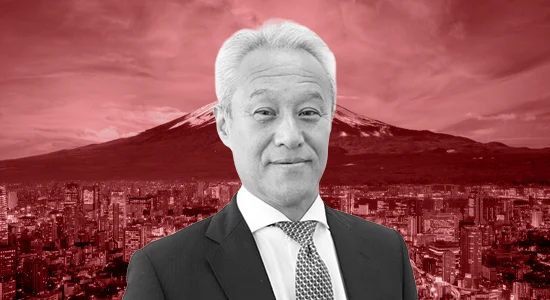
The Government Pension Investment Fund (GPIF) of Japan, the world’s largest retirement fund, has recently undergone a significant restructuring of its executive leadership within its private markets and real estate divisions. This internal shift comes at a critical juncture for the pension giant as it continues to expand its exposure to alternative assets amidst a volatile global economic landscape. Beyond the boardroom changes in Tokyo, the broader private real estate industry is witnessing a series of transformative trends, including the professionalization of the placement agent sector, a strategic pivot by public Real Estate Investment Trusts (REITs) toward private fundraising, and a period of intense reflection among UK-based fund managers regarding the nation’s economic trajectory.
Leadership Transitions at the World’s Largest Pension Fund
The GPIF has historically been a conservative steward of Japan’s public pension wealth, which currently exceeds $1.5 trillion in assets under management (AUM). However, over the last decade, the fund has steadily increased its allocation to "alternative" investments, which include private equity, infrastructure, and real estate. The recent leadership changes in the private markets team signify a maturing of this strategy. While the fund has not publicly detailed the specific personal motivations behind every departure or appointment, industry analysts suggest that the new leadership is tasked with navigating a higher-interest-rate environment that has fundamentally altered the valuation of real estate assets globally.
The real estate division, specifically, has seen a transition in its top-tier management. These leaders are responsible for overseeing a portfolio that has grown from virtually zero a decade ago to a sophisticated network of fund-of-funds and direct mandates. The mandate for the incoming leadership is clear: optimize the existing portfolio for resilience and identify "alpha" in a market where the "beta" of low interest rates has evaporated. This transition is not merely administrative; it reflects the GPIF’s commitment to institutionalizing its private market operations to match the scale of its traditional fixed-income and equity desks.
The Strategic Expansion of GPIF’s Alternative Portfolio
To understand the weight of these leadership changes, one must look at the data governing GPIF’s investment mandate. The fund operates under a five-year plan that currently allows for a maximum allocation of 5% to alternative assets. While this percentage may seem modest, in the context of a $1.5 trillion fund, it represents a potential $75 billion deployment. As of the most recent reporting periods, GPIF’s actual allocation to alternatives has hovered around 1.5% to 2.5%, indicating that tens of billions of dollars are still earmarked for future deployment into private markets.
The chronology of GPIF’s entry into real estate provides essential context for the current leadership shift:
- 2014: The "Abe-era" reforms encouraged GPIF to move away from low-yield Japanese Government Bonds (JGBs).
- 2017: GPIF began its first significant forays into global real estate through a series of "fund-of-funds" mandates, partnering with major global asset managers to build diversified exposure.
- 2020-2022: Despite the pandemic, the fund accelerated its commitments, focusing on logistics and residential sectors in North America and Europe.
- 2024: The current leadership transition occurs as the fund seeks to refine its direct investment capabilities and improve the cost-efficiency of its external manager relationships.
The Rise of Placement Agents in a Challenging Fundraising Climate
As institutional giants like GPIF recalibrate, the intermediaries who facilitate these capital flows—placement agents—are seeing their roles elevated. In a landmark development for the industry, new data has revealed the first-ever comprehensive ranking of the top placement agents by total capital raised and the breadth of their GP (General Partner) relationships.
In the current market, fundraising for private real estate has become significantly more difficult than it was during the "easy money" era of 2010–2021. Investors (LPs) are increasingly concentrated, preferring to re-up with existing managers rather than taking risks on new ones. This has made the expertise of placement agents indispensable. The top-ranked firms are no longer just "introducers"; they have evolved into strategic consultants who help managers structure funds to meet the specific ESG (Environmental, Social, and Governance), tax, and regulatory requirements of global institutions like GPIF or the major sovereign wealth funds of the Middle East.
Industry data suggests that while the total volume of capital raised for private real estate declined in the last fiscal year, the proportion of that capital handled by top-tier placement agents increased. This indicates a flight to quality and a reliance on proven networks to bridge the gap between cautious LPs and capital-hungry GPs.
Public REITs and the Pivot to Private Capital
One of the most striking trends identified in recent market analysis is the "blurring of the lines" between public and private real estate vehicles. Traditionally, a firm chose to be either a public REIT (listed on an exchange) or a private fund manager. Today, that distinction is fading. Public REITs are increasingly rushing into private fundraising, launching non-listed vehicles to tap into the "perpetual capital" available from high-net-worth individuals and institutional investors who prefer the lower volatility of private valuations.
This shift is driven by a persistent valuation gap. Throughout much of 2023 and early 2024, public REITs often traded at a significant discount to their Net Asset Value (NAV). By launching private funds, these companies can raise capital at par value, avoiding the "public market haircut." This strategy allows them to continue acquiring assets even when their stock price is depressed. Furthermore, it provides a more stable fee stream, as private funds are not subject to the daily whims of the stock market.
The UK Market: Uncertainty and Strategic Recalibration
While Japan and the global capital markets undergo structural shifts, the United Kingdom remains a focal point of intense scrutiny for real estate managers. Following a period of political transition and the ongoing battle against inflation, UK managers are deeply engaged in mulling the country’s future direction.
The sentiment in the UK real estate sector is a mix of "cautious optimism" and "structural concern." On one hand, the clarity provided by the recent general election has removed some political risk. On the other hand, the UK faces significant hurdles:
- Interest Rate Trajectory: While the Bank of England has begun to signal a potential easing of rates, the "higher-for-longer" reality has already caused a significant correction in office valuations, particularly in non-prime London locations.
- Regulatory Burden: New environmental standards (MEES) are forcing landlords to invest heavily in retrofitting older buildings, a capital expenditure that is difficult to justify in a low-growth environment.
- The "Levelling Up" Legacy: Managers are waiting to see how the current government will handle regional development and whether the industrial and logistics sectors—the darlings of the last five years—will continue to receive the necessary infrastructure support.
Statements from leading UK fund managers suggest that the focus has shifted from "capital growth" to "income resilience." There is a growing consensus that the "easy wins" in the UK market are gone, and future returns will depend on active asset management—improving tenant experiences and meeting high sustainability standards—rather than simply waiting for yields to compress.
Broader Implications and Future Outlook
The convergence of these events—leadership changes at GPIF, the institutionalization of placement agents, the hybridization of REITs, and the soul-searching in the UK—points toward a more professionalized and complex private real estate market.
For institutional investors, the "GPIF model" of slow but steady diversification into alternatives remains the blueprint. However, the leadership change at the fund suggests that the way this capital is deployed is changing. There is a move away from passive fund-of-funds toward more active, mandate-driven investing. This will put pressure on managers to provide better transparency and lower fees.
For the real estate industry at large, the rise of private fundraising by public REITs suggests that capital will continue to flow into the asset class, but it will be more discerning. The era of "rising tides lifting all boats" is over. Whether in Tokyo, London, or New York, the winners in the next cycle will be those who can navigate the complexities of capital raising and the operational demands of high-quality asset management.
As the GPIF settles into its new leadership structure, the global real estate community will be watching closely. Given the fund’s size, its internal decisions often act as a bellwether for institutional sentiment across Asia and beyond. The shift toward more robust private market leadership is a signal that real estate is no longer a peripheral "alternative" for the world’s largest investors; it is a core pillar of the modern institutional portfolio.
