

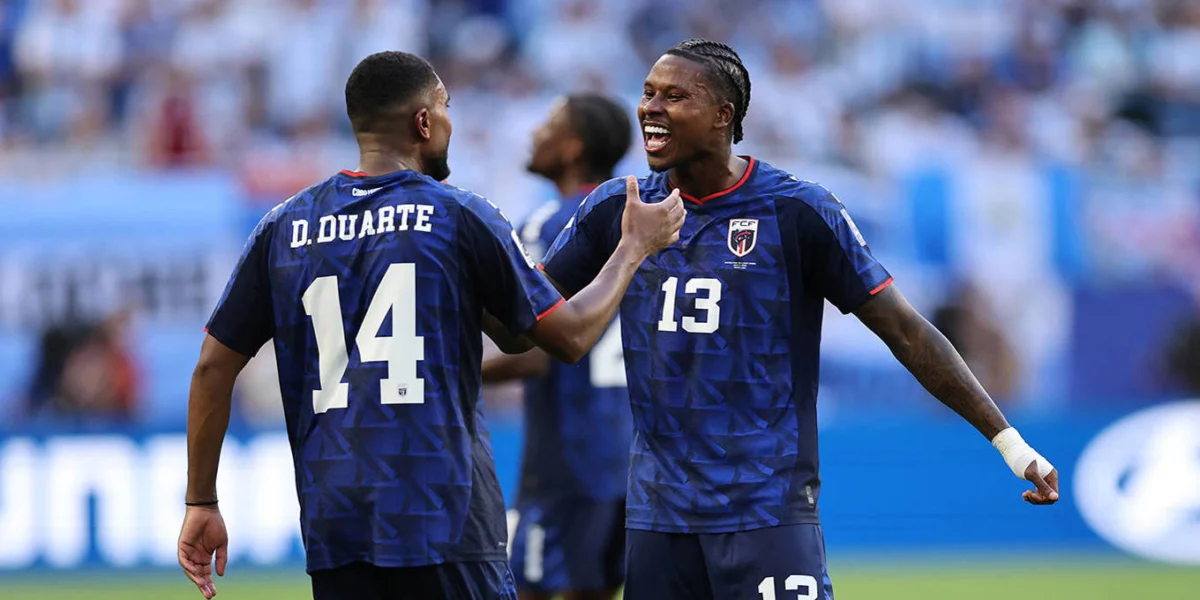
In a global landscape increasingly defined by the formidable might of superpowers and the pervasive influence of technological titans, the prevailing notion often favors the behemoth, the seemingly insurmountable force. However, the unfolding drama of this year’s FIFA World Cup has repeatedly defied this expectation, revealing a compelling narrative where underdogs, against all odds, have seized the spotlight. This sentiment was powerfully underscored in a recent match that saw the established powerhouse Argentina facing off against the less heralded nation of Cape Verde, a confrontation that ultimately delivered a moment of sporting brilliance that reverberated far beyond the pitch.
The expectation, widely held and logically reasoned, was for Argentina to comfortably overcome Cape Verde. Argentina, a nation steeped in footballing tradition and boasting a roster of world-class talent, has consistently been a contender for football’s ultimate prize. Their history is replete with iconic players and memorable victories, establishing them as a benchmark of excellence in the sport. Cape Verde, by contrast, while a nation that has steadily improved its footballing profile on the international stage, typically operates with fewer resources and a less established global footballing pedigree. Their World Cup appearances are rare, and their journey to the knockout stages, or even a competitive match against a top-tier nation, is often considered a significant achievement in itself.
The match, played under the intense pressure of a World Cup knockout tie, seemed to be following its predictable course. The clock ticked into the depths of extra time, a period where fatigue can amplify existing disparities in skill and stamina, and where the superior team often asserts its dominance. It was at this critical juncture, with the outcome appearing all but sealed in favor of the Argentinian side, that an extraordinary event transpired. Sidny Lopes Cabral, a 23-year-old player for Cape Verde, whose youthful appearance belied his crucial role on the field, received a pass on the left flank. In a moment that would be etched into the annals of World Cup history, Cabral eschewed the conventional approach of seeking a teammate for a cross or a lofted ball into the penalty area. Instead, he executed a swift and decisive shift in direction, a maneuver so fluid and unexpected that it sent his Argentine marker sprawling, losing his footing and his defensive position.
What followed was a display of individual brilliance that defied the narrative of inevitable defeat. With a defender out of position and the goal seemingly within reach, Cabral unleashed a shot. It was not a mere strike; it was a "curling wonder of a shot," as described by observers, a testament to both technique and audacity. The ball, imbued with an exquisite spin, arced its way through the air, a trajectory that seemed to defy the laws of physics as it evaded the desperate reach of the Argentine goalkeeper. The destination was the farthest, most unreachable corner of the net, a strike so precise and powerful that it left the vast majority of spectators, and likely the Argentine team itself, in a state of stunned disbelief. This goal, in the dying moments of a match that was expected to be a formality, not only leveled the score but fundamentally altered the psychological landscape of the contest.
The Context of the World Cup Upset
This unexpected turn of events at the World Cup is not an isolated incident but rather a manifestation of trends that have been shaping international football for years. The FIFA World Cup, the most prestigious international football competition, brings together nations from every continent, fostering a unique blend of established footballing giants and emerging nations. While historical powerhouses like Brazil, Germany, Italy, and Argentina have dominated the trophy cabinet, the tournament has increasingly become a platform for smaller nations to showcase their growing talent and tactical acumen.
The increasing professionalization of football across the globe, coupled with advancements in coaching, sports science, and player development infrastructure, has led to a more competitive and unpredictable tournament. Nations that were once considered minnows are now investing heavily in their footballing academies, scouting talent from their diasporas, and employing sophisticated tactical approaches. This has narrowed the gap between the traditional footballing elite and the rest of the world, leading to more closely contested matches and the potential for significant upsets.
The specific context of Cape Verde’s participation in this World Cup is also noteworthy. As an island nation, Cape Verde faces unique logistical and resource challenges in nurturing its footballing talent. However, the dedication of its players, the strategic vision of its footballing federation, and the passion of its supporters have propelled them onto the global stage. Their journey to this point, regardless of the ultimate outcome, represents a triumph of perseverance and a testament to the inclusive nature of modern international sport.
A Chronology of the Dramatic Encounter
While the specific details of the entire match leading up to the decisive moment are not fully provided, the narrative can be pieced together to understand the build-up to this extraordinary goal.
- Pre-Match Expectations: Argentina, a perennial favorite, was widely expected to defeat Cape Verde. Betting odds and expert analyses would have heavily favored the South American giants.
- Early Stages of the Match: The initial phase of the game likely saw Argentina exerting pressure, attempting to establish their dominance. Cape Verde would have been focused on defensive organization and seeking counter-attacking opportunities.
- Mid-Game Stalemate or Argentine Advantage: Depending on the flow, Argentina might have taken a lead, or the game could have remained goalless, with both teams struggling to break the deadlock. The description of "deep into extra time" suggests a protracted battle, potentially a draw for much of the regulation 90 minutes.
- Extra Time Period: The match entered the additional 30 minutes of play, a phase where the physical and mental endurance of both teams is severely tested. This is often where tactical discipline can waver, and individual moments of brilliance or errors can prove decisive.
- The Moment of Brilliance (Deep into Extra Time): As the clock wound down in the second period of extra time, with the possibility of penalties looming or a late winner being sought, Sidny Lopes Cabral received the ball.
- The Goal: Cabral’s decisive action – the feint, the shot, and the ball’s trajectory – culminated in a goal that stunned observers. The scoreline was thus altered dramatically, likely equalizing the match or putting Cape Verde ahead in a critical moment.
- Immediate Aftermath: The reaction would have been a mixture of elation from the Cape Verde bench and players, and shock and dismay from the Argentine contingent and their supporters. The crowd’s roar, or stunned silence, would have reflected the magnitude of the event.
Supporting Data and Broader Trends
The phenomenon of upsets in major sporting events is not unique to football. In recent years, we have seen similar narratives unfold across various disciplines, reflecting a global trend of increased competition and the democratization of high-level performance.
- World Cup Upsets: Historically, the World Cup has seen its share of surprises. While not always as dramatic as a last-minute wonder goal in extra time, matches where perceived weaker teams have held their own or defeated stronger opponents are not uncommon. For instance, the 2002 World Cup saw Senegal defeat France, the reigning champions, in the opening match. More recently, the 2018 tournament witnessed Germany, another footballing giant, being eliminated in the group stage.
- Technological and Analytical Advancements: The application of data analytics and sports science has leveled the playing field. Teams are able to meticulously analyze opponents’ strengths and weaknesses, optimize player performance, and develop highly specialized tactical plans. This allows less traditionally resourced nations to compete more effectively against established powerhouses.
- Global Football Development: FIFA’s "Goal Project," initiated in 1999, has provided significant financial and technical assistance to member associations worldwide, enabling them to develop infrastructure, coaching, and youth development programs. This has been instrumental in the rise of footballing nations that were once considered outsiders. According to FIFA’s own reports, investment in grassroots football development has seen a steady increase across all confederations, leading to a more robust global talent pool.
- Economic Factors: While not always a direct correlation, economic development in some nations has also translated into increased investment in sports, including football. This allows for better facilities, higher quality coaching, and the ability to retain or attract top talent.
Inferred Reactions and Official Statements
While direct quotes are not available, based on the context of such a significant sporting event, one can infer the likely reactions and potential statements from key parties.
- Cape Verde Players and Coach: The overwhelming emotion would be one of immense pride and joy. The coach would likely commend the team’s resilience, tactical discipline, and the individual brilliance of Sidny Lopes Cabral. He might speak about the dream of representing their nation on such a grand stage and the hard work that has gone into achieving this moment. Statements would likely emphasize teamwork, belief, and the fulfillment of a national aspiration.
- Argentine Players and Coach: There would be profound disappointment and perhaps disbelief. The coach would likely acknowledge the quality of Cape Verde’s goal and lament the missed opportunities or defensive lapses that led to the situation. He might express frustration but also respect for the opponent’s performance. The focus would likely be on learning from the experience and regrouping for future challenges, a common sentiment in professional sports after a setback.
- FIFA Officials: FIFA, as the governing body, would likely issue a statement celebrating the spirit of the World Cup and the exciting nature of the competition. They would highlight the positive story of an emerging nation performing strongly and the drama that makes the tournament so captivating for fans worldwide. Such statements often focus on the unifying power of sport and the global reach of football.
- Football Pundits and Media: The goal would undoubtedly be lauded as one of the greatest individual strikes in World Cup history. Analysts would dissect the technique, the tactical implications, and the psychological impact on both teams. The narrative of the underdog triumphing would be a central theme in the post-match commentary.
Broader Impact and Implications
The significance of this event extends beyond the immediate outcome of the match. It serves as a powerful symbol with several broader implications:
- Inspiration for Emerging Nations: For nations like Cape Verde, such a moment is not just a sporting achievement but a source of immense national pride and inspiration. It demonstrates that with dedication, talent, and strategic planning, even smaller countries can compete on the world’s biggest stage and create memorable moments. This can galvanize future generations of athletes and encourage greater investment in sports development.
- Challenging the Status Quo: The repeated instances of underdogs performing well challenge the established hierarchy in international sports. It suggests that the "bully" or the dominant power does not always have the predetermined advantage. This fosters a more dynamic and exciting competitive environment where any team, on their day, can achieve greatness.
- The Beauty of the Unpredictable: This event underscores what makes sports, particularly the World Cup, so compelling. It is the inherent unpredictability, the moments of magic that defy logic, and the stories of perseverance that capture the global imagination. The "wonder goal" by Sidny Lopes Cabral is a perfect embodiment of this unpredictable beauty.
- Evolution of Football Tactics and Skills: The specific nature of Cabral’s goal – a shift in direction and a curling shot – highlights the ongoing evolution of footballing skills. Players are continually developing new techniques and ways to outmaneuver opponents, pushing the boundaries of what is considered possible on the field.
- Global Sports Diplomacy: Sporting events like the World Cup play a crucial role in global sports diplomacy, fostering goodwill and understanding between nations. A moment of exceptional skill from a player representing a smaller nation can capture the attention and admiration of millions worldwide, transcending political or economic divides.
In conclusion, the extraordinary goal scored by Sidny Lopes Cabral against Argentina during this year’s World Cup is more than just a spectacular piece of individual skill. It is a potent symbol of the evolving landscape of international football, a testament to the power of perseverance, and a vivid reminder that in the unpredictable theatre of sport, the most captivating narratives are often written by those who dare to defy expectations. The "bully" may often seem to have the edge, but as this World Cup has so eloquently demonstrated, the spirit of the underdog, armed with talent and audacity, can indeed strike with breathtaking brilliance.
