

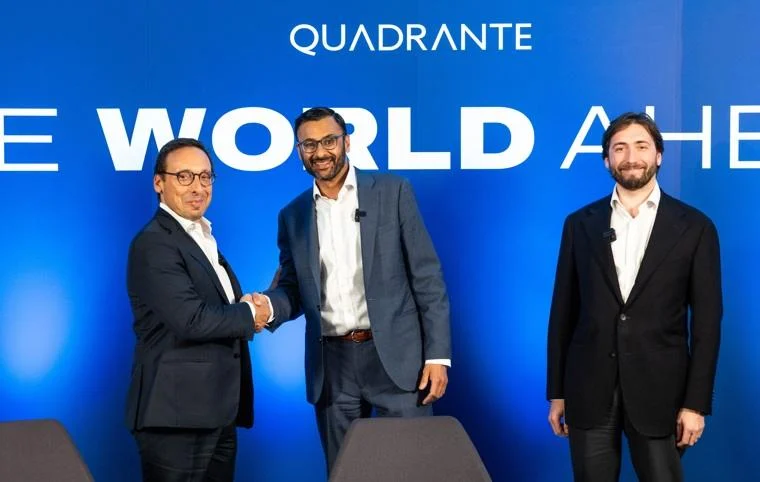
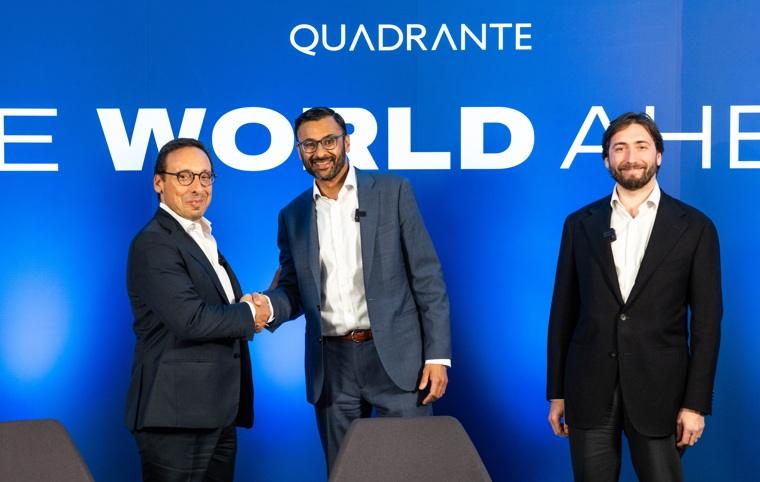
In a move that underscores the intensifying intersection of private equity and the global push toward decarbonization, Permira, the global private equity and credit investment firm, has announced a significant strategic investment in Quadrante. The Lisbon-based firm, which specializes in engineering, architecture, environment, and sustainability consulting, will receive backing through Permira’s dedicated Energy Transition strategy. This partnership is designed to propel Quadrante’s international footprint, with a specific focus on penetrating the high-growth United States market and integrating advanced artificial intelligence (AI) into its service delivery model.
Founded in 1998, Quadrante has evolved from a regional Portuguese engineering boutique into a multidisciplinary global player. The firm operates under an "asset-light" consulting model, focusing on the intellectual capital required to design and manage complex infrastructure. Currently, Quadrante employs over 1,500 professionals across 20 countries, maintaining a dominant presence in Portugal, Spain, Brazil, and Mexico. The investment from Permira is expected to provide the financial firepower and strategic network necessary for Quadrante to compete on a global stage as a tier-one partner for energy transition and critical infrastructure development.
Strategic Pillars and Operational Scope
Quadrante’s business model is organized into three primary segments, each positioned at the center of modern industrial and environmental policy. By targeting these specific sectors, Permira is betting on the long-term structural demand for specialized technical expertise.
The first segment, Energy, addresses the fundamental shift in the global power mix. Quadrante provides engineering services for renewable energy development, including solar and wind, as well as the essential transmission and distribution (T&D) infrastructure required to modernize aging power grids. As nations transition to decentralized and intermittent energy sources, the demand for grid stability and high-voltage interconnectivity has skyrocketed, making Quadrante’s technical proficiency a valuable commodity.
The second segment, Sustainable Cities, focuses on the "backbone" of urban environments. This includes the design and optimization of data centers—which are seeing explosive growth due to the AI boom—alongside water utilities and waste management infrastructure. With urbanization accelerating and climate change putting pressure on municipal resources, the need for resilient, "green" urban planning has become a priority for both governments and private developers.
The third segment, Mobility, covers the logistics of human and freight movement. Quadrante’s portfolio includes high-stakes projects in railways, subways, airports, and maritime ports. As the transportation sector faces mandates to reduce carbon footprints, the engineering of electrified rail systems and sustainable port operations has become a critical sub-sector of the infrastructure market.
Chronology of Permira’s Energy Transition Strategy
The investment in Quadrante marks the second major transaction under Permira’s Energy Transition strategy, a specialized vertical designed to capitalize on the systemic shift toward a net-zero economy. This strategy focuses on backing businesses that provide the tools, services, and expertise necessary for industrial and societal decarbonization.
The timeline of Permira’s recent activities in this space reflects a deliberate pace of acquisition:
- Late 2025 – Early 2026: Permira formally articulates its Energy Transition investment framework, seeking companies with "deep technical expertise" and "asset-light" models.
- Q2 2026: Permira announces its first major transaction under this strategy: a significant investment in CDP (formerly the Carbon Disclosure Project), the world’s leading environmental disclosure platform. This move signaled Permira’s interest in the "data and standards" side of ESG.
- July 7, 2026: Permira announces the Quadrante deal. If the CDP investment was about the measurement of environmental impact, the Quadrante investment is about the physical implementation of the transition—designing the grids, buildings, and transport systems of the future.
This chronology suggests that Permira is building a portfolio that spans the entire value chain of sustainability, from corporate reporting and data to physical engineering and infrastructure design.
Supporting Data: The Infrastructure and Energy Gap
The rationale for Permira’s investment is supported by staggering data regarding global infrastructure needs. According to the International Energy Agency (IEA), global investment in clean energy needs to triple by 2030 to reach approximately $4 trillion annually to meet net-zero goals. A significant portion of this capital is directed not just at hardware like solar panels, but at the "soft" infrastructure of engineering and consulting services required to permit, design, and integrate these assets.
Furthermore, the United States market—Quadrante’s primary target for expansion—is currently undergoing a historic infrastructure revitalization. The Infrastructure Investment and Jobs Act (IIJA) and the Inflation Reduction Act (IRA) have collectively earmarked hundreds of billions of dollars for grid modernization, clean energy manufacturing, and sustainable transport. However, a major bottleneck in the U.S. has been the shortage of specialized engineering talent capable of navigating the complex regulatory and technical requirements of these projects. By bringing Quadrante’s 1,500-strong workforce into the U.S. market, Permira aims to bridge this "expertise gap."
Official Responses and Executive Vision
Leadership from both firms emphasized that the partnership is a blend of financial scaling and technological evolution. Kush Patel, Partner and Co-Head of Energy Transition at Permira, highlighted the "secular growth trends" that make Quadrante a defensive yet high-growth asset.
"Quadrante has built a differentiated platform at the heart of two powerful secular growth trends: the energy transition and the global buildout of critical infrastructure," Patel stated. "We see a significant opportunity to support the company’s international expansion, particularly in the United States, where demand for engineering expertise across power, renewables, data centers, and broader infrastructure development continues to accelerate."

Nuno Costa, Global CEO and Co-founder of Quadrante, noted that the firm will maintain its core leadership and culture while leveraging Permira’s digital expertise. "Our founding team and senior leadership will provide continuity of vision and culture, while Permira will support our next phase of growth by leveraging its expertise and the transformative potential of AI," Costa said. He added that the goal is to deliver "smarter and higher quality seamless client service" through AI-enhanced creative solutions.
Anish Patel, Partner and Co-Head of Energy Transition at Permira, reiterated the firm’s investment thesis, describing Quadrante as the "ideal" target due to its "deep technical expertise, strong customer relationships, and a management team with a clear vision for where the market is heading."
The Role of Artificial Intelligence in Engineering
A notable aspect of this deal is the explicit focus on AI. In the traditional engineering and consulting sector, margins are often tied to billable hours. However, the industry is currently undergoing a digital transformation. Permira and Quadrante intend to use AI to enhance Building Information Modeling (BIM), predictive maintenance design, and generative design.
By utilizing AI, Quadrante can automate routine drafting and calculation tasks, allowing its 1,500 professionals to focus on high-level strategic problem-solving. For clients, this means faster project delivery and more optimized designs that reduce material waste—a key component of sustainable construction. Permira’s track record in scaling technology and software companies is expected to be a major asset in this digital integration.
Market Implications and Broader Impact
The investment in Quadrante reflects a broader trend of private equity firms moving away from high-beta, capital-intensive energy projects (like owning oil fields or speculative wind farms) and toward the "pick-and-shovel" providers of the green revolution. Consulting and engineering firms are viewed as "lower-risk" entries into the energy transition because they are paid for their expertise regardless of the ultimate commodity price of electricity or carbon.
This deal also signals a period of consolidation in the fragmented global engineering market. As "blue-chip" multinational clients seek to simplify their supply chains, they are increasingly looking for "one-stop-shop" partners who can handle projects across multiple continents. Quadrante’s expansion into the U.S. will allow it to serve its existing European and Latin American clients as they expand their own operations into North America, while simultaneously competing for domestic U.S. contracts.
In the long term, the success of this investment will likely be measured by how effectively Quadrante can scale its culture of "creative engineering" across diverse regulatory environments. For Permira, the deal solidifies its position as a serious contender in the ESG and energy transition space, moving beyond simple "green" branding and into the technical core of global industrial change. As the world moves toward the 2030 and 2050 climate milestones, the role of firms like Quadrante will only become more pivotal, serving as the bridge between ambitious policy goals and the physical reality of a decarbonized world.
