

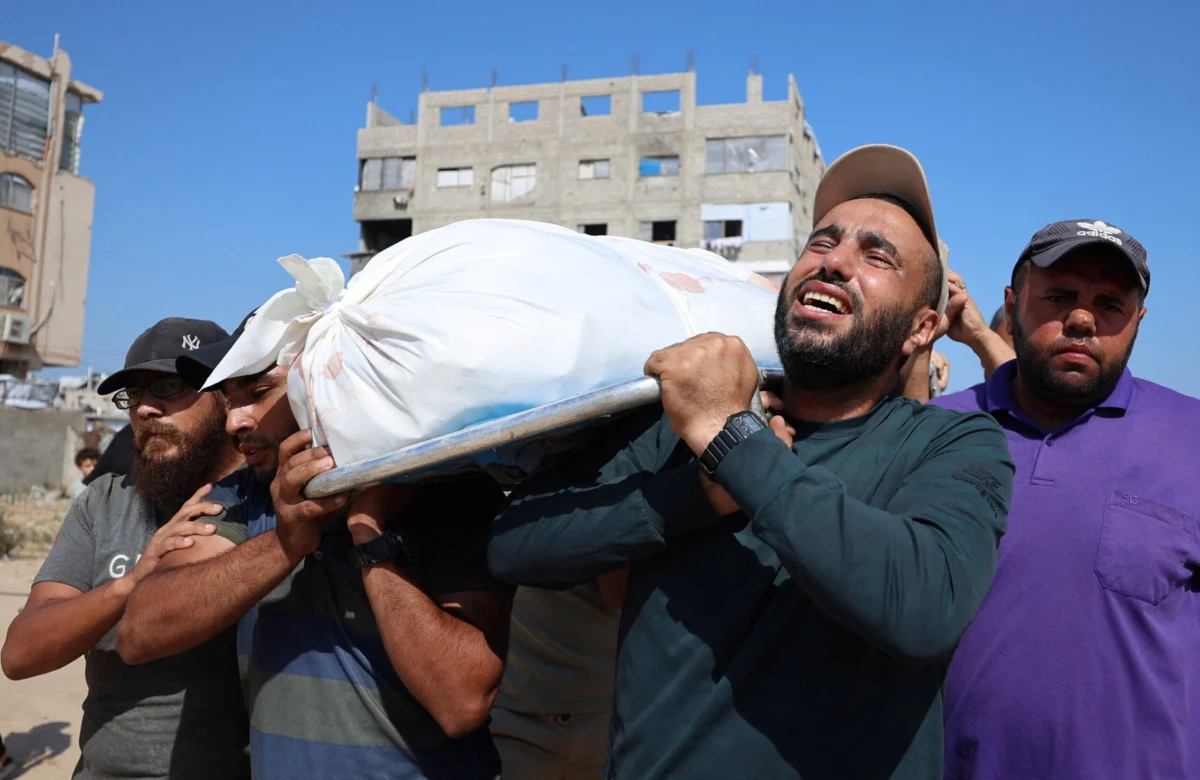
Israeli military operations in the Gaza Strip claimed the lives of at least six Palestinians on Monday, as a series of drone strikes targeted vehicles, residential apartments, and displacement camps across the besieged enclave. According to medical sources and local officials, the latest surge in violence also left more than 20 people wounded, further straining a healthcare system that has been largely dismantled over the past 16 months of conflict. The casualties occurred despite a United States-brokered ceasefire agreement that was nominally implemented in October of last year, highlighting the precarious and often disregarded nature of the current truce.
The most recent fatalities were concentrated in Khan Younis and Gaza City, two areas that have seen heavy bombardment and ground incursions throughout the war. In southern Gaza, an Israeli drone targeted a vehicle traveling along al-Rashid Street, a primary coastal thoroughfare in Khan Younis. Medical officials confirmed that at least two individuals were killed instantly in the strike, which also caused significant damage to nearby civilian infrastructure. Shortly thereafter, another attack was reported in al-Mawasi, a coastal area near Khan Younis that had been designated by the Israeli military as a "humanitarian safe zone" for displaced families. Two Palestinians were killed when a strike hit a tent sheltering civilians who had fled earlier rounds of fighting.
In the northern part of the territory, Gaza City was also the site of lethal aerial activity. A source at al-Shifa Hospital reported that a married couple was killed when an Israeli drone fired a missile into a residential apartment. The strike left several others in the building with varying degrees of injuries. Beyond the fatalities, the Union of Fishermen’s Committees reported that three Palestinian fishermen were wounded by drone fire while working off the coast of Gaza City. In total, medical sources across the Gaza Strip accounted for at least 22 injuries resulting from Monday’s operations, many of whom are in critical condition.
Chronology of the Conflict and the Failing Truce
The current escalation of violence comes at a time when the international community has been pushing for a permanent end to hostilities. In October 2024, following months of intense diplomatic maneuvering led by the United States, Qatar, and Egypt, Israel and Hamas reportedly agreed to a ceasefire framework. The deal was intended to facilitate the release of captives, allow for the massive influx of humanitarian aid, and halt the large-scale aerial and ground offensives that had leveled entire neighborhoods.
However, the reality on the ground has diverged sharply from the diplomatic rhetoric. While the massive, division-strength ground maneuvers that characterized the early stages of the war have largely subsided, the Israeli military has maintained a persistent campaign of "targeted strikes" and "security operations." Since the ceasefire officially took effect, the Ministry of Health in Gaza has documented a staggering number of violations. According to the ministry’s latest figures, Israeli army actions have killed at least 1,072 people and wounded 3,463 others during the period when the truce was supposed to be in force.
The timeline of the conflict remains a grim record of human loss. Beginning in October 2023, the war has transitioned through several phases:
- Initial Bombardment (Oct 2023): Intense aerial strikes targeting Gaza City and northern areas.
- Ground Invasion (Late Oct 2023 – Jan 2024): Massive movement of Israeli armor into northern Gaza and Khan Younis.
- The Siege of Hospitals and Schools (Early 2024): Operations centered on medical facilities like al-Shifa and Nasser Hospital.
- The Rafah Offensive (Mid-2024): Expansion of the war into the southernmost city, leading to the displacement of over a million people.
- The Ceasefire Era (Oct 2024 – Present): A period marked by a nominal truce but characterized by daily drone strikes, sniper fire, and localized incursions.
Statistical Overview of the Humanitarian Crisis
The cumulative toll of the war has reached levels that international observers and human rights organizations describe as catastrophic. The Ministry of Health in Gaza updated the overall death toll on Monday, stating that at least 73,098 Palestinians have been killed since October 7, 2023. This figure includes a high percentage of women and children. Furthermore, the number of injured has risen to 173,571, many of whom suffer from permanent disabilities, amputations, and severe psychological trauma.
These statistics, while daunting, do not fully capture the extent of the crisis. The infrastructure of Gaza has been nearly obliterated. According to United Nations data:
- Over 70% of residential housing units have been damaged or destroyed.
- 34 out of 36 hospitals are either completely out of service or only partially functional.
- Nearly 90% of the population (approximately 2.1 million people) remains internally displaced.
- Famine-like conditions persist in northern Gaza due to the continued restriction of commercial and humanitarian convoys.
The disparity between the "ceasefire" status and the death toll of over 1,000 people since its inception has led to intense criticism of the mediation process. Analysts point out that the lack of a robust monitoring mechanism has allowed for a "grey zone" of combat where drone strikes are categorized as defensive measures or counter-terrorism operations, despite the high civilian cost.
Reactions from Local and International Stakeholders
The continued strikes have elicited sharp reactions from Palestinian officials and international advocacy groups. The Ministry of Health issued a statement condemning the "systematic targeting of civilians in areas designated as safe," referring to the strikes in al-Mawasi. "The occupation continues its genocidal war under the cover of a false truce, using drones to hunt down families in their tents and apartments," the statement read.
Hamas, the governing authority in Gaza, has accused the Israeli government of using the ceasefire as a tactical pause to regroup while continuing to assassinate key figures and demoralize the population. Spokespersons for the group have repeatedly called on the United States and other mediators to hold Israel accountable for the violations, warning that the continued bloodshed threatens to collapse the entire framework of the October agreement.
On the Israeli side, the military typically maintains that its operations are directed at "terrorist infrastructure" and "armed operatives." While the Israel Defense Forces (IDF) have not issued a specific statement regarding every individual strike on Monday, previous justifications for attacks in Khan Younis and Gaza City have cited the presence of Hamas command centers or the movement of combatants within civilian zones. However, the recurring death of non-combatants, such as the married couple in Gaza City and the fishermen off the coast, continues to fuel international legal challenges.
Analysis of Implications and the Path Forward
The persistence of lethal strikes during a ceasefire has profound implications for the future of the region. First, it undermines the credibility of international mediation. If a US-brokered deal cannot prevent the deaths of over a thousand people in a few months, future negotiations may be viewed with extreme skepticism by all parties involved.
Second, the targeting of "safe zones" like al-Mawasi creates a permanent state of displacement and terror. When civilians have nowhere left to flee that is truly safe, the humanitarian crisis shifts from a logistical challenge to an existential one. The strikes on al-Rashid Street and the Gaza City apartments suggest that no part of the territory—whether a transit route or a private home—is exempt from the threat of aerial bombardment.
The legal ramifications are also mounting. The ongoing proceedings at the International Court of Justice (ICJ), where Israel faces allegations of genocide, and the International Criminal Court (ICC), which is investigating war crimes by both Israeli and Hamas leaders, are increasingly focused on the conduct of the war during this "ceasefire" phase. Evidence of strikes on civilian tents and residential buildings will likely be integrated into these international legal dossiers.
As the death toll climbs toward 75,000, the international community faces a critical juncture. The current "ceasefire" appears to be a truce in name only, failing to provide the security and stability required for the massive reconstruction and humanitarian efforts Gaza desperately needs. Without a more rigorous enforcement of the cessation of hostilities and a clear path toward a political resolution, the cycle of drone strikes and civilian casualties is expected to continue, further deepening the tragedy of the Gaza Strip.
