

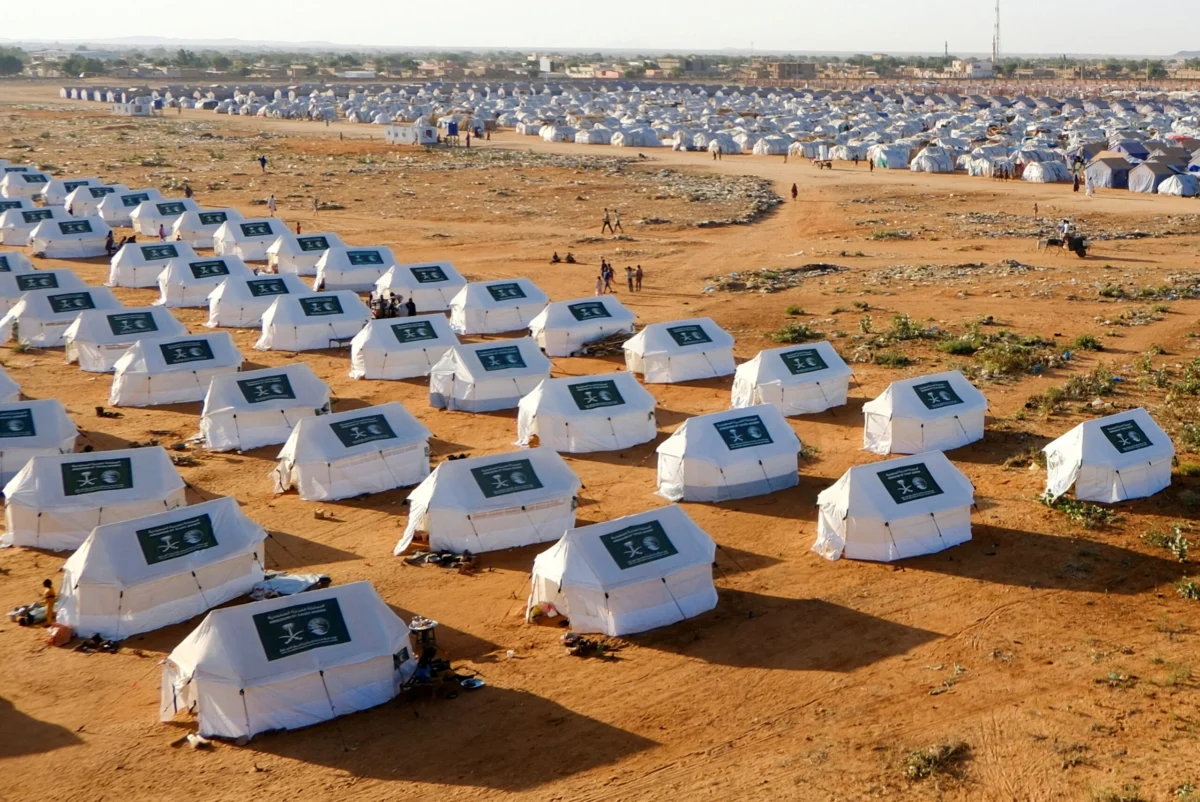
Half a million people, including 105,000 internally displaced individuals, are facing an imminent humanitarian catastrophe in el-Obeid, the strategic capital of North Kordofan state, as the Rapid Support Forces (RSF) paramilitary group intensifies its campaign to assert dominance over Sudan’s vast Kordofan and Darfur regions. This escalating crisis unfolds over three years into a devastating civil war that has plunged the nation into one of the world’s most severe humanitarian emergencies. The Office of the United Nations High Commissioner for Human Rights (OHCHR) has issued stark warnings, anticipating el-Obeid to become the next epicenter of major ground clashes between the RSF and the Sudanese Armed Forces (SAF), with numerous countries raising alarm over potential atrocities mirroring those recently witnessed in el-Fasher.
El-Obeid Under Siege: A City on the Brink
For months, el-Obeid has been effectively cut off and subjected to relentless drone attacks by advancing RSF paramilitaries, a tactic described by UN High Commissioner for Human Rights Volker Turk as creating "siege-like conditions." This aerial bombardment has crippled the city’s vital infrastructure, leading to widespread power outages, severe disruptions to water supplies, and gravely hindering the operational capacity of hospitals. Reports from the Yale Humanitarian Research Lab underscore the severity of the crisis, detailing a critical electricity and fuel shortage that further exacerbates the plight of its trapped population. Residents are forced to seek water from dwindling wells and external tanks, facing exorbitant price hikes—food prices have surged by up to 300 percent, and water costs have doubled. Aid access, already precarious, has shrunk dramatically due to the perilous security situation, leaving hundreds of thousands vulnerable to starvation and disease.
Last week, an international coalition of countries, the Coalition for Atrocity Prevention and Justice for Sudan, delivered a joint statement through Norway, expressing profound alarm. Comprising the United Kingdom, Canada, France, Germany, Ireland, the Netherlands, Sierra Leone, and joined by 21 other nations, the coalition warned of "urgent risks of atrocities and deliberate killings" in el-Obeid. Their statement highlighted that "ten consecutive days of drone strikes have killed at least 50 civilians across El Obeid and North Kordofan, and have caused significant damage to civilian infrastructure." Disturbingly, the coalition also cited "widespread credible reports of ethnically targeted violence, including sexual and gender-based violence," calling these acts "deplorable" and urging the international community to prevent another catastrophe in Sudan.
Strategic Imperative: Why El-Obeid Matters
El-Obeid’s geographical position grants it immense strategic importance, making it a pivotal battleground for control over central Sudan. The city lies on a critical route connecting the RSF-controlled Darfur region to the SAF-held eastern parts of the country. Control of el-Obeid means command over a key gateway for the flow of goods, people, and vital supplies into central Sudan. It hosts the SAF’s 5th Infantry Division and a crucial airbase, facilities essential for military operations in the wider Kordofan region. Beyond its military significance, el-Obeid is an economic hub, home to an important oil pipeline and a major market for gum arabic, a key Sudanese export.
Ahmed Ben Omer, an independent Sudan analyst, emphasized the profound implications of el-Obeid’s potential fall. He told Al Jazeera that such an event would trigger a significant strategic shift in the war: "The city sits at the heart of a network linking Darfur, Kordofan and central Sudan. Control of it would give the RSF an opportunity to connect vast geographical areas and rebuild its political project after losing Khartoum." The RSF’s expulsion from the national capital in March 2025 underscores their desperation to secure new strategic strongholds. If el-Obeid falls, it would severely curtail the SAF’s ability to maintain control over Kordofan and establish a vital supply route for the RSF, linking its western strongholds directly to the rest of the country.
Echoes of El-Fasher: A Precedent for Atrocity
The unfolding crisis in el-Obeid carries chilling echoes of the mass atrocities perpetrated by the RSF in el-Fasher, the capital of North Darfur state, which fell to the paramilitary group in October 2025 after an 18-month siege. During the siege, from May 2024 to October 2025, el-Fasher endured a brutal campaign that culminated in the killing of thousands of civilians following the Sudanese army’s retreat. Amnesty International confirmed in July 2026 that the massacres in el-Fasher "amounted to ethnic cleansing," detailing survivor accounts of sexual violence, targeted killings, torture, and arbitrary detentions. An independent UN mission, reporting in February 2026, went further, stating that the assault bore the "hallmarks of genocide." Civilians were systematically cut off from food, water, and humanitarian assistance, mirroring the dire conditions now emerging in el-Obeid.
The international community’s failure to act decisively to prevent the humanitarian crisis in el-Fasher, despite repeated UN warnings, casts a dark shadow over the current situation in el-Obeid. Leena Badri, a nonresident fellow at the Tahrir Institute for Middle East Policy, highlighted a crucial difference in tactics between the two cities: "El-Fasher underwent a full, prolonged siege. El-Obeid is really an example of the pervasive use of drones, and how the use of drones then essentially creates the conditions of a siege without having them to do an actual full encirclement of the city." While the methods differ, the grim outcome—starvation and immense civilian suffering—is expected to be the same. Omer warned that the prolonged pressure on el-Obeid could lead to widespread famine, a tragic reality confirmed in el-Fasher in September 2025.
The Broader Conflict: Sudan’s Civil War and its Origins

The current civil war in Sudan erupted in April 2023, stemming from a violent power struggle between the SAF, led by General Abdel Fattah al-Burhan, and the RSF, commanded by General Mohamed Hamdan Dagalo, known as Hemedti. This conflict is rooted in Sudan’s complex political history, particularly the integration—or lack thereof—of the RSF into the regular army following the 2019 overthrow of long-time dictator Omar al-Bashir. The RSF, initially formed from the Janjaweed militias responsible for atrocities in Darfur in the early 2000s, was nurtured by Bashir as a counterweight to the traditional army. After Bashir’s fall, both Burhan and Hemedti played key roles in the transitional government, but their rivalry for control over the state and its vast resources ultimately boiled over into open warfare.
The war began with clashes in the capital, Khartoum, quickly spreading across the country and exacerbating existing ethnic and regional tensions. The conflict is now widely regarded as one of the worst humanitarian crises globally. Estimates of casualties vary widely, but credible reports suggest that at least tens of thousands of people have been killed, with some organizations indicating the true death toll, including indirect deaths from lack of food, medicine, and healthcare, could be in the hundreds of thousands.
A Humanitarian Catastrophe Unfolding Across Sudan
Beyond the immediate crisis in el-Obeid, the war has triggered the world’s largest displacement crisis. The United Nations Office for the Coordination of Humanitarian Affairs (OCHA) reports that nearly 9 million people have been internally displaced, while over 2 million have fled to neighboring countries as refugees, bringing the total number of displaced to over 11 million. More than 25 million people—over half of Sudan’s population—are now in urgent need of humanitarian assistance.
Food insecurity has reached catastrophic levels, with millions teetering on the brink of famine. The World Food Programme (WFP) has repeatedly warned of an impending hunger crisis, exacerbated by disrupted agricultural cycles, destroyed infrastructure, and severely restricted humanitarian access. Healthcare systems have collapsed in many areas, with hospitals destroyed, medical supplies scarce, and personnel fleeing. Outbreaks of preventable diseases like cholera and measles are rampant, further threatening a population already weakened by conflict and displacement. Women and children are particularly vulnerable, facing heightened risks of gender-based violence, forced recruitment, and severe malnutrition.
International Responses and Diplomatic Failures
Despite the scale of the crisis, international efforts to mediate a lasting peace have largely faltered. The Jeddah process, initiated shortly after the war began in May 2023 with Saudi Arabian and US mediation, yielded a nominal agreement aimed at ending hostilities. However, fighting resumed just a day after its supposed implementation, underscoring the deep mistrust and entrenched positions of the warring factions. Subsequent rounds of talks have yielded little progress, leaving diplomatic channels largely ineffective.
The UN has consistently called for increased humanitarian access and protection for civilians, with UN Secretary-General António Guterres repeatedly urging an immediate ceasefire. However, these calls have largely gone unheeded on the ground. The recent formation of the Coalition for Atrocity Prevention and Justice for Sudan signifies growing international alarm but has yet to translate into concrete action capable of altering the trajectory of the conflict. Omer stressed that preventing a catastrophe in el-Obeid is a matter of political will and leverage from international actors. He pointed to the United States’ sanctions and financial pressure tools, Egypt’s direct security and political weight in Sudan, Saudi Arabia’s significant diplomatic and regional influence, and the UN Security Council’s legal and political tools as instruments that could be deployed more effectively.
Implications and Future Outlook
The potential fall of el-Obeid would have profound implications for the future of Sudan. It would not only solidify the RSF’s control over a vast swathe of the country, potentially splitting Sudan into de facto zones of influence, but also severely weaken the SAF, possibly prolonging the conflict indefinitely. Such an outcome could further destabilize the broader Horn of Africa region, leading to increased refugee flows into neighboring countries like Chad, South Sudan, and Egypt, and potentially drawing in regional powers.
The international community’s inaction or inability to effectively intervene raises serious questions about its commitment to the principle of "Responsibility to Protect" (R2P). The repeated warnings of ethnic cleansing and genocide by credible organizations demand a robust response beyond mere condemnations. Accountability for the war crimes and crimes against humanity committed by both sides, but particularly the RSF’s documented atrocities, remains a critical unresolved issue. Without concerted international pressure, a unified diplomatic front, and potentially more decisive measures, the humanitarian crisis in el-Obeid—and indeed across Sudan—is set to worsen, pushing the nation further into the abyss of conflict, famine, and despair, with long-lasting consequences for its people and regional stability.
