

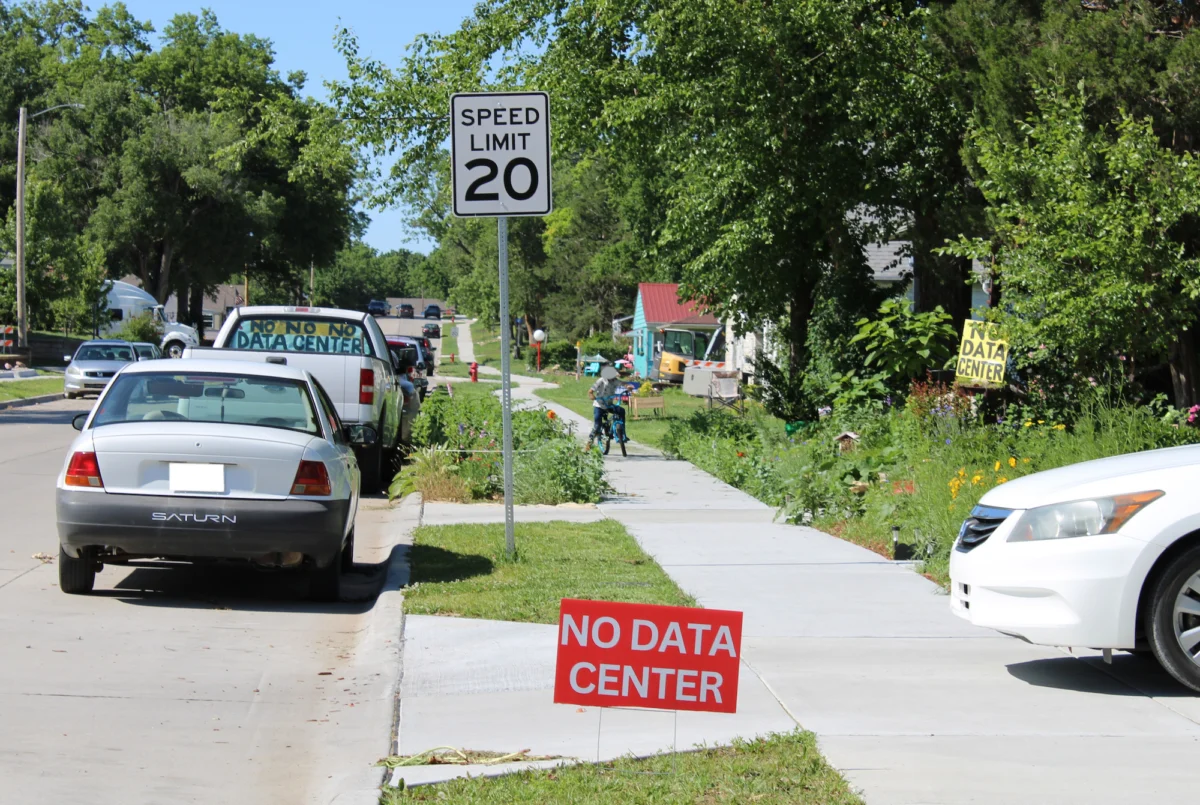
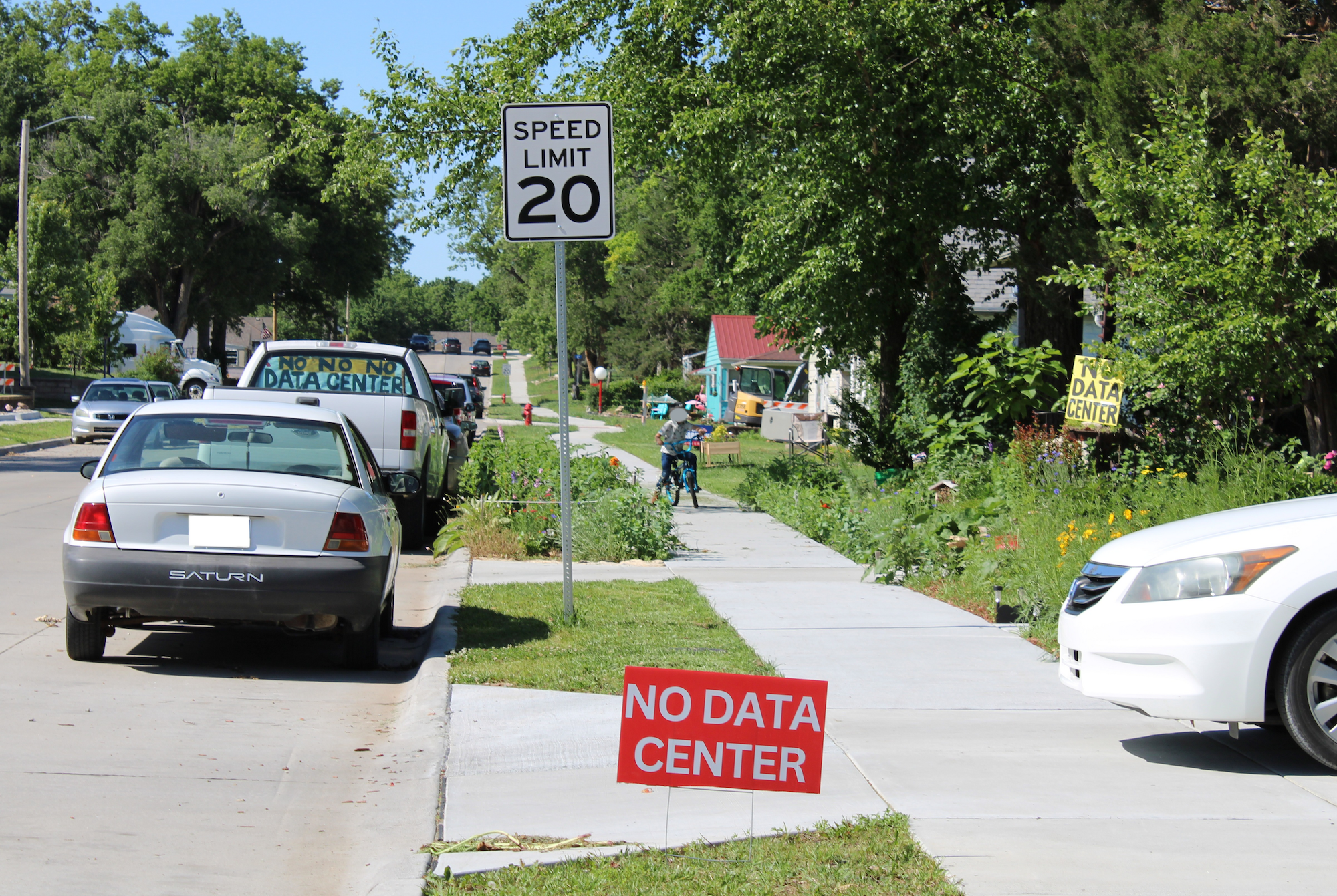
The rapid proliferation of industrial-scale data centers across the United States has transitioned from a localized zoning concern to a pivotal national political issue as the 2026 midterm elections approach. A growing coalition of voters, spanning the political spectrum, is increasingly vocal in its opposition to the "hyperscale" facilities required to power the artificial intelligence revolution. Driven by concerns over resource depletion, rising utility costs, and a perceived widening of the wealth gap between Silicon Valley elites and rural communities, this movement is forcing candidates and incumbents to take definitive stances on moratoriums and regulatory oversight.
While developers and tech conglomerates frequently champion these projects as engines of economic growth, promising high-tech jobs and significant tax revenue, public sentiment has soured. Recent polling from Ipsos indicates a stark reality for the industry: only 14 percent of Americans approve of a new data center being built in their own community. This disapproval is uniquely bipartisan, with only 9 percent of Democrats and 21 percent of Republicans expressing support for local expansion. As the boom accelerates, the political consequences for state and local officeholders have become immediate, with some losing primary challenges and others reversing long-held positions to align with constituent anxieties.
The Evolution of the Data Center Boom
The current friction is rooted in the sheer scale of modern data infrastructure. Historically, data centers were relatively modest facilities located near urban fiber-optic hubs. However, the energy-intensive demands of large language models and advanced generative AI have necessitated a shift toward "hyperscale" campuses. These facilities often require hundreds of megawatts—and in some cases, several gigawatts—of power, a demand that is increasingly being met by expanding into rural landscapes where land is cheaper and more plentiful.
Currently, more than 3,000 data centers operate within the United States. While the largest existing facility is a 750-megawatt bitcoin mining operation in Texas, the next generation of infrastructure dwarfs these figures. In Louisiana, a partnership between Meta and Entergy recently announced a 5.2-gigawatt project involving the construction of seven new power plants to support AI operations. Similarly, a highly contested 9-gigawatt project in Utah has sparked legal battles, with critics arguing that the scale of such developments is incompatible with regional resource management.
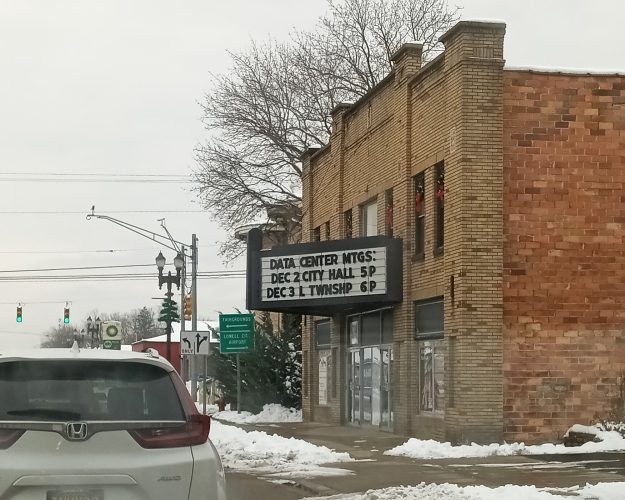
The pace of this construction has left local regulatory bodies overwhelmed. Planning commissions that once handled small-scale commercial zoning are now tasked with evaluating infrastructure projects that consume more electricity than entire mid-sized cities. This perceived lack of oversight has fueled a narrative that tech giants are "forcing" these facilities onto communities through non-disclosure agreements (NDAs) and high-pressure lobbying tactics.
Environmental and Social Resource Strain
The backlash is not merely aesthetic but is grounded in tangible concerns regarding public health and resource availability. Environmental advocates and public health experts have identified several key areas of impact:
1. Electrical Grid Stability and Costs
The most immediate concern for many residents is the impact on the electrical grid. As data centers consume vast portions of available baseload power, utility companies often face the choice of building new generation capacity or increasing rates for residential consumers. A recent Brookings Institution report highlighted that rising energy bills in several states are directly linked to the infrastructure upgrades required to serve data centers. In regions like Northern Virginia, the "Data Center Alley" of the world, the sheer volume of power demand has led to warnings about potential grid instability during peak summer months.
2. Water Consumption
AI hardware generates immense heat, requiring sophisticated cooling systems. Many of these systems rely on "evaporative cooling," which consumes millions of gallons of water daily. In drought-prone areas or farming communities where groundwater is a precious commodity, the arrival of a data center is often viewed as a direct threat to the local agricultural economy. Analysis from the Sierra Club has revealed massive water footprints for power plants serving Texas data centers, further exacerbating regional water scarcity.
3. Noise and Air Pollution
The physical presence of a data center brings persistent industrial noise from massive cooling fans and backup generators. Public health experts at Dartmouth’s Geisel School of Medicine have noted that the low-frequency hum of these facilities can impact sleep patterns and mental health for residents living in close proximity. Furthermore, data centers maintain massive arrays of diesel-powered backup generators to ensure "five-nines" uptime. During grid stress events, these generators can emit significant levels of nitrogen oxides and particulate matter. Research from Virginia Commonwealth University (VCU) found that air pollution from data center clusters in Northern Virginia can rival the emissions of traditional power plants.
A Chronology of Political Fallout
The political ramifications of the data center expansion began to manifest clearly in the first half of 2026. What was once a bipartisan consensus on "tech-led growth" has fractured as the 2026 midterms loom.
- June 2026 (Maine): Democratic Governor Janet Mills unexpectedly dropped her bid for the U.S. Senate. The withdrawal followed a controversial veto of a bill that would have imposed a statewide moratorium on data center development. Her exit cleared the path for Graham Platner, a political newcomer whose platform focuses almost exclusively on protecting local resources from "corporate elite" overreach.
- May-June 2026 (New York): The New York State Legislature passed a data center moratorium bill, responding to intense pressure from small business owners and farmers in upstate regions. Governor Kathy Hochul now faces a difficult political calculation: signing the bill risks alienating the tech sector, while a veto could jeopardize her re-election prospects among rural and suburban voters.
- June 2026 (New Jersey): In a rare move, the all-Democrat city council of Asbury Park adopted a formal resolution urging the state legislature to enact a statewide moratorium. Mayor John Moor stated that the city simply does not have the land, water, or power to spare, echoing a sentiment that "every town needs time to get this right."
- June 2026 (Florida): Republican County Commissioner Kerry Smith in Santa Rosa County called for a 12-month ban on new data center permits as he campaigns for re-election. His stance highlights that the issue is not divided along traditional party lines but rather along the divide between local residents and industrial developers.
The National Context and AI Job Replacement
Adding fuel to the fire is the broader national conversation regarding artificial intelligence and the workforce. Unlike traditional manufacturing plants that may employ thousands of local residents, a 500-megawatt data center may require only a few dozen full-time technicians once construction is complete. This "jobless growth" is particularly frustrating to communities that have provided tax abatements and land concessions.
Furthermore, the perceived irony of AI is not lost on voters. Many residents fear that the very infrastructure they are being asked to host—at the cost of their water and quiet—is being used to develop AI models that will eventually replace their own jobs in the service and administrative sectors. This sentiment has been exacerbated by the current administration’s efforts to shield data center operators from legal liability for pollution, a move that critics describe as a "massive power grab" in defense of wealthy tech executives.
Analysis of Implications for the November Midterms
As the November elections approach, the data center issue is expected to serve as a proxy for larger debates over corporate accountability and the "right to the city" (or countryside). For candidates, the "pro-business" label is no longer a guaranteed asset if it involves supporting resource-heavy data infrastructure.
In swing states like Ohio and Pennsylvania, where the preservation of farmland is a high-priority issue for voters, the threat of eminent domain for data center power lines or campuses has become a primary campaign theme. Legislative efforts in Ohio are already underway to prevent developers from seizing private property for these purposes.
The trend toward local and state-level moratoriums suggests that the tech industry may face a "permitting cliff" in late 2026. If a significant number of states follow New York’s lead, the rapid expansion of AI infrastructure could stall, creating a bottleneck for the very companies—Meta, Google, Microsoft, and Amazon—that have staked their future on AI dominance.
Conclusion
The data center backlash represents a new frontier in American populism. It is a movement that defies traditional demographic silos, uniting environmentalists concerned about carbon footprints with rural conservatives concerned about property rights and local autonomy. For the tech industry, the era of frictionless expansion appears to be ending. For the politicians seeking office this November, the ability to navigate the complex trade-offs between technological progress and community preservation may well determine who wins the most closely watched races of 2026. As Asbury Park Mayor John Moor summarized, the issue is "bigger than any one project"—it is a fundamental question of how much a community is willing to sacrifice for the digital age.
