

The global automotive industry is currently navigating a pivotal transition period, characterized by a complex tug-of-war between two primary paths toward decarbonization: the rapid adoption of full battery electric vehicles (BEVs) and the strategic implementation of ultra-efficient hybrid electric vehicles (HEVs). While the long-term goal for many nations remains a zero-emission transport sector, the emergence of advanced technologies, such as Geely’s new i-HEV system, is challenging the assumption that the transition to full electrification will be a linear or immediate process. For the average consumer in the United States, the choice between these two technologies is increasingly defined by a balance of cost, convenience, and perceived risk.
The Rise of the High-Efficiency Hybrid: Geely’s i-HEV and the Bridge Technology Argument
As the automotive market matures, manufacturers are finding that a significant segment of the population remains hesitant to embrace full electrification. This hesitance is often rooted in concerns over charging infrastructure, vehicle range, and the higher initial purchase price of BEVs. In response, companies like Geely have developed next-generation hybrid systems that offer a "best of both worlds" scenario. Geely’s i-HEV (intelligent Hybrid Electric Vehicle) technology represents a significant leap in thermal efficiency and energy management.
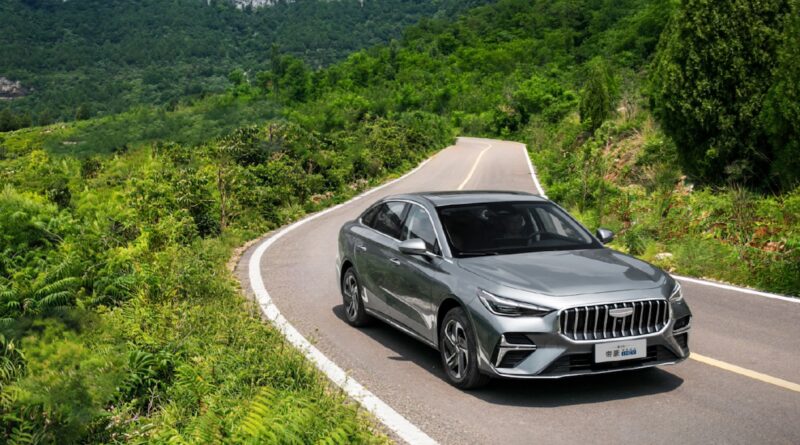
Unlike early hybrids that offered modest fuel savings, these modern systems utilize sophisticated power-split transmissions and high-efficiency engines that can achieve fuel economy ratings far exceeding traditional internal combustion engine (ICE) vehicles. For the "regular Joe"—a term used to describe the mainstream consumer who prioritizes practicality over early-adopter enthusiasm—a vehicle like the Geely Emgrand i-HEV offers a familiar user experience. It requires no changes to refueling habits, eliminates "range anxiety," and provides a significant reduction in fuel costs without the need for a home charging installation.
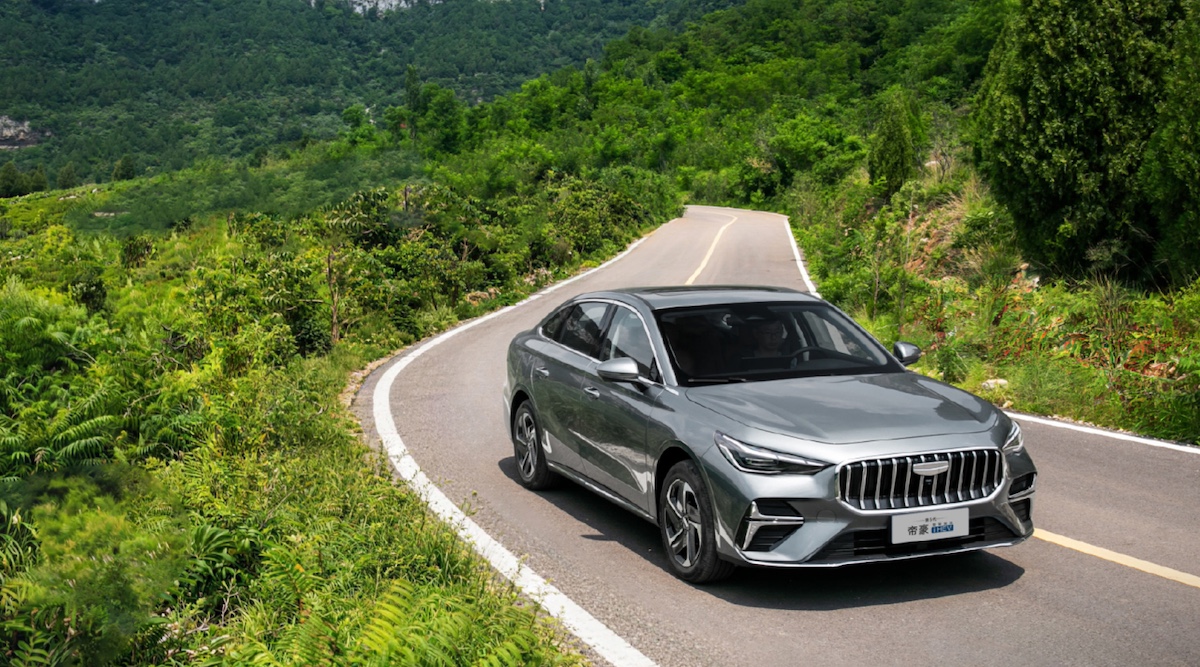
Industry analysts suggest that if more automakers follow Geely’s lead, the market could see a prolonged "hybrid era." These vehicles serve as a lower-risk entry point for consumers who are concerned about the resale value and battery longevity of full EVs. By minimizing the "disruption" to the consumer’s lifestyle, highly efficient hybrids may inadvertently slow the adoption of BEVs by providing a "good enough" alternative that satisfies both economic and environmental motivations for the short term.
Comparative Analysis of Powertrain Manufacturing and Costs
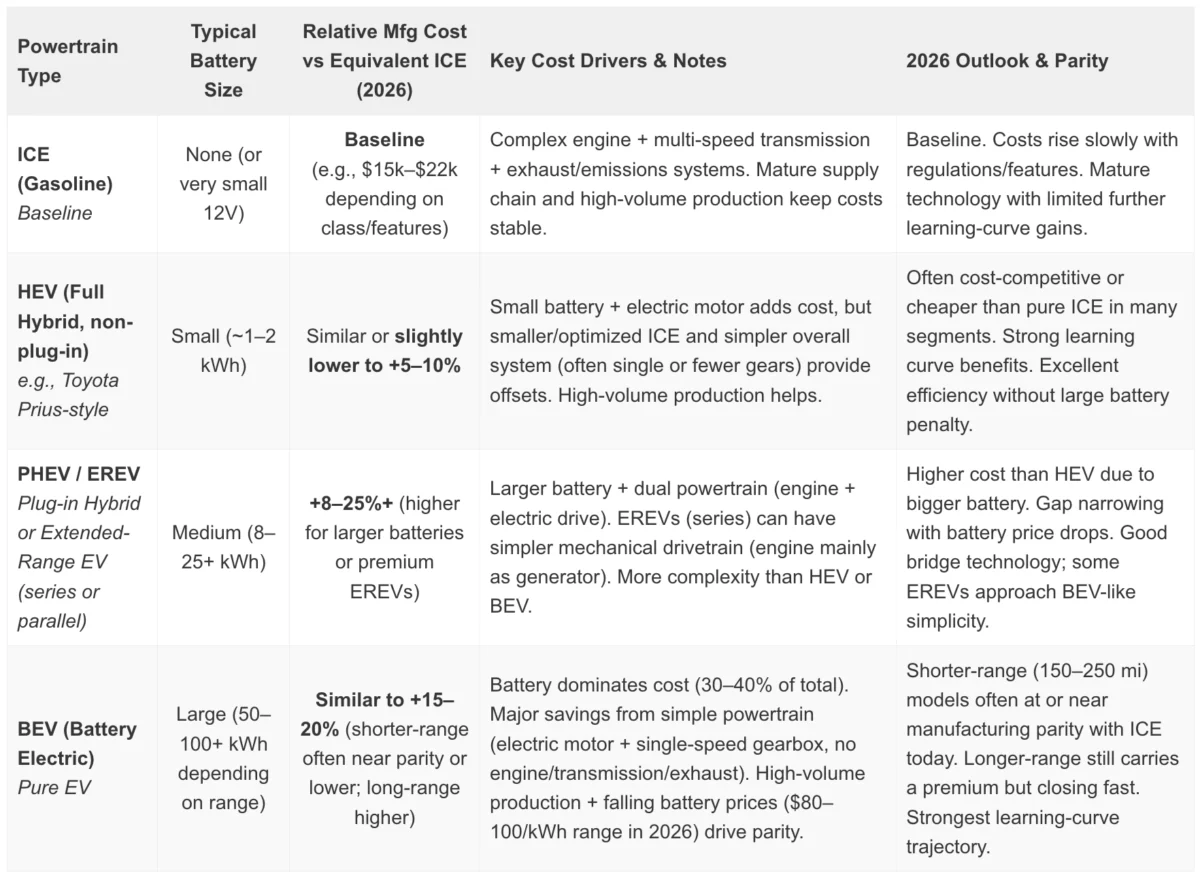
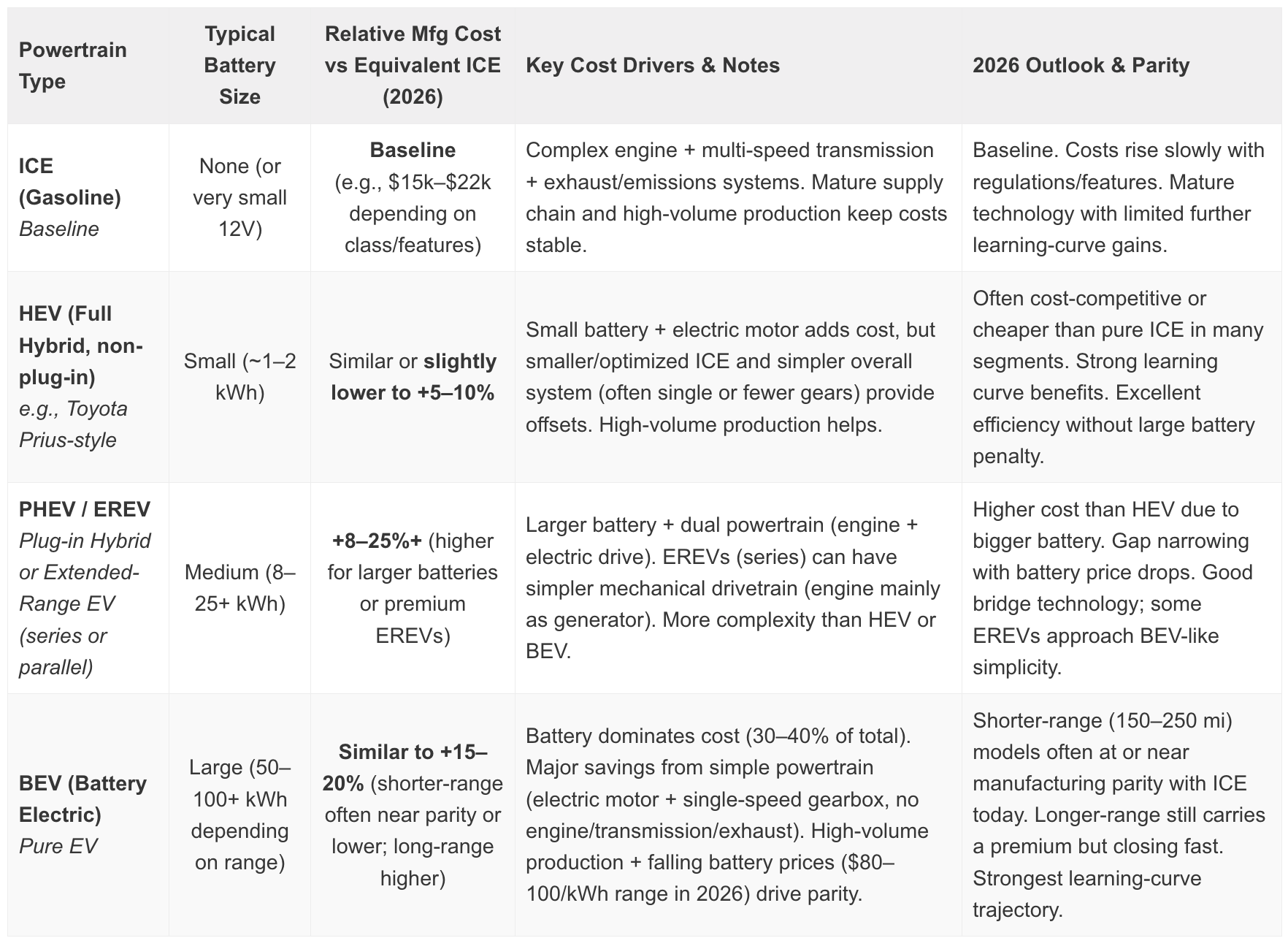
To understand the trajectory of the market, it is essential to examine the underlying economics of vehicle production. Data-driven comparisons between the four primary powertrains—Internal Combustion Engine (ICE), Hybrid Electric Vehicle (HEV), Plug-in Hybrid Electric Vehicle (PHEV), and Battery Electric Vehicle (BEV)—reveal why the transition is as much a financial challenge as it is a technical one.
Current manufacturing estimates indicate that while ICE vehicles remain the cheapest to produce due to a century of supply chain optimization, the gap is closing. A standard ICE vehicle might cost a manufacturer approximately $25,000 to produce in a specific segment. An equivalent HEV adds roughly $2,500 to $3,500 in costs due to the addition of a small battery pack and an electric motor. PHEVs represent a further jump, often costing $5,000 to $7,000 more than an ICE vehicle because they require both a full internal combustion system and a larger battery with charging hardware.
BEVs, historically the most expensive to produce, are benefiting from a dramatic decline in battery prices. In 2010, lithium-ion battery packs cost over $1,000 per kilowatt-hour (kWh). By 2024, that cost has plummeted to approximately $130–$150 per kWh. Despite this, a BEV still carries a production premium of $8,000 to $12,000 over an ICE vehicle, largely due to the massive battery required to achieve a 300-mile range. However, BEVs offer significantly fewer moving parts—roughly 20 compared to the 2,000 found in an ICE drivetrain—which leads to lower long-term maintenance costs and greater vehicle longevity.
The Consumer Psychology of the Transition
For the early adopters who have been driving EVs for over a decade, the benefits of full electrification are clear: instant torque, home charging convenience, and zero tailpipe emissions. However, the broader US market operates on different priorities. Survey data from automotive research firms indicates that the primary hurdles for the mainstream buyer are "upfront hassle" and "infrastructure uncertainty."
The "upfront hassle" includes not only the higher sticker price but also the necessity of assessing one’s home electrical system for a Level 2 charger. For renters or those living in multi-family housing, this barrier can be insurmountable. In contrast, a high-efficiency hybrid like the i-HEV requires zero infrastructure investment from the owner.
Furthermore, the "longevity" argument for EVs—that they can last 300,000 to 500,000 miles with minimal powertrain wear—is often lost on the average consumer who trades in their vehicle every six to eight years. For these buyers, the 10-year fuel savings of an EV might not outweigh the immediate comfort of a familiar hybrid system, especially if gas prices remain relatively stable.
Chronology of the Electric Shift: 2010–2025
The path to the current market state has been marked by several key milestones:
- 2010–2015: The "Early Adopter" Phase. The launch of the Nissan LEAF and Tesla Model S proved that EVs were viable. During this time, hybrids were dominated by Toyota, and gas prices saw significant volatility.
- 2016–2020: The "Scale and Performance" Phase. Tesla’s Model 3 brought long-range EVs to a more accessible price point. Major European and American automakers began announcing "all-electric" futures.
- 2021–2023: The "Supply Chain and Infrastructure" Phase. The post-pandemic era saw a surge in EV demand, followed by supply chain bottlenecks. The US government passed the Inflation Reduction Act (IRA), providing significant tax credits for domestic EV production and charging infrastructure.
- 2024–2025: The "Pragmatic Correction" Phase. Automakers like Ford and GM have recently scaled back some EV targets in favor of expanded hybrid lineups, citing slower-than-expected growth in BEV demand among mainstream buyers. This period marks the rise of ultra-efficient hybrids from Chinese manufacturers like Geely and BYD, which are setting new benchmarks for fuel economy.
Official Responses and Strategic Pivots
The reaction from established automotive giants has been mixed. Toyota, long a proponent of a "multi-pathway" approach, has felt vindicated by the recent resurgence in hybrid demand. Toyota’s leadership has consistently argued that lithium supplies are better utilized by spreading them across millions of hybrids rather than a smaller number of large-battery BEVs.
Conversely, companies like Volkswagen and Tesla remain committed to a BEV-first strategy, arguing that any investment in hybrid technology is a "dead end" that only delays the inevitable shift to zero emissions. However, even these companies are facing pressure to lower prices to compete with the cost-effectiveness of new hybrid models.
Geely, which owns Volvo, Polestar, and a significant stake in Mercedes-Benz, occupies a unique position. By developing the i-HEV alongside advanced BEV platforms, Geely is hedging its bets. Their strategy suggests that the global market will remain fragmented for at least another decade, with different regions adopting different technologies based on local infrastructure and economic conditions.
Broader Implications and the Future Outlook
The continued success of high-efficiency hybrids has profound implications for global climate goals. While hybrids significantly reduce CO2 emissions compared to standard ICE vehicles, they do not eliminate them. If the "regular Joe" chooses a hybrid over an EV, the tailpipe emissions from the transport sector will decline more slowly than climate scientists recommend.

However, from a market perspective, hybrids may be the necessary "training wheels" for the public. By introducing consumers to the benefits of electric torque and regenerative braking, hybrids can demystify electrified drivetrains. The challenge for EV advocates and policymakers is to ensure that the "bridge" provided by hybrids does not become a permanent parking lot.
To tip the scales toward full electrification, several factors must align. First, the build-out of the National Electric Vehicle Infrastructure (NEVI) Formula Program must reach a point where charging is as ubiquitous and reliable as gas stations. Second, battery technology must continue its march toward higher energy density and lower costs, eventually reaching "price parity" where a BEV costs the same as an ICE vehicle upfront.
In conclusion, while the environmental and long-term economic advantages of EVs are scientifically and mathematically sound, the market is currently experiencing a "pragmatic pause." The emergence of technologies like Geely’s i-HEV provides a compelling alternative for those not yet ready to make the full leap. The speed of the transition will ultimately depend on whether the EV industry can address the convenience gap as effectively as the hybrid industry has addressed the efficiency gap. For now, the "regular Joe" has more choices than ever, and the competition between the plug and the pump (in hybrid form) is only beginning to intensify.
