

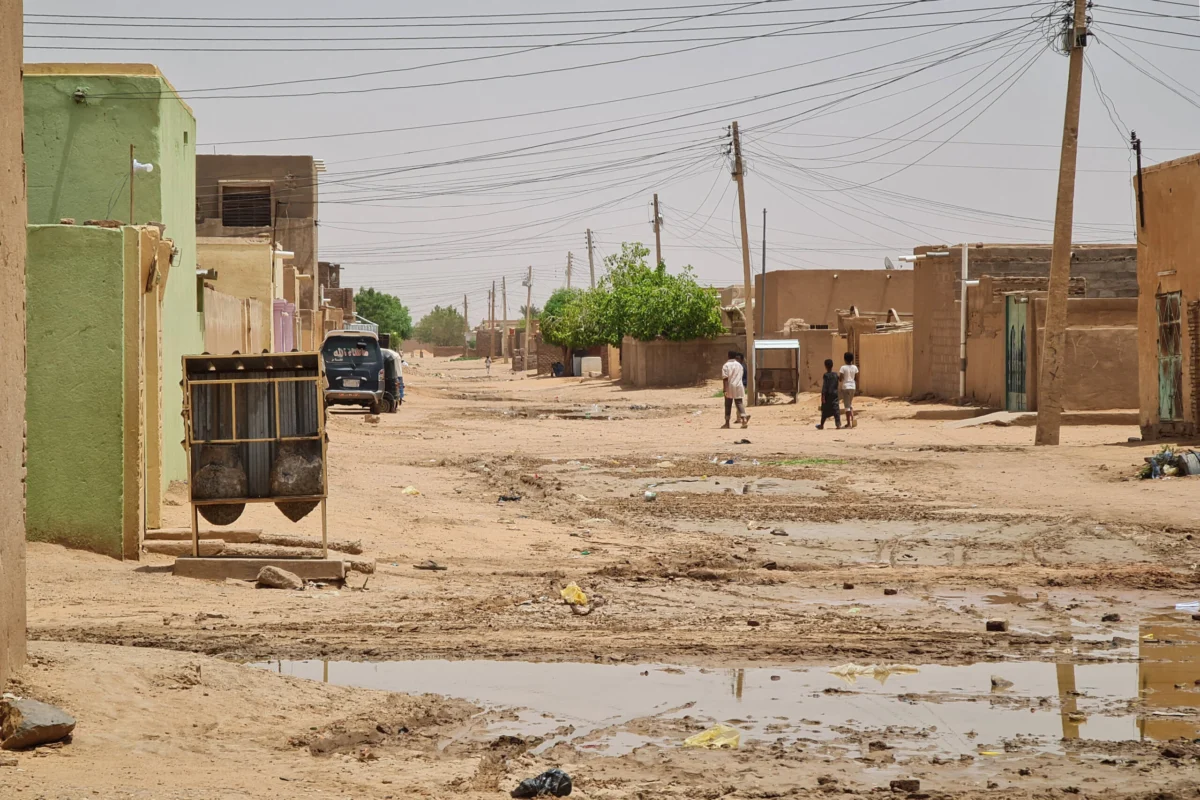
The conflict in Sudan reached a grim new milestone on Saturday as an airstrike ripped through a residential neighborhood in the capital city of Khartoum, claiming the lives of at least 17 individuals, including five children. This latest escalation in urban warfare underscores the devastating toll on civilians as the Sudanese Armed Forces (SAF) and the paramilitary Rapid Support Forces (RSF) continue their violent struggle for national hegemony. Health officials confirmed that the strike, which occurred in the Yarmouk district of southern Khartoum, destroyed at least 25 homes and left dozens wounded, further straining a healthcare system that is already on the verge of total collapse.
The Yarmouk neighborhood has become a focal point of the violence due to its proximity to a major military industrial complex. While the SAF, led by General Abdel Fattah al-Burhan, maintains a significant advantage in aerial capabilities, the RSF, commanded by General Mohamed Hamdan Dagalo, has entrenched itself within densely populated civilian areas, using residential blocks as defensive positions. This dynamic has turned Khartoum, once a bustling African metropolis, into a fragmented battlefield where the line between military targets and civilian infrastructure has virtually disappeared.
The Humanitarian Crisis in Southern Khartoum
The Saturday morning strike targeted an area that has seen intensified clashes over the past several weeks. According to the Sudanese Ministry of Health, the victims included not only children but also an unspecified number of women and elderly residents. Local volunteer groups, operating under the banner of "The Emergency Room," have been the primary responders in the absence of functional municipal services. These volunteers reported that at least 11 people were treated for severe injuries, though the number of casualties is expected to rise as recovery efforts continue amidst the rubble.
Images circulated by local activists and the RSF depicted the harrowing aftermath: residents digging through pulverized concrete with their bare hands to recover bodies, and blood-stained interiors of what were once family homes. The RSF issued a formal statement accusing the military of deliberate bombardment against civilians and claimed to have shot down a MiG fighter jet in retaliation. While the military has not officially responded to these specific allegations, its strategy has increasingly relied on airstrikes and heavy artillery to dislodge RSF fighters from the capital’s neighborhoods.
A Chronology of Escalation: From Tension to Total War
The current war did not emerge in a vacuum but is the result of a protracted power struggle that began following the 2019 ousting of longtime autocrat Omar al-Bashir. The transition toward a civilian-led democracy was derailed in October 2021 when General al-Burhan and General Dagalo joined forces to stage a military coup. However, the alliance between the regular army and the paramilitary group was fragile, built on shared interests rather than a unified vision for the country.
- December 2022: A "framework agreement" was signed to return the country to civilian rule, but it left the timeline for the RSF’s integration into the regular army unresolved.
- Early April 2023: Tensions spiked as RSF troops began mobilizing in Khartoum and the northern city of Merowe without military clearance.
- April 15, 2023: The first shots were fired in Khartoum. Both sides blamed the other for initiating the violence, which quickly spread to the presidential palace, the international airport, and military headquarters.
- May 2023: Numerous short-term ceasefires, brokered by the United States and Saudi Arabia in Jeddah, were repeatedly violated within hours of being signed.
- June 2023: The conflict shifted from a struggle for strategic government buildings to a war of attrition in residential neighborhoods and a resurgence of ethnically motivated violence in the Darfur region.
The Shadow of Darfur and the Assassination of Governor Abkar
While the airstrike in Khartoum captured international headlines, the situation in western Sudan has taken an even more ominous turn. The Darfur region, which was the site of a genocidal conflict in the early 2000s, is once again witnessing systematic violence. In West Darfur, the provincial capital of Genena has been described by UN officials as a "living hell."
The conflict in Genena took a drastic turn on Wednesday when the Governor of West Darfur, Khamis Abdalla Abkar, was abducted and killed. His death occurred just hours after he gave a televised interview accusing the RSF and allied Arab militias—often referred to as the Janjaweed—of carrying out a campaign of ethnic cleansing against the Masalit people. The RSF has denied involvement in the governor’s slaying, attributing it to "outlaws" within the tribal conflict, but eyewitness accounts and video footage have suggested a more direct link to paramilitary elements.
The involvement of Arab militias alongside the RSF has revived fears of a repeat of the 2003 Darfur genocide. Tens of thousands of refugees have flooded across the border into neighboring Chad, carrying stories of mass executions, the burning of entire villages, and the targeted killing of community leaders.
Displacement and the Collapse of Infrastructure
The statistical reality of the war is staggering. According to the International Organization for Migration (IOM) and the United Nations High Commissioner for Refugees (UNHCR), more than 2.2 million people have been displaced since the fighting began in mid-April. This includes approximately 1.7 million internally displaced persons (IDPs) and over 500,000 who have sought refuge in neighboring countries such as Egypt, Chad, South Sudan, and Ethiopia.
The economic and social infrastructure of Sudan is in a state of freefall. In Khartoum, residents face chronic shortages of electricity, clean water, and food. The banking system has largely ceased to function, leaving millions without access to their savings or salaries. Perhaps most critical is the collapse of the healthcare sector; the World Health Organization (WHO) estimates that nearly 80% of hospitals in conflict zones are out of service, either due to physical damage, lack of supplies, or occupation by armed forces.
Tactical Analysis: A War of Attrition
The military dynamics of the Sudan conflict reveal a profound asymmetry. The Sudanese Armed Forces (SAF) possess a significant advantage in heavy weaponry, including tanks, long-range artillery, and a functional air force. However, these assets are often ill-suited for the close-quarters urban combat that defines the battle for Khartoum. The RSF, conversely, is a highly mobile light infantry force. Their "technicals"—pickup trucks mounted with machine guns—allow them to move rapidly through the city’s narrow streets and maintain a presence in residential sectors where the army’s heavy armor cannot easily maneuver.
The use of airstrikes by the SAF, such as the one in Yarmouk, is a tactical attempt to bypass the RSF’s ground presence. However, without precise intelligence and high-tech munitions, these strikes frequently result in "collateral damage." The RSF has countered this by deploying man-portable air-defense systems (MANPADS) and increasingly utilizing drones for both reconnaissance and offensive strikes, as noted by military analysts monitoring the region.
International Diplomatic Stagnation
The international community’s response has been characterized by a series of failed mediation attempts. The Jeddah talks, led by the U.S. and Saudi Arabia, were suspended after the SAF withdrew its delegation, citing the RSF’s failure to vacate civilian homes and hospitals. While the African Union and the Intergovernmental Authority on Development (IGAD) have attempted to launch their own peace initiatives, they have been met with skepticism from the warring generals.
The lack of a unified international front has allowed the conflict to persist. Analysts suggest that both Burhan and Dagalo believe they can achieve a total military victory, discouraging any meaningful compromise. Furthermore, there are growing concerns regarding the involvement of external actors, with reports suggesting that various regional powers may be providing logistical or financial support to their preferred factions, thereby fueling a proxy war on the banks of the Nile.
Implications for Regional Stability
The implications of a protracted civil war in Sudan extend far beyond its borders. Sudan occupies a geostrategically vital position, bordering seven countries and possessing a long coastline on the Red Sea, a critical artery for global trade. A failed state in Sudan could destabilize the entire Horn of Africa and the Sahel, regions already grappling with insurgency, drought, and political instability.
The mass exodus of refugees is already placing an immense burden on neighboring states. Chad, one of the world’s poorest countries, is struggling to accommodate the influx of Darfuri refugees, while Egypt is facing a humanitarian challenge on its southern border that complicates its own internal economic difficulties.
Conclusion: A Nation at a Crossroads
The tragedy in the Yarmouk neighborhood is a microcosm of the larger Sudanese catastrophe. The death of five children in a single airstrike serves as a haunting reminder that the primary victims of this power struggle are those who have no stake in its outcome. As the fighting enters its third month, the prospects for a peaceful resolution appear dim. The transition from a popular uprising for democracy to a brutal military confrontation has left the Sudanese people caught between two generals who seem willing to dismantle the nation’s capital to secure their own survival.
Without an immediate and enforceable ceasefire, accompanied by a genuine return to civilian oversight, Sudan risks falling into a cycle of violence that could last for years. The international community faces a choice: intensify diplomatic and economic pressure on the warring factions or witness the permanent fragmentation of one of Africa’s largest and most historically significant nations. For the families in Khartoum currently mourning their dead and searching through the ruins of their homes, the time for a solution is already long overdue.
