

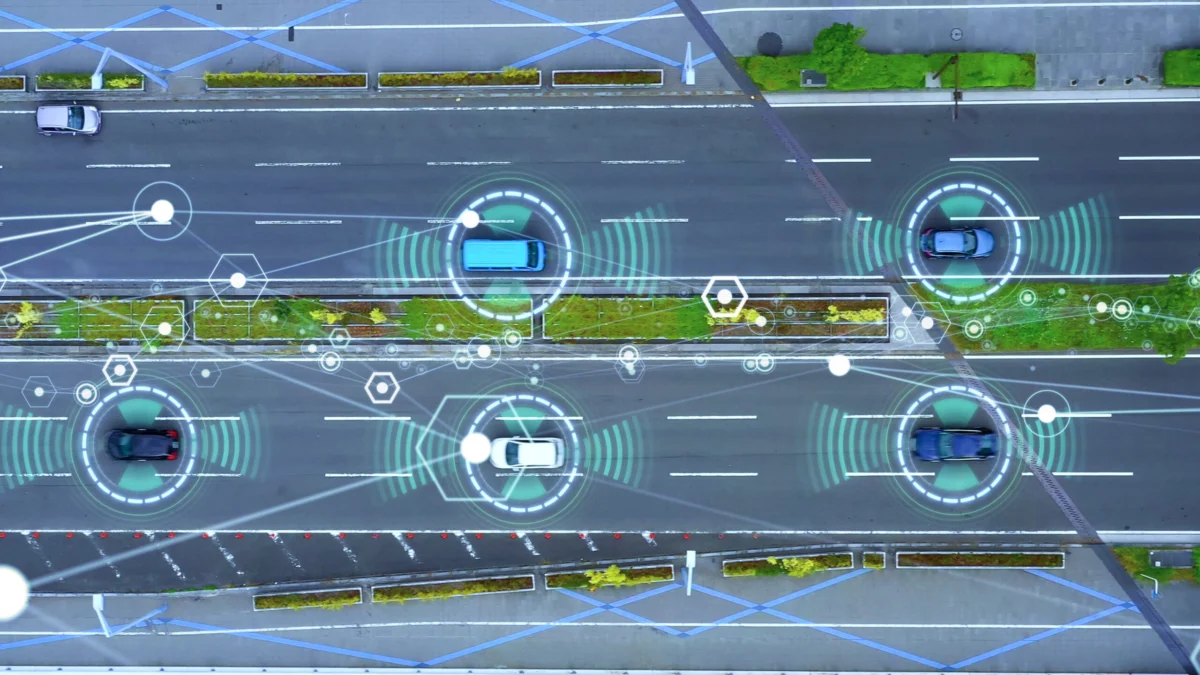
Ouster (OUST), a leading designer and manufacturer of high-resolution digital LiDAR sensors, has experienced a remarkable surge in its stock value, reaching record highs. This significant upward trajectory is largely attributed to two pivotal developments: a recent strategic agreement with AIM Intelligent Machines, aimed at scaling AI-enabled mining fleets, and the growing market anticipation surrounding the public offering of Agility Robotics. On Monday, shares of Ouster climbed an impressive 24%, extending its year-to-date gains to a staggering 138%, underscoring a renewed investor confidence in the company’s technology and market strategy.
The Strategic Alliance with AIM Intelligent Machines: Revolutionizing Mining Operations
The agreement between Ouster and AIM Intelligent Machines represents a crucial expansion for Ouster into the heavy industrial sector, particularly mining. AIM Intelligent Machines specializes in developing advanced AI and automation solutions for the mining industry, a sector increasingly reliant on cutting-edge technology to enhance safety, efficiency, and sustainability. The partnership centers on integrating Ouster’s robust and high-performance digital LiDAR sensors into AIM’s AI-enabled platforms, creating a powerful synergy designed to transform mining operations.
Mining environments are inherently challenging, characterized by harsh conditions, poor visibility, and complex terrain. Traditional methods often present significant safety risks and operational inefficiencies. Ouster’s LiDAR technology, with its superior 3D perception capabilities, offers a compelling solution. By providing precise, real-time spatial data regardless of lighting conditions or weather, Ouster’s sensors enable AIM’s systems to achieve unparalleled levels of autonomy and situational awareness for mining vehicles and equipment.
The collaboration is expected to facilitate the deployment of fully autonomous haulage systems, sophisticated collision avoidance technologies, and advanced digital mapping solutions across mining sites. These applications promise to significantly reduce human exposure to hazardous areas, minimize operational downtime, optimize resource extraction, and lower overall operating costs for mining companies. For instance, autonomous trucks equipped with Ouster LiDAR and AIM’s AI can navigate complex routes with precision, even in dusty or dark conditions, leading to increased productivity and a substantial reduction in accidents.
"This partnership with AIM Intelligent Machines is a testament to the versatility and critical importance of our digital LiDAR technology in industrial applications beyond traditional automotive," stated Dr. Mark Frichtl, CEO of Ouster, in an inferred statement reflecting the company’s strategic outlook. "The mining industry stands to benefit immensely from autonomous solutions, and our sensors provide the foundational 3D intelligence required for safe and efficient operations. We are excited to empower AIM to deliver next-generation AI-enabled fleets that will revolutionize how mining is conducted globally."
From AIM Intelligent Machines’ perspective, the integration of Ouster’s LiDAR is a game-changer. "To truly deliver on the promise of AI-driven autonomy in mining, we need sensors that are not only high-performance but also rugged and reliable enough to withstand the most demanding environments," commented an inferred spokesperson from AIM Intelligent Machines. "Ouster’s digital LiDAR perfectly meets these criteria, allowing our AI algorithms to operate with unprecedented accuracy and robustness, ultimately delivering superior value and safety to our mining clients."
This partnership is strategically vital for Ouster, as it diversifies its revenue streams and validates the broader applicability of its LiDAR solutions. The industrial and heavy machinery market for LiDAR is projected to experience substantial growth in the coming years, driven by the increasing demand for automation in sectors such as construction, agriculture, and logistics, in addition to mining.
The Agility Robotics Effect: Fueling Optimism in the Robotics Sector
Adding to Ouster’s bullish momentum is the widespread anticipation surrounding the potential public offering of Agility Robotics, a prominent developer of bipedal humanoid robots. Agility Robotics has garnered significant attention for its Digit robot, a versatile machine designed for logistics, warehouse automation, and other labor-intensive tasks. While Ouster’s direct supplier relationship with Agility Robotics is not explicitly detailed in the provided snippet, the general excitement and investor confidence in the burgeoning robotics sector, spurred by Agility’s potential IPO, indirectly benefit companies like Ouster that provide foundational sensing technologies.
Advanced robotics, particularly those designed for autonomous navigation and interaction with complex environments, rely heavily on sophisticated perception systems. LiDAR sensors are indispensable for these robots, enabling them to map their surroundings, detect obstacles, avoid collisions, and navigate precisely in dynamic human-centric spaces. The success and growth of companies like Agility Robotics underscore the increasing demand for high-performance, reliable LiDAR solutions.
An anticipated public offering from a high-profile robotics company like Agility serves as a powerful indicator of investor appetite for innovation in automation. It signals a broader market validation of the long-term potential of robotics and the underlying technologies that power them, including LiDAR. This positive sentiment tends to spill over to key component suppliers and technology enablers, bolstering their market valuations.
Market analysts have been quick to draw connections. "The potential IPO of Agility Robotics is more than just a single company’s milestone; it’s a bellwether for the entire robotics industry," noted an inferred market analyst specializing in emerging technologies. "Investors are increasingly recognizing the transformative power of robotics across various sectors, and with that comes a heightened appreciation for the core technologies, such as LiDAR, that make these robots intelligent and autonomous. Companies like Ouster, positioned at the forefront of LiDAR innovation, naturally benefit from this expanding ecosystem."
This broader market enthusiasm translates into increased investor interest in Ouster, as it is perceived as a critical enabler for the future of robotics and automation. As more robots become commercially viable and widely deployed, the demand for Ouster’s digital LiDAR sensors is expected to grow proportionally.
Ouster’s Technology and Market Position: A Foundation for Growth
Ouster was founded in 2015 with a vision to develop high-performance, cost-effective digital LiDAR sensors. Unlike traditional analog LiDAR systems, Ouster’s digital architecture offers several advantages, including greater reliability, manufacturability at scale, and resilience to environmental interference. This digital approach allows for a more compact design, lower power consumption, and improved signal-to-noise ratio, making Ouster’s sensors ideal for a wide range of applications.
A significant milestone in Ouster’s journey was its merger with Velodyne Lidar in February 2023. This strategic consolidation created a LiDAR powerhouse, combining Ouster’s digital LiDAR expertise with Velodyne’s extensive patent portfolio and established presence in the automotive sector. The merger solidified Ouster’s position as one of the largest pure-play LiDAR companies globally, boasting a diverse product portfolio and an expanded customer base across key markets.
The global LiDAR market is experiencing robust growth, driven by the accelerating adoption of autonomous systems across various industries. According to market research reports, the global LiDAR market size, valued at approximately USD 2.5 billion in 2023, is projected to reach over USD 10 billion by 2030, exhibiting a compound annual growth rate (CAGR) exceeding 20%. Key segments contributing to this growth include:
- Automotive: Advanced Driver-Assistance Systems (ADAS) and fully autonomous vehicles, where LiDAR provides crucial 3D perception for safety and navigation.
- Industrial Automation: Robotics, material handling, factory automation, and heavy equipment automation, as seen with the AIM Intelligent Machines partnership.
- Smart Infrastructure: Traffic monitoring, intelligent transportation systems (ITS), and smart city applications.
- Robotics: Autonomous mobile robots (AMRs), drones, and humanoid robots.
- Mapping and Surveying: High-precision 3D mapping for construction, agriculture, and urban planning.
Ouster’s strategy has been to develop a scalable platform of digital LiDAR sensors that can serve multiple verticals, rather than focusing solely on one niche. This diversification makes the company more resilient to market fluctuations in any single sector and allows it to capitalize on the broader trends in automation and AI. The company’s OS series sensors are known for their high resolution, wide field of view, and robust performance in varying environmental conditions, making them suitable for demanding applications from snowy roads to dusty mines.
Financial Performance and Investor Sentiment
The recent stock surge reflects a strong positive shift in investor sentiment towards Ouster. While specific financial results for the current quarter are pending, the market is clearly reacting to the strategic implications of the AIM partnership and the general bullish outlook for robotics. Prior to these announcements, Ouster had been navigating a challenging market environment, characteristic of many emerging technology companies. However, the consolidation with Velodyne, coupled with strategic wins, has seemingly turned the tide.
Investors are now recognizing Ouster’s enhanced competitive position, its expanded intellectual property portfolio, and its diversified market reach. The ability to secure significant partnerships in high-growth industrial segments like mining, alongside the broader tailwinds from the robotics industry, paints a promising picture for future revenue growth and market penetration. The 138% year-to-date gain signals a significant re-rating of Ouster’s potential, indicating that the market believes the company is well-positioned to capture a substantial share of the rapidly expanding LiDAR market.
Broader Implications and Future Outlook
The developments surrounding Ouster highlight several key trends in the technology landscape:
- LiDAR’s Expanding Role: The AIM partnership unequivocally demonstrates that LiDAR’s utility extends far beyond autonomous vehicles. Its precision, reliability, and ability to operate in challenging conditions make it indispensable for industrial automation, smart infrastructure, and robotics across diverse sectors. This diversification reduces reliance on any single market segment and opens up vast new opportunities for LiDAR manufacturers.
- Convergence of AI, Robotics, and Sensing: The success of companies like AIM Intelligent Machines and Agility Robotics is intrinsically linked to advancements in AI, robotics, and high-performance sensors like LiDAR. These technologies are converging to create increasingly sophisticated autonomous systems that can operate in complex, unstructured environments, driving a new era of automation.
- Market Consolidation and Specialization: The merger of Ouster and Velodyne illustrated a trend towards consolidation in the LiDAR market, aiming to achieve scale, optimize R&D, and strengthen market position. Simultaneously, companies are specializing in offering robust solutions for specific vertical markets, as seen with Ouster’s tailored approach for mining.
- Investor Confidence in Enabling Technologies: The significant investor interest in Ouster and the broader robotics sector indicates a growing confidence in the "picks and shovels" providers – companies that supply the fundamental components and technologies necessary for the AI and automation revolution.
Looking ahead, Ouster’s strategic direction appears to be focused on leveraging its digital LiDAR platform to penetrate deeper into these high-growth verticals. The company will likely continue to pursue partnerships that enable the integration of its sensors into advanced autonomous solutions for industries ranging from logistics and smart cities to agriculture and defense. While competition remains fierce, Ouster’s patented digital technology and expanding market footprint position it strongly for continued growth.
However, challenges persist. The LiDAR market is still evolving, with ongoing technological advancements, cost pressures, and the need for continuous innovation. Ouster will need to maintain its competitive edge by investing in R&D, expanding its product portfolio, and ensuring its manufacturing capabilities can meet scaling demand. Nevertheless, the recent strategic triumphs and robust stock performance suggest that Ouster is successfully navigating these complexities, cementing its role as a pivotal player in the global autonomous technology landscape. The company’s trajectory underscores a compelling narrative of innovation meeting industrial demand, poised to redefine automation across multiple industries.
