

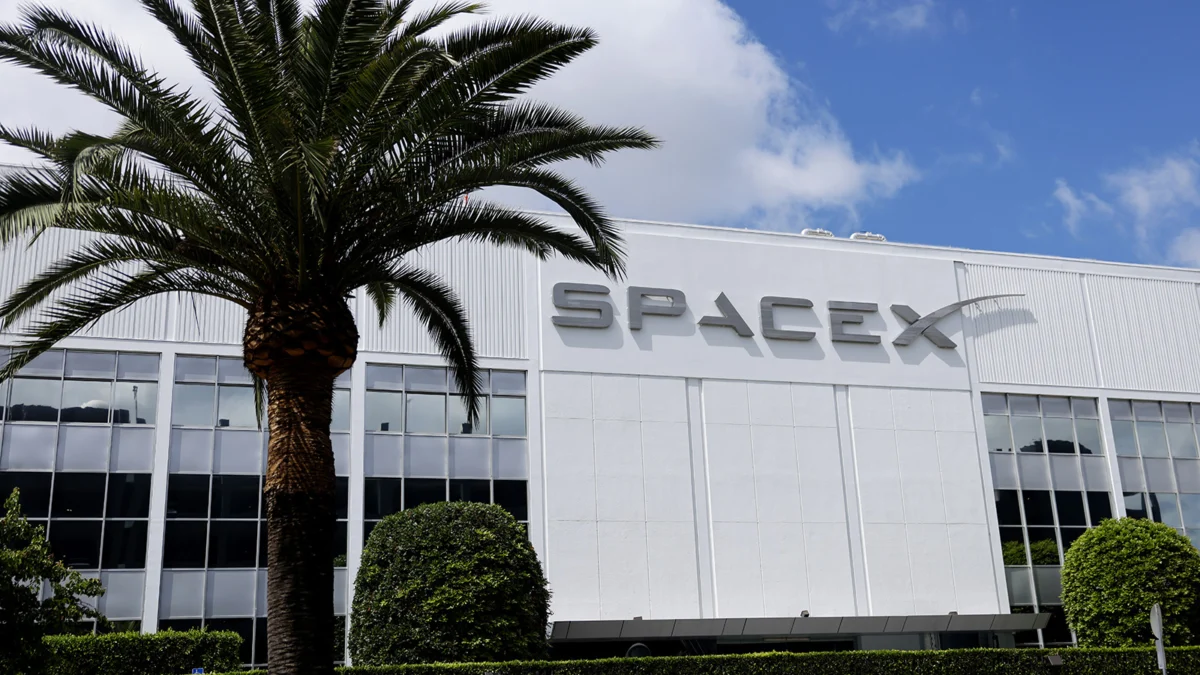
SpaceX’s stock has begun to experience a notable shift in momentum following its highly anticipated market debut. While initial investor enthusiasm propelled the company’s valuation to blockbuster levels, those who have initiated short positions are now bracing for a significant counterforce: billions of dollars in mechanical buying as the stock integrates into major stock market indexes. This influx of capital from index-tracking funds is poised to create a dynamic new phase for the publicly traded entity, potentially challenging existing bearish sentiment and reshaping the stock’s trajectory in the near term.
The Mechanics of Index Inclusion and Its Impact
The imminent inclusion of Space Exploration Technologies Corp. (SpaceX) into prominent benchmarks, including the Russell 1000 and global indexes administered by FTSE Russell, is a pivotal development. Scheduled for Monday, this move will be followed approximately one week later by its entry into the Nasdaq 100. Analysts at Bloomberg Intelligence, led by strategist Rob Du Boff, estimate that this passive buying will translate into purchases worth at least $5.4 billion. This substantial inflow of capital is not driven by individual investor conviction in SpaceX’s fundamental value or future prospects, but rather by the mandate of index funds to replicate the performance of their underlying benchmarks.
This passive buying wave arrives as the initial euphoria surrounding SpaceX’s record-breaking Initial Public Offering (IPO) has demonstrably waned. The stock has seen a significant downturn, shedding approximately a quarter of its value after an initial robust rally in its first three trading sessions. This dip has emboldened some investors to build short positions, fueled by concerns that the company may require several years to achieve profitability, potentially rendering its current valuation unsustainable. However, the impending index rebalancing introduces a powerful countervailing force.
Navigating the Short Seller Landscape
The landscape for short sellers is becoming increasingly complex. Index-tracking funds, such as the widely held Invesco QQQ Trust, are compelled to acquire SpaceX shares within weeks of its inclusion in relevant indexes. This is a consequence of revised methodologies by major index providers, which have expedited the timeline for eligible IPOs to enter their benchmarks. Critics have long argued that such mechanical buying can distort post-IPO price discovery processes. These funds, by definition, follow indexes passively, without regard for individual stock valuations or company-specific fundamentals. For short sellers, this presents an uphill battle, as their bets against the stock will inevitably be met by a significant volume of passive money on the opposite side of the trade.
Ihor Dusaniwsky, Managing Director at S3 Partners, a financial analytics firm, highlights the sheer scale of this dynamic: "With most of these large-cap index names, there are usually so many long holders that short sellers cannot compete in relative size." He further cautions, "Positioning is important. What you don’t know may blow up in your face or take you to the moon."
Data Insights into Shorting Activity
Current data from S3 Partners indicates that while shorting SpaceX does incur costs, shares remain readily available for borrowing. As of recent reporting, nearly 45 million shares, representing approximately 7% of its public float, were available. The borrowing costs have settled near 0.6%, which, while not exorbitant, is double the rate for highly liquid stocks like Tesla Inc. This suggests that while shorting is feasible, it carries a premium.
Further insights are provided by S&P Global Market Intelligence. Their securities-lending data reveals a recent uptick in bearish positioning, with their measure of short interest rising to 0.6% as of Wednesday. Concurrently, the borrow fee has experienced a sharp decline since the stock’s listing, dropping from 2.5% to around 0.3%. Matt Chessum, Executive Director of Equity & Analytic Products at S&P Global, interprets this trend: "Supply has expanded quickly enough to absorb the additional short demand without creating meaningful financing pressure." He adds, "The lending data suggests a more cautious near-term price outlook, with incremental downside or consolidation likely unless new buyers return."
The Chronology of Index Entry
The process for SpaceX’s inclusion in major indexes is a carefully orchestrated sequence of events. FTSE Russell, a leading global index provider, recently updated its rules to allow eligible mega-cap IPOs to enter its indexes after a mere five trading days. However, SpaceX’s public debut coincided with the provider’s three-week reconstitution blackout period. This timing meant the company missed the accelerated entry window. Consequently, it will join the Russell indexes following the close of trading on Friday, with the changes officially taking effect on Monday, as part of the scheduled semiannual reconstitution.
The impact of this inclusion is quantifiable. Bloomberg Intelligence calculations, based on SpaceX’s closing price of $160.95 on June 12th, indicate that the company would command a 0.136% weighting in the Russell 1000. This would position it as the 118th-largest constituent of that index.
Quantifying the Demand
The immediate impact on passive funds tracking the Russell 1000 is estimated to be substantial. According to Bloomberg Intelligence, these funds would be compelled to purchase approximately $500 million worth of SpaceX shares. This figure escalates significantly when active managers who benchmark to the Russell 1000 are factored in. Assuming these managers aim to maintain market neutrality, the demand could surge to an impressive $8.2 billion, representing more than 10% of SpaceX’s available public float.
A second wave of index-induced buying is anticipated roughly one week later, with SpaceX’s entry into the Nasdaq 100. Bloomberg Intelligence projects this will generate an additional $4.9 billion in purchases. This dual influx of capital from two major index families underscores the significant mechanical demand that will soon be directed towards SpaceX stock.
It is worth noting that S&P Dow Jones Indices, which oversees benchmarks such as the S&P 500, has maintained its existing eligibility requirements for mega-cap IPOs. This decision, made after consultation, means that fast-track entry for such companies into the S&P 500 is not currently an option.
Broader Implications and Future Outlook
The current dynamic presents a complex scenario for market participants. While passive buying offers a near-term buffer against bearish sentiment, the long-term outlook for short sellers may eventually improve. Dusaniwsky of S3 Partners points to the expiration of insider lockup periods in the coming months as a potential catalyst. In a scenario where insider selling triggers a decline in SpaceX shares, passive funds could inadvertently amplify these moves. As prices fall, index weights are adjusted downwards, which could eventually temper demand from benchmark-tracking investors.
"The grease on the skids for the shorts is when the pre-IPO long lockups expire and the long sellers with large mark-to-market profits trade in lockstep with the short sellers," Dusaniwsky elaborates. This suggests that the current mechanical buying might provide temporary support, but fundamental market forces and insider actions could ultimately dictate the stock’s long-term trajectory. The interplay between passive index flows, active short selling, and insider behavior will be crucial to observe in the coming months, shaping the narrative around SpaceX’s performance in the public markets. The company’s foray into the public sphere, marked by its impressive IPO, is now entering a critical phase where institutional flows and market sentiment will be tested in tandem.
