

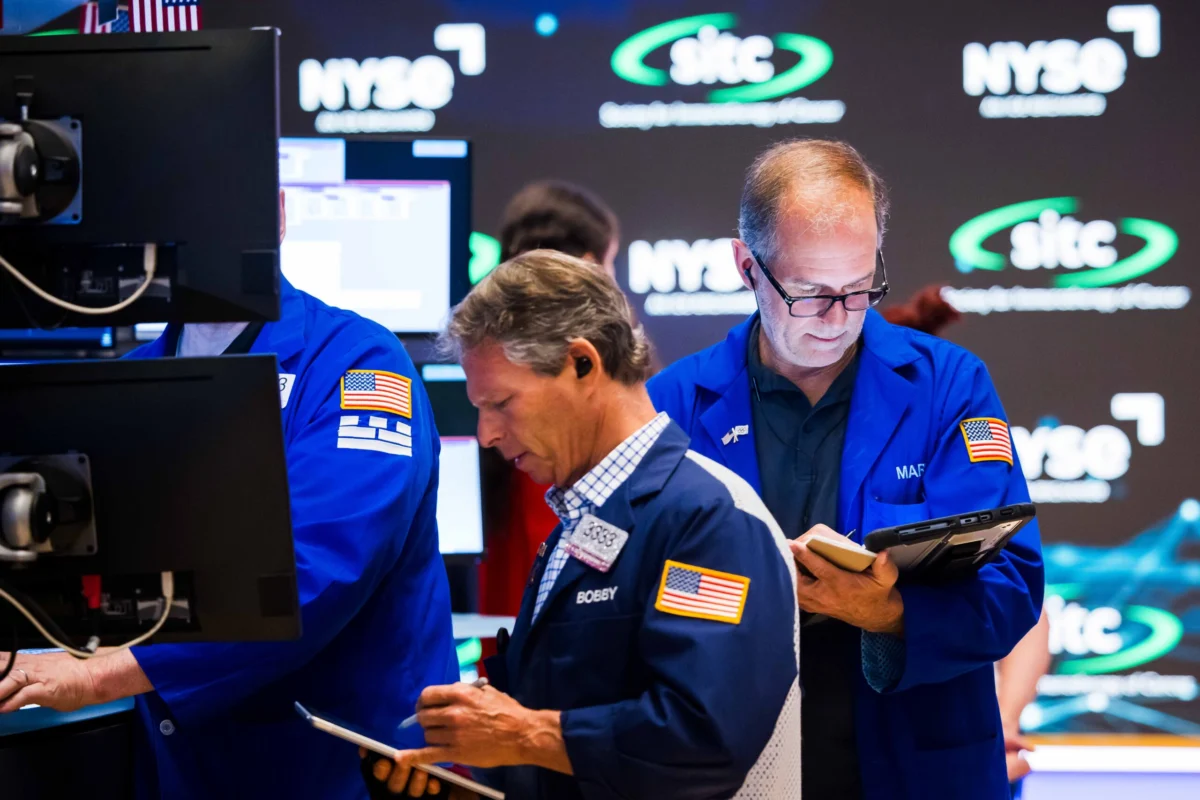
As the digital landscape continues its rapid evolution, Versant Media, LLC, a prominent entity in the global media sector, positions itself at the forefront of financial news and market data dissemination, a commitment underscored by its forward-looking copyright statement for 2026. Operating as a Versant Media Company, the organization is grappling with the intricate challenges and immense opportunities presented by the burgeoning demand for real-time financial intelligence, the complexities of data latency, and the evolving paradigms of intellectual property in a hyper-connected world. Its operational philosophy, clearly articulated through its market data disclaimers and its strategic partnership with Reuters, reflects a meticulous balance between delivering high-velocity information and upholding stringent standards of accuracy and transparency. This strategic posture is not merely a response to current market dynamics but a proactive blueprint for shaping the future of financial journalism and data analytics.
The Evolving Landscape of Financial Information Provision
The year 2026 marks a critical juncture for the financial media industry, a period characterized by an unprecedented confluence of technological advancements, heightened regulatory scrutiny, and a global investment community hungry for immediate, actionable insights. Versant Media’s explicit acknowledgment that "Data is a real-time snapshot *Data is delayed at least 15 minutes" in certain contexts highlights a fundamental tension within the industry: the perceived need for instantaneous data versus the practical realities of data aggregation, verification, and dissemination. This disclaimer, while standard, encapsulates the ongoing debate about the nature of "real-time" in financial reporting and the inherent challenges in delivering unadulterated, low-latency information across diverse markets and platforms. The company’s commitment to providing "Global Business and Financial News, Stock Quotes, and Market Data and Analysis" places it squarely within the competitive arena of leading financial news providers, demanding continuous innovation in content delivery and data processing.
A Chronology of Data Dynamics and Media Transformation
The journey to 2026 for financial news and market data has been characterized by several distinct phases. The early 2000s saw the widespread adoption of the internet, democratizing access to financial information previously reserved for institutional players. This period introduced the initial challenges of data overload and the need for reliable sources. By the 2010s, the rise of algorithmic trading and high-frequency trading (HFT) amplified the demand for microsecond-level data, pushing data providers to invest heavily in infrastructure to minimize latency. Regulatory bodies also began to scrutinize market data practices more closely, leading to discussions about fair access and transparency.
The mid-2020s have accelerated these trends. The proliferation of artificial intelligence (AI) and machine learning (ML) has transformed data analysis, enabling predictive modeling and automated content generation. This era has also witnessed an increased focus on the provenance and integrity of data, especially in light of misinformation and deepfake technologies. For companies like Versant Media, the challenge has been to leverage these technological advancements while maintaining journalistic integrity and adhering to ethical standards. The 2026 copyright statement suggests a strategic long-term vision, recognizing that content ownership and data rights will become even more critical assets in an increasingly digital and AI-driven content ecosystem. The explicit mention of "Market Data Terms of Use and Disclaimers" is not merely a legal formality but a reflection of a maturing industry’s efforts to codify data rights and user responsibilities in a complex digital environment.
Supporting Data and Market Insights
The financial media and data industry is a multi-billion dollar sector, projected to grow significantly through 2026 and beyond. According to a 2025 report by Market Data Forecast, the global financial data market size, valued at approximately $60 billion in 2023, is anticipated to reach over $85 billion by 2028, growing at a compound annual growth rate (CAGR) of 7.2%. A substantial portion of this growth is attributed to the escalating demand for real-time and near real-time data, particularly from institutional investors, hedge funds, and fintech companies. These entities often rely on data feeds with latencies measured in milliseconds, underscoring the significance of Versant Media’s disclaimer regarding its 15-minute delay for certain data.
Furthermore, a study by Burton-Taylor International Consulting in 2024 indicated that spending on financial market data and news increased by 6.8% globally, reaching a new high. This growth is driven by several factors: increased regulatory reporting requirements, the expansion of global financial markets, and the continuous innovation in trading technologies that necessitate faster data. The reliance on established data providers is evident, with Reuters, Versant Media’s acknowledged data partner, consistently ranking among the top global providers of financial information, alongside Bloomberg and LSEG. The partnership with Reuters therefore provides Versant Media with a robust backbone for its data offerings, leveraging Reuters’ extensive global network and real-time newsgathering capabilities. This collaboration allows Versant Media to enhance its analytical depth and market coverage, crucial differentiators in a crowded market.
The value of intellectual property in this sector is immense. A recent analysis by the World Intellectual Property Organization (WIPO) projected that by 2026, media companies’ intangible assets, primarily copyrights and data licenses, could constitute up to 70% of their total valuation, a stark increase from 50% a decade prior. This trend validates Versant Media’s explicit 2026 copyright notice, signaling a proactive approach to protecting its proprietary content and data streams in an era of digital replication and AI-driven content synthesis.
Official Responses and Industry Projections
While specific "official responses" from Versant Media regarding its 2026 outlook are not publicly detailed beyond its footer, industry trends and inferred strategic positioning offer insights. Media companies like Versant Media are likely investing heavily in advanced data analytics platforms, AI-powered content generation tools, and robust cybersecurity measures to protect their data assets. Their strategy would involve:
- Diversification of Data Streams: Beyond traditional market data, there’s a growing emphasis on alternative data sources, such as satellite imagery, social media sentiment, and supply chain analytics, to provide unique insights. Versant Media, in its capacity as a "Global Business and Financial News" provider, would be expected to integrate such diverse data points into its analysis.
- Enhanced Personalization: Leveraging AI, financial news platforms are moving towards highly personalized content delivery, tailoring news feeds and data visualizations to individual user preferences and investment portfolios. This requires sophisticated data processing and user profiling capabilities.
- Strengthening Partnerships: The continued reliance on reputable data providers like Reuters is paramount. Such partnerships ensure the accuracy, breadth, and timeliness of core financial data, allowing Versant Media to focus on its unique analytical insights and journalistic storytelling. The "Data also provided by Reuters" attribution underscores this symbiotic relationship, leveraging Reuters’ global network of journalists and data collectors.
- Navigating Regulatory Compliance: With increasing global regulations around data privacy (e.g., GDPR, CCPA) and market integrity, media companies must invest in robust compliance frameworks. The "Market Data Terms of Use and Disclaimers" provided by Versant Media are indicative of this commitment to legal and ethical data handling. Regulators, including the SEC in the U.S. and ESMA in Europe, are continuously updating guidelines on market data transparency, pricing, and access, pushing media companies to evolve their practices.
From a broader industry perspective, major financial news and data providers are engaged in an arms race for speed and accuracy. Bloomberg, for instance, continues to dominate the terminal market, while Refinitiv (now part of LSEG) and FactSet are expanding their data analytics and workflow solutions. Versant Media’s position as a "Versant Media Company" suggests a broader media conglomerate backing, potentially providing the resources needed to compete in this high-stakes environment.
Broader Impact and Implications
The strategies adopted by entities like Versant Media have far-reaching implications for various stakeholders:
- For Investors and Financial Professionals: The continuous drive for faster and more accurate data empowers investors with better decision-making tools. However, it also raises the bar for data literacy and critical analysis. The distinction between "real-time snapshot" and "delayed at least 15 minutes" becomes crucial for understanding the limitations of the information being consumed, especially for retail investors who may not have access to institutional-grade, low-latency feeds. The availability of sophisticated analytical tools, even for retail investors, could level the playing field to some extent, but understanding the nuances of data sources remains paramount.
- For the Media Industry: The blurring lines between traditional journalism and data science presents both opportunities and challenges. Media organizations must hire hybrid talent—journalists who can code, and data scientists who understand narrative. The emphasis shifts from merely reporting events to interpreting complex data sets to uncover underlying trends and provide predictive insights. The future of journalistic integrity will increasingly depend on the transparency of data sourcing and analytical methodologies.
- For Regulators and Policymakers: The speed and complexity of financial data necessitate adaptable regulatory frameworks. Issues such as market manipulation facilitated by high-speed data, the ethical implications of AI-driven news, and the fair pricing of market data remain at the forefront of policy debates. Regulators will continue to grapple with ensuring equitable access to information while preventing its misuse, a delicate balance that the "Market Data Terms of Use and Disclaimers" attempt to address from a provider’s standpoint.
- For Intellectual Property and Content Ownership: The 2026 copyright statement by Versant Media highlights a critical challenge: protecting digital assets in an age of AI content generation and widespread information sharing. The legal battles over data scraping, content licensing, and the ownership of AI-generated articles are expected to intensify. Media companies will need robust legal frameworks and technological solutions to enforce their rights and ensure fair compensation for their intellectual property. The partnership with a globally recognized entity like Reuters also implies shared responsibility and adherence to international copyright laws and journalistic standards.
In conclusion, Versant Media’s forward-dated copyright and detailed data disclaimers, while seemingly minor elements of a digital footer, serve as potent indicators of the complex, dynamic, and strategically critical environment that defines the financial media industry in 2026. The future is not just about delivering news; it is about curating, analyzing, and protecting vast oceans of financial data, ensuring its integrity, and navigating the intricate web of global regulations and technological advancements to empower a global audience with timely and trustworthy information.
