

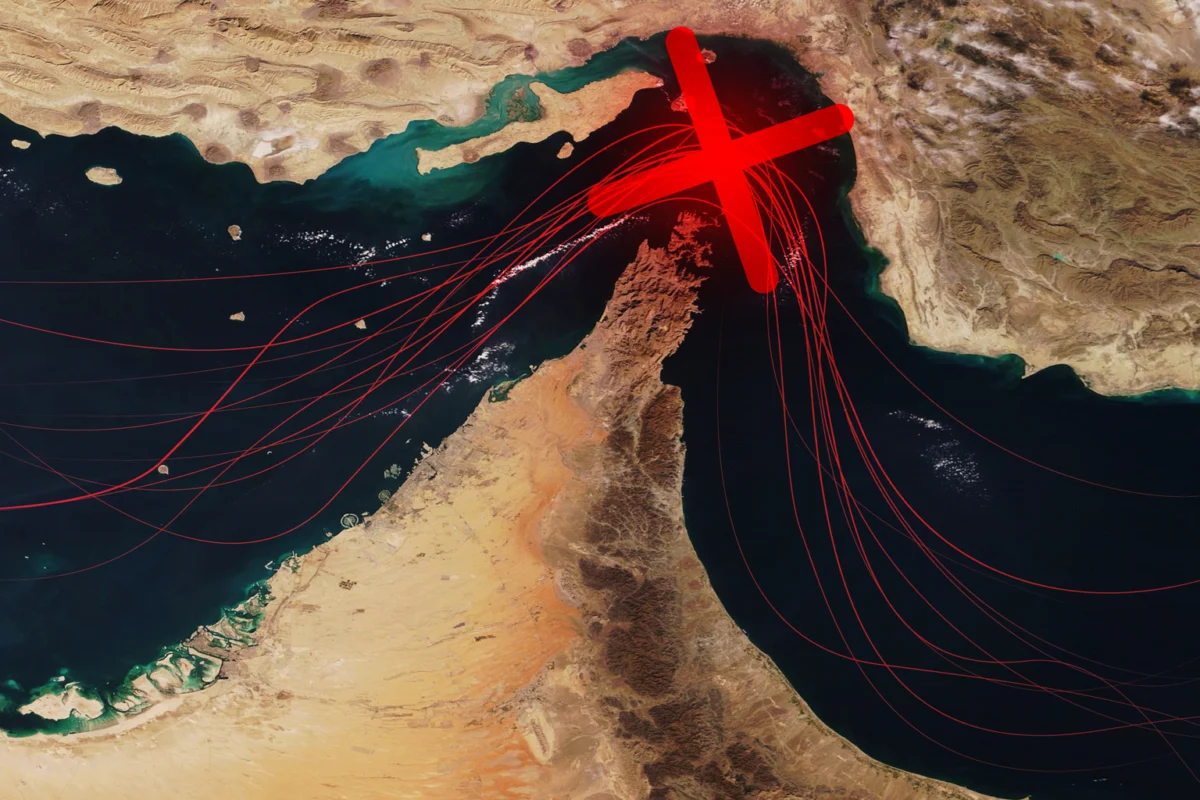
Iran stated Sunday that it holds exclusive authority over maritime traffic in the Strait of Hormuz under a preliminary peace agreement allegedly signed with President Donald Trump, a position that starkly clashes with U.S. assertions that the strategic waterway must remain open to unrestricted international passage. This declaration by Tehran immediately reignited long-standing tensions surrounding one of the world’s most critical energy chokepoints, raising concerns across global diplomatic and economic spheres regarding freedom of navigation and regional stability. The claim, particularly its reference to a peace agreement with the Trump administration, introduces a significant point of contention, given the period was largely characterized by escalating "maximum pressure" sanctions and heightened military posturing from Washington against Tehran. No publicly recognized or officially acknowledged "preliminary peace agreement" granting Iran such exclusive authority over an international strait exists in the records of the United States or international bodies. This discrepancy suggests Iran’s statement may be a strategic maneuver to assert sovereignty and challenge the established international maritime order, rather than a reflection of a mutually recognized accord.
The Strait of Hormuz, a narrow passage between the Persian Gulf and the Gulf of Oman, is undeniably a linchpin of global energy security. Approximately one-fifth of the world’s total oil consumption and a substantial portion of its liquefied natural gas (LNG) traverse this 21-mile-wide channel daily. Its strategic importance cannot be overstated, serving as the primary maritime route for oil exporters from the Middle East, including Saudi Arabia, Iraq, UAE, Kuwait, and Qatar. Any disruption, perceived or real, to the free flow of navigation through Hormuz sends immediate ripples through global energy markets, often leading to spikes in oil prices and increased geopolitical uncertainty. Iran’s latest assertion, therefore, is not merely a diplomatic spat but a pronouncement with profound implications for international trade, energy security, and the delicate balance of power in one of the world’s most volatile regions.
A Vital Global Chokepoint and Economic Lifeline
The Strait of Hormuz is not just a passage; it is a critical artery for the global economy. Each day, an estimated 17 to 20 million barrels of crude oil and petroleum products, along with significant volumes of LNG, pass through its waters. This volume represents approximately 20-30% of the world’s total petroleum liquids consumption, making it the most important oil transit chokepoint globally. The narrowest point of the strait is only about 21 miles (34 km) wide, with the shipping lanes themselves being just two miles (3.2 km) wide in each direction, separated by a two-mile buffer zone. This inherent geographical constraint, coupled with its geopolitical location, renders it exceptionally vulnerable to disruption.
The countries bordering the Persian Gulf – Saudi Arabia, Iran, the UAE, Kuwait, Qatar, and Iraq – are among the world’s largest oil and gas producers. Their economies are heavily reliant on unimpeded access to global markets via the Strait of Hormuz. For instance, Saudi Arabia, the world’s largest crude oil exporter, ships the vast majority of its oil through this strait. Qatar, the world’s largest LNG exporter, also relies heavily on Hormuz for its gas shipments. Any claim of "exclusive authority" by Iran over this international waterway directly threatens the economic lifelines of these nations and, by extension, the energy supply chains of consuming nations worldwide, including major economies in Asia, Europe, and North America.
Decades of Volatility: A Historical Context
Tensions surrounding the Strait of Hormuz are deeply rooted in the complex history of U.S.-Iran relations and regional rivalries. The waterway has been a flashpoint for decades, particularly since the 1979 Iranian Revolution. During the Iran-Iraq War (1980-1988), the "Tanker War" saw both sides attacking commercial shipping, leading to a significant U.S. naval presence to protect international maritime traffic. Incidents such as the USS Stark attack in 1987 and the downing of Iran Air Flight 655 in 1988 underscored the extreme volatility of the region.
In the years following, Iran has periodically threatened to close the strait in response to international pressure or sanctions, framing such actions as a defensive measure against perceived aggression. These threats are typically met with firm warnings from the United States and its allies, who consistently reiterate their commitment to upholding the principle of freedom of navigation under international law. The United Nations Convention on the Law of the Sea (UNCLOS), to which Iran is a signatory (though the U.S. is not, it adheres to most of its provisions as customary international law), explicitly guarantees "transit passage" through straits used for international navigation. This right allows all ships and aircraft to transit such straits without impediment, provided they proceed without delay and refrain from any threat or use of force. Iran’s current claim of "exclusive authority" fundamentally challenges this internationally recognized legal framework.
The Trump Era and "Maximum Pressure"
The reference to a "preliminary peace agreement signed with President Donald Trump" by Iran is particularly perplexing when viewed against the backdrop of U.S.-Iran relations during the Trump administration. Far from pursuing a path of peace and cooperation, President Trump initiated a "maximum pressure" campaign against Iran after withdrawing the U.S. from the Joint Comprehensive Plan of Action (JCPOA), commonly known as the Iran nuclear deal, in May 2018. This campaign involved re-imposing and significantly expanding sanctions aimed at crippling Iran’s economy, particularly its oil exports.
The period from 2018 to 2020 was marked by extreme escalation in the Persian Gulf. In 2019, there were a series of attacks on oil tankers in the Gulf of Oman, which the U.S. and its allies attributed to Iran. These incidents included explosions on the Norwegian-owned Front Altair and Japanese-owned Kokuka Courageous, and the alleged sabotage of four other vessels off the coast of the UAE. Iran also shot down a U.S. surveillance drone over the Strait of Hormuz in June 2019, prompting a near-retaliatory military strike by the U.S. that was called off at the last minute. Furthermore, Iran seized the British-flagged tanker Stena Impero in July 2019, claiming it had violated maritime rules. The peak of this tension arguably came with the U.S. drone strike in January 2020 that killed Iranian General Qasem Soleimani, followed by Iranian missile strikes on U.S. bases in Iraq. In this context, the notion of a "preliminary peace agreement" granting Iran exclusive control over a vital international waterway appears highly incongruous with the prevailing hostile relationship. It is more plausible that Iran is either misrepresenting an informal discussion, interpreting a past interaction in a self-serving manner, or deliberately using this claim as a rhetorical tool to challenge the international status quo.
Washington’s Firm Rejection and International Community on Edge
The U.S. State Department and Pentagon are expected to swiftly and unequivocally reject Iran’s claim. Washington has consistently maintained that the Strait of Hormuz is an international waterway where freedom of navigation is paramount and non-negotiable. Any attempt to restrict or control transit passage would be viewed as a serious breach of international law and a direct threat to global commerce and stability. U.S. officials would likely reiterate their commitment to ensuring the free flow of maritime traffic through the strait, backed by the robust presence of the U.S. Fifth Fleet, headquartered in Bahrain, which regularly conducts operations in the region.
International bodies and allied nations are also likely to express concern. The United Nations Security Council, while often divided on Iran issues, generally upholds the principles of freedom of navigation. European Union nations, heavily reliant on energy imports through Hormuz, would likely urge de-escalation and respect for international law. Major Asian economies like China, India, Japan, and South Korea, which are significant importers of Middle Eastern oil, would view any disruption with extreme apprehension. While China might be more circumspect in its public statements due to its own strategic relationship with Iran, its economic interests are firmly aligned with maintaining open shipping lanes.
Regional allies, particularly the Gulf Cooperation Council (GCC) states such as Saudi Arabia, UAE, and Qatar, would be deeply alarmed. Iran’s claim directly threatens their economic sovereignty and security. These nations would likely call for international support to counter any Iranian attempts to unilaterally assert control over the strait, potentially seeking further security assurances and increased naval presence from their Western partners.
Legal Framework and Challenges
The cornerstone of international maritime law concerning straits is the United Nations Convention on the Law of the Sea (UNCLOS), adopted in 1982. Articles 37 to 44 of Part III of UNCLOS specifically address "Straits Used for International Navigation." Article 38 grants all ships and aircraft the right of "transit passage," which is defined as "the exercise in accordance with this Part of the freedom of navigation and overflight solely for the purpose of continuous and expeditious transit of the strait." This right cannot be suspended. Coastal states bordering a strait can adopt laws and regulations relating to transit passage, but these must not "have the effect of hampering, impairing or suspending transit passage."
Iran’s assertion of "exclusive authority" directly contradicts the spirit and letter of UNCLOS. While Iran has signed and ratified UNCLOS, it has historically attempted to interpret its provisions in a way that grants it more control over the Strait of Hormuz, often referencing its status as a territorial sea under Iranian and Omani sovereignty. However, the international community, particularly major maritime powers, consistently interprets UNCLOS as guaranteeing unimpeded transit passage through such straits. Any Iranian move to enforce "exclusive authority," such as requiring prior permission for passage, imposing new fees, or restricting certain types of vessels, would be seen as a direct violation of international law and a provocative act.
Potential Implications and Risks
The implications of Iran’s latest claim are multifaceted and potentially severe, extending beyond mere diplomatic rhetoric.
Escalation Risks and Miscalculation
The most immediate concern is the heightened risk of military escalation. If Iran were to attempt to enforce its claimed "exclusive authority," it could lead to direct confrontations with naval forces committed to upholding freedom of navigation. Even accidental encounters in such a congested and sensitive waterway could quickly spiral out of control, leading to a wider regional conflict. The history of the Strait of Hormuz is replete with instances where miscalculation or misinterpretation of intent has led to dangerous standoffs.
Economic Ramifications
Beyond direct conflict, even the threat of disruption can have significant economic consequences. Shipping insurance premiums for vessels traversing the Strait of Hormuz would likely skyrocket, increasing the cost of transporting oil and gas. Some shipping companies might opt for longer, more expensive alternative routes, if available, or avoid the region altogether, leading to supply chain disruptions. Global oil prices, already subject to various geopolitical and economic pressures, would likely experience significant volatility and upward pressure, negatively impacting consumer economies worldwide. A prolonged closure, though unlikely given the international response it would provoke, would be catastrophic, plunging the global economy into a severe energy crisis.
Global Energy Security
Iran’s claim challenges the fundamental principle of global energy security, which relies on the reliable and uninterrupted flow of vital resources. Diversification of energy sources and routes has been a long-term goal for many nations, but the Strait of Hormuz remains indispensable for a significant portion of the world’s energy supply. Any threat to its openness underscores the fragility of global energy markets and the need for robust international cooperation to safeguard strategic maritime passages.
In conclusion, Iran’s declaration of "exclusive authority" over the Strait of Hormuz, citing an unconfirmed and highly improbable "preliminary peace agreement" with the Trump administration, represents a significant challenge to international maritime law and global stability. While potentially a rhetorical gambit, it serves as a potent reminder of the inherent volatility of the region and the critical importance of this narrow waterway to the world economy. The international community, led by the United States, is expected to reaffirm its commitment to freedom of navigation, setting the stage for renewed diplomatic tensions and underscoring the delicate balance required to maintain peace and unimpeded commerce in the Persian Gulf. The stakes remain exceptionally high, demanding careful diplomatic engagement and a firm commitment to international legal norms to prevent any actions that could destabilize this vital global chokepoint.
