

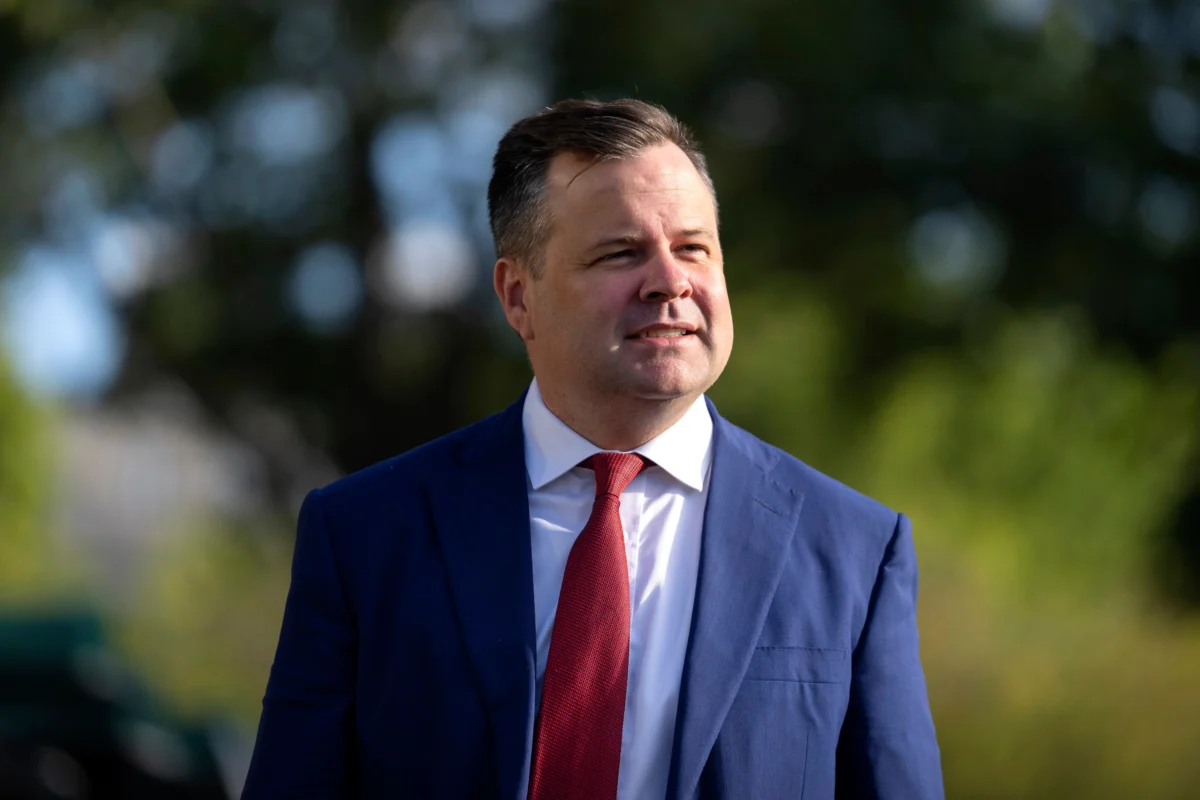
President Donald Trump on Tuesday announced the appointment of Bill Pulte, currently serving as the head of the Federal Housing Finance Agency (FHFA), as the acting Director of National Intelligence (DNI), succeeding outgoing DNI Tulsi Gabbard. The decision immediately ignited a firestorm of criticism from both sides of the political spectrum, with lawmakers expressing profound concerns over Pulte’s complete lack of intelligence experience and his perceived role as a political "attack dog" during his tenure at the FHFA. This move bypasses Aaron Lukas, the Principal Deputy Director of National Intelligence, who had previously been designated to assume the acting DNI role upon Gabbard’s departure.
Pulte’s unexpected elevation places him at the helm of the sprawling U.S. intelligence community, an intricate network comprising 18 distinct agencies including the Central Intelligence Agency (CIA), the National Security Agency (NSA), the Defense Intelligence Agency (DIA), and the intelligence components of the Federal Bureau of Investigation (FBI), Department of Homeland Security, and Department of State, among others. This vast enterprise is responsible for gathering, analyzing, and disseminating intelligence crucial for national security, foreign policy, and military operations. The DNI serves as the principal advisor to the President, the National Security Council, and the Homeland Security Council on intelligence matters related to national security, and is responsible for overseeing and directing the implementation of the National Intelligence Program.
A Controversial Appointment Amidst Critical Responsibilities
The Director of National Intelligence position, established in the wake of the 9/11 attacks by the Intelligence Reform and Terrorism Prevention Act of 2004, was designed to improve coordination and integration across the U.S. intelligence community, addressing critical shortcomings identified by the 9/11 Commission. The statute explicitly requires the DNI to possess "extensive national security experience." Pulte’s professional background, however, is almost exclusively rooted in finance and housing regulation. Before his FHFA role, he was primarily known for his work in the financial sector and as a prominent social media personality. His appointment as acting DNI, therefore, raises fundamental questions about adherence to statutory requirements and the administration’s priorities for this critical national security post.
Adding to the complexity, President Trump’s announcement, made via his Truth Social platform, indicated that Pulte would simultaneously retain his positions as FHFA director and chairman of the mortgage giants Fannie Mae and Freddie Mac. This unprecedented dual role for an acting DNI, especially one involving a high-profile regulatory agency like the FHFA, further fueled concerns about potential conflicts of interest and the sheer workload associated with managing two distinct, demanding federal agencies, one with vast financial oversight and the other with paramount national security implications.
Immediate Congressional Backlash and Bipartisan Concerns
The reaction from Capitol Hill was swift and overwhelmingly negative, highlighting a rare moment of bipartisan agreement on the unsuitability of the appointment. Senate Majority Leader John Thune (R-S.D.), typically a staunch supporter of the administration, voiced strong reservations. "We don’t need a weaponized DNI, we need professionals there," Thune told reporters, signaling deep unease within his own party regarding the potential politicization of intelligence functions. He further stated that he was seeking more information from the Trump administration about "the current state of their thinking about that position," indicating a lack of prior consultation or understanding within Republican leadership regarding such a pivotal national security decision.
Democrats were even more vociferous in their condemnation. Senate Minority Leader Chuck Schumer (D-N.Y.), in a post on X (formerly Twitter), labeled Pulte "a partisan thug with no experience in intelligence." Schumer added, "He is another unqualified Trump appointee that will make our country less safe. And you won’t hear a word from the Republicans who claim to care about national security," although Thune’s remarks quickly contradicted the latter assertion.
Senator Mark Warner (D-Va.), Vice Chairman of the Senate Intelligence Committee, issued a scathing statement. "Mr. Pulte’s appointment speaks volumes about what this president expects from the nation’s top intelligence official," Warner said. "The concern is not only that Mr. Pulte lacks the ‘extensive national security experience’ required by statute for the job. It is that he appears to have been selected precisely because the White House believes he will provide the narrative it wants, not the intelligence we need." This sentiment directly addressed the widespread fear that the intelligence community could be pressured to align its findings with the administration’s political agenda, rather than delivering objective assessments.
Senator Elizabeth Warren (D-Mass.), a prominent critic of Pulte’s tenure at FHFA and the ranking member of the Senate Banking, Housing, and Urban Affairs Committee, echoed these concerns. She highlighted Pulte’s record at the FHFA, stating he had "spent his time abusing his authority to attack the President’s perceived political enemies, prompting the congressional watchdog to investigate his handling of sensitive financial information." Warren concluded with a rhetorical question loaded with apprehension: "Today, President Trump is rewarding his lackey — who has no national security experience — with a perch atop our nation’s intelligence community. What could go wrong?"
Pulte’s Controversial Tenure at the FHFA: A Precedent for "Weaponization" Concerns
The intense scrutiny surrounding Pulte’s DNI appointment is inextricably linked to his controversial and highly politicized actions during his leadership of the FHFA. Far from being a low-profile regulatory agency, the FHFA under Pulte became a platform for what critics describe as politically motivated investigations and criminal referrals against perceived adversaries of President Trump. These actions are central to the "weaponized DNI" concerns articulated by Senate leaders.
One of the most high-profile examples involved Federal Reserve Governor Lisa Cook. Last year, Pulte initiated a criminal referral against Cook, alleging mortgage fraud. The basis of the accusation was Cook allegedly claiming two different properties as her primary residence simultaneously. This referral came amidst President Trump’s persistent public criticisms of the Federal Reserve’s monetary policy, particularly its refusal to lower interest rates as he desired. Following Pulte’s referral, Trump attempted to remove Cook from her position. Cook subsequently filed a lawsuit to prevent her firing, a case that remains pending before the Supreme Court, highlighting the legal and constitutional complexities of such executive actions. The fact that a sitting Federal Reserve Governor was targeted in this manner by a financial regulator, ostensibly on behalf of the President’s political aims, set a concerning precedent.

Another significant instance involved New York Attorney General Letitia James, who had been a persistent legal adversary of President Trump and his business enterprises. Pulte submitted a criminal referral against James, accusing her of falsifying bank documents and property records related to a home mortgage she obtained in 2020. James was subsequently charged in October with bank fraud and making false statements to a financial institution. However, in November, a federal judge dismissed her case, ruling that the interim U.S. attorney who brought the indictment, former Trump lawyer Lindsey Halligan, was invalidly appointed. This outcome further fueled the perception that these referrals were politically motivated and lacked proper legal grounding, rather than being legitimate enforcement actions.
These episodes at the FHFA underscore the specific concerns expressed by lawmakers regarding Pulte’s temperament and approach to federal office. His history of leveraging a regulatory agency to pursue investigations against political opponents, coupled with his lack of intelligence experience, suggests to many critics a pattern of behavior that could undermine the objectivity and independence of the intelligence community.
The DNI’s Role and the Stakes of Politicization
The Director of National Intelligence is a pivotal figure in the U.S. national security apparatus. The DNI is responsible for integrating foreign, military, and domestic intelligence information from all sources to protect national security. This includes preparing the President’s Daily Brief (PDB), a highly classified summary of the most pressing intelligence matters, which serves as the primary intelligence product for the President and other top national security policymakers. The integrity and impartiality of the DNI are paramount for ensuring that decision-makers receive unvarnished, objective intelligence, free from political manipulation or bias.
The potential politicization of the DNI role carries profound implications. If the intelligence community’s assessments are perceived as influenced by political directives rather than raw data and expert analysis, it could erode trust among policymakers, international allies, and the American public. Such a breakdown in trust could impair the ability of the U.S. to effectively address complex global threats, from terrorism and cyber warfare to state-sponsored aggression and geopolitical rivalries. The intelligence community relies on the credibility of its analysis to inform critical decisions regarding military deployments, diplomatic strategies, economic sanctions, and counterintelligence operations.
Context of the Appointment: A Shifting Landscape at DNI
The appointment of Bill Pulte as acting DNI follows the announced departure of Tulsi Gabbard, who cited personal health reasons for her husband as the impetus for her resignation, slated for June 30. Gabbard had served as DNI for a period marked by ongoing tensions between the Trump administration and various intelligence agencies.
Prior to Pulte’s appointment, the White House had indicated that Aaron Lukas, the Principal Deputy Director of National Intelligence, would step into the acting role. Lukas, as the second-highest ranking official in the DNI’s office, possesses a career background in intelligence and national security, making him a more traditional choice for an interim leadership role within the intelligence community. The sudden pivot to Pulte, an outsider to the intelligence world, without any public explanation for bypassing Lukas, further intensified speculation about the administration’s motivations. The White House did not respond to CNBC’s requests for clarification on when Pulte’s tenure at DNI would begin or whether Lukas would remain in his current role.
White House spokesman Davis Ingle, however, defended the President’s choice, stating, "The President chooses the best and most talented people to serve in his Cabinet. That is why this Administration has achieved record successes for the American people. Bill Pulte is a great selection and he will do a great job on behalf of the American people." President Trump, in his Truth Social post, also lauded Pulte’s qualifications, asserting that he "has deep experience managing the most sensitive matters in America, the safety and soundness of the Markets, and over 10 Trillion Dollars at Fannie Mae/Freddie Mac, a substantial increase from where it was just 12 months ago." While Pulte’s financial management experience is not in dispute, critics argue it bears little relevance to the specific demands of leading the nation’s intelligence apparatus.
The "Acting" Designation: Sidestepping Scrutiny
The use of "acting" appointments has been a recurring feature of the Trump administration, particularly in sensitive roles. While presidents have the authority to appoint acting officials, doing so for extended periods or in critical positions like the DNI can effectively bypass the Senate’s constitutional "advice and consent" role. A permanent DNI nominee would undergo a rigorous confirmation process, including extensive hearings before the Senate Intelligence Committee, where their qualifications, past actions, and suitability for the role would be thoroughly scrutinized. An acting DNI, however, is not subject to this same level of congressional oversight, allowing an administration to install an individual without facing potentially difficult questions or a confirmation vote. This dynamic further exacerbates concerns about accountability and transparency, particularly when the appointee lacks traditional qualifications.
Broader Implications and the Path Forward
Bill Pulte’s appointment as acting DNI represents a significant challenge to the traditional norms governing the leadership of the U.S. intelligence community. It underscores a persistent tension between political administrations and intelligence agencies, particularly regarding the independence of intelligence analysis. The decision raises fundamental questions about the future trajectory of the intelligence community, its relationship with the White House, and its ability to maintain its integrity in a highly charged political environment.
The short-term implications include potential morale issues within the intelligence agencies, as a leader without relevant experience or a perceived political agenda takes charge. In the long term, if the DNI’s office is seen as a tool for political ends, it could damage the institution’s effectiveness and its ability to attract and retain top talent. The ongoing bipartisan criticism from Congress suggests that Pulte’s tenure, however long it lasts, will be subject to intense scrutiny, and any perceived attempts to politicize intelligence will likely be met with strong resistance. The focus now shifts to how Pulte will navigate this complex landscape and whether the administration will eventually put forth a permanent nominee who can garner the necessary support and trust from both the intelligence community and Congress.
