

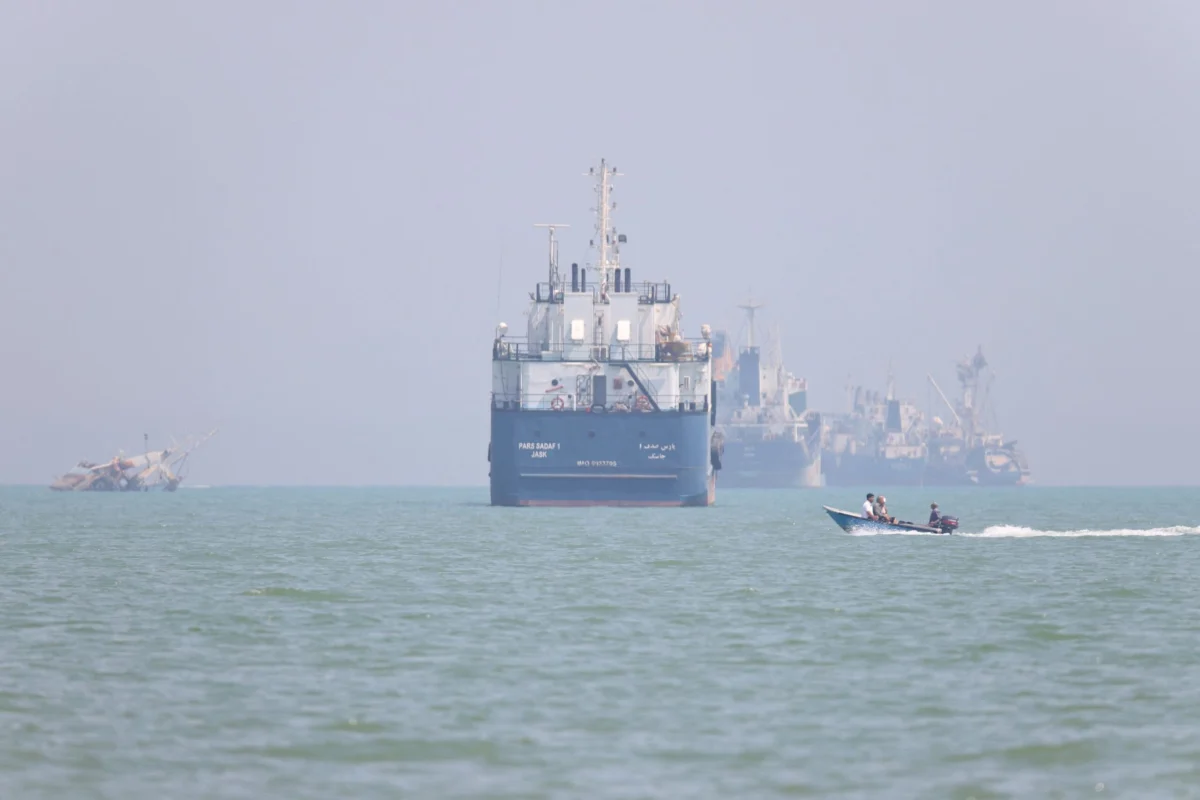
The International Maritime Organization (IMO) has announced a temporary suspension of its critical evacuation initiative for ships and seafarers stranded within the Middle East Gulf, a decision prompted by a recent attack on a vessel in the Gulf of Oman. The pause, confirmed by IMO Secretary-General Arsenio Dominguez, is intended to allow for a thorough reconfirmation of safety assurances for all vessels on the evacuation list and for all maritime traffic operating in the region. This development casts a significant shadow over the fragile recovery of shipping activity through the vital Strait of Hormuz, a crucial artery for global energy supplies.
The incident that triggered the IMO’s decisive action involved a container ship, identified as a Singapore-flagged vessel owned by the shipping giant Evergreen, being struck by an unknown projectile. The attack occurred near the coast of Oman on Thursday, escalating tensions in an already volatile maritime environment. A U.S. official, speaking to MS Now, pointed to Iran as being responsible for the attack, an assertion that, if substantiated, carries profound implications for regional stability and international maritime law.
Background: A Fragile Ceasefire and the Strait of Hormuz
The IMO’s evacuation plan, launched just days prior, was designed to facilitate the safe passage of hundreds of vessels and thousands of seafarers who have been caught in a prolonged period of heightened risk. The initiative offered two primary transit routes: a northern passage through Iranian waters and a southern passage via Omani waters, operating under U.S. oversight. This plan emerged in the wake of an interim peace deal brokered between the United States and Iran, a 60-day ceasefire intended to de-escalate hostilities and create space for negotiations toward a permanent peace agreement.
Prior to this attack, there had been tentative signs of recovery in traffic through the Strait of Hormuz. In the week following the ceasefire announcement, Lloyd’s List Intelligence reported a notable increase in transits, with 125 vessels passing through the strait – the highest weekly figure since the conflict’s onset in late February. This data suggested a cautious return to normalcy, a sentiment now severely undermined by the recent aggressive act.
Chronology of Escalation and Uncertainty
The timeline leading up to the IMO’s pause reveals a complex interplay of diplomatic efforts, de-escalation attempts, and persistent threats. The interim peace deal, a critical precursor to the IMO’s evacuation plan, offered a glimmer of hope for maritime operators. However, this optimism was quickly tempered by a stark warning from Iran’s military on Wednesday. Tehran’s forces explicitly advised vessels against utilizing the southern route endorsed by the IMO, declaring any new transit route established without their explicit approval as "unacceptable and dangerous." This assertion underscored Iran’s ambition to maintain its influence over the strategic waterway.
Compounding the growing uncertainty, at least two vessels reportedly executed U-turns while attempting to depart the Middle East Gulf. According to Lloyd’s, these ships were rerouting after the Islamic Revolutionary Guard Corps (IRGC) seemingly rejected the IMO’s evacuation route. Both vessels were observed to be utilizing the southern route, situated closer to the Omani coastline, raising immediate concerns about the practical implementation and adherence to the agreed-upon safety corridors.
The attacked Evergreen container ship, while flagged in Singapore, did not, according to Secretary-General Dominguez, transit under the IMO’s evacuation framework. This detail is crucial, indicating that the incident, while occurring in a region of concern, may not have directly involved a vessel actively participating in the IMO’s safety net. Nevertheless, the proximity of the attack to the planned evacuation routes and the broader context of regional tensions make its implications undeniable.
Official Responses and the U.S. Stance
The U.S. official’s statement to MS Now, attributing the attack to Iran, carries significant weight. When pressed for a response, the official stated, "We are aware of these reports and looking into them. President Trump has been clear that Iran cannot subvert the free flow of traffic in the strait." This declaration reiterates the U.S. administration’s long-standing position on maintaining freedom of navigation in the Strait of Hormuz and suggests a firm stance against any actions perceived as obstructive or threatening to international shipping.
The IMO’s statement, released by Secretary-General Dominguez, emphasized the paramount importance of safety. "The pause is in order to reconfirm that the necessary safety guarantees continue to be in place for the ships on our evacuation list and all those in the region," he stated. This highlights the organization’s commitment to ensuring the well-being of seafarers and the integrity of maritime operations, even if it means temporarily halting crucial initiatives.
Evergreen, the shipping giant that owns the attacked vessel, along with Singapore’s Ministry of Trade and Industry and Ministry of Foreign Affairs, did not immediately respond to requests for comment from CNBC. Their silence, while understandable in the immediate aftermath of such an incident, underscores the gravity of the situation and the potential for widespread international ramifications.
Broader Implications and Analysis
The suspension of the IMO’s evacuation efforts and the continued threat of attacks in the Gulf of Oman have profound implications for the global economy and regional stability. The Strait of Hormuz is a critical chokepoint, through which approximately 30% of the world’s seaborne oil trade passes. Any disruption to this flow can lead to significant price volatility in global energy markets, impacting economies worldwide.
The incident also raises serious questions about the effectiveness of the interim peace deal and the future of diplomatic efforts to resolve tensions in the region. If Iran is indeed responsible for the attack, it signals a deliberate attempt to undermine the de-escalation process and assert its influence through coercive means. This could lead to a renewed cycle of escalation, potentially involving further military responses and increased sanctions.
Furthermore, the safety of seafarers remains a primary concern. The thousands of individuals who crew these vessels are often caught in the crossfire of geopolitical disputes, facing immense risks to their lives and livelihoods. The IMO’s pause, while disruptive, prioritizes their immediate safety, but it also leaves them in a precarious position, stranded in a region fraught with danger.
The incident also highlights the delicate balance of power and influence in the Middle East Gulf. Iran’s assertive posture, coupled with its control over vital maritime routes, positions it as a significant player whose actions can have far-reaching consequences. The U.S. commitment to ensuring free passage, as articulated by President Trump, suggests a potential for increased naval presence and heightened scrutiny of Iranian activities.
The implications for the shipping industry are also substantial. Shipowners and operators will face increased insurance premiums, higher operational costs due to rerouting or delays, and a greater imperative to assess and mitigate risks in the region. The long-term viability of transit through the Strait of Hormuz may be jeopardized if security concerns are not adequately addressed.
In conclusion, the IMO’s decision to pause its evacuation efforts marks a significant setback for maritime recovery in the Middle East Gulf. The attack in the Gulf of Oman, coupled with Iran’s prior warnings, underscores the persistent volatility of the region and the challenges inherent in de-escalating tensions. The coming days and weeks will be crucial in determining the trajectory of events, with global energy markets, regional stability, and the safety of thousands of seafarers hanging in the balance. The international community will be closely watching for further developments and the potential for diplomatic or military responses.
