

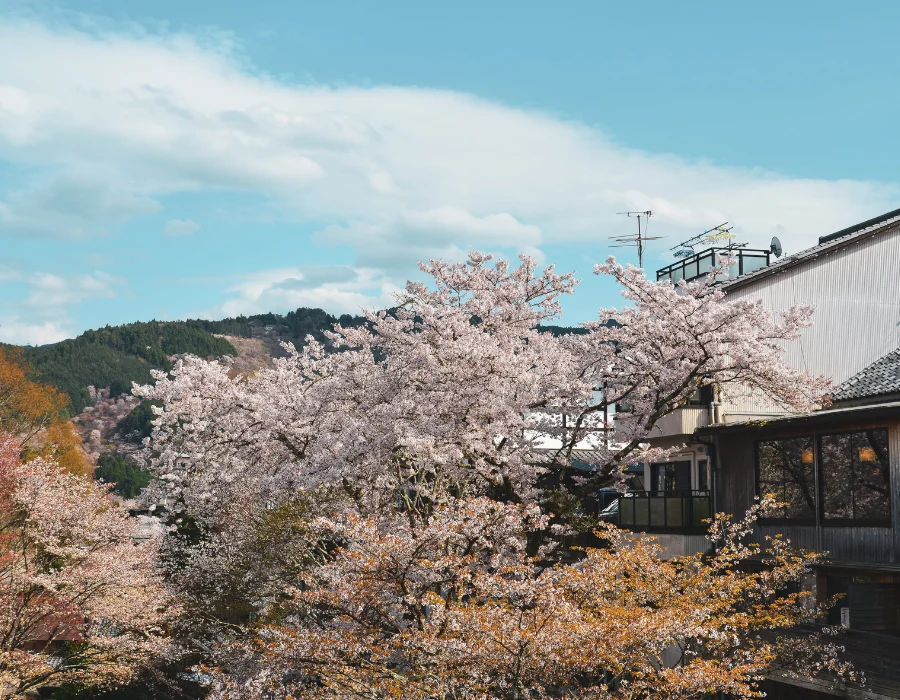
The phenomenon of the "sakura chaser" has become a staple of global tourism, representing a demographic of intrepid travelers who journey from every corner of the globe to witness the ephemeral beauty of Japan’s cherry blossom season. Every spring, millions of visitors descend upon the Japanese archipelago, timing their arrivals to coincide with the brief window when the country’s landscape is transformed into a sea of soft pink and white. However, the delicate nature of this floral spectacle—which typically lasts only five to seven days in any given region—requires meticulous planning and precise timing. In recent years, this task has become increasingly difficult as climate change transforms a once-predictable natural event into a rapidly moving target.
In 2024, Tokyo’s cherry blossoms reached their peak around March 19, a date that stands nearly a week earlier than the historical average. This shift is not an isolated incident but rather part of a documented acceleration. Between 2021 and 2023, the city of Kyoto witnessed peak bloom dates that shattered records stretching back more than 1,200 years. While rising global temperatures are identified as the primary driver of this trend, scientists warn that erratic winter weather patterns may also pose a long-term threat to the trees’ fundamental ability to bloom. Current research indicates that under a medium-emissions scenario, the peak bloom period could advance by another full week by the year 2100, fundamentally altering the Japanese spring as it has been known for over a millennium.
The Science of Phenology and the Warning from the Canopy
The study of recurring biological events—such as the flowering of plants, the emergence of leaves, and the migration of birds—is known as phenology. In the context of the climate crisis, phenology has emerged as one of the most vital and legible tools for understanding the real-world impacts of a warming planet. Elizabeth Wolkovich, an associate professor at the University of British Columbia who specializes in plant communities and climate change, has noted that the cherry blossom record serves as a profound metric for the extremity of environmental shifts.
Wolkovich’s research demonstrates that rising temperatures are advancing spring biological events on a global scale. On average, plant phenology shifts by approximately four to six days for every degree Celsius of warming. One of the more concerning findings in her work is that experimental models often underestimate the speed at which plants respond to warming when compared to long-term observational data. This suggests that the natural world is reacting to climate change more sensitively and rapidly than many scientific simulations have previously predicted.
The biological mechanism behind the cherry blossom is a complex two-stage process. The trees require a period of cold during the winter to break their dormancy—a process known as vernalization. Once the "chilling requirement" is met, the trees then require a consistent period of warmth to trigger the budding and eventual blooming process. The current climate crisis creates a dual threat: while warmer springs cause the flowers to open earlier, increasingly mild winters can fail to provide the necessary cold snap, leading to irregular or failed blooms.
A Millennium of Records: The Kyoto Dataset
Japan possesses what is arguably the world’s most comprehensive and longest-running phenological dataset. For more than 1,200 years, the peak bloom dates of Kyoto’s cherry blossoms have been meticulously documented in imperial court diaries, temple records, aristocratic journals, and historical chronicles. This extraordinary archive allows modern scientists to look back into the medieval period and beyond to understand how the climate has fluctuated over centuries.
Yasuyuki Aono and Shizuka Saito, researchers affiliated with Osaka Metropolitan University and Fujicco Co. Ltd., have utilized these records to reconstruct the historical temperatures of medieval Kyoto. By "gap-filling" the cherry blossom records starting from 812 CE, their research provides a clear baseline for pre-industrial climate patterns. Their findings suggest that for the vast majority of the last millennium, peak bloom dates remained relatively stable, typically occurring around mid-April.
The stability of the medieval period makes the recent volatility all the more striking. The record-breaking early blooms seen in the 21st century represent a sharp departure from over a thousand years of historical precedent. This data confirms that the current rate of warming is unprecedented in the recorded history of the region, providing a stark visual and biological confirmation of the Anthropocene’s impact on natural cycles.
The Cultural and Social Strain on Hanami Traditions
The shifting timing of the sakura season is doing more than just changing the dates on a calendar; it is fundamentally altering "Hanami," the centuries-old Japanese tradition of gathering under blooming cherry trees to appreciate their fleeting beauty. Hanami is deeply woven into the social fabric of Japan, often involving coordinated workplace outings, school celebrations, and family reunions. These events are traditionally anchored to the short window of the "満開" (mankai), or full bloom.
As flowering arrives earlier and with greater year-to-year variability, these social rhythms are under increasing strain. Historically, the predictability of the bloom allowed for long-term planning. Today, visitors and locals alike must rely on hyper-local, high-frequency forecasts provided by the Japan Meteorological Agency and private weather services. Even with advanced technology, small temperature fluctuations in late February or early March can shift the peak bloom by several days, often compressing or entirely displacing long-planned gatherings.
This unpredictability has significant logistical implications. School graduation and entrance ceremonies, which are traditionally associated with the blooming of the cherry blossoms, now often take place after the petals have already fallen. For the tourism industry, which generates billions of yen during the sakura season, the "moving target" of the bloom makes it difficult for international travelers to book flights and accommodations with any certainty. Tour operators are increasingly forced to build "flexible" itineraries, moving groups between different latitudes to find trees that are currently in bloom.
Economic Implications and the Tourism Industry
The economic impact of the cherry blossom season cannot be overstated. According to estimates from Japanese economists, the "Sakura Economy" contributes over 600 billion yen (approximately $4 billion USD) to the national economy annually. This revenue is driven by transportation, hospitality, and the sale of seasonal food and beverage products.
When the bloom occurs earlier than expected, it can lead to a mismatch between consumer demand and business preparation. Hotels may find themselves overbooked or underbooked relative to the actual peak, and seasonal products—often produced months in advance—may hit the shelves after the blossoms have already disappeared. Furthermore, the "compressed" nature of the season means that the surge in tourism is concentrated into a shorter, more intense period, putting immense pressure on local infrastructure in cities like Kyoto and Nara.
Ecological Consequences Beyond the Aesthetic
While the human focus is often on the beauty of the flowers, the early blooming of the sakura has broader ecological implications. Cherry blossoms are a vital early-season food source for various pollinators, including bees and butterflies. Phenological "mismatch" occurs when the trees bloom before the pollinators have emerged from their own winter dormancy. If the timing of the plants and the insects that rely on them falls out of sync, it can lead to reduced reproductive success for the trees and a lack of food for the pollinators.
Additionally, the stress of erratic weather patterns can weaken the trees’ immune systems, making them more susceptible to diseases and pests. The Somei Yoshino variety, which accounts for the vast majority of cherry trees in Japan, is particularly vulnerable because these trees are clones, meaning they lack genetic diversity. If a specific climate-related stressor or disease affects one tree, it has the potential to affect the entire population across the country.
Adaptation in an Uncertain Future: A New Normal
The traditional Japanese view of the cherry blossom is rooted in "mono no aware," a term that describes a pathis or empathy toward the transience of things. The fleeting nature of the sakura has always been its most celebrated characteristic. However, the modern shift in the bloom’s timing is moving beyond the realm of poetic transience and into the realm of environmental instability.
What is emerging is a subtle but profound reordering of seasonal life. A cultural calendar once anchored in predictable natural cycles is now being recalibrated in real time to a climate that is less stable. Hanami is evolving from a ritual of pure appreciation into a ritual of adaptation. Communities are learning to be more agile, using technology to track the "Cherry Blossom Front" (sakura zensen) with obsessive detail, and preparing for a future where the spring landscape may look very different from the one described in the diaries of the 9th-century imperial court.
If current warming trends continue, the timing of cherry blossoms may keep shifting beyond familiar seasonal boundaries. The "moving target" of the sakura serves as a poignant reminder that even the most deeply entrenched cultural traditions are not immune to the far-reaching effects of global climate change. As Japan looks toward 2100, the challenge will be preserving the essence of the sakura tradition within a climate future that is increasingly defined by its unpredictability.
