

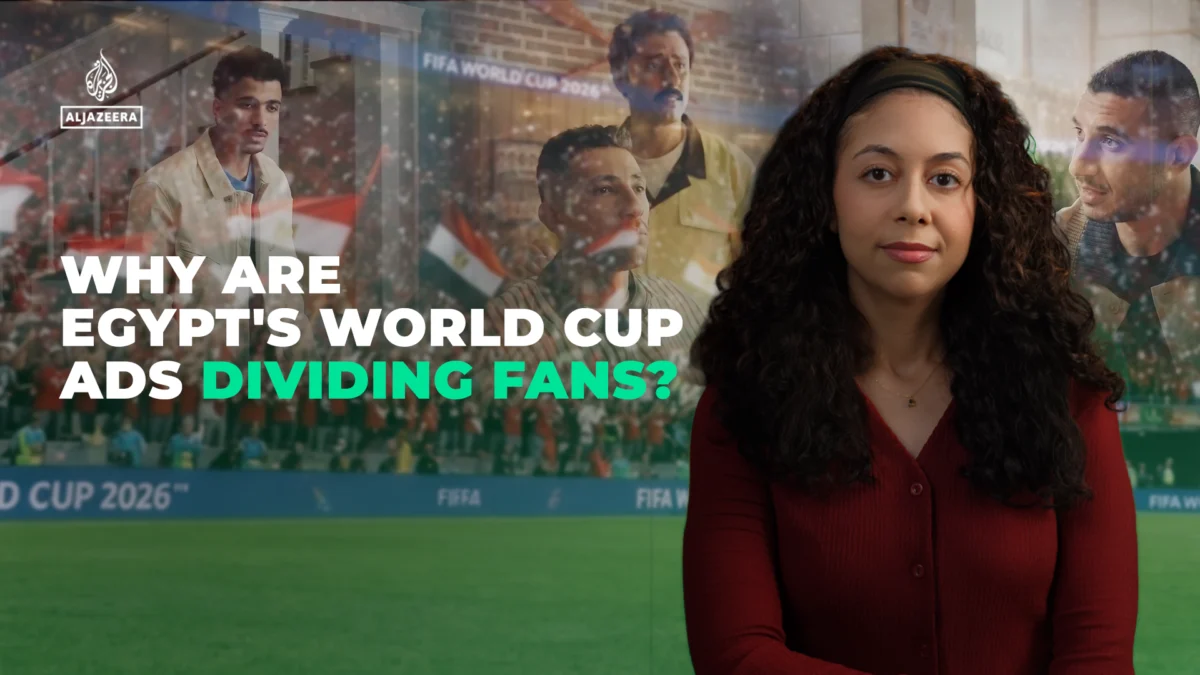
The rhythmic sound of a barber’s shears or the clinking of tea glasses in a crowded Cairo cafe usually provides the backdrop for a familiar Egyptian pastime: cynical pessimism regarding the national football team’s prospects on the world stage. For decades, the narrative surrounding "The Pharaohs" at the FIFA World Cup has been one of qualification droughts, narrow misses, and underwhelming exits. However, as the 2026 FIFA World Cup unfolds across North America, a series of viral advertisements has captured a seismic shift in the national psyche. These commercials, which feature everyday citizens—from skeptical aunts to doubtful shopkeepers—predicting an early flight home for the team, are met with a defiant rebuttal from the players: "To all the doubters, this time we’re staying longer."
As Egypt prepares for its final Group G match against Iran in Seattle, those words no longer feel like mere marketing bravado; they have become a statistical reality. With four points secured from their opening two matches, Egypt stands on the precipice of its first-ever appearance in the World Cup knockout stages. For a nation of 120 million people where football serves as the primary cultural glue, the current campaign represents more than just a sporting success—it is a cathartic breaking of a century-long "World Cup curse."
A Century of Underachievement: The Historical Context
Egypt’s relationship with the World Cup has historically been defined by a paradox. The country is a continental juggernaut, boasting a record seven Africa Cup of Nations (AFCON) titles. It was the first African and Arab nation to participate in a World Cup, debuting in 1934. Yet, despite this regional dominance, the global stage has rarely been kind to The Pharaohs.
Before the 2026 tournament, Egypt’s World Cup resume was remarkably sparse, consisting of only three appearances: 1934, 1990, and 2018. Across those three tournaments, the team failed to record a single victory. The 1934 appearance ended in a first-round exit to Hungary. In 1990, despite a valiant defensive effort that saw them draw with the reigning European champions, the Netherlands, and the Republic of Ireland, a 1-0 loss to England sent them home in the group stages.
The 2018 campaign in Russia was perhaps the most painful for the modern generation. After a 28-year absence, expectations were sky-high, centered on the talismanic Mohamed Salah. However, a shoulder injury sustained by Salah in the Champions League final just weeks before the tournament hampered his performance, and Egypt slumped to three consecutive losses against Uruguay, Russia, and Saudi Arabia. The subsequent failure to qualify for the 2022 Qatar World Cup, following a grueling penalty shootout loss to Senegal, only deepened the sense of national disillusionment.

The 2026 Turning Point: Breaking the Winless Streak
The 2026 tournament has seen an entirely different Egyptian side emerge. Placed in Group G alongside Belgium, Iran, and New Zealand, Egypt entered the competition as the 26th-ranked team in the world, facing a daunting opener against a Belgian side ranked 10th.
In a performance defined by tactical discipline and clinical counter-attacking, Egypt secured a 1-1 draw against Belgium. This result provided the foundational belief that the squad could compete with Europe’s elite. However, it was the second match against New Zealand that rewrote the history books. In a 3-1 victory in Vancouver, Egypt recorded its first-ever win in a World Cup match. Mohamed Salah, continuing his role as the heartbeat of the team, found the net, but the victory was characterized by a collective cohesion that had been missing in previous iterations of the squad.
Statistically, the 2026 campaign is already Egypt’s most successful. The four points earned are the most the nation has ever accrued in a single group stage, and the four goals scored exceed their total output from any previous tournament.
The Hossam Hassan Factor: From Legend to Leader
Central to this transformation is the man on the touchline. Hossam Hassan, Egypt’s all-time leading goalscorer, was appointed as head coach with the mission of restoring the team’s "identity." Hassan is a figure of immense historical weight in Egyptian football; it was his header against Algeria in 1989 that secured Egypt’s qualification for the 1990 World Cup, ending a 56-year hiatus.
Hassan’s appointment marked a shift away from the defensive, often reactive pragmatism of previous foreign managers like Héctor Cúper or Carlos Queiroz. Hassan has instilled a "Grinta"—a term often used in Mediterranean football to describe grit and fierce spirit—that resonates with the Egyptian public. He is the first Egyptian in history to represent the nation at a World Cup as both a player and a manager, a fact that has lent him unparalleled credibility in the dressing room and among the fans.
Under Hassan, the team has moved toward a more balanced 4-3-3 formation that maximizes the creative output of Mohamed Salah while maintaining a compact midfield. His familiarity with the Egyptian domestic league and the psychological makeup of the players has been cited by analysts as a key reason for the team’s newfound resilience.

Cultural Resonance: Why the "Doubters" Campaign Struck a Chord
The advertising campaigns currently saturating Egyptian airwaves—challenging the "doubters"—have transcended sports marketing to become a social commentary. For many Egyptians, the habit of expecting the worst is a defense mechanism born from years of economic volatility and political shifts. By assuming the team will fail, fans protect themselves from the emotional toll of disappointment.
The advertisements essentially hold a mirror up to this national trait. They depict the "Aunt" who suggests the players will be back in time for a family wedding, or the "Barber" who assumes the group stage is the team’s ceiling. By having the players directly challenge these tropes, the campaign has sparked a national conversation about optimism and the right to ambition.
While some critics initially argued that the ads were self-deprecating to a fault, the team’s performance on the pitch has vindicated the message. The "staying longer" slogan has evolved from a commercial jingle into a rallying cry for a population looking for a reason to celebrate.
The Path Forward: Scenarios for the Iran Clash
As the team prepares to face Iran at Lumen Field in Seattle, the stakes are clear. A win or a draw will mathematically guarantee Egypt a spot in the Round of 32, marking their first-ever progression past the opening round of a World Cup.
Even in the event of a loss, Egypt’s path to the knockouts remains viable. Under the 48-team format of the 2026 World Cup, eight of the twelve third-placed teams will advance to the next round. With four points and a positive goal difference, Egypt is currently in a very strong position compared to third-placed teams in other groups. However, the team’s leadership has been vocal about wanting to qualify on their own terms rather than relying on external permutations.
Current Group G Standings (Pre-Match Day 3):

- Egypt: 4 pts (GD +2)
- Belgium: 4 pts (GD +1)
- Iran: 3 pts (GD 0)
- New Zealand: 0 pts (GD -3)
The match against Iran is expected to be a tactical battle. Iran, coming off a victory against New Zealand, also has a path to qualification, making the encounter a high-stakes "win or go home" scenario for the Middle Eastern rivals.
Broader Implications and Analysis
The success of The Pharaohs in 2026 has implications that extend beyond the pitch. Economically, the team’s progression provides a significant boost to domestic brands and broadcasters. In a country where the Egyptian Pound has faced recent devaluations, the World Cup serves as a rare driver of consumer spending and national morale.
Furthermore, Egypt’s performance contributes to a broader trend of African and Arab excellence in global football. Following Morocco’s historic semi-final run in 2022, Egypt’s emergence in 2026 suggests that the gap between traditional powerhouses in Europe and South America and the rest of the world continues to shrink.
Should Egypt secure qualification to the Round of 32, it will represent the culmination of a multi-year project to modernize the national team’s infrastructure. It would also solidify Mohamed Salah’s legacy, not just as a club legend at Liverpool, but as the captain who finally led his nation into the elite brackets of international football.
For the millions of fans watching in Cairo, Alexandria, and Aswan in the early hours of Saturday morning, the match against Iran is not just a game. It is an opportunity to finally shed the "doubter" label and embrace a new era where The Pharaohs are no longer just participants, but genuine contenders on the world stage. The message from Seattle is clear: Egypt is no longer planning an early exit; they are settling in for the long haul.
