

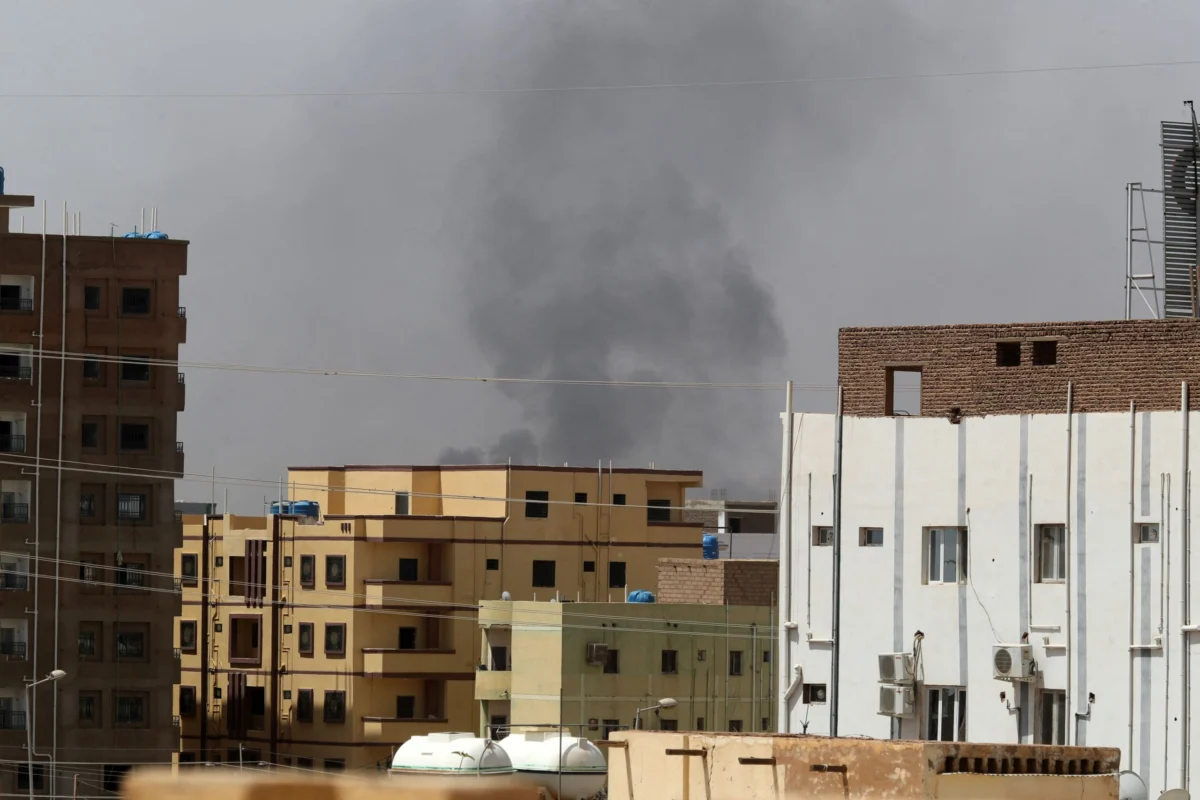
Sporadic fighting between Sudan’s warring factions continued to reverberate across the capital, Khartoum, on Sunday, as residents expressed a mixture of cautious hope and deep-seated skepticism following the announcement of a week-long ceasefire deal. Brokered by Saudi Arabia and the United States, the agreement aims to provide a much-needed reprieve in a conflict that has entered its second month, displacing over a million people and pushing the nation toward a total humanitarian collapse. The deal, signed by the Sudanese Armed Forces (SAF) and the paramilitary Rapid Support Forces (RSF) in the Saudi port city of Jeddah, is scheduled to take effect on Monday evening. Unlike previous verbal commitments that were almost immediately ignored, this agreement includes an internationally supported monitoring mechanism, marking a significant shift in the diplomatic efforts to contain the violence.
The conflict, which erupted on April 15, 2023, has pitted General Abdel Fattah al-Burhan, the head of the SAF, against his former deputy, General Mohamed Hamdan Dagalo, better known as Hemedti, who leads the RSF. While the two generals have remained at their respective command posts within Sudan, their representatives in Jeddah finalized the short-term truce after weeks of grueling negotiations. The primary objective of this seven-day window is to facilitate the delivery of life-saving humanitarian aid and the restoration of essential services, such as electricity and water, which have been severed in large swathes of the capital and the western region of Darfur.
A City Under Siege: The Reality on the Ground
Despite the diplomatic breakthrough in Saudi Arabia, the sounds of heavy artillery and small arms fire continued to plague central and southern Khartoum throughout Sunday. Residents reported that the intensity of the clashes had not significantly diminished in the hours following the signing of the document. For those trapped in the capital, the conflict has transformed daily life into a desperate struggle for survival. Mass looting of markets and private homes has become rampant, and the city’s healthcare infrastructure has effectively collapsed.
Safaa Ibrahim, a 35-year-old resident of Khartoum, spoke to reporters about the toll the war has taken on her family. "We’re tired of this war. We’ve been chased away from our homes, and the family has scattered between towns in Sudan and Egypt," she said. Her story is emblematic of the broader Sudanese experience since mid-April. "We want to return to normal life and safety. Al-Burhan and Hemedti have to respect people’s desire for life."
The United Nations and various NGOs have warned that the window for providing aid is closing as the rainy season approaches, which could further complicate logistics and increase the risk of waterborne diseases. The Jeddah agreement specifically mandates that both parties allow for the movement of humanitarian workers and the repair of critical infrastructure. However, the efficacy of these provisions remains to be seen, as previous "humanitarian corridors" were frequently targeted by snipers or blocked by checkpoints.
The Roots of the Conflict: From Revolution to Civil War
To understand the current crisis, it is necessary to examine the complex political landscape that followed the 2019 popular uprising. For decades, Sudan was ruled by Omar al-Bashir, whose regime was characterized by internal conflicts and international isolation. The 2019 revolution, led largely by civilian activists and professional unions, resulted in Bashir’s ousting by the military. A fragile power-sharing agreement was then established between civilian leaders and the military, represented by both Burhan and Hemedti.
This transition was derailed in October 2021 when Burhan and Hemedti joined forces to carry out a coup, dissolving the civilian government and seizing full control of the state. However, the alliance between the two generals was one of convenience rather than shared vision. Tensions began to simmer over the proposed integration of the RSF—a paramilitary group that grew out of the Janjaweed militias in Darfur—into the regular Sudanese army. The disagreement centered on the timeline for this integration and who would hold ultimate command authority during the process.
As the deadline for a new civilian-led transition approached in early 2023, the friction between the SAF and RSF reached a breaking point. On the morning of April 15, gunfire erupted at the Soba military base and quickly spread to Khartoum International Airport and the Presidential Palace. What began as a localized skirmish rapidly evolved into a full-scale war for control of the state.
Chronology of the Conflict: April to May 2023
The timeline of the conflict illustrates a rapid descent into chaos and the failure of early diplomatic interventions:
- April 15: Heavy fighting breaks out in Khartoum and Merowe. Both sides claim control of the airport and state television.
- April 18: The first of many 24-hour ceasefires is announced; it fails within minutes of its scheduled start.
- April 22: Foreign nations begin large-scale evacuations of diplomats and citizens as the security situation in Khartoum deteriorates.
- May 4: The United Nations warns of a "breaking point" as the number of displaced persons surges.
- May 11: The SAF and RSF sign the "Jeddah Declaration of Commitment to Protect the Civilians of Sudan," a preliminary document that lacked a specific ceasefire mechanism.
- May 20: A formal seven-day ceasefire agreement is signed in Jeddah, including a monitoring and coordination committee.
- May 21: Continued clashes reported in Khartoum as the world waits for the Monday evening implementation of the truce.
The Human Cost and Displacement Crisis
The statistical data regarding the conflict paints a grim picture of the humanitarian situation. According to the World Health Organization (WHO), at least 705 people have been confirmed killed and more than 5,287 injured. However, medical professionals on the ground and local activists suggest the actual death toll is significantly higher, as many bodies cannot be recovered from the streets or are buried in private gardens due to the danger of reaching cemeteries.
The displacement crisis has reached staggering proportions. The International Organization for Migration (IOM) reported that over 1.1 million people have been forced to flee their homes. Approximately 840,000 are internally displaced within Sudan, while more than 250,000 have crossed borders into neighboring countries, including Egypt, Chad, South Sudan, and Ethiopia. This mass exodus threatens to destabilize an already volatile region, as neighboring states struggle with their own economic and security challenges.
In Khartoum, the collapse of the banking system has left residents without cash, while the destruction of factories and the blocking of trade routes have led to a 300% to 500% increase in the price of basic commodities like bread and fuel. "The health situation is getting worse day after day," said Mohamed Hamed, a local activist. "The people of Khartoum are waiting for the truce and the opening of humanitarian corridors just to get medicine for chronic illnesses."
Strategic Stalemate and the Risk of Civil Arming
Military analysts suggest that the conflict has entered a strategic stalemate. The SAF possesses superior firepower, including a functioning air force and heavy artillery, which it has used to bombard RSF positions across the city. Conversely, the RSF is a highly mobile, light infantry force that has embedded itself within densely populated residential neighborhoods, using homes, schools, and hospitals as shields and bases of operation. This "urban guerrilla" tactic has neutralized much of the army’s technological advantage while resulting in massive civilian collateral damage.
In a significant development, senior army general Yassir al-Atta recently spoke on Sudan state TV, defending the military’s tactics and addressing the growing calls for civilian mobilization. While he stated that the formal arming of civilians was not currently required by the state, he emphasized that residents being attacked in their homes have a "natural right" to self-defense. This rhetoric has raised concerns among international observers about the potential for the conflict to devolve into a multi-sided civil war, particularly if ethnic militias in regions like Darfur become more formally aligned with the primary combatants.
In Darfur, the conflict has already taken on a more communal and ethnic character. Reports from El Geneina in West Darfur indicate that the fighting has reignited long-standing grievances between Arab and non-Arab communities, leading to the burning of displacement camps and the targeted killing of civilians. The RSF’s roots in the region make Darfur a secondary but equally critical front in the war.
Analysis: Will the Jeddah Agreement Hold?
The primary difference between the current Jeddah agreement and previous failed truces is the inclusion of a "Ceasefire Monitoring and Coordination Committee." This body is expected to be composed of representatives from the United States, Saudi Arabia, and both warring factions. The mechanism is designed to identify violations in real-time and exert diplomatic pressure on the commanders to rein in their forces.
However, significant hurdles remain. Neither Burhan nor Hemedti traveled to Jeddah, raising questions about their personal commitment to the deal or their ability to control decentralized units on the ground. The RSF, in particular, operates as a loose network of commanders, some of whom may prioritize local looting or territorial gains over high-level diplomatic agreements.
Furthermore, the talks in Jeddah have purposely avoided the larger political questions regarding the future of Sudan’s governance. Mediators have noted that this truce is strictly humanitarian. A permanent peace deal would require the removal of military forces from urban centers and a return to the civilian-led transition process—a prospect that seems distant as long as both generals believe a total military victory is still possible.
The international community remains focused on the immediate goal: stopping the bleeding. The success or failure of the Monday evening ceasefire will likely determine whether Sudan can avoid a protracted conflict that could last years, or if the current week-long window will provide the necessary foundation for a more durable peace. For the millions of civilians trapped in the crossfire, the Jeddah deal represents perhaps the last best hope to escape the "hell" that Khartoum has become.
