

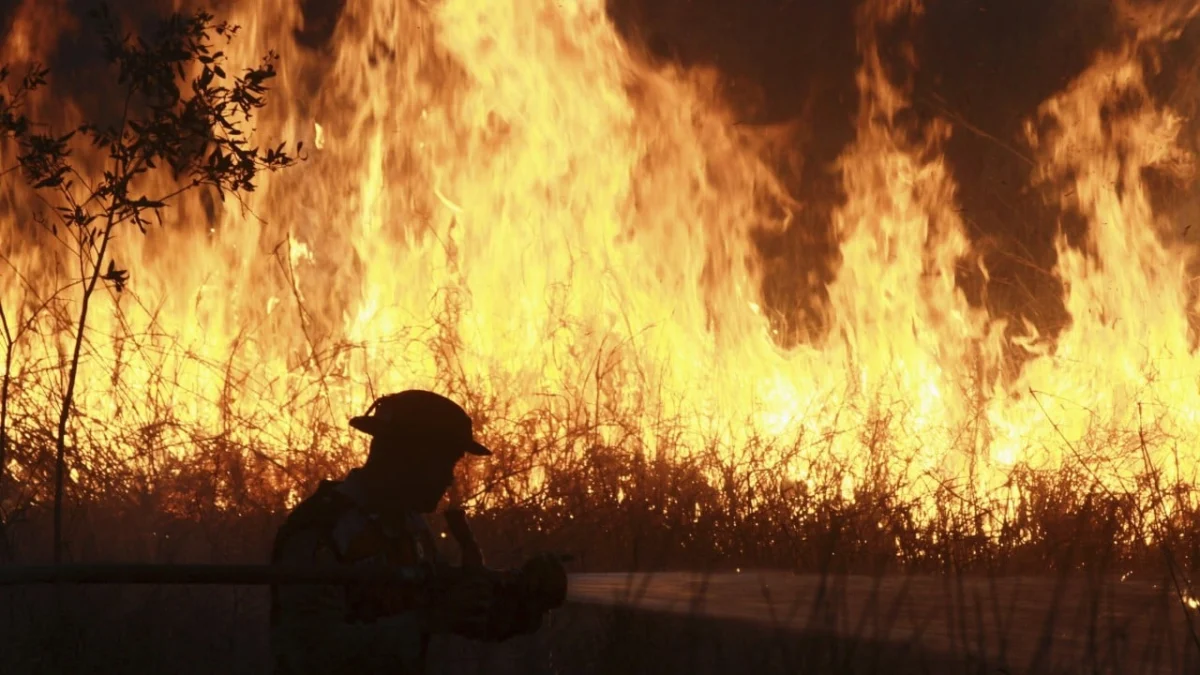
The Southeast Asian region stands at a critical environmental crossroads as a convergence of volatile geopolitics, surging commodity prices, and unfavorable climatic patterns threatens to trigger one of the most severe transboundary haze crises in recent history. The Singapore Institute of International Affairs (SIIA) has issued a rare red alert for Indonesia, Malaysia, Singapore, and Brunei, signaling that the risk of severe smoke haze reaching hazardous levels is now at its highest point in years. This warning comes at a delicate time for the region’s largest economy, Indonesia, where President Prabowo Subianto’s administration faces its first major test in balancing aggressive economic growth targets with international environmental commitments.
The primary driver behind this heightened risk is a dangerous shift in the economic incentives governing land management. For decades, the practice of slash-and-burn agriculture has been the most cost-effective, albeit illegal, method for clearing land for palm oil and pulpwood plantations. While intensified enforcement and corporate sustainability pledges had successfully reduced fire hotspots in recent years, a new wave of global economic instability is threatening to reverse these gains. As the cost of sustainable land clearing—which relies on heavy machinery, labor, and fuel—spirals upward, experts warn that both smallholders and large-scale agricultural players may return to the use of fire as a desperate cost-cutting measure.
The Economic Catalyst: Energy Costs and Fertilizer Shortages
The SIIA’s assessment highlights a direct correlation between global energy disruptions and the likelihood of forest fires in Sumatra and Kalimantan. According to SIIA Chairman Simon Tay, the closure of the Strait of Hormuz amid the ongoing conflict involving Iran has sent shockwaves through global supply chains. For Southeast Asian planters, this has translated into a 20 to 30 percent increase in production costs.
Fuel is a primary component of mechanized land clearing. When diesel prices surge, the cost of operating excavators and bulldozers becomes prohibitive for many mid-sized firms and independent farmers. Simultaneously, the price of chemical fertilizers, which are highly energy-intensive to produce, has reached record highs. This creates a "pincer effect" on agricultural margins. To compensate for the loss of profitability, there is a significant risk that land managers will bypass expensive mechanical clearing and zero-burning policies in favor of the traditional, low-cost method of setting fire to degraded peatlands.
Furthermore, the economic pressure extends to the maintenance of fire-mitigation infrastructure. In previous years, many large plantation companies invested heavily in fire-fighting teams and water management systems to keep peatlands moist. However, with capital being diverted to cover rising operational overheads, the readiness and response capacity of these private fire brigades may be compromised, allowing small, localized blazes to escalate into uncontrollable regional infernos.
Climatic Convergence: El Niño and the Indian Ocean Dipole
While economic factors provide the motivation for burning, climatic conditions provide the fuel. Meteorologists have warned that the region is entering a period defined by a "double whammy" of weather phenomena: a strong El Niño and a positive Indian Ocean Dipole (IOD).
El Niño typically brings prolonged dry spells to the Indonesian archipelago, particularly in the southern and western regions of Sumatra and the southern parts of Kalimantan. These areas are home to vast tracts of carbon-rich peatland. Under normal conditions, peat acts as a natural sponge, retaining water and resisting fire. However, during extended droughts, the water table drops, leaving the organic matter dry and highly flammable. Once ignited, peat fires are notoriously difficult to extinguish, as they can smolder underground for weeks or even months, releasing up to ten times more smoke and carbon dioxide than regular forest fires.
The positive IOD exacerbates this by further suppressing rainfall across the eastern Indian Ocean, leading to even drier conditions in the western parts of Southeast Asia. The SIIA report notes that the current meteorological modeling suggests the 2026 dry season could rival the severity of the 1997 and 2015 haze events, which remain the benchmarks for environmental catastrophes in the region.
A Chronology of the Transboundary Haze Crisis
To understand the gravity of the current red alert, one must look at the historical timeline of the haze, which has long been a point of diplomatic friction within the Association of Southeast Asian Nations (ASEAN).
- 1997-1998: The most severe haze event on record, triggered by a massive El Niño. It resulted in an estimated $9 billion in economic losses across the region and led to the drafting of the ASEAN Agreement on Transboundary Haze Pollution.
- 2002: The ASEAN Agreement on Transboundary Haze Pollution was signed, though it took years for all member states, particularly Indonesia, to ratify it.
- 2013: A sudden spike in haze levels saw Singapore’s Pollutant Standards Index (PSI) hit a record high of 401, entering the "hazardous" range. This event prompted Singapore to pass the Transboundary Haze Pollution Act in 2014, allowing the city-state to prosecute entities responsible for haze regardless of where the fire occurred.
- 2015: Another major El Niño year saw Indonesia experience massive forest fires. The resulting haze lasted for months, causing school closures in Malaysia and Singapore and leading to thousands of cases of respiratory illness.
- 2019: A moderate IOD and El Niño led to a resurgence of fires. While not as severe as 2015, it served as a reminder that the problem had not been solved despite increased government oversight.
- 2024-2025: A period of relatively low fire activity due to wetter "La Niña" conditions, which led to a degree of complacency in regional fire-prevention efforts.
- 2026: The current "red alert" issued by SIIA, marking the return of high-risk climatic and economic conditions.
Indonesia’s Political Response Under President Prabowo
The international community is closely watching the response of the Indonesian government under President Prabowo Subianto. During his campaign and early months in office, Prabowo committed to continuing the environmental legacies of his predecessor, Joko Widodo, who saw a significant decline in deforestation rates. However, Prabowo has also prioritized food and energy security, launching ambitious programs to expand agricultural land for palm oil-based biofuels and food estates.
The challenge for the Prabowo administration lies in enforcing the "zero-burn" policy while simultaneously pushing for rapid agricultural expansion. Environmental advocates worry that the "food estate" projects, often located on sensitive peatlands in Central Kalimantan, could become new flashpoints for fires if not managed with extreme care.
In response to the SIIA report, Indonesian officials have reiterated their commitment to "firm law enforcement." The Ministry of Environment and Forestry has stated that it will continue to monitor hotspots via satellite and deploy "Manggala Agni" (the state’s forest fire-fighting tactical unit) to high-risk zones. However, the effectiveness of these measures will depend on the government’s ability to provide economic alternatives or subsidies to smallholders who find themselves unable to afford mechanical clearing.
Regional Implications and Health Risks
The return of the haze has profound implications for the health and economies of the "southern tier" of ASEAN. For Singapore and Malaysia, the haze represents a significant public health threat. The fine particulate matter (PM2.5) found in haze is small enough to enter the bloodstream, causing long-term damage to the lungs and heart. During previous severe haze years, hospital admissions for asthma and respiratory infections surged by over 30 percent.
Beyond health, the economic impact on tourism and aviation is substantial. Reduced visibility frequently leads to flight cancellations and delays at regional hubs like Changi and Kuala Lumpur International Airport. The tourism sector, still sensitive to global economic fluctuations, faces the prospect of mass cancellations as travelers avoid the region during the "haze season."
Furthermore, the environmental impact is a global concern. Indonesia’s peatlands are some of the world’s most significant carbon sinks. When they burn, they release massive amounts of methane and carbon dioxide, potentially undermining global efforts to limit temperature rises under the Paris Agreement.
Analysis: The Need for a New Cooperative Framework
The current crisis underscores the limitations of the existing ASEAN "non-interference" policy. While the ASEAN Agreement on Transboundary Haze Pollution exists, it lacks a strong enforcement mechanism. The SIIA report suggests that the region needs to move beyond reactive fire-fighting and toward proactive economic cooperation.
One proposed solution is the "Green Lane" for sustainable agriculture, where financial institutions provide low-interest loans or subsidies specifically for mechanical land clearing and peatland restoration, particularly during years of high energy costs. This would decouple the cost of land clearing from the volatility of global oil markets.
Another avenue is the enhancement of the ASEAN Coordinating Centre for Transboundary Haze Pollution Control. By centralizing data and resources, member states could deploy regional assets more rapidly to extinguish fires before they cross borders. However, this requires a level of transparency and data-sharing regarding land ownership and concession maps that has historically been resisted by some member states.
As Southeast Asia enters the peak of the 2026 dry season, the red alert serves as a stark reminder that environmental stability is inextricably linked to economic health. The coming months will determine whether the region has truly learned the lessons of the past or if it remains vulnerable to the same cycles of smoke and economic pressure that have defined it for decades. The "red alert" is not just a weather forecast; it is a call for a fundamental shift in how the region manages its most precious and volatile natural resources.
