

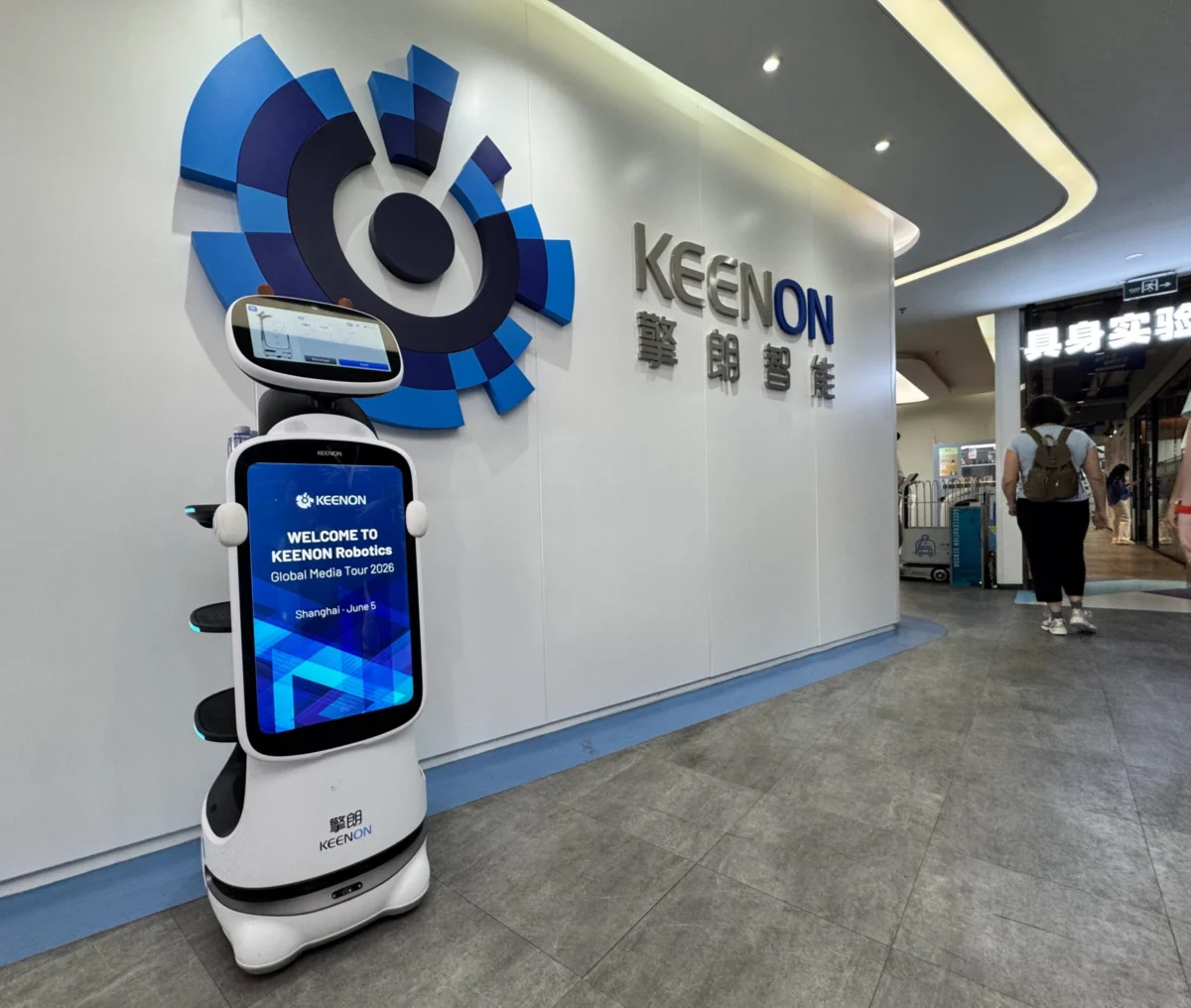
The integration of autonomous systems into the daily fabric of urban life has moved beyond the realm of science fiction and into the commercial reality of modern China. In major metropolitan hubs like Shanghai, specialized robots are no longer experimental novelties but are actively performing essential functions in hospitality, healthcare, and retail sectors. Keenon Robotics, a prominent manufacturer based in Shanghai, has emerged as a central player in this transition, focusing on the development and deployment of service-oriented machines designed to navigate the complex "last mile" of delivery and public space maintenance. As the global labor market faces unprecedented shifts, the trajectory of Keenon’s technology offers a blueprint for how robotics may soon redefine the service industry worldwide.
The Economic Imperative: Cost Efficiency and Labor Shortages
The primary catalyst for the rapid adoption of service robots is an economic one. According to data provided by Keenon during a recent industry inspection, the operational cost of a service robot is approximately one-third that of a human worker performing the same repetitive tasks. This cost disparity is compounded by the robot’s ability to operate nearly 24 hours a day without the need for breaks, benefits, or traditional management overhead.
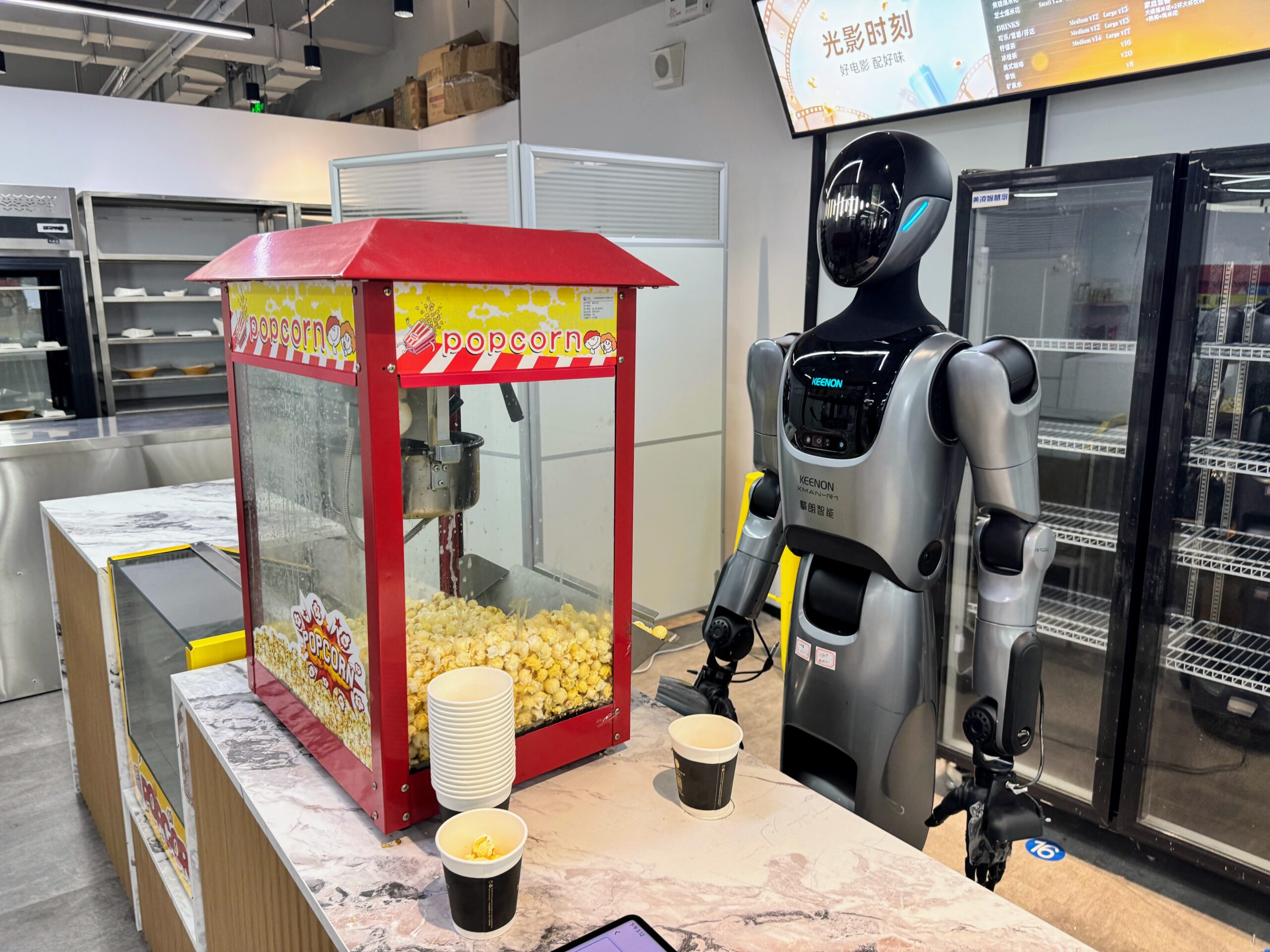
Beyond direct cost savings, Keenon reports that businesses utilizing their systems have seen a revenue increase of approximately 40%. While the specific drivers of this revenue growth can vary by sector, industry analysts suggest it stems from a combination of increased operational throughput, reduced error rates in delivery, and the novelty factor that attracts customers to tech-forward establishments.
Furthermore, China is currently grappling with significant demographic shifts. With an aging population and a shrinking workforce in the service and manufacturing sectors, there is a growing "labor gap." Robots are increasingly being viewed not as replacements for existing workers, but as essential tools to fill vacancies that human workers are no longer willing or available to take. This is particularly evident in menial roles such as floor scrubbing in 24-hour convenience stores or luggage transport in high-volume hotels.
Specialized vs. Generalized Robotics: The Current Landscape
The robotics industry is currently bifurcated into two distinct developmental paths: specialized robots and generalized humanoid robots. Keenon’s current commercial success is rooted in the former. Specialized robots are engineered for narrow, specific tasks. A restaurant delivery robot, for instance, is optimized for tray stability and obstacle avoidance within a geofenced indoor environment. Similarly, medical support robots are designed for sterile transport, while cleaning robots are equipped with specialized sensors to detect floor debris and liquid spills.

In contrast, the industry is moving toward the "Holy Grail" of robotics: the generalized humanoid. These machines are designed with powerful onboard compute capabilities and multiple points of articulation, allowing them to perform a wide range of tasks traditionally reserved for humans. However, the transition from specialized to generalized is a significant technological leap.
Keenon’s Chief Operating Officer indicated that while the hardware for humanoid robots is advancing rapidly, a fully capable generalized robot remains at least five years away from meaningful integration into production lines. The barrier is not merely mechanical but intellectual, requiring a level of Artificial General Intelligence (AGI) that can navigate the unpredictability of the human world without constant supervision.
The Three Pillars of Robotic Intelligence
To bridge the gap between a "dumb" specialized machine and a truly autonomous humanoid, Keenon identifies three critical areas of development:

1. Advanced Robot Hardware
The physical components of robots—actuators, sensors, and structural frames—have reached a level of maturity where basic humanoid forms are viable. Modern actuators now possess the acuity required for delicate tasks, such as handling glassware or operating touchscreens. While hardware continues to iterate, it is no longer considered the primary bottleneck in the industry.
2. The Embodied Mind
This represents the artificial intelligence neural network that serves as the robot’s brain. For a robot to be useful in a generalized sense, it must possess an AI capable of understanding complex, multi-step instructions. This "embodied mind" must be able to translate a verbal command—such as "clean up the spill in aisle four"—into a series of coordinated physical movements, accounting for changing environmental factors in real-time.
3. Embodied Motion
The final pillar is the ability to perceive and navigate the world seamlessly. Unlike a factory robot bolted to a floor, a service robot must navigate "unstructured" environments. This includes climbing stairs, avoiding moving pedestrians, and operating in outdoor conditions like rain or uneven terrain. Achieving "embodied motion" requires a fusion of high-speed computer vision and predictive algorithms that allow the robot to move with the same fluidity and spatial awareness as a human.

The Data Bottleneck and Training Methodologies
The most significant hurdle in the development of generalized robotics is the acquisition and processing of high-quality data. Just as the development of Level 5 autonomous driving has been slowed by "edge cases"—rare scenarios that the AI has not been trained to handle—humanoid robots face an infinite variety of real-world interactions.
Keenon utilizes a multi-pronged approach to training:
- Data Scraping: Utilizing existing video data from the internet to teach robots basic human movements and social cues.
- Synthetic Data: Creating simulated environments where robots can "practice" tasks millions of times in a virtual space before attempting them in the real world.
- Teleoperation: This is perhaps the most critical and expensive form of training. Human operators wear VR suits or use remote controls to perform tasks through the robot’s body. Every movement, sensor reading, and correction is recorded. This rich, real-world data is then fed back into the neural network to refine the robot’s autonomy.
For specialized robots, the training process is significantly more streamlined. Onboarding a Keenon delivery robot typically takes only four hours. Because the scope of the job is predefined and the environment is geofenced, the robot can be "taught" its routes and duties via an integrated touchscreen or with minimal assistance from a regional distributor.

A Chronology of Service Robotics in China
The rapid proliferation of Keenon’s technology is part of a broader national strategy in China to dominate the global robotics market.
- 2010–2015: Early development of indoor navigation and basic LiDAR technology. Robots were largely confined to lab settings or very simple "track-following" applications.
- 2016–2019: Keenon and its competitors began deploying "waiter robots" in restaurants. These early models proved the commercial viability of the "Robot-as-a-Service" (RaaS) model.
- 2020–2022: The COVID-19 pandemic acted as a massive accelerant. The need for contactless delivery in hotels and hospitals turned service robots from luxury items into essential infrastructure.
- 2023–Present: The focus has shifted toward AGI integration and the first prototypes of humanoid robots. Companies are now moving from "navigation-based" robots to "interaction-based" robots.
Broader Implications and the Future of Labor
The shift toward robotic labor raises significant questions regarding the future of the global workforce. While the immediate impact is the elimination of "3D" jobs—those that are Dirty, Dull, or Dangerous—the long-term implications are more complex.
From a journalistic perspective, the transition appears inevitable. The efficiency gains and cost reductions are too significant for the private sector to ignore. However, this transition will require a societal shift in how labor and income are structured. As robots take over menial tasks, new categories of employment are emerging. There is an increasing demand for robot maintenance technicians, fleet managers, software engineers, and "robot trainers" who specialize in teleoperation.

The goal, according to industry proponents, is not to dehumanize the workforce but to liberate human workers from repetitive and physically taxing labor. By allowing robots to handle the logistics of room service or the monotony of floor cleaning, human staff can focus on high-value interactions, such as customer service, complex problem solving, and creative tasks that AI cannot yet replicate.
As Keenon and other manufacturers continue to refine the "embodied mind," the line between specialized tools and generalized assistants will continue to blur. The next five years will likely determine whether the humanoid robot becomes a ubiquitous presence in the global economy or remains a specialized tool for high-tech markets. For now, the streets and hallways of Shanghai serve as a living laboratory for the future of human-robot coexistence.
