

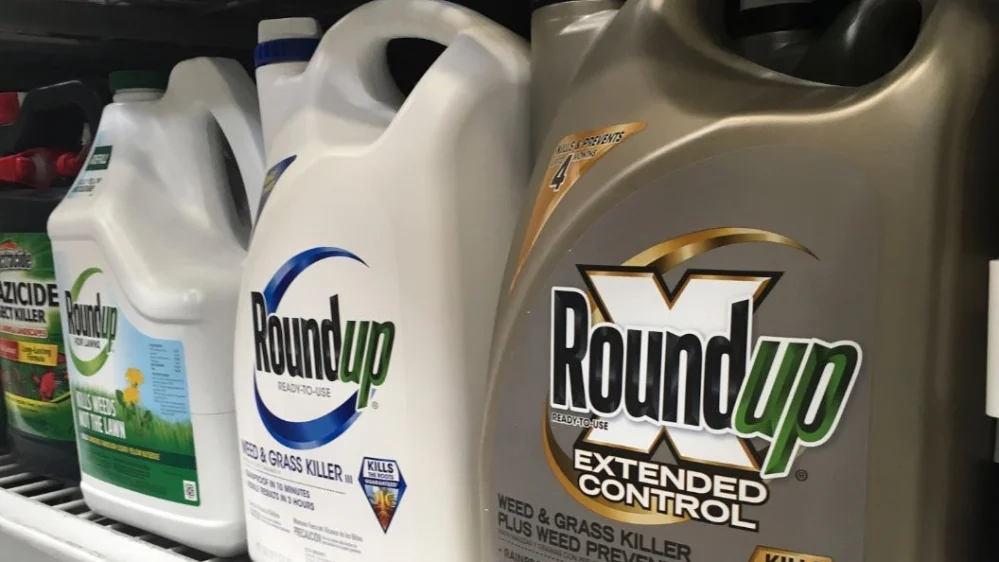
The United States Supreme Court has delivered a landmark ruling, siding with Bayer AG, the manufacturer of the widely used weedkiller Roundup, in a decision poised to halt thousands of pending lawsuits alleging the product caused cancer due to inadequate warnings. The high court’s 7-2 ruling, announced on Thursday, found that federal law governing pesticides preempts state-level failure-to-warn claims, effectively closing a significant avenue for litigants seeking damages from the agrochemical giant.
This pivotal decision emerged from a specific case, Bayer v. Durnell, which reached the justices amidst a torrent of litigation that has plagued Bayer since its 2018 acquisition of Monsanto, Roundup’s original producer. That acquisition, valued at $63 billion, brought with it a wave of legal challenges, including several multibillion-dollar jury verdicts that sent shockwaves through the global agrochemical and pharmaceutical industries.
The ruling represents a substantial victory for Bayer, whose shares surged nearly 18 percent following the announcement, reflecting investor relief over the potential reduction in its vast legal liabilities. It also aligns with the position of the US President Donald Trump’s administration, which had explicitly backed Bayer in the case. However, the political implications are nuanced, as some allies within the "Make America Healthy Again" movement advocate for stricter regulation and a reduction in pesticide use, creating a potential ideological friction point.
The Court’s Rationale: Federal Preemption under FIFRA
At the heart of the Supreme Court’s decision is the legal principle of federal preemption, specifically under the Federal Insecticide, Fungicide and Rodenticide Act (FIFRA). This federal statute governs the registration, sale, and labeling of pesticides in the United States, granting the Environmental Protection Agency (EPA) the authority to approve product labels. The majority opinion, authored by Conservative Justice Brett Kavanaugh, stipulated that because the EPA has repeatedly concluded that glyphosate, the active ingredient in Roundup, does not cause cancer and has not required a cancer warning on its label, state-level failure-to-warn claims are preempted.
Justice Kavanaugh wrote that Durnell’s claim “would require Monsanto to add a cancer warning to Roundup’s label even though federal law requires Monsanto to use the EPA-approved label without a cancer warning.” This argument asserts that allowing state courts to impose different or additional labeling requirements would directly conflict with the EPA’s federal mandate under FIFRA, thereby undermining a uniform national standard. The court’s majority held that FIFRA prohibits states from imposing “differing or additional requirements for labeling or packaging” than those mandated by federal law.
The dissenting opinion, penned by Liberal Justice Ketanji Brown Jackson and joined by conservative Justice Neil Gorsuch, offered a robust counter-argument. Justice Jackson contended that Durnell’s claim sought to enforce state law requirements that were equivalent to, rather than different from, FIFRA’s prohibition on "misbranded" labels that lack adequate warnings. She argued that the majority’s interpretation unjustifiably restricts consumer access to state tort systems. Jackson called the ruling “remarkable and regrettable, for it unjustifiably closes the courthouse doors to state tort plaintiffs like Durnell,” highlighting concerns about individuals’ ability to seek redress for alleged harm.
The Case of John Durnell
The specific lawsuit that reached the Supreme Court involved John Durnell, a Missouri man diagnosed with non-Hodgkin lymphoma. Durnell sued Monsanto in Missouri state court in 2019, alleging the company failed to warn users of the dangers associated with Roundup and glyphosate exposure. He claimed his cancer was a direct result of his extensive use of Roundup for approximately 20 years, starting in 1996, during which he acted as the "spray guy" for a St. Louis neighborhood association, applying the herbicide without protective equipment.
In 2023, a jury sided with Durnell, awarding him $1.25 million. This verdict was subsequently upheld by a state appeals court in 2025. Bayer, arguing that FIFRA preempted such state-law claims, appealed the decision, ultimately leading to the Supreme Court’s review. The high court’s reversal of Durnell’s verdict underscores the profound impact of this ruling on similar cases across the nation.
Background to the Litigation: Glyphosate, Monsanto, and Bayer
The saga surrounding Roundup and glyphosate is a complex narrative spanning decades, intertwining scientific debate, corporate strategy, and public health concerns. Glyphosate, first introduced by Monsanto in 1974, quickly became the world’s most widely used herbicide, largely due to its effectiveness and its pairing with genetically modified "Roundup Ready" crops designed to resist its effects.
The controversy intensified significantly in 2015 when the International Agency for Research on Cancer (IARC), a research arm of the World Health Organization (WHO), classified glyphosate as “probably carcinogenic to humans.” This classification sparked a global outcry and a surge in litigation, particularly in the United States, where thousands of individuals who had used Roundup and subsequently developed non-Hodgkin lymphoma began filing lawsuits.
In contrast to the IARC’s finding, the US EPA has consistently maintained that glyphosate is “not likely to be carcinogenic to humans” when used according to label instructions. The EPA has reiterated this stance through multiple reviews, most recently in 2020, and has continued to approve Roundup’s product labels without a cancer warning. This divergence between international and national scientific assessments has been a central point of contention in the legal battles.
Bayer’s acquisition of Monsanto in 2018, intended to create a global powerhouse in crop science, quickly became a financial albatross due to the escalating Roundup litigation. The German drugmaking and crop science company inherited the full scope of Monsanto’s legal liabilities, facing more than 100,000 plaintiffs in US state and federal courts. The financial strain was immense, with initial jury verdicts reaching into the billions of dollars, although many were later reduced on appeal.
Bayer’s Financial and Strategic Response
The immense financial pressure from the litigation forced Bayer to take significant strategic actions. Faced with potential liabilities running into the tens of billions of dollars, Bayer announced a proposed $7.25 billion settlement in February, aimed at resolving tens of thousands of current and future lawsuits. This settlement, however, would not cover claims stemming from pending appeals or those falling outside the specific terms of the deal, which the company estimated at nearly $1 billion. The Supreme Court’s decision now drastically alters the landscape for these remaining claims, particularly those based on failure-to-warn allegations.
The company had already taken steps to mitigate future risks, including removing glyphosate from its consumer version of Roundup sold in US residential markets, a move effective from 2023. This strategic shift aimed to reduce exposure to future lawsuits while continuing to sell glyphosate-based products to agricultural users, where the bulk of the product’s sales and economic importance lie.
Bayer spokesperson Tino Andresen hailed the Supreme Court’s decision as a significant turning point: “The US Supreme Court decision is good for science, farmers, and industries that depend on regulatory clarity for innovation. It should help significantly contain the Roundup litigation after nearly a decade of legal battles. The ruling should result in the dismissal of current warning-based claims and bar future failure-to-warn claims.” This statement underscores Bayer’s belief that the ruling will bring much-needed clarity and a substantial reduction in its legal burdens.
Reactions and Broader Implications
The Supreme Court’s ruling has elicited strong reactions from various stakeholders, highlighting the deep divisions in the debate over product liability, federal regulation, and public health.
Environmental activists and consumer advocacy groups expressed profound disappointment and alarm. Tarah Heinzen, legal director at Food and Water Watch, stated, “Once again, the Supreme Court has sided with big business over people and the environment. Today’s ruling is a disaster for public health.” Kelly Ryerson, co-executive director of American Regeneration and a prominent "Make America Healthy Again" activist known as "The Glyphosate Girl" on social media, echoed these sentiments, warning that “The harm from this decision will perpetuate our cancer, infertility and general chronic disease epidemic for generations to come.” These groups argue that the ruling prioritizes corporate interests over consumer safety and the right to seek justice for alleged harm.
On the financial front, the ruling was met with enthusiasm. Markus Manns, a fund manager at Union Investment, described it as a “significant milestone for Bayer,” suggesting the company is “entering a new era” a decade after the Monsanto acquisition. Manns noted, “While future lawsuits are not entirely off the table, they will become considerably more difficult. A final breakthrough would come if the settlement is accepted by the plaintiffs and approved by the competent court in July. This would bring Bayer’s glyphosate litigation chapter to a definitive close, allowing management to fully refocus on operational and strategic matters.” This perspective underscores the financial community’s focus on regulatory certainty and reduced litigation risk for major corporations.
The implications of this ruling extend beyond Bayer and Roundup, potentially impacting product liability law across various industries where federal agencies regulate labeling. The decision reinforces the power of federal preemption, making it more challenging for individuals to sue manufacturers in state courts over alleged "failure-to-warn" claims when a federal agency has approved the product’s label without such a warning. This could set a precedent that benefits other federally regulated industries, potentially reducing their exposure to similar state-level lawsuits.
However, legal experts note that the ruling specifically addresses "failure-to-warn" claims. It does not necessarily preclude other types of product liability claims, such as those alleging design defects or manufacturing defects, though these are less common in the context of Roundup litigation. Furthermore, the scientific debate over glyphosate’s carcinogenicity remains active, and public health advocates will likely continue to press for stricter regulations and warning labels at the federal level.
In essence, while the Supreme Court’s decision offers significant relief to Bayer and reshapes the landscape of product liability law, it simultaneously intensifies the debate over the balance between federal regulatory authority, corporate responsibility, and consumer protection in the United States. The "glyphosate chapter" for Bayer may be nearing a close in terms of litigation, but the broader societal and scientific discussions surrounding the chemical are far from over.
