

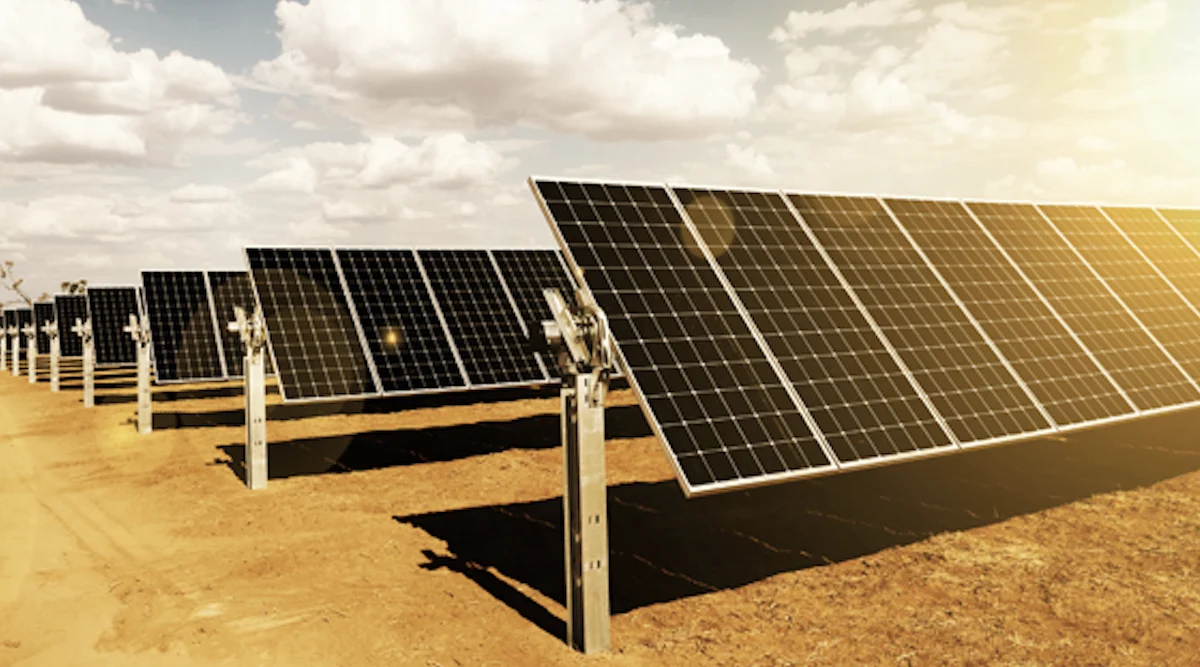
Canadian Solar, a leading global manufacturer of solar photovoltaic (PV) products, has officially unveiled its latest high-performance solar module, the TOPCon 3.0, marking a significant milestone in the company’s efforts to capture a larger share of the United States renewable energy market. This strategic product launch arrives at a critical juncture for the energy industry, as the manufacturer navigates a complex federal policy environment and shifting trade dynamics. Despite fluctuations in federal energy priorities and the implementation of restrictive trade measures, Canadian Solar is doubling down on its commitment to the U.S. market through a multi-billion-dollar investment in domestic manufacturing and advanced technology.
The company’s new TOPCon 3.0 high-power-density module is specifically engineered to meet the rigorous demands of utility-scale solar power plants, as well as large-scale industrial and commercial users. By aligning its technology with industry-standard dimensions—2382 × 1134 × 30 millimeters—Canadian Solar has ensured that its new product can be seamlessly integrated into existing developer pipelines while offering a significant boost in energy output. With a capacity reaching up to 670 Wp (Watt-peak), the module stands at the forefront of the current market, providing the high-density power required to optimize land use and reduce the Levelized Cost of Energy (LCOE).
The Evolution of TOPCon and HJT Technology
To understand the significance of the TOPCon 3.0 module, it is necessary to examine the technological shift currently sweeping the PV industry. For several years, Passivated Emitter and Rear Contact (PERC) technology served as the industry standard due to its cost-effectiveness and reliable performance. However, as the industry reaches the theoretical efficiency limits of PERC, manufacturers have turned to more advanced architectures.
TOPCon, which stands for Tunnel Oxide Passivated Contact, represents a leap forward in efficiency. First conceptualized by researchers in 2013, the technology remained on the periphery for nearly a decade due to high manufacturing costs. Recent innovations in production techniques have finally allowed companies like Canadian Solar to mass-produce TOPCon cells that convert sunlight into electricity with significantly higher efficiency than traditional PERC cells.
In addition to TOPCon, Canadian Solar is investing heavily in Heterojunction Technology (HJT). Unlike standard monocrystalline cells, HJT cells combine crystalline silicon with layers of amorphous "thin-film" silicon. This hybrid approach results in a cell that can capture more energy from a wider spectrum of light and maintains better performance in high-temperature environments. The U.S. Department of Energy has supported the commercialization of HJT since the early 2000s, and Canadian Solar’s move to manufacture these cells on U.S. soil marks a major step toward domesticating high-tech solar components.
Strategic U.S. Manufacturing Expansion: Texas and Indiana
A cornerstone of Canadian Solar’s strategy is the rapid "onshoring" of its manufacturing capabilities. By producing modules and cells within the United States, the company aims to mitigate the risks associated with international trade disputes and benefit from domestic content incentives.
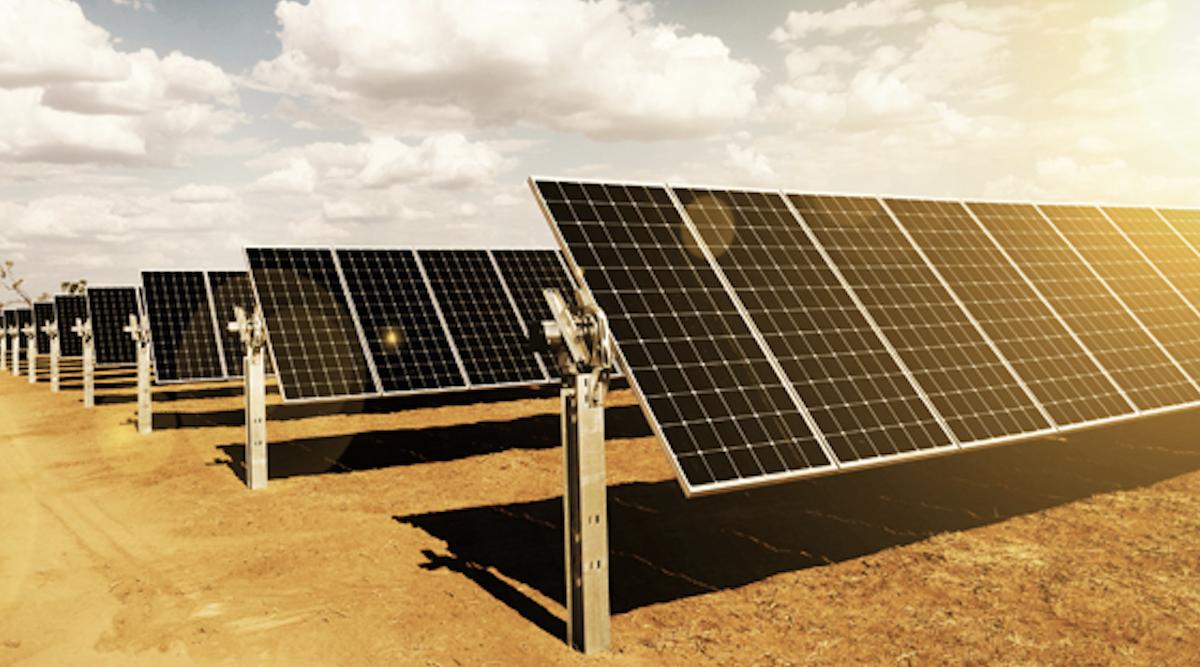
In Texas, Canadian Solar is currently expanding its existing 5-gigawatt (GW) solar module factory. According to the company’s first-quarter 2026 reports, the facility is on track to reach a capacity of 10 GW per year by the end of 2026. This expansion reflects the "red-hot" demand for utility-scale solar in the American South and West, where land availability and high solar irradiance provide ideal conditions for large-scale deployments.
Simultaneously, the company is developing a state-of-the-art cell manufacturing facility in Jeffersonville, Indiana. This factory is dedicated to the production of HJT solar cells. While the initial design called for a 5 GW capacity, Canadian Solar recently revised the plan upward to 6.3 GW to meet projected demand. The Indiana project is being executed in two phases:
- Phase I: Scheduled to begin commercial operations this year, this phase will have a nameplate capacity of 2.1 GWp, making it one of the first commercial-scale HJT cell facilities in the United States.
- Phase II: Trial production is expected to commence at the beginning of 2027, adding an additional 4.2 GWp of capacity.
Navigating Political and Trade Headwinds
The expansion of Canadian Solar’s U.S. footprint is occurring against a backdrop of significant political volatility. The return of trade-focused energy policies has created a challenging environment for multinational firms with historical ties to Asian supply chains. Canadian Solar, founded by Canadian citizen and materials scientist Dr. Shawn Qu in 2001, has faced scrutiny due to its early manufacturing roots in China.
To navigate these challenges, the company announced a major structural reorganization in late 2025. This included the creation of CS PowerTech, a joint venture specifically designed to house U.S. assets. This move was strategically aimed at avoiding "Foreign Entity of Concern" (FEOC) restrictions, which were tightened under the July 2025 Republican-backed budget law. By establishing CS PowerTech as a U.S.-based platform with a 75.1% controlling stake, Canadian Solar has positioned itself to qualify for federal tax credits while insulating its operations from federal scrutiny regarding foreign influence.
Industry analysts at S&P Global have noted that this "strategic reshoring" is a direct response to the on-again, off-again trade wars that have characterized U.S. trade policy over the last decade. By purchasing 75.1% of the overseas assets of CSI Solar that support U.S. operations, Canadian Solar is effectively creating a self-contained, U.S.-focused supply chain that is legally and operationally distinct from its other global divisions.
Bifaciality and the Rise of Agrivoltaics
The TOPCon 3.0 module is not only powerful but also versatile. One of its standout features is its bifacial design, which allows the panel to absorb light from both the front and the back. This is particularly advantageous when panels are installed over reflective surfaces like snow, light-colored gravel, or even certain types of vegetation.
Bifacial technology is a primary driver for the burgeoning field of agrivoltaics—the practice of using the same plot of land for both solar energy production and agriculture. Because bifacial panels can be mounted vertically, they can act as "solar fences," allowing tractors and livestock to move freely between rows. This dual-use approach addresses one of the primary criticisms of utility-scale solar: the displacement of farmland. Canadian Solar’s focus on bifaciality suggests a long-term play for the agricultural heartland of the U.S., where farmers are increasingly looking for ways to diversify their income through renewable energy leases without sacrificing crop production.

Furthermore, the TOPCon 3.0 is designed for durability in extreme climates. Traditional solar panels often suffer from efficiency drops and accelerated degradation when exposed to high heat. Canadian Solar’s new modules are engineered to maintain an output of more than 88.85% even after 30 years of operation in hot climates. This longevity is crucial for developers seeking to secure long-term power purchase agreements (PPAs) in regions like the Mojave Desert or the Gulf Coast.
Economic Implications and Market Outlook
The economic impact of Canadian Solar’s expansion is multifaceted. First, the increase in module capacity from 670 Wp reduces the "Balance of System" (BOS) costs for developers. With more power per module, a project requires fewer racks, fewer cables, and fewer man-hours for installation. This makes solar projects more bankable, even in an environment of fluctuating interest rates.
Second, the onshoring of manufacturing creates thousands of high-tech jobs in states like Texas and Indiana. These facilities require skilled technicians, engineers, and logistics experts, contributing to the "Green-Collar" economy. The Jeffersonville, Indiana facility, in particular, is expected to be a hub for HJT innovation, potentially attracting a cluster of secondary suppliers to the region.
However, the path forward is not without risks. The residential solar market has seen a "crimp" in recent years due to high interest rates and changes in net-metering policies in states like California. Canadian Solar is mitigating this by focusing heavily on the utility and commercial segments, where demand remains robust among corporate energy buyers and utilities seeking to meet state-mandated renewable portfolio standards (RPS).
Chronology of Key Events
- 2001: Dr. Shawn Qu founds Canadian Solar in Ontario, Canada.
- Early 2000s: U.S. Department of Energy begins collaboration on HJT technology.
- 2013: Initial research into TOPCon efficiency begins.
- July 2025: Republican-backed budget law introduces stricter FEOC restrictions for solar tax credits.
- December 1, 2025: Canadian Solar announces the creation of CS PowerTech to reshore U.S. manufacturing.
- Q1 2026: Canadian Solar reports record interest in the Texas 10 GW expansion.
- June 22, 2026: Official announcement of the TOPCon 3.0 high-power-density module.
- Late 2026: Targeted completion of the Texas factory expansion to 10 GW.
- Early 2027: Expected commencement of Phase II trial production at the Indiana HJT cell facility.
Conclusion: A Resilient Strategy for a Decarbonized Future
Canadian Solar’s proactive approach to technology and trade policy demonstrates a sophisticated understanding of the modern energy landscape. By combining cutting-edge TOPCon 3.0 and HJT technologies with a robust U.S. manufacturing presence, the company is effectively "trolling" political opposition with a business model that is difficult to disrupt.
The move toward 670 Wp modules and bifacial designs ensures that Canadian Solar remains competitive on a technical level, while the formation of CS PowerTech provides the legal and financial shield necessary to operate in a protectionist trade environment. As the U.S. continues its transition toward a cleaner grid, the ability of manufacturers to adapt to both physical and political climates will determine the leaders of the next energy era. Canadian Solar, through its strategic investments in Texas and Indiana, has clearly signaled its intent to remain at the top of that list.
