

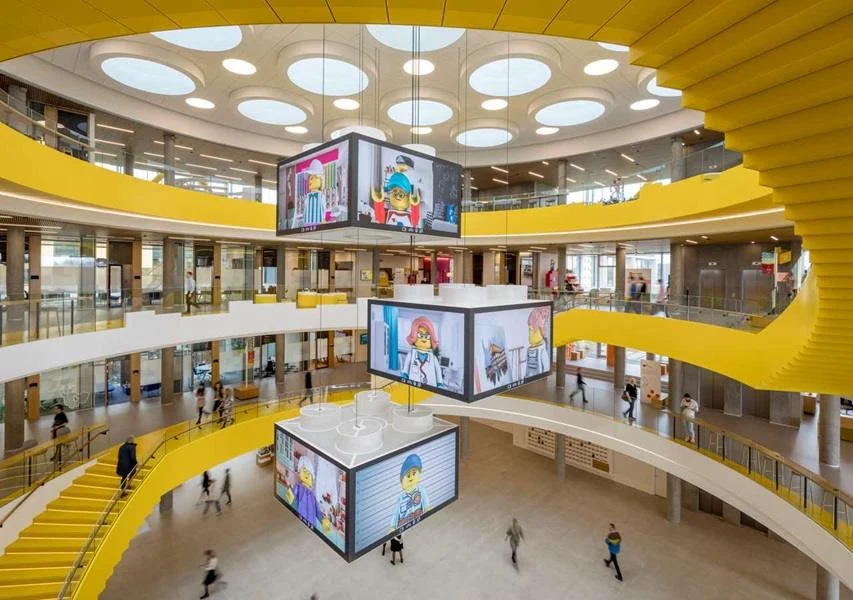
The LEGO Group has officially broken ground on its most ambitious renewable energy project to date: a massive solar park located in close proximity to its global headquarters in Billund, Denmark. This landmark infrastructure project is engineered to generate a volume of renewable electricity equivalent to 100% of the total energy consumption across all of the company’s extensive Billund-based operations. As the toy industry leader continues to pivot toward a circular and carbon-neutral business model, this solar installation represents a cornerstone of its "Planet Promise" and a significant leap toward achieving its long-term environmental benchmarks.
The facility, which is scheduled to commence full operations by the end of 2027, is not merely a utility project but a specialized "eco-park" that balances industrial-scale energy production with ecological restoration. By integrating high-capacity solar technology with dedicated biodiversity zones, the LEGO Group aims to set a new standard for how corporate entities can meet energy demands while simultaneously enhancing local ecosystems.
Technical Specifications and Energy Output
The Billund solar park is designed with an impressive installed capacity of 116 Megawatts (MW). For a private corporate installation in Northern Europe, this scale is substantial. Projections indicate that the park will generate approximately 99 Gigawatt-hours (GWh) of renewable electricity annually. To put this into perspective, 99 GWh is roughly equivalent to the average annual electricity consumption of more than 20,000 Danish households.
For the LEGO Group, this output is specifically calibrated to offset the carbon footprint of its massive Billund campus. The scope of the project covers several critical sites that form the heart of the company’s global operations:
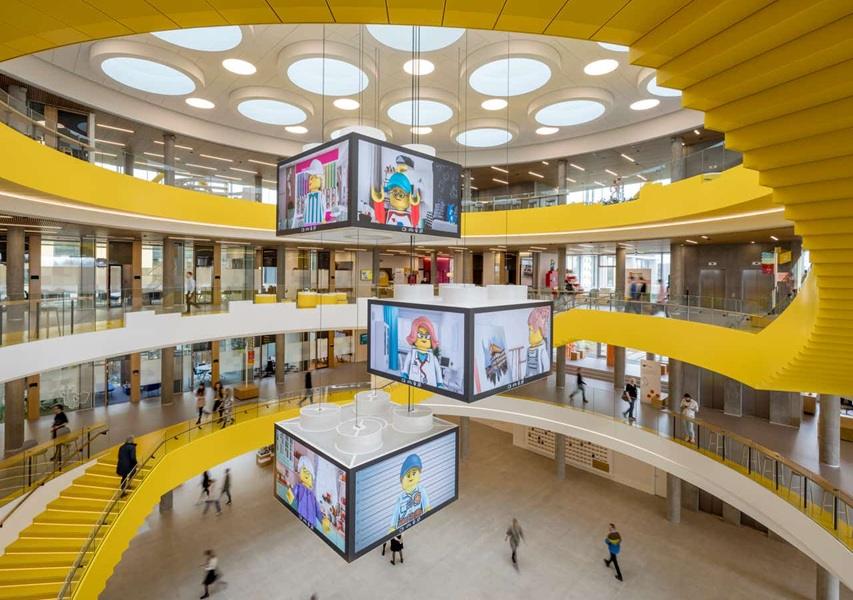
- LEGO Campus: The 54,000-square-meter global headquarters that houses thousands of employees.
- Kornmarken Manufacturing Plant: The primary molding factory where billions of LEGO bricks are produced annually using high-precision injection molding machines.
- Innovation House: The secretive hub where designers and engineers develop future play experiences.
- Our LEGO Agency (OLA): The company’s internal creative and marketing powerhouse.
By matching the electricity needs of these facilities, the LEGO Group effectively "greens" the most energy-intensive portion of its Danish operations. The project is expected to increase the company’s total global installed renewable energy capacity by a staggering 204% compared to 2025 levels, illustrating a rapid acceleration in their transition away from grid-dependency and fossil fuels.
A New Blueprint for Biodiversity: The 65/35 Split
One of the most distinctive features of the Billund solar park is its land-use strategy. Unlike traditional solar farms that often utilize every available square meter for panels, the LEGO Group has adopted a holistic approach to land management. The site spans a total of 100 hectares, but only 65 hectares will be occupied by solar arrays.
The remaining 35 hectares are being transformed into a sanctuary for local flora and fauna. This area will feature:
- Wetlands and Water Features: Designed to manage rainwater runoff and provide habitats for amphibians and aquatic insects.
- Natural Habitats: Re-wilded sections consisting of native Danish grasses and wildflowers to support pollinators such as bees and butterflies.
- Open Landscapes: Areas left undeveloped to maintain the aesthetic integrity of the Danish countryside and provide corridors for local wildlife movement.
To mitigate the visual impact often associated with large-scale industrial projects, the solar panels will be screened by dense vegetation. Furthermore, the LEGO Group is prioritizing community integration by including public walking paths and boardwalks throughout the nature zones. This "open-door" policy is intended to turn a utility site into a recreational and educational resource where the public can learn about renewable energy and local biodiversity side-by-side.
Chronology of the Transition: From 2024 to Net Zero 2050
The launch of the Billund solar park is a vital chapter in the LEGO Group’s broader sustainability timeline. The company has been under increasing pressure from consumers and environmental groups to address the carbon-intensive nature of plastic production. This project is a direct response to those challenges.

- 2024: The LEGO Group reported that owned renewable energy accounted for 3.6% of its total energy consumption at production sites. During this period, the company began scaling up investments in off-site Power Purchase Agreements (PPAs) and on-site solar installations.
- 2025: Owned renewable energy capacity grew to 5.8%. This growth was driven by smaller-scale installations and the initial planning phases for major projects in Denmark, Vietnam, and the United States.
- 2026 (June): Official announcement and start of construction for the Billund solar park. This marks the transition from incremental improvements to large-scale infrastructure shifts.
- 2027 (Late): Expected completion and synchronization of the Billund park with the local grid. At this stage, the Billund operations will reach their 100% renewable energy matching goal.
- 2050: The ultimate target. The LEGO Group has committed to achieving net-zero greenhouse gas emissions across its entire value chain—from the sourcing of raw materials to the energy used in retail stores—by mid-century.
Strategic Leadership and Corporate Philosophy
The project is being overseen by the company’s sustainability leadership, which views the solar park as a "milestone" rather than a destination. Annette Stube, Chief Sustainability Officer at the LEGO Group, emphasized that the project serves a dual purpose: operational efficiency and social responsibility.
"The Billund solar park is an important milestone towards our ambition to expand our renewable energy capacity globally and reduce our greenhouse gas emissions," Stube stated. She further noted that the design reflects the company’s "Learning Through Play" ethos by creating a space that is "thoughtfully designed to support local biodiversity and provide a welcoming space for the community to enjoy."
This sentiment reflects a growing trend among multinational corporations to pursue "nature-positive" outcomes. It is no longer sufficient for a project to be carbon-neutral; it must also demonstrate a net gain for the local environment and community. By including public boardwalks and educational opportunities, the LEGO Group is reinforcing its brand image as a family-oriented, future-conscious entity.
Broader Impact and Industry Implications
The implications of this project extend far beyond the borders of Billund. The LEGO Group’s move is a clear signal to the global manufacturing sector that energy self-sufficiency is both achievable and economically viable for large-scale industrial operations.
1. Decoupling Growth from Emissions
As the LEGO Group continues to expand—building new factories in Vietnam and Virginia, USA—it faces the challenge of "carbon leakage." By investing heavily in its own energy generation at its home base, the company provides a proof-of-concept that can be replicated at its other global sites. If the Billund model succeeds, it is likely that similar solar-and-biodiversity parks will follow near their other major manufacturing hubs.
2. Supporting Denmark’s National Energy Goals
Denmark has long been a global leader in wind energy, but the nation is currently looking to diversify its renewable portfolio with more solar and Power-to-X technologies. Private investments of this scale take the pressure off the national grid and contribute to Denmark’s goal of quadrupling its combined solar and wind power by 2030.
3. Supply Chain Influence
The LEGO Group’s commitment to net zero by 2050 includes "Scope 3" emissions—those generated by suppliers and partners. By taking such a public and decisive step with its own energy consumption, the company gains significant leverage when asking its suppliers to follow suit. It sets a "gold standard" for the thousands of companies within the LEGO supply chain.
4. Technical Innovation in Solar Design
The Billund project highlights a shift toward "agrivoltaics" and biodiversity-integrated solar. By proving that solar farms do not have to be "industrial deserts," the LEGO Group may help reduce local opposition to solar projects (often referred to as NIMBYism). When a project provides public parks and protects wildlife, it is far more likely to receive local government approval and community support.
Conclusion
The construction of the Billund solar park represents more than just an array of silicon panels; it is a physical manifestation of the LEGO Group’s transition into a new era of corporate responsibility. With a 116 MW capacity and a 99 GWh annual output, the project provides the heavy-duty power needed to run one of the world’s most famous manufacturing operations while respecting the delicate balance of the local environment.
As the late-2027 operational date approaches, the eyes of the business world will be on Billund to see if this harmonious blend of industry and nature can truly deliver on its promise. For the LEGO Group, the message is clear: the future of play must be powered by the sun, and the path to net zero is built one renewable block at a time.
