


The Canadian economy is currently navigating a period of profound uncertainty, characterized by sluggish growth, shifting geopolitical alliances, and a volatile global energy market. In 2025, Canada’s real gross domestic product (GDP) expanded by a meager 1.7%, marking its lowest growth rate since the global pandemic. This economic cooling has been exacerbated by the disruption of a century-old trading relationship with the United States and the ripple effects of regional conflicts, most notably the war in Iran, which has sent shockwaves through global energy prices. Against this backdrop of declining employment rates and a persistent cost-of-living crisis, Corporate Knights has released its 2026 "Best 50 Corporate Citizens" ranking, revealing a significant shift in how the nation’s leading firms are approaching long-term viability.
While economic downturns historically force sustainability initiatives to the periphery, the 2026 data suggests the opposite is occurring among Canada’s corporate elite. Rather than retreating to traditional defensive postures, the companies featured on this year’s list are aggressively reorienting their business models around energy resilience and the burgeoning "green" economy. The 2026 ranking highlights a maturing corporate landscape where sustainability is no longer viewed as a discretionary expense but as a fundamental driver of the bottom line.

A New Hierarchy of Corporate Responsibility
The 2026 rankings reflect a significant reshuffling of Canada’s corporate hierarchy, driven in part by a refined methodology that places greater emphasis on sustainable revenue momentum and investment ratios. Innergex Renewable Energy has claimed the top spot this year, ascending from third place in 2025. The Quebec-based renewable power giant displaced last year’s leader, Boralex, which fell to seventh position.
The movement within the top ten underscores the volatility and competitiveness of the green energy sector. Telus Corp saw one of the most dramatic rises, jumping from 15th to third place, largely due to its high sustainable investment ratio and robust revenue momentum in digital health and agricultural technology. Similarly, Cascades Inc., a leader in sustainable packaging, climbed from 20th to eighth.
The 2026 list is also notable for its inclusivity of new industries. Ten newcomers joined the ranking this year, representing sectors such as real estate, municipal transit, and waste management. Canadian Apartment Properties REIT (CAPREIT) emerged as the highest-ranking newcomer at 16th, signaling that the real estate sector is finally beginning to integrate deep decarbonization into its core financial reporting.
Chronology of Economic Disruption and Corporate Response
The path to the 2026 rankings was paved by three years of intensifying economic pressure.
2023–2024: The Strategic Pivot
Following the post-pandemic recovery, Canadian firms faced a "polycrisis" of high interest rates and labor shortages. During this period, companies like Polaris Renewable Energy began aggressive expansions into Latin America and the Caribbean, diversifying their portfolios to include geothermal and hydroelectric projects. This foresight allowed them to report a 21% revenue jump between 2022 and 2024, providing a buffer against domestic stagnation.
2025: The Year of Energy Volatility
The outbreak of conflict in Iran led to a chaotic spike in fossil fuel prices. For many Canadian businesses, this was the "tipping point" for energy transition. Firms that had already invested in self-generation or renewable procurement, such as those on the Best 50 list, saw significantly lower operational volatility compared to their peers.
2026: The Sustainability Integration
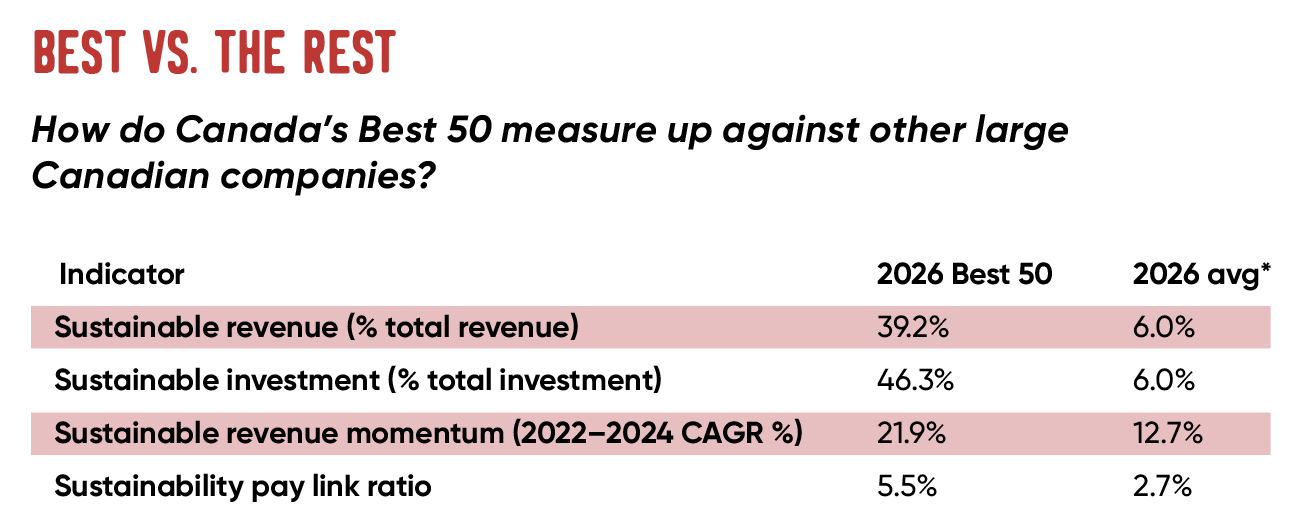
The current year marks the formalization of "sustainable revenue" as a primary metric for investor confidence. The Corporate Knights methodology now tracks the "Sustainable Revenue Momentum" (CAGR), rewarding companies that are not just "green" today but are actively growing their green portfolios.
Sector Analysis: Mining and Waste Management Lead the Charge
One of the most surprising trends in the 2026 report is the resurgence of the mining sector. Historically viewed as an environmental antagonist, the mining industry secured six spots on this year’s list—nearly rivaling the pure-play power generation companies that typically dominate these rankings.
Eldorado Gold (Ranked 20th) has emerged as a standard-setter in this space. With operations spanning Canada, Turkey, and Greece, the company has integrated solar-powered infrastructure into its mining sites. Its Kışladağ mine in Turkey recently received the Towards Sustainable Mining (TSM) Environmental Excellence Award for a project that provides clean water to 350 local households by eliminating energy-intensive pumping costs. In Quebec, Eldorado’s Lamaque Complex achieved a rare AAA rating from the Mining Association of Canada for its waste and water stewardship.

The waste management sector has also seen a paradigm shift. Waste Connections (Ranked 43rd) has transitioned from a traditional collection service to a circular economy champion. The company currently diverts up to 70% of waste from landfills in certain markets and operates 23 landfill-gas-to-energy facilities. These facilities generate enough power to support approximately 312,000 homes annually. Last year, the company committed $500 million toward a new target: increasing its recycling capacity by an additional 30%.
Supporting Data: The "Green" Financial Performance
The 2026 data indicates a clear correlation between sustainable disclosure and capital growth. Vancity (Vancouver City Savings Credit Union), ranked 9th, reported the most significant increase in sustainable revenues during the ranking period. Its sustainable revenue grew by a staggering 266%, from $4.69 million in 2022 to over $65 million in 2024.
While Michael Yow, Director of Rankings at Corporate Knights, notes that this jump is partly due to improved disclosure practices, it also reflects a genuine shift in financial products. Vancity now offers specialized mortgages for affordable housing and environmental financial products that donate profits to sustainability causes.

Table: Performance Metrics of Top 5 Corporate Citizens (2026)
| Rank | Company | Sustainable Revenue Ratio | Sustainable Investment Ratio | Overall Score |
|---|---|---|---|---|
| 1 | Innergex Renewable Energy | 100.00% | 100.00% | 82.21% |
| 2 | Polaris Renewable Energy | 100.00% | 100.00% | 81.28% |
| 3 | Telus Corp | 29.20% | 64.09% | 80.96% |
| 4 | Société de Transport de Montréal | 86.40% | 97.30% | 80.92% |
| 5 | Kruger Products Inc. | 57.92% | 34.88% | 77.82% |
Official Responses and Industry Implications
Industry leaders have been quick to react to the 2026 rankings, framing them as a roadmap for Canada’s industrial future. Executives from Kruger Products (Ranked 5th) highlighted the company’s transition away from fossil-fuel-based plastics toward innovative biomaterials. As a fourth-generation family-run business, Kruger has used its 122-year history to pivot toward FSC-certified products, preserving millions of trees annually while maintaining market share in the essential goods sector.
In the energy sector, Énergir (Ranked 24th) serves as a "transition torchbearer." Despite being Quebec’s largest natural gas distributor, it achieved a perfect sustainable revenue score in the Corporate Knights methodology. The company’s leadership emphasized that as of April 2024, 100% of its new residential and commercial connections are powered by renewable sources, including wind and biomethane.

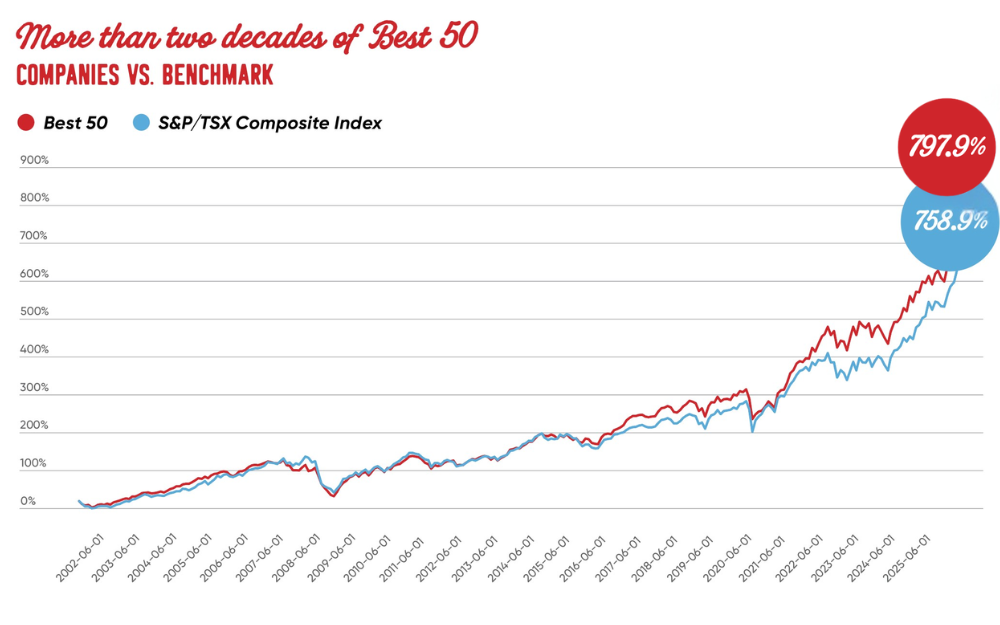
Market analysts suggest that the success of these "Best 50" companies is creating a "green premium" in the Canadian stock market. Investors are increasingly penalizing firms that fail to disclose climate risks or sustainable revenue streams, while rewarding those that demonstrate "energy resilience"—the ability to operate independently of volatile global oil and gas markets.
Broader Impact and Future Outlook
The 2026 Best 50 Corporate Citizens list arrives at a critical juncture for Canada. As the country struggles with low productivity and the fallout of disrupted trade, these 50 companies provide a blueprint for a more resilient economic model. The data shows that the "green transition" is no longer a theoretical future; it is a current financial reality.
The presence of heavy industries like mining and transit (the Toronto Transit Commission and Société de transport de Montréal both made the list) indicates that the transition is permeating the core of the Canadian economy. However, challenges remain. The lower scores of legacy telecommunications and asset management firms suggest that while some sectors are sprinting toward decarbonization, others are still struggling with the "sustainable investment ratio"—the amount of capital expenditure actually being funneled into green projects.

As Canada moves toward the end of the decade, the companies on this list are likely to be the ones best positioned to survive the ongoing cost-of-living crisis and energy volatility. By reorienting their business models around sustainability, they have not only protected their brand reputations but have secured their financial futures in an increasingly unstable world. The 2026 rankings prove that in the modern economy, the most "citizenly" thing a corporation can do is ensure its own long-term survival through sustainable innovation.
