


In a dramatic market reversal, the Canadian dollar has experienced a significant depreciation, plummeting to a 14-month low against the US dollar. This sharp decline, which saw the loonie touch 1.4183 per US dollar on Friday, its weakest intraday level since April of the previous year, is primarily attributed to a rapid repricing of US Federal Reserve policy. Scotiabank analysts are now forecasting a near-term dip to as low as 68.9 cents US, a stark contrast to its January high of 74.1 cents US.
The Fed’s Hawkish Pivot and its Ripple Effect
The catalyst for this currency sell-off appears to be a fundamental shift in market expectations regarding the US Federal Reserve’s monetary policy. In a matter of days, market sentiment flipped from anticipating no US interest rate hikes before March 2027 to pricing in an 88 percent probability of an increase in September. This recalibration, driven by the Federal Open Market Committee’s (FOMC) June decision, has injected a renewed sense of hawkishness into the Fed’s outlook.
The US dollar index, a measure of the greenback’s strength against a basket of major currencies, surged by 1.3 percent from Wednesday to Friday. This appreciation is a direct consequence of the growing conviction that the Fed will soon lift its benchmark interest rate from its current level of 3.5 percent to 3.75 percent. Traders are now betting on a 25 basis point hike as early as the October 28 meeting, a stark departure from the previous consensus that had effectively ruled out any moves until early 2027.
This divergence in monetary policy expectations has widened the gap between US and Canadian interest rates. The Bank of Canada, in contrast, held its key interest rate steady at 2.25 percent on June 10, marking the fifth consecutive meeting without a change. The prevailing view among most economists is that the Bank of Canada will maintain its current accommodative stance for the remainder of the year, anticipating steady policy. This disparity in central bank trajectories is a key factor driving capital away from the Canadian dollar and towards the relatively more attractive yields offered by US dollar-denominated assets.
Scotiabank’s Bearish Outlook and Year-End Projections
Shaun Osborne, Chief Currency Strategist at Bank of Nova Scotia (Scotiabank), described the Canadian dollar’s sell-off this week as "particularly brutal." He noted that the greenback’s 1.2 percent gain against the loonie was the "sharpest" since the loonie’s slump in the spring. Osborne’s analysis suggests that the currency could fall to a low of 68.9 US cents in the near term before a potential recovery to 75.2 US cents by the end of the year.
Scotiabank’s year-end projection hinges on the fading geopolitical risks associated with the US-Iran conflict, which could prompt the Fed to consider rate cuts later in the year. However, the immediate outlook remains challenging for the loonie. Osborne attributes the late-second quarter gains of the US dollar to "fundamentals," specifically the market’s repricing of "a considerable amount of Fed tightening" following the FOMC meeting.
The Dual Pressure of Oil Prices and Geopolitical De-escalation
Adding to the downward pressure on the Canadian dollar is the recent decline in oil prices. Canada’s economy is significantly influenced by commodity prices, and fluctuations in the price of crude oil have a direct impact on the loonie’s valuation. The Middle East de-escalation, particularly the agreement between Israel and Hezbollah for a ceasefire, has led to a significant sell-off in oil markets.
Sarah Ying, Head of Currency Strategy at CIBC Capital Markets’ fixed income, commodity, and currency unit, highlighted in a June 19 note that this geopolitical easing and the subsequent market reaction could weaken the loonie. West Texas Intermediate (WTI) crude oil has reportedly fallen by approximately 30 percent since mid-May, a trend that has dragged the Canadian dollar down with it. Further exacerbating this, Reuters reported that US oil prices dropped about 9 percent in the week leading up to Friday’s report, following the ceasefire agreement.
The inverse relationship between oil prices and the Canadian dollar is a well-established phenomenon. As oil prices decline, the revenue generated by Canadian oil exports decreases, negatively impacting the country’s trade balance and, consequently, the demand for the loonie. This dynamic is currently playing out, amplifying the currency’s weakness.
Broader Economic Context and the Bank of Canada’s Stance
Despite the volatility in the currency markets, a weaker loonie does not necessarily alter the Bank of Canada’s monetary policy path, according to Bank of America. Analysts at Bank of America suggest that the central bank is likely to maintain its rate hold through most of 2027, allowing the currency’s depreciation to act as a natural adjustment mechanism for any Fed tightening.
Carlos Capistran, Head of Latin America and Canada Economics at BofA Securities, elaborated on this perspective during a webcast. He pointed to the weakness in the Canadian economy, evidenced by a negative output gap, as a factor that makes it difficult to attribute current inflation solely to demand pressures. This sentiment is further reinforced by subdued domestic demand, as indicated by recent retail sales data.
Statistics Canada reported that Canadian core retail sales fell by 0.7 percent in April, marking the second consecutive month of decline. This data suggests that while inflation may be supporting nominal retail sales figures, the underlying consumer demand remains sluggish. Maria Solovieva, an economist at TD Economics, commented on this trend, noting that April’s report indicates that "inflation continued to support nominal retail sales, while underlying demand remained subdued." This economic backdrop provides the Bank of Canada with room to refrain from immediate rate hikes, even as the US Federal Reserve signals a more aggressive stance.
Implications for Investors and the Canadian Economy
The sustained strength of the US dollar and the potential for the loonie to dip below 70 US cents have significant implications for various stakeholders. For Canadian businesses that import goods and services, a weaker dollar translates into higher costs, potentially impacting profitability and consumer prices. Conversely, for Canadian exporters, a weaker loonie makes their products more competitive in international markets, potentially boosting sales and revenue.
Investors holding Canadian assets denominated in Canadian dollars may see their returns diminish when converted back to US dollars. Conversely, US investors looking to invest in Canada might find it a more attractive proposition due to the lower cost of acquiring Canadian assets.
The current market environment underscores the interconnectedness of global economies and the powerful influence of central bank policies on currency valuations. The rapid shift in expectations surrounding the Federal Reserve’s monetary tightening cycle has sent shockwaves through global markets, with the Canadian dollar bearing a significant brunt of this adjustment. As the economic landscape continues to evolve, market participants will be closely watching for further signals from both the Federal Reserve and the Bank of Canada to navigate the complexities of the currency markets. The coming months will likely be characterized by continued volatility as markets digest the implications of these diverging monetary policy paths and the ever-changing geopolitical and commodity price landscapes.
Historical Context of Loonie Fluctuations
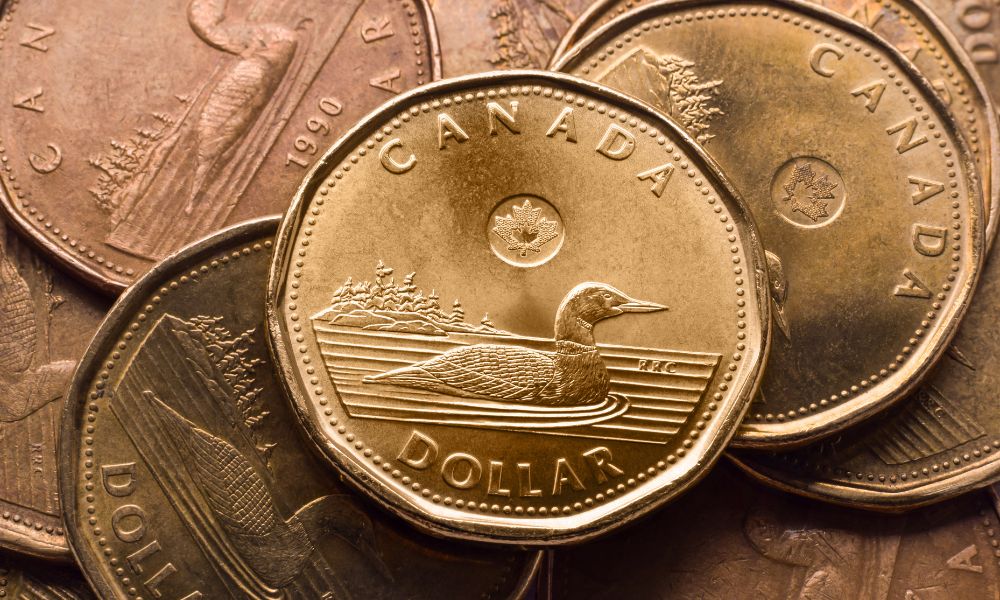
The Canadian dollar, often referred to as the "loonie" due to the image of a common loon on the one-dollar coin, has a history of sensitivity to global economic conditions and commodity prices, particularly oil. The currency’s value has historically moved in tandem with oil prices, given Canada’s significant role as an oil exporter. During periods of high oil prices, the loonie has tended to strengthen, while periods of declining oil prices have often coincided with a weaker loonie.
Furthermore, the interest rate differential between Canada and the United States has always been a critical driver of the loonie’s value. When the US Federal Reserve raises interest rates, it typically attracts capital towards US dollar-denominated assets, increasing demand for the greenback and putting downward pressure on other currencies, including the Canadian dollar. Conversely, when the Bank of Canada raises rates while the Fed holds steady or cuts, the loonie can appreciate.
The current scenario is particularly noteworthy because it combines a hawkish pivot from the US Federal Reserve with a significant decline in oil prices. This dual pressure is creating a potent cocktail of factors that are weighing heavily on the Canadian dollar. The market’s rapid adjustment to the prospect of higher US interest rates highlights the sensitivity of currency markets to central bank communications and actions. The speed at which expectations have shifted from a dovish outlook to a more aggressive tightening stance by the Fed has caught many by surprise, leading to the pronounced currency movements observed in recent days.
Analyzing the "Output Gap" and Inflationary Pressures
The concept of the "output gap" is crucial in understanding the Bank of Canada’s cautious approach. An output gap refers to the difference between the actual output of an economy and its potential output. A negative output gap signifies that the economy is operating below its potential, with underutilized resources and subdued demand. In such an environment, inflationary pressures are generally considered to be demand-driven and less persistent.
When inflation is not driven by excessive demand, central banks may be less inclined to aggressively raise interest rates, as doing so could stifle economic growth without effectively taming inflation. Carlos Capistran’s observation that the Canadian economy has a negative output gap and that inflation is not primarily driven by demand pressures provides a strong rationale for the Bank of Canada’s decision to remain on hold. This suggests that the central bank is more concerned about the potential for a prolonged period of weak economic growth than about runaway inflation.
The data on core retail sales further supports this view. A consistent decline in retail sales indicates that consumers are not significantly increasing their spending, which is a key component of aggregate demand. While inflation may be present, its impact on real consumer purchasing power might be mitigated by the subdued demand environment. This economic backdrop allows the Bank of Canada to prioritize economic stability and growth, even as the US Federal Reserve adopts a more contractionary monetary policy.
Geopolitical Risk and its Currency Impact
The influence of geopolitical events on currency markets cannot be overstated. The recent de-escalation in the Middle East, marked by a ceasefire agreement, has significantly reduced perceived risks in the region. Historically, heightened geopolitical tensions, particularly in oil-producing regions, have led to increased oil prices and a corresponding strengthening of commodity-linked currencies like the Canadian dollar.
The reduction in these tensions has had the opposite effect. As the immediate threat of supply disruptions diminishes, oil prices have fallen, removing a key support for the loonie. This demonstrates how global events, even those seemingly distant, can have tangible and immediate impacts on national currencies. The market’s swift reaction to the ceasefire highlights the speculative nature of currency trading, where expectations about future events play a significant role in current price movements. The market’s ability to quickly reprice risk associated with geopolitical events is a testament to the efficiency of modern financial markets.
Conclusion: Navigating a Complex Financial Landscape
The current depreciation of the Canadian dollar is a multifaceted phenomenon, driven by a confluence of factors including a hawkish shift in US Federal Reserve policy, declining oil prices, and the reduction of geopolitical risk in the Middle East. Scotiabank’s forecast of a near-term dip to 68.9 US cents underscores the prevailing bearish sentiment towards the loonie.
While the Bank of Canada appears poised to maintain its current interest rate policy, allowing the currency to absorb some of the US tightening, the Canadian economy faces a delicate balancing act. Exporters may benefit from a weaker loonie, but importers and consumers could face higher costs. The subdued domestic demand, as evidenced by retail sales data, further complicates the economic outlook.
As the global financial landscape continues to evolve, stakeholders will be closely monitoring central bank actions, commodity price movements, and geopolitical developments to gauge the future trajectory of the Canadian dollar. The coming months promise to be a period of significant adjustment and potential volatility in currency markets.
