

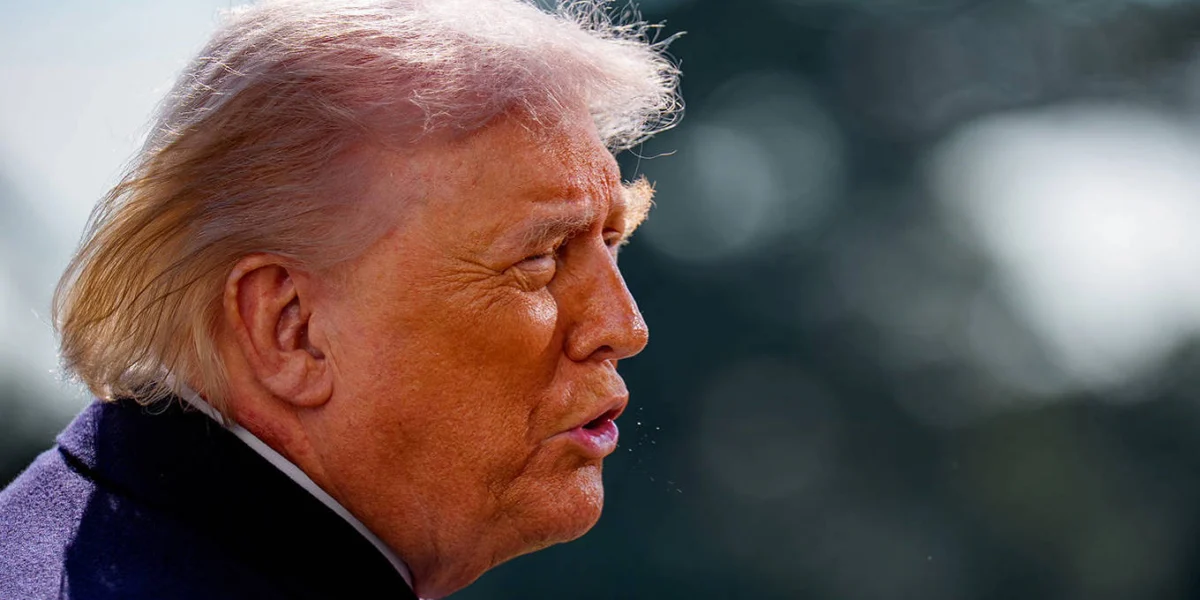
Chicago – The enduring question of how to interpret President Donald Trump’s distinctive brand of governance finds a compelling, albeit grim, analytical lens in the theories of economist Mancur Olson. Nearly three decades ago, Olson, in his seminal work on the origins of states, presented a framework that distinguishes between rulers who "shear the sheep" and those who "skin them alive." The former, through sustainable policies, cultivate productivity and generate consistent tax revenues over time. The latter, by contrast, engage in extractive practices that yield immediate, often catastrophic, gains at the expense of long-term prosperity. By what many observers perceive as his audacious utilization of the United States government for what can be described as national pillage, President Donald Trump appears to have definitively chosen the latter, more destructive path. This analysis, authored by Aziz Huq and Tom Ginsburg and published on June 22, 2026, delves into the implications of this governance philosophy, examining its historical parallels, economic consequences, and potential long-term ramifications for American democracy and its global standing.
Historical Precedents and the Olson Framework
The historical analogy drawn from Roman Emperor Tiberius, suggesting a ruler’s choice between sustained extraction and immediate plunder, is not merely an academic flourish. It speaks to a fundamental tension in the exercise of power: the balance between fostering a flourishing society and exploiting it for immediate personal or factional gain. Mancur Olson’s theories provide a robust academic underpinning for this observation. In his work, Olson posited that stable, autocratic rulers, often termed "stationary bandits," have an incentive to govern their territories in a way that maximizes their long-term revenue. This involves ensuring the security of their subjects and facilitating economic activity, as a more prosperous populace will yield greater tax revenues over time. This contrasts with "roving bandits," who are transient and thus have no incentive to invest in the long-term productivity of the areas they plunder.
President Trump’s approach, as articulated by Huq and Ginsburg, appears to deviate from the "stationary bandit" model, exhibiting characteristics more aligned with a short-sighted, extractive mindset. This is not to categorize the American presidency as an autocracy, but rather to employ Olson’s framework as an analytical tool to understand the incentives and outcomes of certain governance decisions. The authors suggest that Trump’s administration has prioritized immediate gains, often through policies that appear to benefit specific constituencies or serve personal interests, without sufficient consideration for the sustainable health of the nation’s economy or its democratic institutions.
The "Skinning the Sheep" in Practice: Policy Manifestations
The assertion that Trump has chosen to "skin the sheep alive" is supported by a pattern of policies and actions that have been widely debated and scrutinized. These include:
- Tax Cuts and Deficit Expansion: The Tax Cuts and Jobs Act of 2017, while championed as a stimulus for economic growth, significantly increased the national debt without a commensurate increase in long-term revenue generation. Critics argued that it disproportionately benefited corporations and wealthy individuals, aligning with an extractive model that prioritizes immediate financial gains for a select few. Data from the Congressional Budget Office indicated a projected increase in the national debt by trillions of dollars over the subsequent decade as a direct result of these cuts.
- Deregulation: A broad rollback of environmental, financial, and labor regulations was often framed as a means to unleash business and create jobs. However, opponents argued that these deregulatory measures prioritized immediate cost savings for businesses over long-term societal well-being, potentially leading to increased environmental degradation, financial instability, and worker exploitation – akin to extracting value without investing in the underlying infrastructure.
- Trade Policies and Tariffs: The imposition of tariffs on goods from key trading partners, ostensibly to protect American industries, led to retaliatory tariffs on American exports. While some domestic industries may have seen short-term benefits, the broader impact included increased costs for consumers, disruptions to supply chains, and strained diplomatic relations. This can be viewed as an attempt to extract immediate concessions through leverage, rather than fostering mutually beneficial trade relationships.
- Executive Orders and Evasion of Congressional Oversight: A frequent reliance on executive orders and a perceived disregard for traditional checks and balances have raised concerns about the erosion of democratic norms. This can be interpreted as a way to bypass the deliberative processes that foster long-term policy stability, instead opting for swift, executive-driven actions that may yield immediate political or personal advantages but lack broader societal consensus and durability.
Timeline of Perceived Extractive Governance
To understand the trajectory of this governance approach, a hypothetical timeline of key events and policy shifts, leading up to the article’s publication in mid-2026, can be constructed:
- Early Presidency (2017-2018): Focus on deregulation and tax cuts. The passage of the Tax Cuts and Jobs Act in December 2017 marks a significant moment. The initiation of trade disputes and the imposition of tariffs on steel and aluminum in early 2018 signal a departure from multilateral trade agreements.
- Mid-Presidency (2019-2020): Continued emphasis on "America First" policies. Increased reliance on executive actions. Escalation of trade tensions with China. Growing concerns about the national debt and the long-term implications of fiscal policy. The COVID-19 pandemic introduces unprecedented economic challenges, with the administration’s response further highlighting its approach to crisis management and resource allocation.
- Post-Presidency and Ongoing Influence (2021-2026): While no longer in office, Trump’s influence on the Republican party and policy debates remains significant. His rhetoric continues to advocate for policies that prioritize immediate economic gains and nationalistic interests. The legacy of his administration’s fiscal policies, including the elevated national debt, continues to be a subject of economic analysis and political debate. The legal challenges and investigations surrounding his business dealings and post-presidency actions further fuel discussions about his approach to governance and adherence to established norms. The article’s publication date in June 2026 suggests a reflection on the cumulative effects of these policies and the enduring questions they raise about the direction of American governance.
Supporting Data and Economic Indicators
The assertion of an extractive governance model is not solely based on qualitative analysis. Several economic indicators, when examined in the context of the policies enacted, offer supporting data:
- National Debt: The U.S. national debt has seen a dramatic increase. Prior to the Trump administration, the debt stood at approximately $19.8 trillion. By the end of his term, it had risen to over $27.7 trillion. Projections, even after his departure, indicated continued growth, largely attributed to the 2017 tax cuts and increased spending, including pandemic relief measures. This growing debt burden represents a future liability, a form of long-term cost passed on to future generations.
- Income Inequality: While the economy experienced job growth during parts of his presidency, data suggested that the benefits were not evenly distributed. Metrics on income inequality, such as the Gini coefficient, remained at high levels, indicating a widening gap between the wealthiest and the rest of the population. This aligns with an extractive model where wealth is concentrated at the top, potentially at the expense of broader economic security.
- Trade Deficits: Despite the stated goal of reducing trade deficits, the overall U.S. trade deficit remained substantial throughout his presidency, fluctuating but not consistently decreasing. This suggests that the protectionist trade policies did not achieve their intended macroeconomic outcome of significantly rebalancing trade flows.
- Environmental Degradation Metrics: Reports from environmental agencies and independent research organizations indicated a weakening of environmental protections and an increase in certain types of pollution following deregulation. This signifies a potential short-term economic gain for some industries at the expense of long-term environmental sustainability.
Reactions and Broader Implications
The governance philosophy attributed to President Trump has elicited a wide spectrum of reactions, both domestically and internationally.
- Domestic Political Discourse: Supporters often defended his policies as necessary to revitalize the American economy, challenge unfair global trade practices, and restore national sovereignty. They would argue that his approach was a necessary disruption to a stagnant political and economic order. Critics, however, viewed his actions as destabilizing, detrimental to democratic institutions, and serving to benefit a narrow elite. They emphasized the erosion of trust in governmental processes and the exacerbation of societal divisions.
- International Relations: Allies expressed concern over the unpredictable nature of U.S. foreign policy and trade relations. The withdrawal from international agreements, such as the Trans-Pacific Partnership and the Paris Agreement on climate change, was seen as undermining global cooperation and ceding influence to other powers. Adversaries, conversely, may have found opportunities in the perceived weakening of American leadership and the internal divisions within the United States.
- Economic Analysis: Economists offered a range of perspectives. Some lauded the tax cuts for stimulating business investment, while others pointed to the increasing national debt and potential for inflation. The long-term impact of trade wars and deregulation on global supply chains and economic stability remained a subject of ongoing debate and analysis.
The implications of a governance approach characterized by short-term extraction are profound and far-reaching. If the "sheep" are continually "skinned," the capacity for future productivity is diminished. This can manifest as:
- Erosion of Trust in Institutions: When governmental actions are perceived as self-serving or extractive, public trust in democratic institutions wanes, making it harder to address collective challenges.
- Long-Term Economic Stagnation: A focus on immediate gains over sustainable growth can lead to a decline in innovation, infrastructure decay, and a less competitive economy in the long run.
- Increased Social Inequality: Extractive policies often exacerbate wealth and income disparities, leading to social unrest and political instability.
- Diminished Global Standing: A nation perceived as prioritizing narrow self-interest over global cooperation and stability may find its influence and leadership diminished on the international stage.
In conclusion, the framework provided by Mancur Olson offers a potent, if stark, lens through which to understand the governance strategies employed by President Donald Trump. By choosing to "skin the sheep" rather than "shear them," the administration, as argued by Huq and Ginsburg, has prioritized immediate, often concentrated, gains at the potential expense of the nation’s long-term economic health, social cohesion, and democratic resilience. The data, historical parallels, and ongoing debates surrounding his policies suggest that this approach has had, and will continue to have, significant and lasting consequences for the United States and its role in the world. The ongoing analysis of these outcomes underscores the critical importance of governance models that foster sustainable prosperity and uphold democratic principles for the enduring well-being of any nation.
