

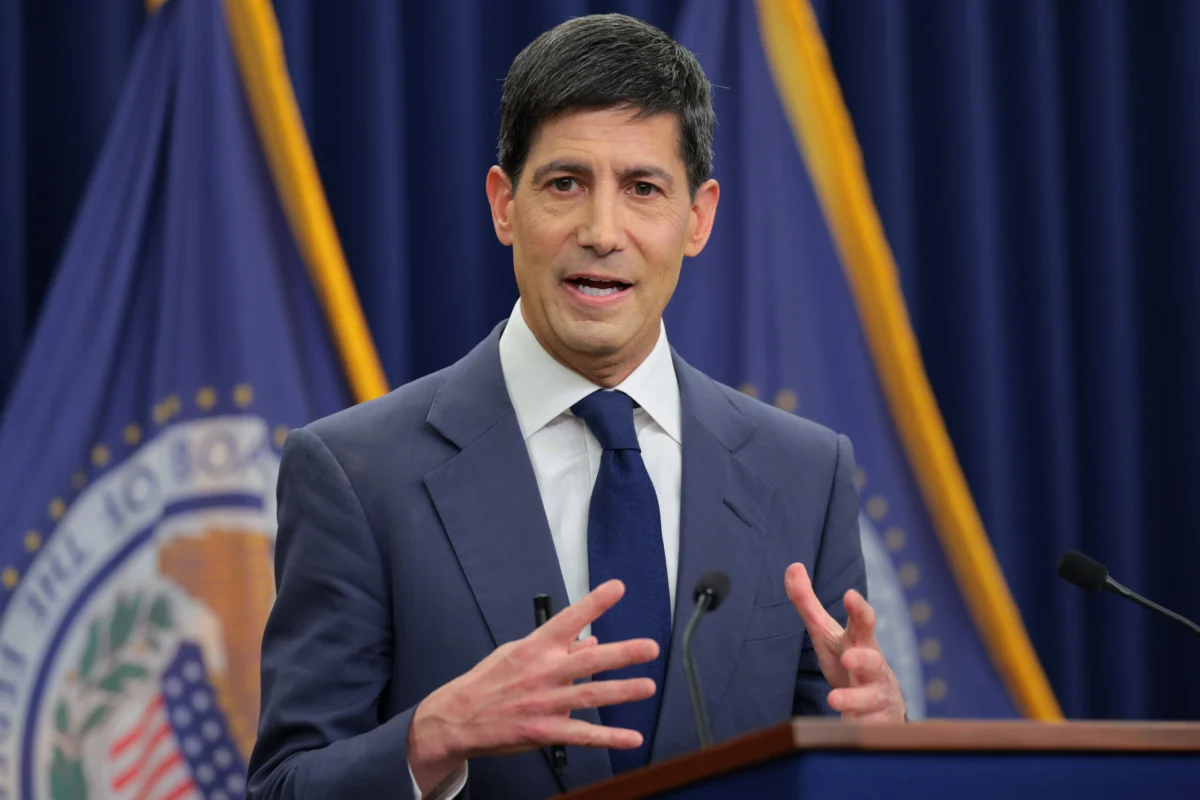
Federal Reserve Chairman Kevin Warsh has initiated a profound transformation of the central bank’s operational framework, announcing a sweeping agenda of reforms just weeks into his tenure. Speaking to reporters on June 17, 2026, following his inaugural Federal Open Market Committee (FOMC) meeting, Warsh outlined an ambitious plan involving five distinct task forces designed to critically re-evaluate virtually every facet of monetary policy formulation and implementation. This comprehensive overhaul marks an unprecedented undertaking by a Fed chair in recent history, signaling a strategic departure from long-established practices and promising a new era for U.S. monetary stewardship.
A New Chapter for the Federal Reserve
Warsh, who assumed the helm of the world’s most influential central bank on June 17, 2026, wasted no time in charting a new course. His initial pronouncements point not to an abrupt, disruptive shift, but rather a "quiet revolution," as described by market observers. The newly established task forces are mandated to delve into fundamental principles, scrutinize current methodologies, explore alternative approaches, and ultimately propose actionable recommendations for policymakers’ consideration. This meticulous, bottom-up examination aims to ensure the Federal Reserve remains "clear-eyed about its mission, fit for purpose, and focused on the future," as Warsh articulated in his address.
The appointment of Kevin Warsh, a former Fed governor with a history of critical commentary on the institution’s post-financial crisis policies, had initially sparked speculation of a potentially contentious period within the central bank. During his campaign for the chairmanship in July 2025, Warsh famously called for "regime change" at the Fed, citing a "credibility deficit" he attributed to the institution’s "incumbents." However, his tone has demonstrably softened since taking office. During his first news conference, Warsh expressed being "incredibly impressed" with the internal workings and collegiality he had witnessed, remarking that the FOMC meeting "exemplified the very best of the Fed’s traditions." This shift from sharp criticism to an embrace of consensus-building suggests a pragmatic approach to reform, characterized by Scott Clemons, chief investment strategist at Brown Brothers Harriman, as "regime change, but in a velvet glove."
The Five Pillars of Reform: A Comprehensive Examination
The five task forces represent a thorough and systematic review of the modern monetary policy toolkit. Their mandates touch upon critical areas that have evolved significantly over the past two decades, particularly in response to the 2008 financial crisis and the 2020 COVID-19 pandemic.
1. Reimagining Communications:
One of the most visible and immediate changes under Warsh’s leadership has been to the Fed’s communication strategy. The post-meeting statement issued after the June 2026 FOMC gathering notably eschewed much of the boilerplate language that had become a hallmark of previous communications. Instead, it offered a concise, bare-bones account of the committee’s decisions and its assessment of current economic conditions. In a significant callback to pre-March 2009 practices, the statement commenced with the actual rate action—unchanged, as broadly anticipated—rather than the economic assessment that had become customary since the financial crisis era.
Former Cleveland Fed President Loretta Mester, who served on a communications subcommittee during her nearly 40-year career at the central bank (2014-2024), acknowledged the necessity of this "purging" of extraneous language. "Once a phrase or sentence got in there, it was very difficult to get it out. So this was a needed sort of purging," Mester remarked, referencing the Fed’s long-standing "Hotel California problem" with its statements. However, she also highlighted a critical point of concern: the statement’s deletion of "forward guidance" language. Mester suggested that officials might need to compensate for this by providing more detailed information about the Fed’s "reaction function"—an outline of how and why the Fed intends to adjust its policy stance in response to evolving economic factors. The task force will likely explore the potential elimination of the "dot plot," a graphical representation of individual FOMC participants’ interest rate forecasts, which has often been a source of market confusion. Adjustments to the format and frequency of the chair’s news conferences, a practice initiated approximately 15 years ago, are also expected to be under scrutiny.
2. Enhancing Data and Analytics with AI:
The second task force will focus on the data the Fed utilizes to measure the economy. In an increasingly complex and interconnected global economy, the accuracy and timeliness of economic indicators are paramount. This review will encompass a comprehensive examination of existing metrics, with an anticipated push towards further integration of advanced data analytics and the burgeoning capabilities of artificial intelligence (AI). The rise of AI, both as a tool for economic analysis and as a force impacting labor markets and productivity, necessitates a deeper understanding of its implications for monetary policy. The task force will assess how AI can refine the Fed’s forecasting models, enhance real-time economic monitoring, and inform policy decisions, ensuring the central bank’s analytical framework remains cutting-edge and robust in a rapidly digitizing world.
3. Rethinking the Inflation Framework:
Perhaps one of the most critical areas for reform is the Fed’s view on inflation and its causes. This task force’s mandate comes in the wake of a challenging period where inflation consistently exceeded the Fed’s long-term goal for five years following the "erroneous ‘transitory’ call" of 2021 and 2022. That misjudgment underscored the need for a profound re-evaluation of the models and assumptions underpinning the central bank’s inflation targeting framework. The task force will explore alternative approaches to measuring and forecasting inflation, examining the role of supply-side shocks, global factors, and labor market dynamics. It will also consider whether the current 2% inflation target remains appropriate or if adjustments are warranted given structural shifts in the economy and the experience of prolonged disinflationary pressures preceding the recent inflationary surge.
4. Addressing the Balance Sheet’s Size and Composition:
A significant point of contention for Warsh, even prior to his chairmanship, has been the substantial size and composition of the Fed’s balance sheet. Currently standing at $6.7 trillion, the balance sheet swelled dramatically during and after the 2008 financial crisis and again during the 2020 COVID-19 pandemic, as the Fed engaged in massive asset purchases to support financial markets and stimulate the economy. Warsh has long argued that an oversized balance sheet could distort market functioning, constrain future policy flexibility, and potentially fuel asset bubbles. This task force will meticulously examine the optimal size and composition of the Fed’s holdings, exploring potential strategies and a clear path for reducing these assets through quantitative tightening. The goal is to return the balance sheet to a more "normal" or "efficient" level without causing undue market disruption, a delicate balancing act that requires careful planning and communication.

5. Integrating the Impact of Technology:
While AI is specifically mentioned under data, this task force likely takes a broader view of technology’s systemic impact on the economy and financial system, beyond just data analysis. This could include how digitalization affects payment systems, the potential for central bank digital currencies (CBDCs), cybersecurity risks, and the evolving structure of financial markets due to technological advancements. Understanding these broader implications is crucial for ensuring monetary policy remains effective and that the financial system remains stable in an era of rapid technological change.
Expert Endorsements and Market Anticipation
The comprehensive nature of Warsh’s proposed reforms has garnered cautious optimism and significant attention from financial leaders and former central bank officials. Roger Ferguson, a former central bank Vice Chair, noted that Warsh’s approach aligns with established internal processes. "All those who’ve been in the Fed know that the way change operates is through just what he did, which is create task forces to build consensus," Ferguson told CNBC, while also urging caution on certain changes.
Loretta Mester, while acknowledging that many of the areas under review have been previously considered by the Fed, commended Warsh for organizing the work and putting it on a "faster than typical timeframe." She emphasized the importance of the eventual recommendations and the changes Warsh intends to implement.
Rick Rieder, BlackRock’s chief investment officer of Global Fixed Income and himself a finalist for the Fed chairmanship that Warsh ultimately secured, hailed the approach as ushering in "a new era of monetary policy in the United States." Rieder emphasized that "Building a sense of confidence in achieving monetary policy targets will only be enhanced by an impressive consideration of complex subject matter that could be very influential on the economy and Fed targets going forward. So, this time is different, we are hearing about a different philosophy, different tools, and potentially a very different policy ethos."
Broader Implications and the Path Ahead
The ambitious scope of Warsh’s agenda underscores a recognition within the Federal Reserve that the tools and frameworks developed in earlier eras may require significant adaptation for the challenges of the 21st century. The implications of these reforms extend far beyond the marble halls of the Eccles Building.
Market Dynamics: Investors will be closely watching for clarity on the Fed’s "reaction function" and any potential shifts in its communication strategy. Greater transparency regarding policy objectives and the economic indicators guiding decisions could reduce market volatility. Conversely, radical changes or perceived ambiguity during the transition period could introduce uncertainty. The prospect of a systematic reduction in the Fed’s balance sheet, while long-anticipated, will require careful management to avoid disruptions in bond markets and potential tightening of financial conditions.
Economic Stability and Mandate Fulfillment: The core objective of these reforms is to enhance the Fed’s ability to fulfill its dual mandate of maximum employment and price stability. A refined inflation framework, improved data utilization, and a more agile communication strategy are intended to make monetary policy more effective in navigating future economic cycles. The review of the balance sheet aims to ensure that quantitative tools remain effective and do not inadvertently create systemic risks.
Global Impact: As the world’s leading central bank, the Federal Reserve’s policy shifts have profound global repercussions. Changes in its communication, interest rate path, or balance sheet management can influence global capital flows, exchange rates, and the monetary policy decisions of other central banks. A more predictable and transparent Fed could contribute to global financial stability, while any missteps could amplify international economic volatility.
Challenges and Consensus Building: Implementing such a wide-ranging set of reforms will not be without its challenges. Building consensus among the diverse members of the FOMC, who often hold differing economic philosophies, will be paramount. As former Vice Chair Ferguson noted, the task force approach is key to achieving this. There may also be resistance to dismantling long-standing practices, even those deemed outdated. Warsh’s initial shift in tone from critic to collaborator suggests an understanding of the delicate balance required to drive change within a historically independent and institutionally robust body like the Fed.
In essence, Chairman Warsh is not merely tweaking the edges of monetary policy; he is initiating a deep and fundamental introspection. The outcome of these task forces will shape the Federal Reserve’s identity, its relationship with markets, and its efficacy in steering the U.S. economy through an increasingly complex and technologically driven future. The "quiet revolution" has begun, promising a transformative period for U.S. monetary policy and potentially setting a new benchmark for central banking globally. As Mester aptly put it, the goal is for central bankers to articulate their approach clearly, moving beyond a simple "trust me" to provide a robust, transparent framework for the years to come.
